Archive | Album Review RSS feed for this section

Album review: Petula Clark – Lost in You

15 Feb

Petula Clark: Crazy, from Jools Holland’s 2012 Hootenanny
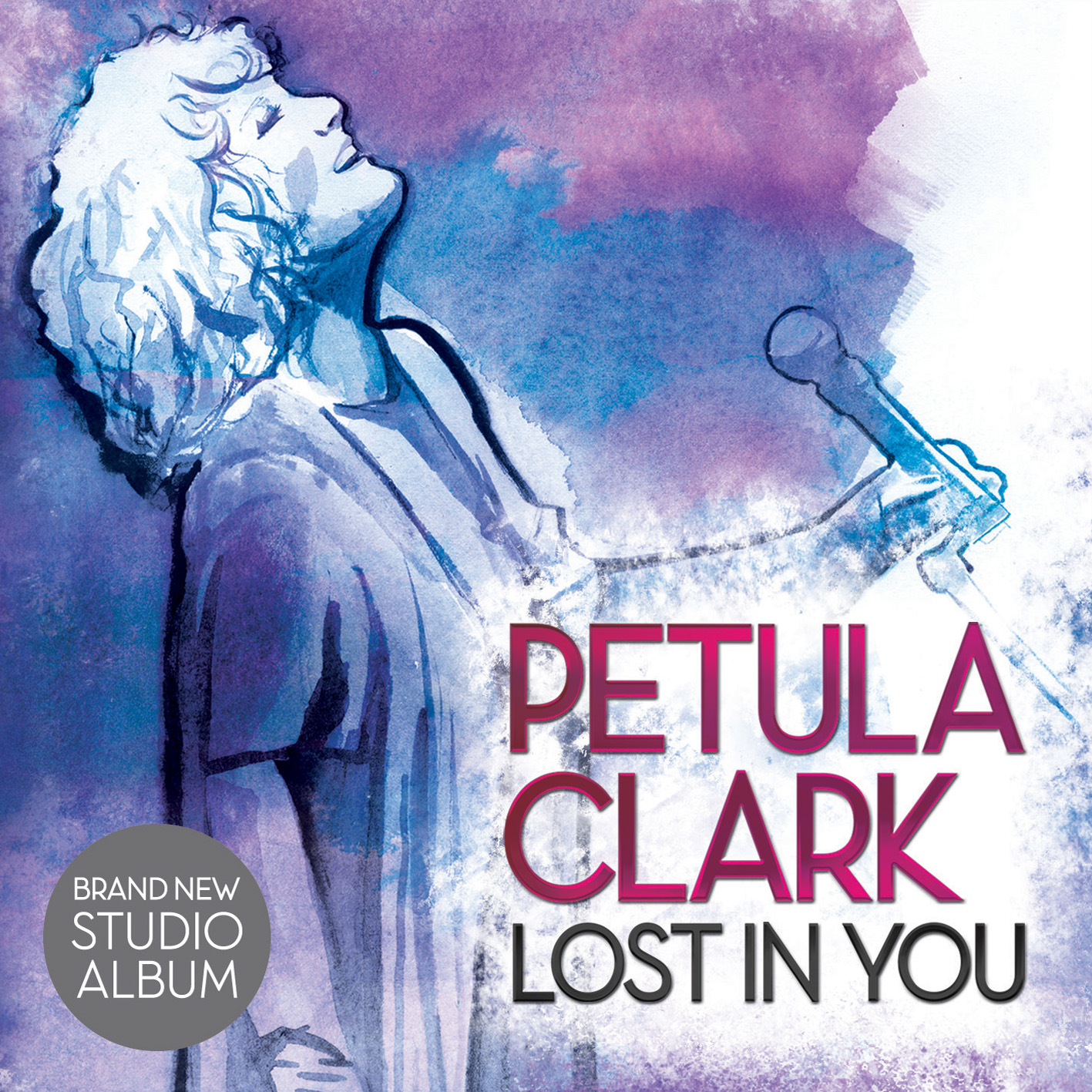
Lost in You: edgy and contemporary tunes from a superstar

Lost in You: edgy and contemporary tunes from a superstar

At 80 – how is that possible? – Petula Clark has made her first English language studio album in 15 years. Lost in You is crisply produced, utterly devoid of sentimentality and resonates with a contemplative, moody and arresting contemporary vibe. There isn’t a whiff of nostalgia. Even a reinvented “Downtown”, stripped back to an almost bleakly acoustic riff, sounds as if it was written only yesterday.

As a record, Lost in You manages to reflect the nuances of a career that for sheer longevity and breadth of achievement puts Clark among the all-time great entertainers. At the same time, it confirms the lingering sense of a complex and enigmatic performer, a woman who would prefer to let her music speak for her than divulge her views about a world beyond the stage that is sometimes profoundly troubling.

I interviewed her once, in her West End dressing room during her successful stint as Norma Desmond in Sunset Boulevard. It was a trepidatious moment. “Downtown” was number one in the soundtrack of my childhood and I’d been a lifelong fan – always dangerous territory for a journalist meeting a hero. But there were no signs of clay feet. Far from being a grande dame, the friendly yet pensive woman I encountered left a lingering impression of artistic integrity and unfussy professionalism.

“Lyrics are very important to me,” she told me. “When I see a lyric and I say ‘Hey, yes! I know what that means, how it feels. It just flows through, your body is almost like a filter. It’s all filtered through your mind and then it comes out through your mouth. That’s it, you know. That’s the way you feel about something.”

A couple of the covers here  – “Imagine” and “Love Me Tender” – could have languished as record company-requested interludes between her edgy treatments of more 21st-century material, but there is not the slightest hint of a phoned-in vocal. Everything is handled with that distinctive Clark sound: those unique, idiosyncratic vowels, combined with a subtle technique and phrasing that has defined her work at every turn.

“Reflections” is a self-penned, hymn-like paean to little Sally Olwen, the girl who snatched precious moments of childhood in Wales, even while the machinery of show-business was propelling her to child stardom and beyond.

As the prototype 1950s girl singer, she would rescue herself from the cul-de-sac of novelty pop by marrying a Frenchman and discovering the dramatic possibilities of the chanson, absorbing the potent influences of Brel and Piaf. “Next to You” thrums with barely contained emotion – the mark of a great dramatic singer who doesn’t need to resort to melisma or histrionics to make an emotional connection with the story.

Clark reveals another facet of her versatility on the country-tinged “Never Enough”, which she delivers with subtle verve and warmth. The set finishes with a statelier take on romantic relationships: “I Won’t Care”, a big, modern ballad that is the closest thing to formulaic among the twelve tracks.

Cut Copy Me: a lesson in ethereal pop

But overall, the album’s slightly melancholy, troubled atmosphere, established across the first three numbers, is its most fascinating asset. “Cut Copy Me” is a lesson in dreamy, ethereal pop singing without artifice; the title track “Lost in You”, an echoing piano-driven ballad with nifty key changes reminiscent of Clark’s glory chart years with ace songwriters Tony Hatch and Jackie Trent; and best of all, a fascinating version of Gnarls Barkley’s “Crazy”, which Clark turns into an epic, intelligent exploration of human frailty, dappled with cynicism.

80? The maths say it must be so. But on this evidence, Petula Clark has no intention of being out any time soon. Lost in You is a little triumph.

Album review – North: Mary Dillon

30 Jan

North sampler: introducing a slow burner of an album

North: Mary Dillon's quietly magnificent return

North: Mary Dillon’s quietly magnificent return

Mary Dillon’s return to the music scene, North, is a slow burner of an album which insinuates itself into the listener’s ear with stealth and grace. After a couple of plays, the combination of her gently assured voice and a set of mainly traditional songs dressed in sparkling new arrangements and beautifully restrained accompaniment works its magic.

Haunting is a wizened old chestnut in the reviewer’s vocabulary. But in Dillon’s case, it’s hard to think of a more apposite word. Strains and phrases from these poignant, intensely romantic tales linger in the air long after the album has played out, gentle as a whisper but always insistent on being heard.

The lack of artifice is compelling. Dillon might have been absent from the studio for more than a decade since her days with Déanta, but so steeped is she in an enviable heritage of Irish traditional singing that there is no sense of her searching for her mark. There are no cobwebs to blow away. She hits the ground running with “When a Man’s in Love” and “Ballyronan Maid” (backing vocals supplied by sister Cara).

While the opening track and the equally carefree “The Banks of the Claudy” are laced with wry humour, the accents are generally dark and complex. Witness the tragedy of “John Condon”, the well-received single that heralded the release of this album, in which Dillon unpicks the tale of an under-age soldier’s fate in the First World War with gut-wrenching simplicity.

Dillon points out that the songs are all linked in some way with the North of Ireland and the musical influence of her homeland on her style and technique is clear. But like all fine singers, she instinctively highlights their universality. She approaches them from a subtle, modern perspective, steering them away from melodrama and the visceral influence of experience to a more intimate, contemplative place.

The devastating tale at the heart of “The Month of January” becomes a monologue of almost chilling rage as the voice of the wronged girl grows in certainty and she grimly forecasts the fading charms of her feckless lover. The traditional lament, “Ard Tí Chuain”, sung a cappella, ends abruptly, leaving the listener almost suspended in its aching beauty.

The sense of trepidation and foreboding that hovers around Dillon’s own composition, “The Boatman”, is one of the North’s strongest themes. Nothing is certain. Everything could be taken at any time. “Edward on Lough Erne Shore”, underscored by Neil Martin’s sympathetic string arrangement and resonant cello playing, epitomises the album’s thoughtful passage along the narrow divide between hope and despair. A quietly magnificent album.

Album review – Deborah Shulman and Larry Zalkind: Lost in the Stars, The Music of Bernstein, Weill & Sondheim

23 Dec

Mack the Knife: Shulman and Zalkind whip up a little vortex of menace

Lost in the Stars: standards for grownups

Lost in the Stars: standards for grownups

Lost in the Stars is a classy little jewel of an album. It takes a couple of listens for the sheer quality and uncluttered lustre of Deborah Shulman’s vocals to take hold, so understated and subtle are they. But once they have you in their thrall, they yield refined treasure.

The album is based on songs from a trinity of musical theatre composers – Weill, Bernstein and Sondheim – who need no further introduction. The delight is in the ease with which Shulman teases out nuances and revelations from numbers that you might think you know inside out.

There’s an eerie, unsettling version of “Mack the Knife”, for example, which sweeps you up into a little vortex of menace, light years from the bravado that most singers ladle on. And if “The Ladies Who Lunch” replaces the traditional self-scorning attack with a more observational, modulated treatment, it’s certainly a fresh approach to some of Sondheim’s most visceral lyrics. That clarity extends to “Children will Listen”, a lilting “I Feel Pretty” and an assured, stark and mournful “Losing My Mind”.

Shulman’s restraint pays such dividends that it almost seems a shame not to hear how she might handle “My Ship”, here an elegant instrumental solo for her brother-in-law, the trombonist Larry Zalkind, whose contribution to the album is equally fascinating. He leads an accomplished band of accompanists who provide Shulman with some intriguing counter harmonies to work against. The texture they bring to the gently swinging “September Song” and the washed-up, after-hours blues of “Ain’t got no Tears Left” is sublime. Serious without once sounding earnest or worthy, this is an album of standards for grownups.

Album review – Barb Jungr: Stockport to Memphis

23 Dec

River: Barb Jungr and the Northampton and Derngate Community Choir raise the roof for Christmas

Stockport to Memphis: some of Barb Jungr's finest work to date

Stockport to Memphis: some of Barb Jungr’s finest work to date

Substrata of autobiography, moments caught in time and the inherited trove of familial memories lurk beneath the polished surface of Barb Jungr’s new album, Stockport to Memphis. The occasional jagged shard among the softer elements hints at pockets of darkness to counter the exuberance of the title track, a foot-stomping anthem in which she tips a knowing wink at the young woman who sought – and found – escape from small, northern-town blues in music way back when.

So far, so pleasingly typical. Jungr’s ability to juxtapose bittersweet nostalgia with something bleaker is her stock in trade, giving depth and often an ominous power to her re-imaginings of seminal numbers from the great modern songbook. Heroes including Dylan (“Lay Lady Lay”), Joni Mitchell (an aching version of “River” which, reinforced with a choral backing, has been released as a Christmas single), Neil Young (“Old Man”) and Tom Waits (“Way Down in the Hole”) are represented with skill and style.

But the big news here is that Jungr has connected with the muse, and in partnership with regular accompanist and producer Simon Wallace, found space to exercise her song-writing muscles.

The six self-penned songs (which also include a number written with her former Sticky Moments singing partner Michael Parker) provide an intriguing counterpoint to the cornerstones of the modern standards. “Sunset to Break Your Heart” is further evidence of  Jungr’s particular way with a break-up song: that characteristic mixture of searing desolation and the cynicism of the survivor. But there is joyful optimism, too, in the promise of “New Life “ and – my highlight of the album – “Urban Fox”, a beautiful and evocative jazz-tinged ode to that maligned creature. Without question, some of her finest work to date.

Barb Jungr will be touring extensively throughout 2013. On January 12th she will be at the Quay Theatre in Sudbury, Suffolk.

Single review – Mary Dillon: John Condon

5 Nov

John Condon: Mary Dillon’s haunting vocal signals a welcome return after 15 years away from the music scene

Ulster singer Mary Dillon has returned after a 15-year break from the music scene with “John Condon“, the tale of a 14-year-old boy lost on the front in the Great War. Stark and pure, with exquisite backing, the single is released in time for Remembrance Day and heralds a new album, North, which will arrive in February. Poignant and cinematic in its imagery, the song exerts a gentle but irresistible pull thanks to Dillon’s eloquent reading of lyrics that find universal relevance in the tragedy of one young, wasted life. If the rest of North lives up to this, Dillon’s re-emergence as a solo artist will be something to celebrate.

EP Review – Anna MacDonald: Paper Flowers

3 Aug

Naj’s Song: never mind the shaky camera work, just listen to Anna MacDonald and the Portobello Orchestra

Paper Flowers: a nightingale sings in George Square?

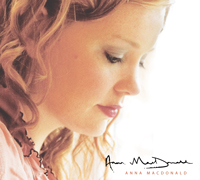
If a nightingale ever sings in Glasgow’s George Square, I’ll bet it sounds just like Anna MacDonald. Her voice has the same combination of urgency, brilliance and beauty that creeps into your sleep in the early hours and makes you wonder if you’re still dreaming.

On the epic “Matty Groves”, one of the standout tracks on her second EP Paper Flowers, it soars and shimmers as if ricocheting off the majestic buildings and echoes into the distant night like a siren call to another world. This traditional folk song is a sad and violent tale that builds on a simple melodic hook. In MacDonald’s feverish version, she seems to meld the bitter rivalry of the street fight with doomed love and murder in a mixture of urban imagery and pastoral folklore.

MacDonald is a gifted songwriter, too. Her ballads – the title track, the atmospheric “Glasgow Rain” and “Naj’s Song” – complement another traditional number, “Banks of Inverurie”, as sweet, melancholy paeans to hearts broken against the gritty background of a city that is clearly a major influence on her work. The texture is an arresting weave of Scottish and Gaelic traditions, with a dash of English folk. A full album would be welcome, and soon.

These are heady days for the female Scottish troubadour. That other notable MacDonald, Amy, already on to her third album, has helped to open a door into mainstream pop music for what seems like an army of young women, each with their own blend of traditional and modern musical tastes. Where Amy favours fierce, guitar-driven narratives in the manner of her breakthrough hit “This is the Life”, Anna is deceptively gentle and contemplative, that angelic voice telling quietly bleak truths about the realities of waning love and loneliness. There is plenty of room for them both.

Album Review – Christine Tobin: Sailing to Byzantium

29 Jul

So Far Away: not Yeats but Carole King, from Christine Tobin’s previous album Tapestry Unravelled

Sailing to Byzantium: Christine Tobin rescues Yeats from memories of academic overload

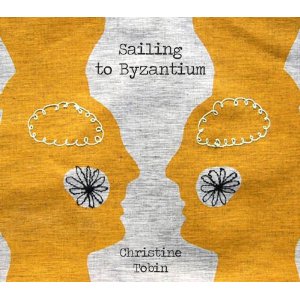
The rich source material for Christine Tobin’s latest album positively encourages metaphor, so here goes. Sailing to Byzantium is a vibrant, irresistible lake. There’s nothing to be gained from standing suspiciously on its shore.  Take a deep breath, plunge in, and let the water draw you down into a musical world of burnished colours, intriguing shades, spine-chilling dangers and soothing sub-aquatic glades.

Tobin’s audacity in setting 13 of W. B. Yeats’s poems to fluid and spacious jazz arrangements pays off on every level.  The poet’s characteristic themes of memory, time and place, unattainable love, the artist’s lot, and mythology shine through, heightened but never unnecessarily embellished by some brilliant ensemble playing.

Tobin isn’t the first composer to set Yeats to music. Herbert Hughes, for example, wrote a rollicking tune for “Down by the Sally Gardens”, most recently recorded by Clare Teal for her album, Hey Ho. But Sailing to Byzantium is on a much more ambitious scale. And how Tobin pulls it off.

It would be invidious to single out any band member; plaudits to Liam Noble (piano), Phil Robson (guitar), Gareth Lockrane (flute), Kate Shortt (cello) and Dave Whitford (double bass). With their support, Tobin’s warm timbre wraps itself around the shimmering imagery of Yeats’s verse, taking it into a new and very different space while staying true to the original work.

Like Tobin, I studied Yeats at school, and was so absorbed by the texture and subjects of his poetry that I later seized the opportunity to immerse myself in it at university. Analytical overload was inevitable and it’s been many years since I revisited the glories of poems such as “Long-legged Fly” and “The Wild Swans at Coole”. Tobin’s inspired handling of the material has sent me scurrying to the bookshelf and reaching out for a familiar, yellowing volume as if it was an old friend.

From the sparkling Joni Mitchell-ish  guitar intro to the opening track, “When You are Old” to the elegiac tones of actor Gabriel Byrne (who taught at Tobin at school in Dublin) reading “The White Birds” to the backdrop of rising waves and Tobin’s wordless, keening chant, Sailing to Byzantium commands attention. The production is fresh and crisp.

There is turbulent beauty, not least in the cacophonous climax to “The Second Coming”. Characters spring to life, greatly assisted by the sparkling arrangements. “The Song of Wondering Aengus” and “The Fisherman” – that paean to a simple, idealised reader – bristle with energy. Some of the songs are haunted and haunting in equal measure:  ghosts gather and whisper as “In Memory of Eva Gore-Booth and Constance Markievicz” conjures a room populated by lost friends, to exquisitely poignant effect, building to the sinister revelation of knowledge that’s come too late. An artistic triumph, brimming with integrity.

Album review – Macy Chen: After 75 Years

28 Jul

Languishing Love: Macy Chen’s JazAsia quest pays dividends


After 75 Years: Macy Chen’s contribution to the East/West cultural exchange

Macy Chen is living proof that jazz is the most international of musical languages. The Taiwan-born singer soon established herself on the pop scene in her home country after graduating from Soochow University. But having realised that her heart was really in jazz, she headed west to New York in search of new influences that would help her to build on this passion.

A decade later, Chen has released a concept album – After 75 Years – that fuses Chinese and Western jazz traditions in a style she has dubbed ‘jazAsia’. It’s a canny modern take on a phenomenon that actually has its roots in the 1930s. As Chen reveals through a selection of songs from old Shanghai, jazz was a highly popular style of music in the more cosmopolitan cities of pre-Communist China; something that possibly escaped her grandfather, a saxophonist who also left Taiwan to pursue a career as a musician but stayed firmly in the Eastern hemisphere, in Japan.

The album is packaged as an imagined correspondence bridging the 75-year gap between these two wondering spirits (they never knew each other), with a sheaf of letters and photographs for the listener to browse while Chen’s mellow and expressive voice works a rather special spell.

The Shanghai numbers are fascinating in themselves, telling exotic tales of “Unrequited Love” and “The Wandering Mistress” in mandarin. Rather than being an obstacle to the non-speaker, the language becomes an intrinsic element of the music as Chen’s voice blends like an instrument with the rest of her nimble, sophisticated band.

She has also written mandarin lyrics for a handful of American jazz standards – “My Only Love” and a mash-up of “Harlem Fantasia” and the Duke Ellington classic “Caravan” – which add an exciting new texture to these familiar tunes.  She is at her most effective in languid, melancholy musical territory: “Reminisce” and “Suzhou Nocturne” both showcase a range that swoops effortlessly across the soprano/alto divide with a blend of sweet, instinctive jazz inflections.

Chen rounds things off with a pair of self-penned songs, “Fly Away” and “Good Night, My Love”, that experiment with tempo and elegant melodic lines, suggesting that her unusual quest is set to pay further dividends as her career develops. JazAsia is full of idiosyncratic possibilities.

Album Review – Kathryn Roberts & Sean Lakeman: Hidden People

10 Jul

The Ballad of Andy Jacobs: Kathryn Roberts sings a sad story with a soaring voice

Hidden People: a skilfully woven sonic tapestry

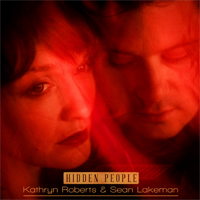
Three songs at the core of Hidden People, the eagerly awaited new album from British folk dynasts Kathryn Roberts and Sean Lakeman, epitomise its sharp brilliance. It isn’t that individually, the surrounding numbers are lesser pieces. It is simply that the gathering sense of an extraordinary listening experience reaches its peak through a trio of story songs that in different ways, showcase the musicianship of Roberts and Lakeman, the lush and plangent arrangements that burnish the album without blurring the clarity of the narrative lyrics, and the range of influences that make it impossible to categorise Hidden People merely as a folk record.

Each of these songs – “Hang the Rowan”, with its witch-like promise of revenge woven into a compelling hook of a melody, the aching beauty of “The Ballad of Andy Jacobs”, with Roberts’ glorious voice rendering the disintegration of a soldier’s marriage almost unbearably poignant, and the mystic fatalism of “The White Hind”, bathed in shimmering production values – in some way exemplifies the record’s potent mixture of the poetic and the prosaic, of timeless tales and modern twists, of violence and passion.

The clues are all there in the first songs on the album, which take us from a bleak Nordic landscape (“Huldra”), announced a cappella before Swedish sisters Baskery chime in, to America (“Oxford, NY”) before bringing us home for a more traditional three-time folk ballad about an ill-starred love affair sparked at the village fair (“Money or Jewels”). Throughout, soaring vocals and tight harmonies, graced with contributions from the likes of Cara Dillon, Sean’s brother Seth, Dave Burland, and Caroline Herring, add ear-catching nuances so that Hidden People yields new treasure with each repeated listening.

Things take a bluegrass turn later, with the story of “Lusty Smith”, and the skiffle beat that announces “Standing at the Window” gives a hint of the influence of the five years that Roberts and Lakeman spent touring the States with Equation before they settled back in Devon to raise their family.

So this, in some respects, is a ‘comeback’ album for the husband-and-wife duo – and particularly for Roberts, who has been enjoying the distractions of motherhood, which might make the noir-ish atmosphere of much of the lyrical content somewhat surprising. She admits to a preference for musical edginess to balance the comfort of her home life, but even after plenty of sturm und drang, there is still space here for the contemplative peace of “The Wisdom of Standing Still”.

Lakeman has spent the time buffing up his considerable talents as a producer, and the layered sounds of Hidden People – so full of unexpected moments (a bouzouki and a mandolin jostle for attention with guitars, Roberts’ keyboards and woodwind) – amount to a sonic tapestry so skilfully woven that it never threatens to overwhelm.

Reviewers need to keep the records moving on, but this one is going to be hard to shift from my MP3 player. As a set of individual, beautifully-crafted songs that amount to a highly satisfying, holistic piece of work, Hidden People is up there with Gretchen Peters’ Hello Cruel World as a contender for my Album of the Year.

Album Review – Gill Manly: The Lies of Handsome Men

7 Jul

Wild is the Wind: Manly’s sublime phrasing bathes you in warmth

The Lies of Handsome Men: world-weary, self-knowing and great singing

If you get the chance to catch Gill Manly singing live, seize it. Even in a London jazz scene crammed with secret treasures, her sublime phrasing, a voice which bathes you in warmth even when the lyrics tell a bitter tale, and her connoisseur’s ear for songs that chime with the musicality which she wears with grace and insouciance, set her apart as a singular talent. The world would be a better place if she were heard more widely – and if there’s any justice, her new album, The Lies of Handsome Men, will bring her the attention she deserves as one of Britain’s finest female singers of any genre.

It’s a carefully selected set of songs that she likens to jewels from her personal treasure trove, put by until the time was right to put her interpretations on the record. Generous, too, at 15 tracks.

Many better-known singers would be hard-pressed to sustain unbroken interest through such an eclectic mix of standards and pop songs. However, Manly has a gift for threading lyrical themes and ideas together with a vocal line that ranges from girlish delight (shades of Blossom Dearie) to arch-vamp (recalling Julie Wilson) but is at its most telling with world-weary, self-knowing material that hints at the emotional texture of a woman’s life, lived fully. Buddy Greco guests on “Second Time Around”, but it’s a measure of the album’s quality that his stardust is a pleasantly incidental contribution rather than the high point of the record.

Despite the occasional tone-lightening favourite (“Peel Me A Grape” and “Witchcraft”), The Lies of Handsome Men sets a contemplative mood from the moment the title track edges into earshot. In that respect, it reminded me very much of a great but little-remembered Judy Holliday album, Trouble is a Man: serious, complex, sophisticated and intelligent readings of heart-breaking songs.

“The Lies of Handsome Men” sets the bar high, but with the glories of the Dudley Moore/Fran Landesman at-least-we-had-a-go classic “Before Love Went out of Style”, the John Scott/Caryl Brahms soliloquy “Woman Talk” and the quietly devastating Rod McKuen testament to survival, “A Single Woman” to follow, the quality never dips. “How Insensitive” is a case study in narrative interpretation, and “Wild is the Wind” a glorious tribute to one of Manly’s main influences, Nina Simone.

Manly’s pianist, Simon Wallace, who also produced the album, must share the credit for this. To make “Mad World” rub shoulders with the damped-down histrionics of “Windmills of Your Mind”, the cynicism of “Charade” and the frustrated longing of a little-heard Goffin/King number, “Go Away Little Boy”, without a single jarring moment is a considerable achievement.

This is a cohesive and coherent piece of work full of endless lessons for any receptive singer – and indeed for the rest of us, picking our way through the emotional minefield of human experience and trying to make sense of it without letting bitterness take hold. When Manly signs off with “Not Like This”, salvaging truth and dignity from the ashes of a love affair, the affirmation is left hanging in the air between the artist and the listener. That’s great singing. Highly recommended.