Archive | Album Review RSS feed for this section

Album Review – Broadcaster featuring Peggy Seeger: Folksploitation

5 Jul

First Time Ever: Peggy Seeger’s shamen-like vocal takes a classic to another place

Folksploitation: Seeger’s voice rises triumphant above the vocoder treatment

The Pet Shop Boys and Dusty Springfield. Morrissey and Sandie Shaw. The Bee Gees and Dionne Warwick. Jack White and Loretta Lynn. The KLF and Tammy Wynette. There’s a great tradition in pop music of collaboration between iconic female singers and contemporary singer/songwriter producers that brings their work and back stories to the attention of a new generation.

Note that I don’t use the word ‘rescue’, although in the case of Dusty Springfield, the timely approach of the Pet Shop Boys with “What Have I Done to Deserve This?” led directly to a welcome late career revival. I hesitate, too, to use the much-abused word ‘Diva’, although these women had earned such a status in the historical arc of pop long before any second flourishing opened up new territory for them.

I would certainly hesitate to call Peggy Seeger a ‘Diva’, although if anything, she merits the title in her sphere even more than any of the women mentioned above.  She is a touchstone for folk singers and songwriters of any age. While she herself has dipped in and out of the music business, always having plenty of other fish to fry as an activist and archivist, her songs, her musicianship and that timeless, multi-textured voice have made her a constant influence on her peers and subsequent generations.

Her long partnership – personal and artistic – with Ewan MacColl, which began when she came to the UK in the 1950s, and their prodigious body of work embracing traditional folk songs and new material, made her in many eyes the founding mother of the modern folk revival.

And it would be patently ridiculous to call her extraordinary new collaboration with experimental dance music pioneer Broadcaster a ‘rescue’. New York-born Seeger has long since returned to live in the UK after several years back in her homeland, and at the age of 77 is still singing and touring (albeit avoiding long flights these days) with great zest and verve. But Folksploitation has already ignited a whole new wave of interest in the woman whose voice cuts like the chant of a shamen across Broadcaster’s edgy techno beats with all the wisdom of the ages. It’s an utterly absorbing and frequently exhilarating experience.
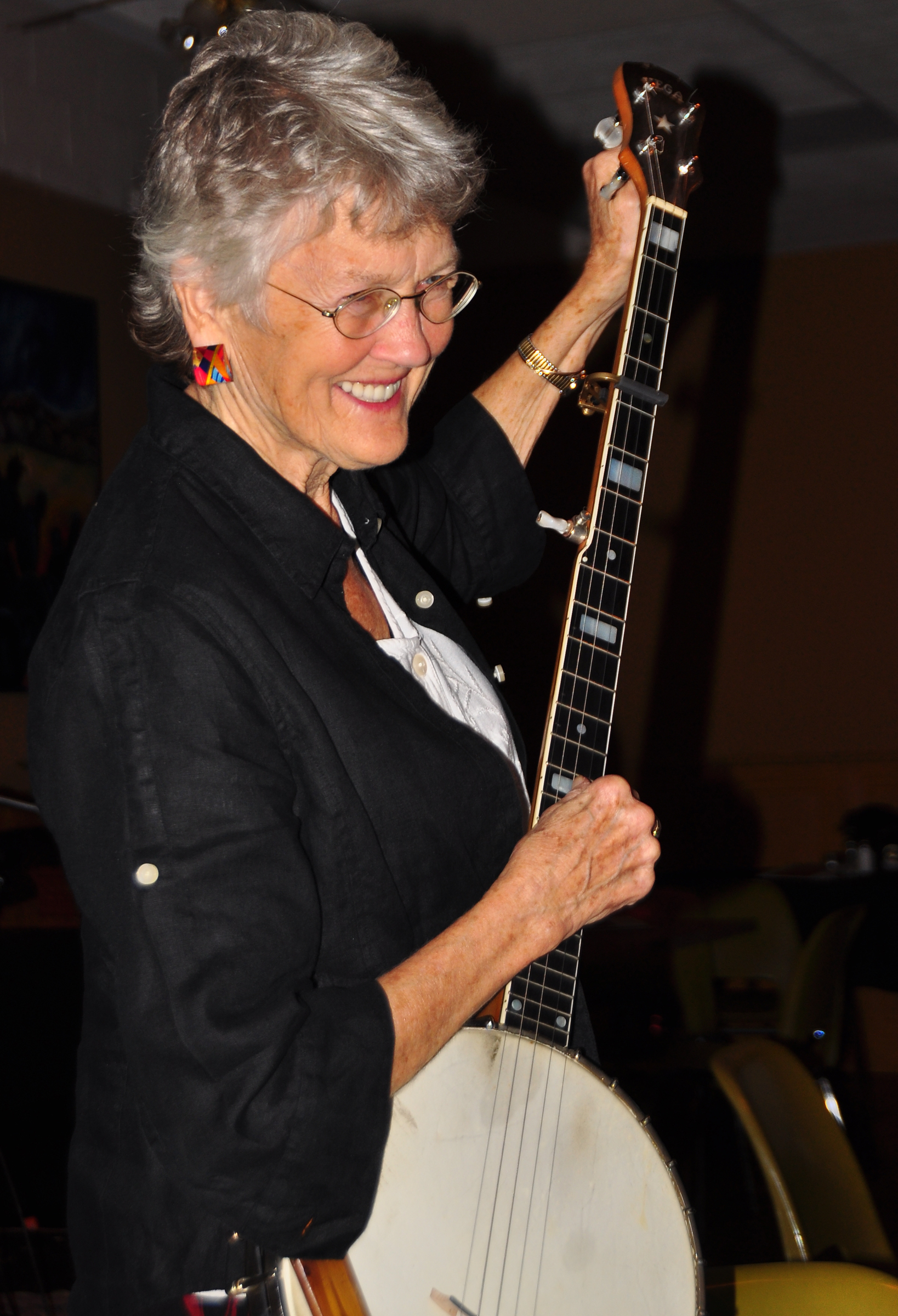
Peggy Seeger today: still pushing the boundaries (photograph: Dale Herbert)

Seeger embraces the world of dubs and samples as if to the manner born. And it’s hard to resist the woman for whom Ewan MacColl wrote “The First Time Ever I Saw Your Face” when she consents to such a radical reworking. Here, as “First Time Ever”, its arrival is signalled by a Numanesque burst of electronica, before fragments of one of the great modern standards build into a remarkable collage that rescues it from the desert of a thousand hotel lobbies and sends it on a completely different trajectory.

The album goes way beyond mere sampling. The compelling beat that underpins the bleak “Little White Grains” is a fascinating juxtaposition, hooking you in even as you’re floored by the grimness of the lyrics. And in the midst of all these new sounds, you never forget that Seeger’s work has always been lyric- (and specifically, story-) centred. As those lyrics often concern timeless themes – drug addiction, violence, abusive relationships – they have a contemporary resonance that’s a perfect match for this hustling, urban treatment.  The narrative lines of “Bad, Bad Girl” and “Welcome to the Neighbourhood” are driven by Broadcaster’s insistent riffs, with Seeger’s voice given the full vocoder treatment, from which it emerges astringent and triumphant.

Despite the essential darkness of much of the material, Folksploitation is a thrilling, hypnotic experiment which Seeger’s die-hard fans will probably approach with trepidation. But ultimately, it’s a surprising triumph for this redoubtable singer’s capacity to push the boundaries and make her listeners think again. So yes, let’s add Broadcaster and Peggy Seeger to that list.


Album Review – Violette: Simple is Beautiful

4 Jul

La Vie en Rose: Violette leaves the bal musette behind

Simple is Beautiful: a heady mix of pop, torch ballads, soul and chansons

Sorbonne and Berklee College of Music graduate Violette harnesses a complex range of influences on her third album, which give the lie to its title Simple is Beautiful. Sometimes the mix is so broad that it’s tricky to pin down a specific style or direction: “All I Need”, for example, juggles rhythms and pace like there’s no tomorrow. That’s no bad thing in an age when the music industry seems more determined than ever to categorise artists in easy-to-market boxes.

Here are power ballads, soul shuffles with a hint of reggae and, for good measure, a dash of Piaf. The award-winning singer /songwriter’s jazz-tinged pop songs, mostly self-penned (with Rich Mendelsson), are deceptively light, and underpinned by catchy beats, urgent guitar riffs and earthy harmonicas. Quirky references and rhyming couplets abound on numbers like “Superwoman”, interspersed with reflections on the contemporary life and concerns of a young woman about town.

Violette has a sweet voice that reflects the discipline of her classical training – thankfully, the modern trend for all things melismatic has passed her by – and is particularly suited to ballads such as the title song and the bonus track “Miss Your Company”,  if a little less robust on the up tempo rock and gospel numbers.  There’s a glorious Streisand-style torch song, “Don’t Make Me Beg”, all soaring strings and building key changes, which might have considerably improved France’s recent Eurovision status, if Violette had been tempted to represent her native country.

She lives in New York these days, but there’s a nod to her roots with a couple of French language tracks: “Insomnie”, a swirling love song with an operatic choral backing, and “La Vie en Rose”, a jazz-flecked interpretation of Piaf’s standard that is more Manhattan supper club than Montmartre bal musette, reflecting Violette’s transatlantic transition. Between them she and Mendelsson have produced another album with great clarity. A fourth is already on the way.

Album Review – Mari Wilson: Cover Stories

4 Jul

Don’t Let the Sun Catch You Crying: Mari Wilson goes all Proustian on us

Cover Stories: a delightful piece of work

The title of Mari Wilson’s new album isn’t just a play on words. Cover Stories takes some beloved songs and gently picks its way through their lyrics, discovering a multitude of unexpected twists and turns, against a subtle backdrop of modern, stripped-down arrangements that make you shiver with pleasure as the tune emerges from each reinvented intro.

It’s bathed in nostalgia but could never be described as just another retro covers project. That’s partly down to Wilson’s sensitive, spot-on vocals which give the album its rather poignant quality. It isn’t that the choice of song is unremittingly sad. Far from it. But as she takes traditionally up-beat numbers like Dusty Springfield’s “I Only Want to be With You” or the Pretenders’ “Don’t Get Me Wrong” and slows them down to meandering threnodies of contemplation, it’s impossible to escape a slight sense of melancholy, of youth seen through the eyes of experience.

I wouldn’t normally expect to describe a new treatment of “Be My Baby” or Gerry Marsden’s “Don’t Let the Sun Catch you Crying” as Proustian, but it’s a measure of the album’s quality, and the thought that has gone into the production (by Simon Hale, who also plays keyboards, and Wilson herself), that its dying chords leave a host of half-memories and elusive dreams hanging in the air, like the scent of autumn on a late summer breeze.

She has chosen these songs very carefully, and with great respect for the writers who have provided her – and us – with such a rich soundtrack of pop music.  And while she connects with them through her own story – much of which will be familiar to anyone who has had the good fortune to spend an evening at one of her gigs – her considerable gifts as a singer render them equally a reflection of the listener’s life. We revisit our own stories in parallel, allowing old, benevolent ghosts another outing. And just as when she sings “Be My Baby” in concert, and your eyes fill with unbidden tears for reasons that you can’t quite put your finger on, it’s a moving experience.

Other stand-out tracks include “Disney Girls” (another concert favourite) and the Gillian Welch number “Dear Someone”, which is treated almost like a sentimental Edwardian music-hall song (more ghosts!) The Gibb brothers are represented by “First of May”, Kirsty MacColl by “They Don’t Know”.  Cover Stories signs off with a soft, jazzy treatment of “Everybody Needs a Holiday”, an acknowledgement of the power and value of support in a relationship. It’s a reassuring coda to a really delightful piece of work.

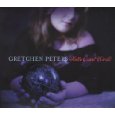
Album Review: Gretchen Peters – Hello Cruel World

31 Jan

Hello Cruel World: damaged goods make for a fine album of sanguine songs

Hello Cruel World: Gretchen Peters shows you the dark side - and how to survive it

What a trying year Gretchen Peters had in 2010. Worldly and personal challenges hurled themselves at her from every direction. Man-made disaster in the Gulf of Mexico devastated the shore around the Florida bolthole where she writes her songs. Her adopted hometown of Nashville was stricken by catastrophic floods. And one of her oldest friends committed suicide. On the bright side, she married her pianist Barry Walsh after a 20-year relationship; and her child revealed that he was transgender – a shared journey that she says she found inspiring and disorienting in equal parts.

Songwriters of lesser skill might have walked into all the melodramatic traps sprung by such a discomfiting and extended period of life experience, and turned them into a self-indulgent misery fest, shot through with the well-worn leitmotif of the stoic survivor. Not so Peters. “The grain of sand becomes the pearl,” she sings on the title track of her album Hello Cruel World, setting the scene for an unflinching but ultimately hopeful response to her recent ride on the Big Dipper of life.

There’s no hint of smiling bravely through the tears here. Instead, Peters’ lyrics roll with the punches as she picks her way through the wreckage of “Natural Disaster”, the sanguine home truths of “Dark Angel” and a meditation on the testing of faith, “Saint Francis”. Some tracks enter mesmerising art-song territory: the starkly beautiful “The Matador” with its heart-breaking accordion (courtesy of Peters’ husband Barry Walsh); and “Woman on the Wheel”, which takes an old fairground attraction as a metaphor for the listener’s insidious fears.

Peters further proves herself a past mistress in the art of darkness with the glorious “Five Minutes”, a country-tinged torch song that quietly shows how the lingering power of an eternal passion will always manage to disrupt the most mundane, workaday life. “Camille” follows in similar vein, its muted trumpet intro (from Vinnie Giesielski – Peters has surrounded herself with some serious musical talent) heralding a bleak tale of the other woman that is expertly wreathed in whisky vapours and midnight smoke. And “Idlewild” is a throat-catching child’s-eye vision of parental dislocation (and an interesting comparison with Mary Black’s recent take on a similar theme, “The Night Was Dark and Deep”).

It sounds like strong meat for a casual listen but Peters’ essential optimism and resilience mean that even in its bleakest moments, Hello Cruel World offers much more than a fix of suffering for those who tend to roam across shadier emotional plains. Redemption, a tad weary and accepting of the trials that have gone before, comes with the gentle “Little World”, which seizes gratefully on the familiar comforts of home.

This is Peters’ sixth solo album. And thanks to the gimlet-eyed take on life that informs her lyrics, a voice that sings the story straight, and arrangements that imbue the songs with a stark, poignant beauty, it’s an absorbing transformation of adversity into art.

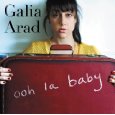
Album review: Galia Arad – Ooh La Baby

23 Jan

“Better Than Bonnie”: a song for the other woman, with a sneaky dash of Britney Spears

Ooh La Baby: Suzanne Vega meets Marianne Faithfull in the singular new talent of Galia Arad

Concept albums are springing up everywhere. Hot on the heels of Kate Bush’s extended meditation on the white stuff (50 Words for Snow), we have Ooh La Baby, the tale of a fractious love affair with a feckless Irishman told from the perspective of New York-based singer/songwriter Galia Arad.

The genre is where the similarity begins and ends. These two artists occupy completely different territory. But there is one moment – “Snowed in at Wheeler Street”, the duet with Elton John – when Bush’s otherwise largely existential take on the mysterious power of snow chimes with Arad’s earthy, melancholy exploration of the frustrations of an all-consuming passion. Ooh La Baby is a glittering stream of such moments, brought vividly to life in Arad’s wry lyrics and delivered with a voice of deceptive purity and innocence.

Arad is interesting company as she mines a rich seam of rock and roll, blues and folk influences and comes up with a highly individualistic formula of her own – mix the whimsical intensity of a Suzanne Vega with the occasional mordant observation from a Marianne Faithfull and you’ll arrive at something approaching the bittersweet musical spirit of this witty new voice.

One of the standout tracks is the upbeat song of the other woman, “Better than Bonnie”, with its triumphant sideways raid on Britney Spears’s signature song “Oops!… I Did it Again”. Equally good are the slow, gentle ballads like “You’re Always There”, the shuffling “Something Sweet” and the contemplative “Will I Be Loved (By You)”, which edges hesitantly into earshot on the tail of a moving fiddle solo (“Dad’s Intro”).

Moods shift in the blink of an eye, reflecting the emotional ebb and flow of the affair from high intensity to bleak disillusionment. Lyrical beauty is lascerated now and then by moments of Faithfull-esque rage and frustration – nowhere more acerbically than on “Don’t Go”, a prolonged sigh of exasperation and desire.

Less obviously engaging is the input of The Pogues’ Shane MacGowan (on the lilting “Four Leaf Lover Boy” and a foul-mouthed intro to the vicious slugfest “Full of Sh*t”), which is a pity because – perhaps a consequence of the recent annual blast of Christmas evergreen, “Fairy Tale of New York”, a poignant reminder of his glory days – I expected more than the trashed sound of his spoken vocals actually delivers.

The album is beautifully produced by Tommy Faragher, whose track record includes work with Dusty Springfield, Taylor Dayne and Al Green. He’s certainly given Galia Arad the space she and her guitar need to untangle this complex narrative. And there’s enough evidence here to herald the arrival of a compelling new talent.

Album Review: Mary Black – Stories From the Steeples

19 Jan

“Marguerite and the Gambler”: story-singing at its best

Stories from the Steeples: a masterpiece from Mary Black

What a fine singer Ireland’s Mary Black is. Unfussy, gimmick-free and capable of switching from confessional intimacy to assured declaration in the space of a phrase, she always puts the song’s story first. The effect can be breathtaking, catching out the listener with a vocal catch or a sung-through line that will break your heart or make you laugh out loud, depending on the lyric.

In years to come, Black’s new album Stories from the Steeples (her first new set since 2005) might well come to be seen as her masterpiece – and considering the quality of her work throughout the last quarter of a century, that would be some achievement. Few singers would have the ability to pull together such a disparate collection of songs – modern folk numbers, soft Celtic rock ballads and a delightful bonus track, the pastiche chanson “Fifi the Flea”- and weave them so effectively into the cohesive whole of this record, which ranges across a rugged emotional landscape, full of troughs and challenging heights.

The thrilling story-song “Marguerite and the Gambler”, the troubadour’s jaunty, evocative signature tune “Mountains to the Sea” (written by Shane Howard and Neil Murray, and featuring an unexpectedly sedate and subtle duet between Black and Imelda May), and the joyous, shambling “Walking With My Love” (on which Black is joined by Finbar Furey) provide the album’s top notes. But the listener is never lulled into a false sense of security. There are shades of darkness in many of Black’s interpretations: the bleak, calm-after-the-storm assessment of a relationship’s uncertain future (“Faith in Fate”); the searing anti-war song “All the Fine Young Men”; and the measured reassurance of “Steady Breathing”, a song written by Chris While to comfort his ill sister.

Janis Ian puts in a welcome appearance on “Lighthouse Light”, contributing guitar and vocals to a simple, foot-tapping meditation on distant threats and prayed-for safety.  “Wizard of Oz” is a touching summation of the longed-for qualities that provide the narrative of the much-loved children’s story, turning them into a mature exploration of the chasm between hope and realistic expectation. And “One True Place” makes a sweet case for some kind of afterlife.

For me, though, the standout track is “The Night Was Dark and Deep”, which evokes a universal experience of childhood that echoes into adulthood, with its lingering traces of vulnerability and the realisation that despite our parents’ best efforts to conceal trouble, an insight into their unhappiness is a rite of passage for everybody.

Black has produced the album with Billy Robinson and throughout, she has the support of a driving, vibrant band led by Bill Shanley and Pat Crowley. Stories From the Steeples is a majestic piece of work that yields new treasure with each listening.

Album Review: Judie Tzuke – One Tree Less

17 Jan

“If”: Judie Tzuke at Union Chapel in 2010 – still a voice to be reckoned with

Here’s a piece of advice for Adele, Jessie J, Emili Sandé and everybody else who is riding the crest of a huge wave of fascination with young female singers and songwriters in the UK: make the most of your hour in the sun. Because once you’ve hit middle age, you’ll find it virtually impossible to get any kind of coverage in the mainstream music press.

A flurry of New Year articles hailed 2012 as the year of rock’s illustrious old guys. Bowie, Elton John, Meatloaf, Ronnie Wood and Mick Fleetwood will all turn 65 in the next 12 months, pointed out The Independent. While in The Daily Telegraph, Neil McCormick hailed forthcoming new albums from Leonard Cohen (77) and Paul McCartney (69), Springsteen and the E Street Band, and rumours of 50th anniversary tours from the Rolling Stones and the Who.

The usually excellent McCormick’s crystal-ball piece did at least name check Florence and the Machine, La Roux and Lana del Rey – prime examples of contemporary young female talent, all. But the absence in any of these stories of any reference to mature women singers (Madonna aside) reveals once again the curious neglect of a significant category of talent that frequently blights the best broad music journalism. It’s as if the media suffers from an odd, sexist/ageist blind spot. Even The Guardian’s TV listing for New Year’s Eve fell into the trap, wondering vaguely what Sandie Shaw was doing in Jools Holland’s Later line-up, apparently ignorant of her well-received participation in his 2011 tour.

At least Shaw got a mention at all. Frankly, with the exception of Kate Bush (as left-field in her career management as in her approach to her music) and Annie Lennox (who is, in any case, more likely to garner column inches for her socio-political activism than her music these days), senior British female singers seem to become invisible to the press once they pass 40. Which means that a whole range of performers and recording artists – Eddi Reader, Elkie Brooks, Barbara Dickson, Mari Wilson, Barb Jungr and Mary Hopkin, to name but a handful – are now producing some of their finest work in their middle years, without the hope of a mainstream profile or review to remind people that they’re out there, no less creative than their male contemporaries and in many cases a great deal more active.

Let’s add Judie Tzuke to the list. Her new album, One Tree Less, is a beauty. Troubled, uneasy lyrics juxtapose natural references with smarting, visceral explorations of broken relationships, fractured trust and self-doubt. The arrangements are string-laden, echoing aural landscapes, liberally sprinkled with epic piano riffs and sparkling guitar sequences that draw you in, making the occasional sharp jab of the words all the more startling.

“Stay With Me Till Dawn”: Judie Tzuke’s slow-burning torch song is still a classy affair after all these years

Tzuke has been making records for 35 years. She had her first hit, the torchy, slow-burning ballad “Stay With Me Till Dawn”, in 1978, lifted from the album Welcome to the Cruise, while she was signed to Elton John’s Rocket label. From the start, there was an edginess beneath the ethereal voice and polished pop lyrics – a restlessness and an anxiety that hinted at more substantial themes. In the wake of its success, she was put in the same bracket as Kate Bush, simply by dint of being a new, happening female singer songwriter. Truly, the music industry’s marketing imagination has never known its own bounds.

A stellar future seemed assured as Tzuke became a much in-demand touring artist and released a series of acclaimed albums through the early 1980s (she moved from Rocket to Chrysalis in 1982). But like so many before her, she found herself buffeted by an industry that has never been great at promoting and sustaining singular female talent. Ricocheting from one record company to the next for the rest of the decade and into the 1990s with diminishing returns, and occasionally beset with management disagreements, she took time out to have her two daughters (the eldest, Bailey, is now a singer in her own right and contributes backing vocals on the new album) before returning to the fray with her own label – finally in complete charge of her own career (Elton John handed back the copyright on her first three albums in 1999).

These days, the voice has a pleasing mahogany-dark timbre that compliments Tzuke’s misty upper register. From the title track, the ominous and agitated “One Tree Less”, with its tentative discovery of hope, to brooding, thoughtful numbers like “The Other Side” and “Till It’s Over”, the album showcases the ripeness of her talents – and particularly her ability to suggest an inner life in which doubt and uncertainty are constantly preying shadows, without ever sounding trite or pretentious. In other words, she is still exploring the consequences of that first dawn.

“Joy” is a deeply personal take on a friendship interrupted by tragedy. “Humankind” favours a dramatic piano intro, leading into a bleak wonder across the face of the human condition. “The Other Side” bridges the divide between life-as-a-bitch and security – but as always, with Tzuke, that note of hesitation is left hanging in the air: “though I might be wrong…”

“I Can Wait” is an up tempo, guitar-driven ballad about the sudden discovery of passion, “A Moving Target” an urgent, self-directed plea for acceptance of the way things are.

More substantial themes, indeed. So yes, Judie Tzuke is very much alive and kicking – and apparently in her prime. And more people should know about it. She’s touring the UK throughout March – which sounds like a good opportunity to catch up with one of our foremost, lamentably unsung, female singer/songwriters.

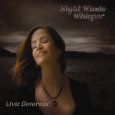
Album Review: Livia Devereux – Night Winds Whisper

24 Dec

Devereux sings “You’ve Changed” at the Metropolitan Room: no victim, she

Night Winds Whisper: Livia Devereux on audacious form

Fascinating beats and rhythms underscore Livia Devereux’s audacious perspective on some mighty standards on her album, Night Winds Whisper. And she pulls it off with verve and the backing of a band that is as tight as a drum. The leitmotif is jazz but here is a singer who is quite happy to stray across the boundaries into pop and blues; nothing seems to hold any fear for her.

From the opening track – an up tempo, on-the-nail version of “Walkin’ After Midnight”, which takes the song a million miles from Patsy Cline’s definitive and ominous vibrato-laden country classic and turns it into a defiant challenge – to a whipped-up “Come Rain or Come Shine”,  Devereux displays an unnerving command of a rich range of material. And with that nerve comes an assurance that many singers at the peak of their game would envy.

I can’t remember hearing another version of the great, urgent Bernsten/Sondheim ballad “Tonight” that threw away the rule book with such style and transformed it into a swinging celebration of romance and anticipation.

Devereux hits the mark on each of these taught, sharply arranged tracks with similar accuracy. And just when she’s turned your expectations on their head, she dims the spot and fires up the torch, assisted on several numbers by Jisoo Ok on the cello, who adds real depth to songs such as “Welcome to My Love” and “Never Let Me Go”.

“I Don’t Hurt Anymore” becomes a thrilling anthem of survival, although there are so many layers at work in Devereux’s interpretation that the ifs and maybes ripple beneath the waves, always threatening to break the surface. Those ripples finally erupt on “Never Let Me Go” and a sweeping version of “You’ve Changed”, which in Robin Petre’s arrangement starts by evoking Gershwin and rises to a resiliant, ‘I’ve had enough’ climax. Devereux does torch songs with aplomb, but also with attitude. No victim, she.

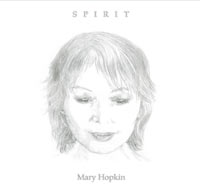
Album review – Mary Hopkin: Spirit

15 Dec

Mary Hopkin reminisces about her childhood in Pontardawe

Spirit: Mary Hopkin explores her early musical influences

If you’re in a contemplative mood and want to create a little corner of peace and tranquillity, you could do a lot worse than to light a few candles and give Mary Hopkin’s Spirit a spin. Reissued on her own label under the guidance of daughter Jessica Lee Morgan, this 1989 album offers an intimate and deeply personal insight into the early influences that coaxed Hopkin into her singing career. So intimate, in fact, that you occasionally feel that you are eavesdropping on private thoughts about her Welsh childhood.

That is the charm of Spirit. In a new note for the album, Hopkin states candidly, “No aspiration to classical accuracy here… just me and my memories.” So classical purists probably need proceed no further. But they’d really be missing the point if they started grumbling. Mary Hopkin is no pop star trying to be an opera star.

Her Introit and Kyrie from Fauré’s Requiem are honest, unfussy interpretations. “One Fine Day” from Madam Butterfly, sung in English, is a clear and touching narrative which eschews the potential for overblown drama and actually allows you to hear the thoughts of the tragic heroine – although there is one slightly tricky moment when the keyboards evoke a Hammond organ at its most tremulous. And there is an ethereal “Intermezzo” from Cavalleria Rusticana, which confirms the fact that Hopkin always had one of the sweetest voices of any popular female British singer. Mozart’s “Ave Verum-Corpus”, the sentimental parlour song “Sweet and Low” and a soaring “Ave Maria” evoke the childish innocence that must have informed those early performances at chapel or in the school choir.

Two composers’ takes on Pie Jesu are offered. Andrew Lloyd Webber’s – the only contemporary offering – recovers much of the dignity it has lost over the years at the hands of over-hyped juvenile stars, while Hopkin’s crystalline soprano weaves a moving threnody with Fauré’s version. But the highlight of the album is a delightful, folk-ish interpretation of “Jerusalem” that allows you to hear the beauty and strength of Blake’s words in a way that is the antithesis of the hearty tub-thumping treatment it usually receives.

Mary Hopkin lets the words come first

Following the success of her recent release, You Look Familiar, which was written and produced with son Morgan Visconti, Spirit is a touching reminder of the range and depth of Mary Hopkin’s singing talent. It’s great to see her back catalogue being made available while we look forward to the possibilities of new work.

Album Review: Lisa Kirchner – Something to Sing About

14 Dec

Rewarding and scintillating: Listen to three tracks from Something to Sing About

Something to Sing About: a cornucopia of musical genres under the art song umbrella

Tragedy, broken hearts, mortality and violence lie beneath the surface of Lisa Kirchner’s scintillating album, Something to Sing About, like bloodstained rocks. As her vocals spin and gyrate through a cycle of songs that draws on the work of the finest American composers, she covers the range of human experience from girlish hopefulness to world-weary heaviness, exposing these underlying dangers in startling moments of dissonance, shifts in meter and rhythm, and unsettling musical intervals. And all with a lightness of touch that belies the essential darkness of much of the material. These are lullabies with cruel truths at their heart.

Kirchner, the daughter of composer Leon and a doyenne of New York’s cabaret scene, has some pedigree. She has personal associations with many of the composers and songwriters represented in this rich collection, who include her father (“Lily” is one of the most poignant tracks), William Schimmel (who plays accordion on many of the numbers), Charles Ives, Wynton Marsalis, David Del Tredici and, of course, Aaron Copeland. As she explains in her excellent notes, Kirchner met Copeland when she was just eight. His music features large, culminating in a beautiful, gentle, jazz-infused take on his arrangement of “Long Time Ago”, which hangs shimmering in the air at the end of the album.

The result of this inspiring network of connections is a tapestry of musical genres brought together under the umbrella of the art song, revealing the scope of influences on quintessentially American composers whose work often reflects a European heritage in such innovative ways.

It’s impossible, for example, to escape the Brechtian cabaret nuances of Schimmel’s pastiche, “Suicide in C Minor” (the bleak tale of a gangster’s moll); or the chanson flavour of a Ned Rorem melody that provides the setting for Robert Hillyer’s poetic take on the romantic possibilities of Paris, “Early One Morning”. The chanson also informs Kirchner’s own composition, “Crazy Love, Crazy Heart”. Even Lewis Carroll gets a look-in. His ode to Alice Pleasance Liddell finds new life underpinned by Del Tredici’s dreamlike music in “Acrostic Song”. Kirchner herself has written many of the lyrics for the album, most notably for a new version of Paul Chihara’s theme to the Sidney Lumet film, Prince of the City – a gritty paean to betrayal.

Something to Sing About is an impressionistic experience, a sequence of constantly shifting musical tableaux that blur the edges and trace intriguing connections between urban 20th century America, smoky jazz bars, Medieval Europe, Shakespearian England (courtesy of two of Stanley Silverman’s Stratford Shakespeare Festival songs), and even burlesque and casinos. It’s an endlessly inventive proposition, delivered with a streak of humour that leavens the ever-present threats and terrors with quirky songs such as Samuel Barber’s “Under the Willow Tree” and William Bolcom’s “Night Make My Day” or a masterpiece of eccentricity, Silverman’s “Photograph Song”.

At the album’s heart lies Kirchner’s intense knowledge of her material, combined with an ability to render it accessible. While the listener needs to be on their mettle, they never feel part of an academic exercise. Her musicians include pianists Joel Fan and Xavier Davis, saxophonist Sherman Irby, guitarists Ron Jackson and Vicente Archer, bassist Dwayne Burno and drummer Willie Jones III. Between them, they create a warm, richly textured sound that cradles Kirchner’s voice as it veers from velvety reassurance to acerbic rasp. Rewarding and fascinating stuff.