Archive | Album Review RSS feed for this section

Box set review: Goin’ Back – the Definitive Dusty Springfield

13 Dec

Losing You: Dusty Springfield in her prime, with a typically big ballad
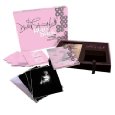
Goin' Back - The Definitive Dusty Springfield: expensive and comprehensive, with timeless hits

It’s nearly 13 years since Dusty Springfield died, yet hardly a day goes by without her voice cropping up somewhere. She’s frequently playing on the jukebox, providing a soundtrack for the latest instalment of sturm und drang in the Queen Vic or the Rover’s Return. Fittingly, she’ll often be followed by an Adele track.

It’s been a long wait but finally, in Adele, we have a British singer who is Springfield’s equal when it comes to a vocal capacity for conveying epic desolation and emotional complexity that will find and unpick the sub-text in the least promising lyrics. In a short space of time, she and the late Amy Winehouse established themselves as genuine successors to Springfield’s brand of soulful, palpable heartache, where others have flattered merely to deceive: torch singers for our times.

Goin’ Back: the definitive Dusty Springfield is a major 92-track compilation of the singer’s work and the first box set since The Legend of Dusty Springfield (released by Philips in 1994 on the back of a late flourish in her career, but with a portentously funereal design) and the posthumous, equally sombre Simply… Dusty (Mercury, 2000).

This time the theme is pink. Very pink. And the four CDs, which focus on the hits, the singer’s extensive legacy of live BBC recordings, a loosely-linked collection of film songs and show tunes, and the obligatory rarities (the most valuable part of the offering for die-hard Dusty fans), are joined by three DVDs of performances from a career that spanned more than 40 years.

The box set also includes Paul Howes’ book, The Complete Dusty Springfield, and a separate volume based on an essay by Springfield’s great friend and manager Vicki Wickham, with contributions from numerous pop and rock luminaries including Burt Bacharach and Carole King – the two songwriters whose work probably shaped the Springfield sound more than any others.

Howes, who has curated this collection, deserves special mention. His sterling work as editor of the Dusty Springfield Bulletin created a formidable archive of material and it is thanks to him that, over the years, many rare recordings have seen the light of day. The package feels comprehensive, authoritative and well produced by people who have taken their responsibility to a great artist very seriously. And with the exception of the Lana Sisters, every stage of Springfield’s career is represented, from the quintessential 1960s numbers to the soft rock of her final work (“Wherever Would I Be”, a duet with Daryl Hall) and her last recording, a short version of “Someone to Watch Over Me” which graced a television commercial and is a poignant reminder that when she chose to indulge them, she had a jazz singer’s instincts for interpreting the standards – another parallel with Amy Winehouse.

That said, it’s a mightily sumptuous and expensive set, clearly targeted at aficionados rather than the idly curious or the Dusty Springfield novice. And the trouble with any substantial compilation is the ratio of ‘new’ material to the old and familiar. Without the hits, it would hardly be definitive, but it’s difficult to imagine that any Dusty fan of substance won’t already have stacks of them in abundance. In producer Tris Penna’s remixes of “Goin’ Back” and “The Look of Love” (he returned to the original master tapes), there is a laudable attempt to bring something fresh to the table. But ultimately, these spacey, ambient versions lack the booming, lush sound that constituted so much of Dusty’s appeal.

Which really leaves the rest of the rarities as the most compelling attraction. And this is a mixed bag of alternate takes, obscure ballads (including the delightful “Summer Love” and an aching “Goodbye”) and some intriguing live performances that date back to the Springfields’ heyday – most of which sound as if they were grabbed by someone holding an unsteady mic with a noisy old reel-to-reel recorder under the table in a nightclub. You certainly get the atmosphere but when you’ve heard them once, you probably won’t be keeping them on shuffle. The hits, however, are ageless.


Album Review: Anita Skorgan – Adventus (Special Edition)

15 Nov

Is it True? The song that captured the hearts of Radio 2 listeners

Adventus: a Christmas album that evokes and provokes

“Christmas has started,” said Anita Skorgan before launching into a chilled, jazz-inflected version of “Silent Night” which achieved the near-impossible feat of giving you the feeling that you were hearing that familiar carol for the first time. It was the last number of a short set intended to showcase the UK release of a special edition of her recent album, Adventus, delivered in the opulent surroundings of the palm court at the Langham Hotel.

Skorgan’s surprised delight at the growing British interest in her work was as charming as her songs – contemplative, searching threnodies with a non-evangelistic spiritual accent that is a rare antidote to the annual rash of festive standards already descending on us.

It would be patronising to call this Skorgan’s breakthrough when has been a major star in her native Norway for more than 30 years. Yet there’s something very touching and satisfying about a successful, mature artist finding deserved but unexpected acclaim beyond their established market. And for that, she has to thank BBC broadcaster Jeremy Vine, who introduced Skorgan’s showcase and has been playing her songs for a couple of years – and listeners of his Radio 2 lunchtime show, who heard something profoundly appealing in her pure soprano and gentle melodies and wanted to know more about her. That powerful connection was crystallised in the wake of last summer’s atrocities in Oslo and Utøya, when Skorgan sang live on the show, her clear, soaring voice epitomising the dignified grief of her nation.

The Eurovision years: Anita Skorgan sings “Oliver” in Jerusalem, 1979

Anita Skorgan: voice of a nation

In fact, Anita Skorgan is no stranger to international audiences. But in helping to bring her to wider attention, Vine has succeeded where several high-profile Eurovision appearances failed. Readers whose memories stretch back to the late 1970s might recall her stalwart efforts for Norway, which included the excellent “Oliver” in 1979, a duet with her former husband Jahn Teigen and in 1988, songwriting credits for Karoline Krüger’s fifth-placed “For Vår Jord”.

Adventus is actually an updated and largely anglicised version of Julenatt, a 1994 album that sowed the seeds of Skorgan’s hugely popular – and groundbreaking for a pop singer – seasonal tours of traditionally sober Norwegian churches. The first track on the album – the poignant “Is it True” – is the song that captured the hearts of Jeremy Vine’s listeners, and the way she delivered it to an enraptured showcase audience showed exactly why this thoughtful, questioning and deeply personal exploration of hope struck such a chord.

Equally absorbing, “The Miracle in Me” was another performance highlight. With lyrics from the pen of Skorgan’s regular song-writing partner Kari Iveland, it interprets the story of Christ’s birth from Mary’s point of view without a hint of evangelising. Like “Peace”, in which faith bursts from uncertainty with a glorious burst of the saxophone from Tore Brunborg,  and “Come With Me”, these songs are thematic rather than specifically religious.

There are a handful of traditional numbers, including a Norwegian version of “Mary’s Boy Child”, plus Lloyd Webber’s “Pie Jesu”, “Den Fattige Gud” (on which Skorgan is joined by rousing Salvation Army horn orchestra, and the sweet folk song “Et Lite Barn”, all delivered with a vocal clarity thrillingly free of artifice or schmaltz. There’s also a homage to her hero, Johan Sebastian Bach, whose first Prelude she references on “Kyrie Eleison”.

Skorgan’s voice has a beguiling honesty and underlying nordic melancholy. Rather than imposing a particular narrative, she invites you to explore a thought or a feeling with her. The result is an album that is evocative and subtly provocative. Light the candles. Christmas has started indeed.

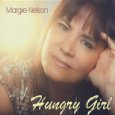
Album review – Margie Nelson: Hungry Girl

9 Oct

“Lost Mind” isn’t on the album but this live performance shows a fine jazz singer at work

Hungry Girl: time for Margie Nelson to set her sights further afield

There’s a lot of competition out there when it comes to albums based on the American standards. But still they keep on coming, filling your CD shelves and playlists until you’re awash in a hundred interpretations of “Fly Me to the Moon” or “Cry Me a River”. Some of them are very good, of course. But every so often, one turns up and delivers something so fresh and scintillating that it knocks everything else off the player. Hungry Girl from Californian Margie Nelson, a self-styled ‘late bloomer’ has just that effect.

Where has she been hiding, this mistress of deft phrasing, with her ear for the sardonic underbelly of a lyric, and her ability to balance comedy with moments of unadorned melancholy? In and around Santa Barbara for the last 15 years, according to her biographical notes, paying her dues in showcases, workshops and jazz clubs. It’s high time she started to set her sights further afield, because vocalists with this kind of talent deserve a much wider audience.

Hungry Girl should help. For a start, it contains by far and away the best version – with all due respect to Ms Streisand – I’ve ever heard of the Johnny Mandel/Alan and Marilyn Bergman classic “Where do you Start?” All sense of melodrama is banished. Nelson picks her way with arresting honesty through the bittersweet break-up lyrics, unravelling the bleakness as they shift from helpless uncertainty to self-realisation, ultimately finding a nugget of comfort in acknowledging the eternal hold of the departing lover. It becomes an epic tale, told with unflinching clarity. She’s great with a couple of other torch numbers – a lilting “If You Never Come to Me” and a late-night, bluesy “Don’t Go to Strangers” both stand out – revealing the intuitive gift of the best narrative singers.

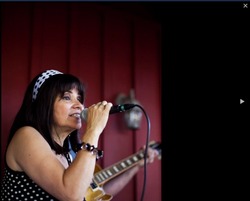
Margie Nelson sings with the Montecito Jazz Project at the Environmental Defense Center's "TGIF" Benefit in Santa Barbara

There’s a dash of Julie Wilson’s artful story-telling (“I Love the Way You’re Breaking My Heart”) and Julie London’s laconic irony (“An Occasional Man”), as well as hints of the phrasing of the great jazz singers – Anita O’Day (Nelson’s heroine), Carmen McRae (listen to Nelson swing on “How Come?”) and Rosemary Clooney. In a nod to the technique of such illustrious forebears, when she declares “I Need Ya (Like I Need a Hole in the Head)”, not a single word of those acerbic-yet-resigned lyrics is wasted. But whatever her influences, Nelson is very much her own mistress – assured, putting a relaxed, timeless spin on such standards as “I Can’t Believe That You’re in Love With Me”, a swerving, slowed-down “The Best is Yet to Come” and a nicely contemporary “Be Cool”, as well her irresistible and articulate take on the title track.

She is greatly assisted by a top-flight band that includes her producer, drummer Kevin Winard, Christian Jacob and Quinn Johnson sharing keyboard duties, Kevin Axt on bass, saxophonist Matt Catingub and guitarist Stephen Geyer. The arrangements simply swing out from the speakers.

Album Reviews – Barb Jungr: Man in the Long Black Coat; Durga Rising

3 Oct

It Ain’t Me Babe: the camerawork might be shaky but here’s a real sense of Barb Jungr’s compelling technique

The Man in the Long Black Coat: Barb Jungr gets closer than ever to Bob Dylan's lyrics

There are three elders at the top of the tree when it comes to British female singers who have an instinctive ability to tell the whole story in a song: Norma Waterson, June Tabor and Barb Jungr. Forget any ungallant connotations. I use the word simply to connote wisdom and an almost forensic approach to their craft. If Waterson is the benevolent earth mother, Tabor is the cool, all-seeing and often bleak eye at the centre of life’s storm. Jungr, on the other hand, hurls herself into the maelstrom, seeking the key to the most visceral experiences in the songs and chansons of the great modern songwriters and rendering them into compelling dramas for the listener.

This summer saw the simultaneous release of two albums from Jungr. Strictly speaking, neither is actually ‘new’. Man in the Long Black Coat is a compilation of Bob Dylan recordings made since her groundbreaking 2002 set, Every Grain of Sand, with the bonus of four additional songs laid down in the studio at the start of this year. Durga Rising is the reissue of her 1997 collaboration with renowned Asian music producer Kuljit Bhamra and Jungr’s late, and much-missed, accompanist Russell Churney. Between them, these very different pieces of work showcase an unstinting commitment to innovation and exploration that runs like seams of resilient, glistening black jet through her finest interpretations. Why this important British singer is still waiting to make an appearance on Later… with Jools Holland is a mystery.

Some people have hailed Man in the Long Black Coat as Jungr’s best album yet. And there is certainly a holistic feel to the album; much of this possibly comes from the sense of a ‘journey’, in which Jungr is getting closer and closer to crystallising exactly what Dylan’s lyrics mean to her. In doing so, she becomes increasingly agile with the possibilities and nuances that they offer.

The four most recent tracks – the title track with its ominous, funereal bell, “It Ain’t Me Babe”, the bitter, ironic “With God on Our Side”, and the sublime “Sara” – were all arranged and recorded with pianist Jenny Carr. They reveal a singer at her peak, brimming with confidence in the material. Dylan purists will no doubt perceive liberties being taken. Let them get on with it. There’s an audacity and boldness about these reinvented classics that is rooted in Jungr’s sense of freedom in the world she discovers through them.

From the up tempo “The Times They Are A-Changin’” to the reggae beat of “Just Like a Woman”, a spacey treatment of “Like a Rolling Stone” and the bluesy “High Water”, Jungr pursues the truth in the lyrics with a spirit of adventure and a musicality that is always intriguing. Who else could dream of giving “Blind Willie McTell” the feel of a chanson and make it work with such flair?

Durga Rising: pain and darkness with splashes of dizzying happiness

“Willie McTell” also turns up in a different, more subdued version on Durga Rising. This album, sub-titled ‘An Indo-Jazz Adventure’ is a cornucopia of human experience; bhangra beats meet midnight soul. Jungr and Bhamra have taken it on the road recently, now with exemplary pianist Simon Wallace, to great acclaim.

Jungr’s natural territory is pain and darkness, but she can also spin tails of dizzying happiness. Both extremes are here in a collection of almost entirely self-penned lyrics (Dylan aside), and the music of Bhamra, Churney and her old partner-in-song Michael Parker.

Jungr, Bhamra and Wallace talk Durga Rising on the road

Bhamra’s percussion is ethereal and fleet-fingered, working with Jungr’s vocals in contrapuntal sequences that shimmer with energy. When things get dark, they get really dark. “How Could I Ever”, “Tears in a Bottle” and the lascerating, end-of-the-affair piece of advice, “Choose to be Alone”, offer delicious degrees of cynicism. So do the apocalyptic overtones of “Crimes Against Nature”. But there are plenty of lighter textures in the music, and the exhilarating, life affirming romance of “Bombay Dreaming” – a latin-ish, retro dance hall number – is balm for the most jaded spirit.

Album review: Jo Birchall – Something to Say

22 Sep
 
Wonderful: Jo Birchall delivers a late blast of summer
 

Something to Say: Jo Birchall firmly in the driving seat

Here’s a late blast of summer. A collection of bright, guitar-driven pop songs – self-penned, with a handful of faithful covers thrown in – from London-based Liverpudlian Jo Birchall.

A veteran of the first series of Pop Idol, Birchall is blessed with a fine, confident voice and a well-stocked songwriter’s tool chest. Signed to Gary Barlow’s production company in the wake of Pop Idol exposure, she made an album for Decca, which was promptly shelved when the record company restructured. Meanwhile, Barlow, who continued to be a champion of her work, became preoccupied with the revival of Take That, and Birchall’s career was interrupted by family illness and personal loss.

But if the last five years have been a bit of a roller-coaster, she’s very much back in the ascendant following Barlow’s advice to get into the driving seat. Something to Say is a polished production, and Birchall was particularly impressive when she launched the album at a showcase in July.

On a humid evening in the oak-panelled cavern upstairs at Kettners, packed with seasoned music hacks and industry insiders, she commanded the room impressively with a brisk set that easily kept the wailing Soho police sirens at bay: no mean achievement.

Birchall excels at the Nashville-tinged ballad. “All About Love”, “Wonderful” and the title track, “Something to Say”, are well-constructed, radio-friendly earworms with upbeat lyrics. But in true country-influenced tradition, there’s also an underlying melancholy and a more than a hint of bitter experience in some of the low-key numbers, particularly the standout track, “Unanswered”, with its aching, Dusty-style piano.

“Unanswered” unplugged

The covers, which include “I Don’t Want to Talk About It” and Olivia Newton-John’s “I Honestly Love You”, are fine, straight-down-the-middle interpretations. But on the evidence of the rest of the album, Birchall doesn’t really need to bulk out her own song-writing talents with other people’s old crowd-pleasers.

CD Review – Tracie Bennett Sings Judy: Songs from End of the Rainbow and Other Garland Classics

20 Jun

After a short interview, Tracie Bennett sings “Just in Time” on the Paul O’Grady Show

Tracie Bennett Sings Judy: never a mere impersonation

She might have missed out on an Olivier Award – and surely it was by the narrowest of margins – for her performance as Judy Garland in End of the Rainbow, but Tracie Bennett’s insightful and committed interpretation of the role will be her calling card for years to come.

Her six-month sell-out season at the Whitehall Studios will soon be followed by a UK tour and then, early in 2012, a US run in Minneapolis – on the doorstep of Garland’s birthplace in Grand Rapids – with Broadway the ultimate goal.

In truth, it’s Bennett’s Garland, rather than the play itself, which has generated this momentum. Her Judy, plummeting headlong into an emotional vortex, repels and compels in equal measure, a fascinating study of a legend in rapid decline. And then there are the songs, each embodying in some way the unique spell that Garland held over her audience, even when it was tainted by the lurid voyeurism that too often featured in her late performances.

In the role, Bennett’s portrayal of the Garland concert persona – the twitches, the hair tugging, the restless strutting, that flicking of the microphone lead – is an extraordinary dramatic feat. And her vocal performance, an uncannily accurate blend of Garland’s trademark tics, the on-the-edge tremolo and smudged consonants, goes way beyond mere impersonation.

All of which makes the cast album – for that’s what Tracie Bennett Sings Judy: Songs From End of the Rainbow and Other Garland Classics essentially is – an interesting prospect: are we listening to Tracie or Judy?

Bennett obviously has serious vocal gifts of her own, but they are necessarily subjugated to the role in a way that doesn’t usually impact so specifically on a leading lady’s singing performance. Without its dramatic context, it would have been all too easy for the album to dwindle into mimicry, serving neither the artist nor her subject.

Happily, this is never the case. Co-producers Chris Egan and Gareth Valentine have lovingly created an authentic, contemporary, brassy sound that supports Bennett’s throaty timbre – the key to her approximation of the Garland voice – and allows her to showcase the essential emotional highpoints of “Somewhere Over the Rainbow” and “The Man That Got Away” without ever tipping into parody or sound-alike karaoke.

The handful of songs from the show are joined by a selection from the legendary Carnegie Hall concert – the reference for many of Egan’s arrangements – and the title song from Garland’s last film, I Could Go On Singing. There are also cracking versions of “When the Sun Comes Out”, “Come Rain or Come Shine” and Chaplin’s evergreen, “Smile”.

At times, the similarity with the real thing is breath taking. Bennett is ever respectful of the legend. But there are also occasional moments when she takes off on a little riff – or in “The Trolley Song”, a chuckle – that reminds you this is a dramatic interpretation rather than an imitation.

Album Review: Miriam Waks – Waksing Lyrical

10 May

O gente da minha terra: Miriam Waks in fadista mode

Waksing Lyrical is an elegant, sophisticated debut album from Sydney’s Miriam Waks. Light jazz inflections mingle in an intimate, lounge-inspired atmosphere as she tours an eclectic  set of standards, chansons and a couple of quaint, unexpected choices.

Why Suffer: Miriam Waks collaborates with Coptic Soldier

There’s no doubt Waks can deliver a genuinely contemporary sound when she has to. Check out her collaboration with Coptic Soldier on “Why Suffer” for evidence. So when I say that in some ways, the overall effect of Waksing Lyrical is disarmingly old-fashioned, I mean it in the most complimentary way: her diction is perfect, regardless of the language she’s singing in (and her linguistic skills are nicely showcased). You get every word, which is rare in an age of overwhelming production values. And there is an air of traditional, pared-back simplicity about the whole project that is utterly refreshing.

Kerrie Biddell has done a discreet job on the mixing desk, leaving plenty of air around Waks and her accomplished trio – pianist Michael Bartolemi, Ben Waples on double bass and drummer James Waples (they’re joined by her uncle, Nathan, on cello for “La Vie en Rose”).

Waksing Lyrical: an elegant debut for the Sydney singer

Waks has a lilting soprano voice that really tugs the heartstrings on the ballads. But she also throws in some earthy grit and nuanced comedy on more lived-in numbers like “Peel me a Grape”, “Black Coffee”, “Hard-Hearted Hannah” and the suitably torchy “I Keep Going Back to Joe’s”, phrasing with confidence and clarity. She attacks “There’s Gotta be Something Better Than This” with restrained bravado.

The Portuguese and Spanish numbers – “Chega de Saudade” and “Veinte Años”, in particular throb with dignified emotion, and she has a sweet, wistful approach to “La Vie en Rose”. Further proof of her stylistic range is provided by the Sephardic song, “Si Veriash”, on which she reveals real vocal ease and flexibility.

As I’m writing this Eurovision 2011 is fast approaching, so the presence of “Al di La” rates a special mention. Although Betty Curtis failed to win the 1961 contest for Italy with this stately, sentimental ballad, it became a signature song for Connie Francis. Dated it might be but here, dusted off and polished up by Waks, it gleams afresh, full of yearning and regret for what might have been.

Al di La: Betty Curtis sings at the Eurovision Song Contest in 1961

Album Review: Cæcilie Norby – Arabesque

10 May

The Dead Princess: Cæcilie Norby’s haunting take on Ravel

Arabesque: contemplative and modern treatments of classic melodies, with astringent lyrics

Arabesque is an edgy, moody collection of songs to thrill the musical iconoclast. Classical purists might run for the hills but Danish jazz singer Cæcilie Norby has come up with some extraordinary settings that shed new light on familiar melodies by Rimsky Korsakov, Satie and Debussy, boldly applying her own astringent lyrical interpretations of the stories behind them.

The result is an impressionistic aural feast, punctuated by a burst of funky swing (“Bei mir bist du schoen”), a couple of Michel Legrand tracks and an inspirational take on Abbey Lincoln’s “Wholly Earth”. In short, Norby, who has been a pioneer of modern Nordic music, straddling the choppy territory between jazz and pop with her refusal to be categorised, has sharpened her maverick credentials and come up with an audacious concept. Just when you think you’ve pinned it down, the musical influence on each track shifts into new territory.

“The Dead Princess” takes Ravel’s haunting theme and turns it into an exploration of the character of the composer’s benefactress, Princess Winnaretta de Polignac. His “Pavane”, so evocative in any setting, is transformed into a brooding meditation on the power of music to arouse memories and sensations.

Norby isn’t the first musician tempted to take liberties with Rimsky Korsakov’s “Scheherazade” – prog rock band Renaissance built an entire album around it in the 1970s – but she treats it with great respect, her Arabian Nights-inspired lyrics swirling among the excellent accompaniment of musicians including pianist Katrine Gislinge, co-producer Lars Danielsson (on bass, cello and organ).

The percussion of Anders Engen and Xavier Devandre-Navarre is a crucial ingredient of Arabesque, fluid and driven, providing a great counterpoint to the fascinating texture of Norby’s voice. There is more than a hint of Berlin cabaret in her timbre – at times, comparisons with Ute Lemper are valid – but her phrasing is always contemplative and modern. Norby is more about the inner monologue than playing to the gallery.

Other highlights include “The Tears of Billie Blue”, a shimmering interpretation of Debussy’s “Claire de Lune”, and “No Air”, which turns Satie’s Gymnopédie into sultry, delicate soliloquy. There is also a Danish version of Legrand’s “Windmills of Your Mind” (“Hvirvelvinden”) and a bonus track, “How Oft”, a tribute to the singer’s father, Erik, who composed it. An absorbing landscape of an album.

CD Review: Cynthia Felton – Come Sunday: The Music of Duke Ellington

13 Apr

Cynthia Felton in a sentimental mood: assured torch-singing

Come Sunday: Dr Cynthia Felton's new twist on some Ellington favourites

If you like velvety, elegant jazz, Cynthia Felton’s Come Sunday: The Music of Duke Ellington will be music to your ears. This is emphatically not just another Ellington tribute.

Felton’s trademark is a contemporary R&B accent which gives these familiar and enduring numbers a refreshing new twist. And with a stellar line-up of accompanists including Patrice Rushen, Donald Brown and John Beasley on the piano, and drummers Terri Lynne Carrington and Jeff Tain Watts, it’s a classy piece of work.

Felton, who has a formidable academic pedigree and is artistic director of the Ethnomusicology Library of American Heritage, has produced the album herself with serene assurance. From the start, she shows she means business. A fast and furious “It Don’t Mean a Thing” introduces the accomplished scatting that later graces an easy, fluid take on “Perdido” and, of course, “Take the A Train”.

The first part of the album is all about celebrating the singer as an integral part of the band – another instrument rather than the voice out front. A swirling “Caravan” nods respectfully to the classic Lambert, Hendricks and Ross version but ultimately ploughs a new furrow as Felton kicks against the melody with her own off-beat, contrapuntal line. And with the title track half way through the set, she introduces a gospel influence that is yet another facet of her eclectic musical range.

To be honest, though, my own taste is more inclined to some of the later, midnight-flavoured tracks in which Felton gives herself the space and a lingering tempo to explore the lyrics.

Blessed with a voice of nearly four octaves, she proves herself a sultry torch-singer of considerable merit, with the assistance of Wallace Roney’s moaning trumpet on “I Got it Bad”, and a molten “Sophisticated Lady” that reveals the song’s broken but still beating heart. The last number, “Prelude to a Kiss”, is lifted by Carol Robbins’s harp, endowing it with that slightly melancholy last-dance feeling. Highly recommended.

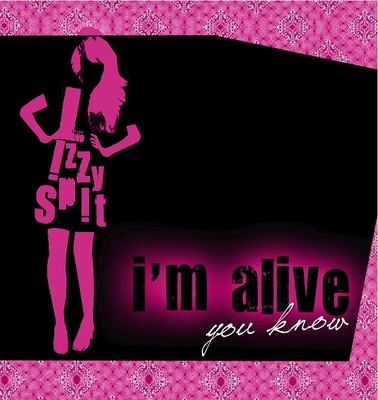
CD Review: Lizzyspit – I’m Alive You Know

13 Apr

Lizzyspit sings “I Worry, I Wait” at the Troubadour in London, where several tracks from her new EP were recorded live

I'm Alive You Know: a voice of Skin-like intensity

London singer/songwriter Lizzyspit’s new 7-track EP I’m Alive You Know is a step up from her well-received first album Egg Box. There’s an assurance about her voice, always of considerable emotional substance, which imparts real urgency to lyrics that range from gentle introspection to flashes of anger without straying in to pretentious territory.

These unplugged songs are snapshots of moments lived and stored, captured in a web of spare, acoustic arrangements, and articulated with a Skin-like intensity that insists you listen to the words.

Lizzyspit (also known as Elizabeth Knights-Ward), 25, has been steadily attracting attention since Radio 2 stalwarts Janice Long and Steve Lamacq gave her some all-important airplay. Long described “Stars in the Water” (the third track on this EP) as “absolutely beautiful” and indeed it is: a delicate and ethereal chant of simple images.

The other standout tracks are the single, “Talk You Down” – a sharp, articulate tale of self preservation, and “Only a Matter of Time”, part cry for help, part reassurance that help will come.

“Little Dan” with its quirky, loping whistled intro, is a touching tribute to individuality, while “Trip” explores the frustratingly enduring remnants of a relationship that’s left its mark. “I Worry, I Wait” is a frank, unsparing account of 21st century neurosis that will echo with anyone afflicted by doubt and uncertainty.

While her first album was self-produced in her bedroom – she made a sound booth out of egg boxes – most of these tracks were recorded in London at the Troubadour, giving a strong sense of Lizzyspit’s strengths as a live performer.

Her voice, with its underlying vibrancy and resonance, is a compelling instrument that sets her apart from the current mainstream of young female singer/songwriters. It’s well served here by her spare guitar accompaniment, but I bet she can equally well let fly with a band and some harder beats behind her.