Helena Blackman sings “If I Loved You” live at The Kings Theatre, Portsmouth
Helena Blackman: pretty in pink and commanding of voice
Helena Blackman might have been the runner-up in the BBC’s 2005 quest to find a Maria for Andrew Lloyd Webber’s revival of The Sound of Music. But as her debut album, The Sound of Rodgers & Hammerstein, reveals, she was never going to settle for perennial bridesmaid status.
The diversity of Blackman’s CV since her television talent show days is telling, and suggests that coming first is far from everything. Connie Fisher was such a quintessential Maria that she was the only possible winner – and consequently seems destined to play the role on the road forever. Similarly, it’s hard to see I’d Do Anything winner Jodie Prenger playing anything other than variations on her hearty Nancy, while runner-up Jessie Buckley has, like Blackman, developed a potentially stellar career as a singer and actor based on the breadth and variety of her talents.
That said, I must confess that I approached The Sound of Rodgers & Hammerstein with somewhat muted enthusiasm, simply because there are more than half a century’s worth of similar anthologies out there. Do we really need another one?
Well yes, it turns out that we do. Blackman’s producers, Neil Eckersley and Paul Spicer, and conductor Mike Dixon, have treated her to a substantial orchestra – much bigger than you’ll find in the average West End pit today. And yet the playing of Richard Rodgers’ soaring melodies is so restrained and sympathetic that the songs emerge as chamber pieces, clear and nuanced, with Blackman in commanding form as she traces their underlying emotional content with obvious pleasure, as if she’s discovering treasure in each line.
With a pure soprano voice that would easily straddle the divide between operetta and musical theatre, she’s something of a throwback to a golden age of pre-pop performers who knew all about lyrical interpretation and melodic lines.
At the same time, and supported here by some sharp, pared down arrangements, she’s quite capable of giving a refreshing twist to familiar material without resorting to contemporary vocal gimmicks. “What’s the Use of Wondrin’?” becomes an unexpectedly modern, gentle piece of introspection, for example, and the wistful “Love Look Away” is beautifully reinvented as a stately ballad, delivered with controlled power.
If the track list contains no real surprises, the real delight is to hear Hammerstein’s words and phrases delivered with such crystal eloquence. There are duets with Jonathan Ansell (“I Have Dreamed”) and Daniel Boys (a profoundly romantic “People Will Say We’re in Love”). The album is book-ended by numbers from The Sound of Music,“I Have Confidence” and that ripe, wise old anthem, “Climb Every Mountain” – perhaps not an obvious choice for a singer whose voice rings with youthful clarity but it’s an unbeatable show stopper to end on and Blackman proves herself more than equal to the task.
In between, other highlights include characterful stalwarts like “I’m Gonna Wash That Man Right Out of my Hair”, “Some Enchanted Evening” and a splendid “The Gentleman is a Dope”.
Tea for Two: an up tempo number from Clare Teal shows her vocal prowess but as Hey Ho shows, she can slow it down to great effect
Hey Ho: celebrates the glorious diversity of British song writing and is one of Teal's best albums to date
For a no-nonsense, hearty Yorkshire lass, Clare Teal has the uncanny knack of triggering all kinds of unexpected emotions as she peals back the layers of even the hoariest old chestnut. At least twice as I put her jauntily titled new album Hey Ho through its first couple of spins, I realised my tear ducts had responded instinctively to the uncluttered honesty she brings to a ballad, as she cuts through the basic sentimentality of the lyrics and catches you unaware with something fresh and current.
And while there is plenty of up tempo fun to be had here, not least in the Latin beats of Teal’s take on “It’s Not Unusual” – a radical makeover for Tom Jones’s signature song – and “Sing it Back”, or a sultry, laid-back “Feeling Good”, it is her treatment of the ballads that lingers longest in the mind, provocative and challenging.
Hey Ho has been conceived and compiled thoughtfully, with a dash of inspirational boldness, to celebrate great British song writing, dusting the numbers with the lightest of jazz touches in the process. How Noel Coward or Ivor Novello, let alone W. B. Yeats (present courtesy of Herbert Hughes’ setting of his poem, “Down by the Sally Gardens”) would have felt rubbing shoulders with Annie Lennox, Snow Patrol or Moloko is anybody’s guess. All that matters is that here, Teal and her collaborators have identified the common threads that run through some of their most lovedsongs and come up with a musical tapestry that does them all proud.
A lilting and poignant version of Coward’s “If Love Were All” opens proceedings, touching in its exploration of some basic human truths and the reduction of the entertainer’s art to a simple talent to amuse. Time and again, Teal returns to similar introspection and commentary as she tackles “Why” with a softness that makes for a fascinating contrast with the basilisk coldness of Lennox’s original, and “Chasing Cars” with an intimacy that finds startling simplicity at the heart of Snow Patrol’s anthem. “Try a Little Tenderness” and Cleo Laine’s “He Was Beautiful” are achingly sad and dazzling in their clarity.
But for me – and the cause of my misty eyes – the vocal fluency of “A Nightingale Sang in Berkeley Square” and the final track, “We’ll Gather Lilacs”, sum up what this album is all about. There is nothing halting or reticent about Teal’s delivery on these gentle, restrained tracks; just the assuredness of a singer at the peak of her powers. When she opens up her throat, the warmth of her timbre is like the sun coming out. And to make Novello’s lilacs sound completely relevant and immediate in 2011 is a triumph. With only a piano for accompaniment, she makes the song glow with meaning.
Credit must also go to pianist Grant Windsor for his production and musical arrangements, and to Teal’s musicians who include guitarist Femi Temowo and, on “Love is The Sweetest Thing”, stellar saxophonist Pee Wee Ellis.
Teal wears her talent with the down-to-earth characteristics of her home county. She once told me in an interview that she was finding her success “Mad as cheese”. With an album of this quality to add to her already distinguished resumé, those flavours should be ripening very nicely by now. Hey Ho is one of her best yet.
And I Love Him: D’Amico in the studio, showing off her risky phrasing
Tamela D’Amico is no mere canary or foil for the big band. She has one of those voices that doesn’t sidle shyly up and ask respectfully for your attention. It swoops in and insists that you listen. One minute it’s powerful and keening. The next it’s intimate and conversational, in half-past midnight mode, cards on the table time.
Got a Little Story: the work of a formidable song stylist
Her debut album Got A Little Story is a swinging, fluid collection of standards, punctuated with a bit of Lennon and McCartney, Harry Connick, Jr. and Ann Hampton Callaway – the latter cited by D’Amico in her thank-you notes and clearly a modern inspiration to match the greats of yesteryear who also get a mention.
The whole production exudes a sumptuous glamour thanks to a sizeable orchestra of top-flight instrumentalists – one or two are given solos – which, under Chris Walden’s baton, cradles D’Amico’s multiple vocal shades in soothing strings, appropriately brassy horns and the subtle, easy touch of Jim Cox on the piano.
She proves herself a formidable song stylist. Every word is audible, a rarity for a singer who lives so much in the upper register. And she is risky to the point of audacity in her phrasing. Imagine Billie Holiday singing “And I Love Him” and you’ll get the idea. D’Amico combines the instincts and hard-earned musical sensibilities of her heroines with a touch of Broadway verve and a contemporary technique in such a way that you never feel you’re being treated to just another nostalgia trip.
She may not share Peggy Lee’s small, husky vibrato – D’Amico’s voice is an altogether different instrument – but she pays homage to another big influence with a swinging, unfussy “He’s a Tramp”, letting the lyrics lead the way. Other up tempo numbers like “The Gentleman is a Dope” and the Gershwins’ “They All Laughed” zing with vitality, while Arlen and Mercer’s “One for My Baby” and “When October Goes” (Mercer again, this time with Barry Manilow) are layered with resignation and a restrained hint of melancholy. Likewise, a swirling, jazzy take on Callaway’s “Perfect”, which brings the album to a poignant close like a wistful sigh.
Not on this album but also worth a listen is D’Amico’s most recent recording of “Down With Love”.
Jessica Lee Morgan: “Your Girl” – mixed by Morgan Visconti
I Am Not: don't be fooled by the sweetness and light - it isn't always what it seems
“My mamma always said, ‘Keep your powder dry’,” sings Jessica Lee Morgan in “I Wanna Be Famous”, one of the standout tracks on her debut album, I Am Not. And she pretty much did as she was told for years. Which makes sense, considering mamma is Mary Hopkin, that fine singer with a healthy contempt for the more fatuous aspects of the music industry, whose advice would probably be worth its weight in gold to any young woman who thinks X Factor is the fast track to success.
As things turn out, it’s rather a pity Jessica kept us waiting to appreciate her vocal and song-writing talents for such a long time. As she explains on her web site, despite growing up steeped in music (dad is the legendary producer Tony Visconti) and writing her own songs since she was four, she spent the first part of her life rebelling – ultimately to no avail – against following in the parental footsteps. So this record has been a very long time in the gestation. And it’s full of good stuff that marks her out as an idiosyncratic force, capable of drawing on decades of musical influences to create songs that veer from plangent folk to the insistent beats of state-of-the-art electronica – exemplified by two contrasting versions of the tender “Your Girl”.
The songs on the album span her passage from teenaged belligerence – some of which, pleasingly, she retains throughout – to introspective 30-plus maturity. It is, like her mother’s well-received new record (You Look Familiar, co-written and produced with Jessica’s brother Morgan Visconti) a family affair. Mary comes through, pristine as ever, on several of the backing vocals, melding highly effectively with her daughter’s lower, more resonant timbre in a way that brings to mind the recent collaboration between Eliza Carthy and Norma Waterson. Tony and Morgan Visconti share arrangement, co-production and mixing duties. But Jessica, who also plays piano and guitar, is always in the driving seat.
Things kick off with a country-rock ballad, “Texas Angel”, setting the tone for the tales to come, full of crystal clear imagery, smooth-flowing harmonies and a very eloquent style. But just when you think you’ve got the measure of her, she shatters the mould and moves on to something completely different. There is a real lyrical edge to many of these tracks that repays the attentive listener. The sweetness and light is rarely what it seems.
“I Wanna Be Famous” is an acerbically ironic comment on the fast-track promises of celebrity culture, all the more effective because it has such an ear-worm of a riff and would fill the dance floor in a second, calling the listener’s double bluff. In a just world it would be a mega hit.
Morgan is at her best on these electronica-dusted tracks, her voice cutting the swirling, atmospheric, retro arrangements like a knife through fine butter. “Leave the Light On” is another multi-layered beauty, echoing and poignant in its hope that things will come right in the end. “Just A Song”, a riposte to somebody’s accusation that singing cover versions was a sell-out, knocks all the pretence out of the song writer’s art.
“Whatcha Do” has a distinct R&B feel – think Mariah Carey or Beyoncé without all that infernal melisma. And on “Here it All Comes Again”, a pull-yourself-together-and-go-and-get-it, guitar-driven ballad, co-written with Hopkin, Morgan reveals a tougher vocal sound at the eleventh hour. Talent will out. There’s no need to keep that powder dry any more.
“Fall for Me”: an urgent demand is the leitmotif of the opening track
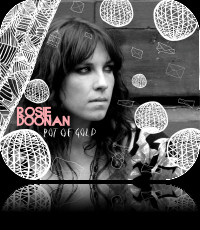
Pot of Gold: folk tales full of complex musical influences
Somewhere on the scale between the husky purity of a young Joni Mitchell and Jacqui McShee’s ethereal clarity comes the voice of Yorkshirewoman Rosie Doonan, insightful and humane, restlessly exploring the vagaries of human relationships through lyrics that are as articulate as they are personal.
Doonan’s new album, Pot of Gold, is like a series of encounters with characters and experiences that always leave their mark – more often the bruise of an emotional clout than the ghost of a lingering kiss, but always provocative and empathetic. From the deceptively upbeat, guitar-driven urgency of “Fall For Me” to the ominous, on-the-edge strumming of “Darker Side of You”, Doonan presents a warts-and-all yet compassionate vision of the relentless cycle of meetings, fallings and break-ups that constitute life.
The single “Lay Your Love” epitomises Doonan’s realistic attitude and intelligence as a lyricist. It might be a break-up song, but the back story isn’t all bad and the relationship is meaningful enough to deserve one last send-off. Lines are drawn in the sand, experiences noted and assimilated, hindsight acknowledged, inevitabilities accepted and understood (“Into the Fire”).
These are folk tales, full of complex musical influences that hint at Doonan’s personal heritage (her father was a uilean piper with Hedgehog Pie) – “Wind That Shakes the Barley”, with its yearning strings, slow marching drums and harmonica, is the most traditional song on the album – while embracing a host of other styles and techniques. “Victor”, for example, comes on like a sentimental Edwardian parlour song with modern nuances.
“Winter Song”, reminiscent of a top quality Judie Tzuke number, is a touching, delicate paean to the comfort of turning back to a love that, despite everything, is still all that matters on a cold, snowy night. “Lady Blue” might be a tribute to Joni Mitchell herself, while the album’s title track has a winning jaunty gait and energy that is equal to anything that’s come so far from the pen of Amy McDonald.
Female singer/songwriters are hot currency at the moment and with this album, her second as a solo artist, Doonan has well and truly staked her claim to a place among the front-runners.
Rosie Doonan is on tour in March at the following venues: 11th – with the Snap Dragons at Wem Town Hall (Shropshire); 12th – with the Snap Dragons at The Brindley, Runcorn; 17th – with the Snap Dragons at Cumberland Arms, Newcastle-upon-Tyne; 19th – Shaw Theatre, Leeds; 20th – The Boardwalk, Sheffield; 23rd – with the Snap Dragons at The Biddulph Arms, Stoke-on-Trent; 25th – Trowbridge Arc Theatre (Shropshire); 26th – with the Snap Dragons at The Beehive, Swindon.
Montage from last year’s Broadway production of Sondheim on Sondheim
The following review also appears in the current issue of The Sondheim Society’s magazine. A London production of the show is anticipated for 2011.
Sondheim on Sondheim: a welcome new approach to revues based on the Broadway composer's work
Does Stephen Sondheim really play pinball on his Mac when the muse doesn’t show up? The sound effects during one of the recorded asides that punctuate “God”, a witty, self-deprecatory number written specially for Sondheim on Sondheim certainly suggest it. I hope it’s true because if he relies on the odd bit of displacement activity – and a vodka shot or two – to get his writing gear working, it would make the rest of us see all the hours we spend procrastinating, dawdling and daydreaming in a much more positive light.
Such revelations pepper the revue, which arrived on Broadway to coincide with Sondheim’s 80th birthday celebrations last April and has been preserved in a two-disk original cast recording that artfully balances entertainment with documentary. And in many ways, they are among the bravest and most revelatory comments he has ever publicly made about himself as a human being and a working artist.
There is an intimacy about his observations that is far more profound than anything Jude Kelly managed to extract, for example, during their interview at the Royal Festival Hall in October. This alone makes for a listening experience that, while completely different from seeing the production at first hand, is compelling –and often touching – in its own right.
On stage, Sondheim’s narration was conveyed through specially filmed interview footage presented on numerous flat-panel screens so that he became a fully integrated character, acknowledged by the performers who could interact with him at several key moments. In a purely aural medium, his commentary inevitably becomes more detached. But thanks to producer Tommy Krasker, a veteran of 14 Sondheim cast recordings, there are still moments of connection that make you blink at the loudspeakers in wonder, not least the final number – “Anyone Can Whistle” – in which you’re suddenly aware that a new singing voice has joined the eight-strong cast for the last stanza; it’s Steve himself, tentatively suggesting that if we whistle, we could do so for him.
If this is showbiz sentimentality, it’s of the highest order and repeated listening doesn’t diminish the impact, coming as it does after Sondheim has analysed his love of theatrical collaboration as compensation for the lack of family life that blighted his youth. As he explains during the course of his commentary, his songs are character and situation based. They are not autobiographical. And yet for those who know and love his work, it’s impossible at certain moments while listening to Sondheim on Sondheim to escape the sense of an artist reaching out to his audience in search of understanding and affection.
“Anyone Can Whistle” is the culmination of a revue that is presented as memoir rather than chronological autobiography. Themes and artistic challenges rather than specific events are the triggers for many of Sondheim’s observations. All that has been important in his life – personal as well as creative – is alluded to.
Important influences and collaborators – Oscar Hammerstein II, Hal Prince, Mary Rodgers – are celebrated. Sondheim’s difficult relationship with his mother is pithily summarised, its long-term ramifications acknowledged. The revelation that he first fell in love at 60 comes almost casually, sandwiched between the charming “The Best Thing That Ever Happened to Me” (Bounce) and numbers from Passion, by any standards one of his most emotionally intense pieces.
The songs, carefully culled, interspersed and, occasionally, amalgamated in telling medleys (never more poignantly than the combination of two of his most dazzling torch songs “Losing My Mind” and “Not a Day Goes By”), become a commentary on Sondheim’s narration. And as has become traditional with a Sondheim anthology, the show’s creator and director James Lapine seizes the chance to raid the archives for songs that were eventually replaced in original productions or revivals. This time, Company proves a fascinating source, the tale of its three endings serving as an excuse to revive two complex numbers: “The Wedding is Off” and “Happily Ever After” (which evolved into “Being Alive”) are worth hearing again, even if they also confirm that sometimes a producer’s reservations about a particular song are spot on.
With great economy, Sondheim describes the process of artistic creation, demystifying his own contribution as part of a collaborative effort, explaining that his work is not self-referential, but that writes for the specific circumstances of a character at that particular moment in the story. “God” is a delicious deconstruction of his own myth, poking gentle fun at his detractors and supporters alike.
It’s ironic that the biggest star of this cast recording is the recorded voice of the show’s central character when the hard work is done by the performers who bring the songs to life with some lightly scripted joshing and interplay that helps to maintain the loose sense of a developing story.
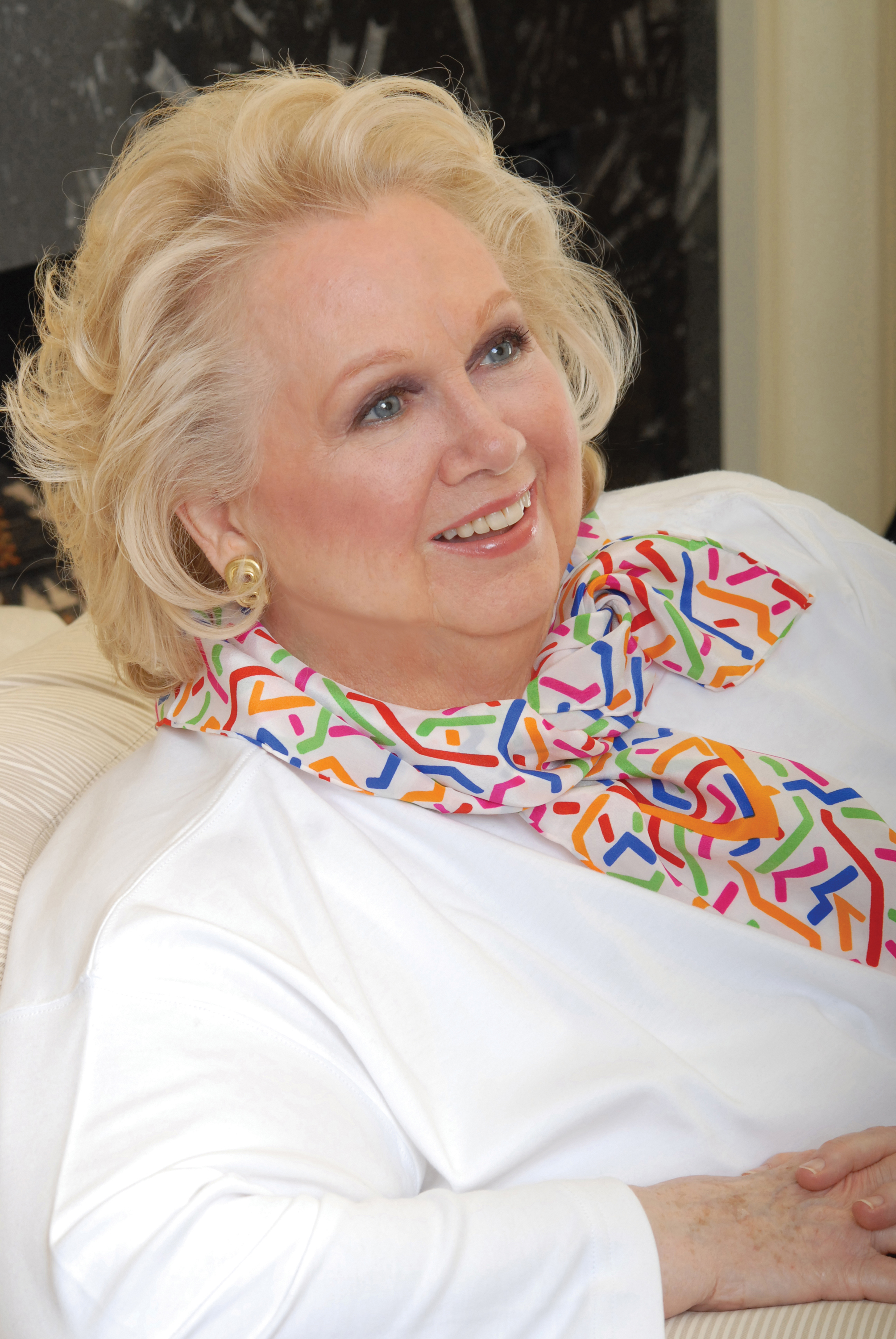
Barbara Cook: one of the wonders of Broadway
Chief among them is Barbara Cook, whose voice remains one of the wonders of Broadway. It might be thickening now in the middle register but the soaring beauty of one of musical theatre’s great sopranos remains a potent force, serving some of Sondheim’s signature numbers – “Not a Day Goes By”, “Send in the Clowns”, “Take Me to the World” and two of Fosca’s ominous, brooding soliloquies “I Read” and “Loving You” – with supremely intelligent interpretations.
Vanessa Williams is under used on the album, although she contributes a rich, creamy “Losing My Mind”. Among the male voices, Tom Wopat delivers a stunning “Finishing the Hat”, Norm Lewis wrings every sliver of meaning from “Being Alive” and Euan Morton brings the developing writer’s dilemma to life in “Franklin Shepard, Inc”.
Sondheim on Sondheim is an expertly produced double album that complements rather than replicates the original stage production. Michael Starobin’s orchestrations are restrained and elegant, supporting some shimmering ensemble work, so that the overall effect is of a holistic collage rather than a staccato series of standalone numbers. This sets it apart from most previous revue-style anthologies and in many ways harks back to the purity and simplicity of that original pioneer piece, Side by Side by Sondheim, albeit with a 21st century angle on the material.
There are some omissions, from the recording at least. Pacific Overtures, one of Sondheim’s most challenging and rewarding pieces, is never mentioned. More puzzling, neither is Sweeney Todd. Given that it is one of his most popular and frequently revived musicals, this seems odd and as the final chords die away, there is inevitably a nagging sense of something missing. But even without the demon barber, Sondheim on Sondheim is a fitting 80th birthday addition to the library of recordings of his work – and one of the best of its kind.
Those were the the days: Mary Hopkin sings her signature song on a very strange choice of set
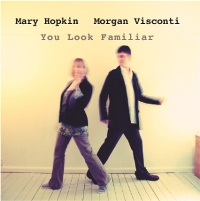
You Look Familiar: Mary Hopkin shakes off the shreds of nostalgia with a fascinating new album
It’s hard to believe that more than 40 years have passed since a Welsh teenager with a melancholy, angelically crystalline voice and a curtain of blonde hair won a British TV talent show – Opportunity Knocks (how quaint that now seems compared with the global machine that is X Factor today) – and secured a substantial chart career that lasted into the early 1970s.
The name Mary Hopkin will be forever associated with the Paul McCartney-produced “Those Were the Days”, a fatalistic traditional folk song, probably originally from somewhere east of the Urals, which gave her a number one hit. Hopkin was an important early signing for the Beatles’ iconic Apple label.
A blast from the past: Mary Hopkin sings Temma Harbour, produced by Mickie Most, on Top of the Pops in 1970
She went on to work with Mickie Most on a number of hits and represented the United Kingdom in the 1970 Eurovision Song Contest. But while she came second with “Knock Knock, Who’s There?”, the experience of singing a song that she has never made a secret of loathing only added to her growing distaste for the manipulation of the music industry – and a lack of influence over her own career that was the lot of most young female singers at the time.
Although she continued recording intermittently through the 1970s and 1980s, much of Hopkin’s subsequent work was within the collaborative security of project bands Sundance and, later, with Peter Skellern and Julian Lloyd Webber, Oasis (long before a pair of Mancunian brothers changed the trajectory of British rock with a group of the same name).
Hopkin seemed bent on putting as much water between her and the days of her greatest commercial success as possible. And although there have been occasional snippets of new work in the intervening years, interviews became rare and accordingly, she acquired a reclusive, increasingly enigmatic reputation – not unlike that of Kate Bush.
Now, she has released a fascinating new album (You Look Familiar) written and produced in partnership with her son Morgan Visconti – and it’s a treat from start to finish, not least because those pristine vocals are utterly undiminished by the years. But it is also a work of real, thought-provoking depth that references Hopkin’s folk roots (“Chime” is the most overtly folk-accented track) and influences as she relates a sequence of rounded, modern stories, from the opening track (“America”) with its tale of the young stowaway heading East to the uneasy warnings of “Eve’s Revenge” and the easy, resigned chug of “Dog Eat Dog” – a catchy pub song.
Intriguingly, many of the arrangements are cradled in infectious, synth-style riffs, beats and echoing overlaid harmonies (some courtesy of daughter Jessica Lee Morgan, a singer in her own right) that often create a retro sense of lush 1980s electronic pop.
But don’t be seduced simply by the sound. Piercing barbs lurk in the lyrics, reminders that Hopkin now has the lifetime of experience that she was only able to hint at as the 18-year old singer of “Those Were the Days”. There is darkness and stinging cynicism, too. I don’t know who she had in mind, writing “Heaven Knows”. But even if her target was personal, the stinging words could equally apply to higher, more public figures and I can think of one or two politicians who would be usefully caught in their firing line.
I love “People Say”, a wise and touching account of an unexpected encounter that could lead to something more, the motherly advice of “Walk Like Me” and the epic, hypnotic forebodings of “Pretenders”. With You Look Familiar, Hopkin has emphatically shaken off the shreds of nostalgia and reminded us of a voice and pedigree that have much to offer in 2011. Don’t leave it so long next time, Mary. We’d like some more – and soon.
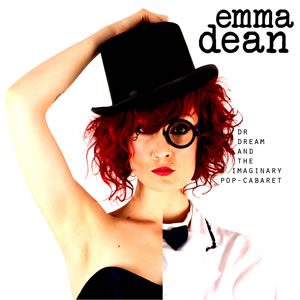
“Sincerely Fearful”: a track from Emma Dean’s new album, Dr Dream and the Imaginary Pop-Cabaret
Dr Dream and the Imaginary Pop-Cabaret: a record with huge ambitions
I know it makes me a failure on so many levels as a gay man but I’ve never really understood the Kylie phenomenon. Those Stock, Aitken and Waterman years were anathema to me. And give or take a couple of genuinely interesting floor fillers since then – and the lady’s occasional flirtations with jazz and Nick Cave – I’ve always found that tiny sliver of a voice totally at odds with her diva status and the outrageous production values of her arena tours. For such a small talent, she’s had a spectacular career. But now that she’s post-40 and has successfully battled breast cancer, she has also earned her ‘show-business survivor’ stripes. So good luck to her, I guess.
Emma Dean is something altogether different: bold, edgy, clearly determined to plough her own creative furrow and to hell with the consequences, and possessed of a raw, outsize talent that will take some steering. And with a new album – Dr Dream and the Imaginary Pop-Cabaret – just out, she is in pole position to be Australia’s next big cultural export.
This is a record with huge ambitions – epic arrangements (catch those strings on “Sharks”), swooping vocals (that have had some critics reaching yet again for Kate Bush comparisons), lyrics that plunge with vertigo-inducing speed from existential streams of consciousness to the gut punch of rock balladry and the occasional crude verbal laceration.
Dean herself says, “It’s [the album] about letting go of all the things I’m normally too afraid and ashamed to speak of and unashamedly airing them in song.” If you have sensitive pretentiousness antennae, they’re probably twitching already. And the album’s concept – Dean spilling the contents of her sub-conscious to the eponymous Dr Dream – is no small hurdle, for a start. But once you get beyond that and start listening to the words, the cascade of characters, dark tales, threats, dangers and sensual motifs, is innovative and promising.
It’s a long while since I heard a lyric as challenging as: “Once a thieving scoundrel dared me to steal your underwear. The silk did trickle down your legs to your ankles pink as pigs,” the opening lines to the hymn-like “Thieving Hearts”.
Can’t get her out of my head? Well Dean is certainly a bold and refreshing new voice, and there are several tracks I’ll happily have on my iPod. To be honest, I don’t get Kate Bush so much as Sparks (“Sincerely Fearful”) with a dash of Tori Amos and Berlin cabaret. Dean’s fascinating vocal texture also reminds me very much of Melinda Miel, a performer of dark, bloodstained cabaret material, who captured the imagination of London’s club scene all too briefly in the early 1990s.
Melinda Miel sings “Delirium’s Mistress”: dark, bloodstained cabaret from the early 1990s
Dean has combined idiosyncrasy and a strong, fetishistic visual impact with a promisingly commercial sound, epitomised by one of the best tracks, the anthemic “Thunder”.
At the same time, this points to another hurdle: Dr Dream is a character from her alternative cabaret show, and there is sometimes a sense with the album that the listening experience is only giving you half the story. Not all the songs are wholly effective in a pure audio format. So hopefully, she’ll soon be following that well-trodden path to London and we’ll get the chance to see and hear the complete picture.
Meanwhile, if you’re going to be in Australia this summer, you can catch her as Sally Bowles in Zen Zen Xo Physical Theatre’s production of Cabaret in Brisbane.
Renée Oxon sings “Gee Baby, Ain’t I Good to You” on a fire escape in Ottawa. The sound quality on her album, Let’s Call it a Day, (reviewed below) is much better!
Wilson, Jungr and Herbert: the new Girl Talk line-up hits London in February
Congratulations to Barb Jungr, whose album The Men I Love has just been named Cabaret CD of the Year by Time Out New York.
Barb and Mari Wilson will be joined in the new year by the equally talented Gwyneth Herbert, as they launch a revived Girl Talk with a new show – I Am Woman. Girl Talk begin a week-long residence at The Pheasantry in London’s King’s Road on 8th February.
Mari has just released a fabulous slab of electro-pop, with a slash of retro hi-energy, collaborating with Boisounds on a party floor filler, “O.I.C.”, which is available for free download.
Horses & High Heels: Marianne Faithfull's new album, out in March
Marianne Faithfull’s new album Horses & High Heels comes out in March. “I don’t really do conventional,” she warns us in advance publicity. As if we didn’t know. A taster track, the self-penned “Why Did We Have to Part”, is available for free download until 19th January.
Back at The Pheasantry, there is a really good reason for fans of Stephen Sondheim’s work to join the Sondheim Society. In tandem with the Society, producer Sam Joseph has conceived a series of Monday night cabarets starring some of the biggest names from all areas of London musical theatre. Society members benefit from advance notice of the programme and discounted ticket prices. Confirmed so far are: Alex Young (10th January), Sally Ann Triplett (21st February) and Mrs Lovett-to be – at Chichester later in the year – Imelda Staunton (14th March). Future appearances are expected by Rosemary Ashe, Janie Dee, Robert Meadmore, Adrian Grove, Graham Bickley, Michael Peavoy and leading West End musical director Gareth Valentine.
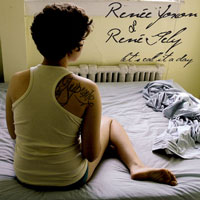
Let's Call it a Day: an auspicious debut from Renée Yoxon
Who’d have thought a physics degree would be the ideal foundation for a career as a torch singer? OK, so she was doing a little music on the side, but Renée Yoxon’s decision to ditch formulae for the jazz clubs of Ottawa is one of those left-field decisions that can occasionally lead to thrilling careers. And on the evidence of her first album, Let’s Call it a Day, this young Canadian could be the biggest female talent to emerge in her field since Diana Krall.
It’s an assured and auspicious debut. Accompanied only by veteran virtuoso René Gely on a selection of guitars – his steel string, in particular, rings with marvellously crisp authority – and occasional piano, Yoxon has reinvented a selection of standards with a refreshing boldness. Not in a revolutionary way, but mainly by re-establishing the lyric as the focus of attention, stripping it away from the overblown tendencies of so many younger interpreters at the moment.
Yoxon’s voice is something to treasure. Like one of the UK’s rising stars, Rumer, with her slightly husky accents and bang-on vocal authority, nothing seems to intimidate Yoxon. The opening track, “The Look of Love”, is a case in point. Bacharach’s off-beat melodies are notoriously tricky to do well, but Yoxon slides through it with lightly-oiled ease.
Undercurrents of melancholy and Billie Holiday-like phrasing seep through her interpretations of “Willow Weep for Me”, a shimmering “The Masquerade is Over” and of course – with an intimacy that’s almost audaciously spare – “Don’t Explain”. Two self-penned numbers, “Let’s Call it a Day” and “Lovers’ Lullaby” add to the album’s sense of freshness. There’s also a French-language version of Rodgers and Hammerstein’s “It Might as Well be Spring”.
If the final track, “One For My Baby”, betrays her youthfulness and lack of cynicism – catharsis seekers will probably miss the spirit of a wracked and bloodshot Sinatra – equally, it hints at what we can expect from Yoxon in the future. She’s set herself a high bar indeed.
Memory Box: a number from Tanja Maritsa’s previous album, Child in My Heart
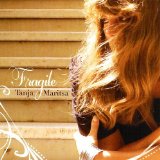
Fragile: a little piece of magic
Here’s proof that it’s possible to be gentle, understated, enigmatic and provocative, all at the same time. London-based Tanja Maritsa’s second album, Fragile, insinuates itself into your head and drifts around, underscoring the changing moods of the day. Not in a ghastly, earworm fashion. But in the way her intimate vocals – so soft that they’re almost whispered rather than sung, daringly close to the mic (she has an assured technical confidence) – wrap themselves around you.
Maritsa’s top-class band provide jazz inflections and undertones that shimmer around her voice – James Graydon’s guitar and Richard Cottle (who works regularly with Claire Martin) on the piano deserve special mention for the delicacy of their playing – as she swings her way delicately through Colette Meury’s pristine arrangements. Richard Niles has done a masterful production job, pulling together a diverse range of musical references and nuances in such a way that the shifts in tone, style and tempo never jar.
Maritsa keeps your expectations on their toes. The lilting opening track, “Live for Today”, promises a retro, 1950s nightclub experience, full of simple optimism, which is revisited later on in “No More the Blues”. But don’t be fooled, because there is plenty of food for the soul’s darker side to come, not least in Maritsa’s treatment of Sting’s “Fragile” – the title track and one of two imported numbers (the others are all from Maritsa’s pen) – and the poignant “Fading Grace” and “Always With You”. Loss, renewal and moving on are constant themes. The final ballad, “Fading Grace”, is a poignant acceptance of grief and lost innocence, its emotional impact only heightened by the spare delivery.
There are hints of chanson in “Won’t You Dance” and “In Love Again”, jazz-tinged folk in “On the Other Side of the World”, and bossa nova in the Astor Piazzolla number “Libertango”, but every time you think you’ve identified a specific style, Maritsa spins you on to a new perspective in her subtle, irresistible way. Fragile is a thoughtful, beautifully conceived little piece of magic.
Someone who sings about love and loss, and the pain of experience. The power of torch-singing lies in its effect on the listener. For me, it transcends musical genres. These pages explore the dazzling, and sometimes dark, world of the female singer through history and in the present. Concert and CD reviews, interviews and articles combine to create a comprehensive view of this vital strand of popular culture. Why not share your views and experiences of your favourite artists, suggest performers you would like to see featured - and let me know what makes a torch singer for you?





What do you think?