Archive | Album Review RSS feed for this section

Album review – Anna von Hausswolff: Ceremony

10 Sep

Mountains Crave: futuristic and industrial sounds give way to glittering beauty

Ceremony: epic and sepulchral with moments of scintillating beauty

Ceremony: epic and sepulchral with moments of scintillating beauty

The brooding sound of an organ echoing in cavernous cathedral vaults creates an ominous bass line which rumbles constantly beneath Anna von Hausswolff’s new album Ceremony.

Epic and sepulchral, the Swedish singer/composer’s aural landscape is pierced by futuristic, industrial sounds that suggest a tumultuous clash between life and death, and between the ancient and the present.  So far, so Nico. ABBA, this certainly isn’t.

But time and again, just when you’re on the verge of being sucked into an abyss of existential bleakness, von Hausswolff chucks a curved ball of glittering beauty that sends you rushing skywards. The arpeggios that announce the “Epitaph of Daniel” come tumbling out of the darkness like spinning hoops of light, for example.

As the tracks unfold, from the opening instrumental “Epitaph of Theodor”, through the anthemic rock references of “Deathbed”, to the soaring glory of “Red Sun” and the scintillating clarity of “Liturgy of Light” and “Harmonica”, reminders of the grave are constant.

But von Hausswolff is an intrepid musical explorer, unraveling her own perceptions of mortality – not least in the penultimate track, devastatingly entitled “Funeral  For My Future Children” – and the possibilities of rebirth. Her music erupts from the elemental clashes generated by her questions. “Mountains Crave” is a throbbing testament to the might of nature.

With its absorbing, intricate melodies, Ceremony is often overwhelming in its intensity. It rises above the listener like a vast granite rock face. Tracing the threads of gold that run through it demands commitment, but there are plenty of rewards to be discovered in these musical and poetic meditations if you’re prepared to surrender to such a visceral listening experience.

Album review – Anne Marie Almedal: Memory Lane

11 Jun

Winter Song: raises the hairs on the back of your neck (in a good way)

Memory Lane: multi-layered lyrics and sumptuous harmonies

Memory Lane: multi-layered lyrics and sumptuous harmonies

There are many gorgeous moments in Anne Marie Almedal’s album Memory Lane – the distillation of a host of folk and pop influences into a clean, uncluttered sound that draws equally on the inspiration of the landscape around her home in Kristiansand, which permeates the music and conjures a brooding, unsettled and occasionally restless atmosphere.

Threads of nostalgia are tempered by elemental noises and echoes that give the album an almost metaphysical feel.  The opening track, “Back to Where it Started”, with its soaring hints of Pentangle flute and guitar, is a tale for everyone looking in the rear view mirror, trying to recapture the mysterious moment when a relationship sprang into bloom.

With her British husband and co-writer Nicholas Sillitoe, the Norwegian singer/songwriter has crafted a fresh, contemporary, ambient take on modern folk that completely subverts the increasingly tiresome clichés which abound around Nordic Noir. Sure, there is darkness and unease in her often introspective lyrics, but there is also an acknowledgement – even a celebration – of the cleansing, focusing effect of proper cold, freezing everything in a breath of innocence as it does on one of the standout tracks, “Winter Song”.

If I say that this and the equally beautiful “Scars” remind me of Kate Bush’s 50 Words for Snow, the comparison is intended entirely as a compliment. They are songs in which the combination of simple yet multi-layered lyrics and sumptuous harmonies generated by strings, wind chimes, even a singing bowl, deliver a subtle acoustic blow that raises the hairs on the back of your neck.

Lyrically, Almedal draws her inspiration from the relationship between human experience and landscape. It isn’t always an easy one: “And It’s the Loneliness” urges us to look always to the horizon in our effort to keep love alive, “One Day” faces up to the uncertainty of the future. But an underlying optimism lifts even the bleak moments, imbuing them with warmth and quiet calm.

In the company of her own songs, the two covers – of John Martyn’s “May You Never” and Bread’s “If” – seem almost superfluous. Where the latter is concerned, at least Almedal’s assured, fluid voice goes some way to exorcising the horrors of Telly Savalas’s spoken 1975 version, which continues to blight the song for those of us of a certain age.

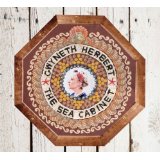
Album review – Gwyneth Herbert: The Sea Cabinet

5 Jun

Gwyneth Herbert talks about the genesis of The Sea Cabinet

Haunted and haunting: Gwyneth Herbert's Sea Cabinet is a triumph of eclecticism

Haunted and haunting: Gwyneth Herbert’s Sea Cabinet is a triumph of eclecticism

Haunted and haunting. Poignant and achingly beautiful. Ribald and raunchy.  Evocative and nostalgic. These are just a few of the adjectives that spring to mind as Gwyneth Herbert’s inspired, crowd-funded and self-released new album scatters and spills its contents before the intrigued listener.

The Sea Cabinet started life at Snape Maltings in Suffolk, following Herbert’s artistic residency with Aldeburgh Music. The concert at which she introduced this cycle of sea-inspired songs was absorbing, heralding a work of great promise, albeit still very much in progress and charmingly rough-hewn in places. Almost three years later, that promise has been fully realised.

Herbert’s wide-ranging musical references – sea shanties, Edwardian parlour songs, folk airs and laments, chansons, bluesy bar songs – are impeccable. And she has woven them into a fluent, multi-textured piece from which her eclecticism emerges triumphant and accessible. There isn’t a trace of pretentiousness.  She has laboured over her lyrics, honing and polishing them so that they shimmer across a constantly shifting aural landscape of rhythms and ghostly echoes.

The concept of a solitary woman picking her way along the shore and storing the fruits of her beach-combing in a cabinet, provides a beautifully simple arc for the album. Herbert’s achievement is to populate the memories and ideas inspired by the woman’s discoveries with a cast of characters who spring vividly to life before they are absorbed back into the ebb and flow of diverse melodies.

Mrs Wittering, the owner of the Regal, emerges from the fading gentility of her tea room to take a bow. The petticoat-flashing “Fishguard Ladies” live once more to see off the French fleet. Old salts and soldiers jostle for position. But there is also plenty of underlying darkness and melancholy, not least in the sombre tale of wartime “Alderney”.  In the beguiling “Sweet” and the increasingly belligerent “I Still Hear the Bells” there is also a sense of the personal experiences that brought Herbert to the emotional place which inspired The Sea Cabinet.

She is ably assisted by fellow singer/songwriter Fiona Bevan, who collaborates on “I Still Hear the Bells” and “The King’s Shilling”, by The Rubber Wellies, and by regular band Al Cherry, Sam Burgess and David Price. But it’s Herbert’s own voice, ranging from that of a sweet folk siren to jazz canary and late-night blues singer, which gives the album its momentum.

Snatches of the songs continue  to swirl and soar in the air long after The Sea Cabinet has spun to a stop, not least the “Sea Theme” which opens and closes the set, tempered with field recordings that add pleasingly disturbing frissons of mystery and unease. In its lovingly-produced completeness, this album is a work of art.

Album Review – Agnetha Fältskog: A

14 May

When You Really Loved Someone: Agnetha returns  in fine voice


AgnethaIt’s been great to see Agnetha Fältskog back in the spotlight after nearly a decade of silence. Grace and charm personified, she’s handled the publicity treadmill with style, giving dignified responses to undeserving questions – mainly relentless enquiries about the likelihood of an ABBA reunion – while somehow managing to preserve that sense of still waters running deep, which always marked her out as the serious, complicated member of the Swedish supergroup.

Her return has been greeted with such affection and interest that A could probably have been an album of nursery rhymes and nobody would really have cared. The good news is that the voice, with its compelling mix of brightness and underlying melancholy, has in no way been diminished by the years away from the studio. An occasional lingering huskiness only adds to the frisson which it generates, easily evoking the glories of the great ABBA harmonies and cutting through the arrangements like an old friend in remarkably good shape.

So it’s slightly disappointing that A is overall a serviceable record rather than a truly exciting attempt to build on Fältskog’s considerable legacy and give it a 21st-century polish. Gary Barlow’s 2009 collaboration with Shirley Bassey, The Performance, showed how it is possible to take the combined baggage of an exalted performer’s history and their unique sound, and turn it into something relevant and contemporary, teasing it in unexpected directions without frightening the horses. If only Fältskog’s producers, Jörgen Elofsson and Peter Nordahl, had taken a few similar risks, the results could have been electrifying. The closing track, “I Keep Them On the Floor Beside My Bed”, hints at what might have been, with its vocoder accents and swelling, ABBA-esque chorus.

But too many other numbers play it safe to the point of being anodyne, and the token disco track – “Dance Your Pain Away” – never quite gathers the energy to match the nostalgic exuberance of “Dancing Queen” or the guitar-driven urgency of “Voulez-Vous”. Barlow’s contribution to the album is restricted to a dull, up-beat duet (“I Should’ve Followed You Home”), and a phoned-in vocal.

Elsewhere, there are indeed some magical moments: big, orchestral arrangements, minor key changes, and particularly on the ballads that dominate proceedings, passages when that crystalline voice takes a line into a poignant emotional space and lets it soar. The first single from the album, “When You Really Loved Someone”, “I Was A Flower” and the aforementioned “I Keep Them On the Floor Beside My Bed” (a contender for most mind-boggling song title of the year – it’s a relief to discover that “they” are simply memories) all deliver in spades.

Album review – Maika Makovski: Thank You For The Boots

13 May

Language: eccentric and appealing sonic vistas

Than You For The Boots: Maika Makovski harnesses an eclectic bundle of musical influences

Than You For The Boots: Maika Makovski harnesses an eclectic bundle of musical influences

The boots in the title of Maika Makovski’s 2012 album apparently belonged to an old friend and are still going strong more than a decade later – much like the friendship itself. Born in Mallorca of Andalucian and Macedonian parents, Makovski has earned something of a reputation as an underground muse, ploughing her own furrow in the darker recesses of Spanish rock music.

Thank You For The Boots is somewhat quirkier, lighter fare – an exploration of the light and shade of friendship in which she occasionally seems to be channelling Lena Lovich, Emilie Simon, Kate Bush and even Lynsey de Paul, often within the space of a few bars.

From the sonic vistas of the opening track, “Language”, the album strikes an eccentric and frequently appealing attitude. Makovski’s gypsy guitar-tempered rock roots rumble along under some insistent beats, occasionally breaking through, as in the sinister shuffle of “Number” and the disenchanted belligerence of “No News”. But there are also jazzy samba influences (“Vulnerable”) and joyous honky-tonk rhythms (“Cool Cat”) on offer, which makes for an eclectic and occasionally uneven listening experience.

Her lyrics are sparky and articulate, at their most effective on slower, idiosyncratic numbers like the deceptively simple, hypnotic “When the Dust Clears” – a waltzing threnody with moments of spine-tingling beauty – the wistful “Men of Talent, and “Dream”, the final track, which sounds for all the world like an old English folk song.

Makovski contributed words and music to Forests, the Shakespearian odyssey presented to great acclaim last year by Birmingham Repertory Theatre and Barcelona Internacional Teatre. As Thank You For The Boots amply demonstrates, she has a rare gift for absorbing and repurposing multiple musical influences.

Album review – Nynke: Alter

8 May

How Alter was made: Javier Limón and Nynke at work

Alter: Nynke blends northern and southern cadences to arresting effect

Alter: Nynke blends northern and southern cadences to arresting effect

I don’t know how many Frisian language albums have been released in the last ten years but I suspect that Nynke pretty much has the field to herself at the moment with Alter, a shimmering collection of self-penned songs that draw on many musical influences from beyond Friesland, her birthplace in the northern Netherlands.

Even to a non-speaker (there is a smattering of English to leaven the mix), her lyrics have a runic, poetic quality as they weave in and out of some fascinating rhythms. After a gentle, haunting start, the album comes fully to life with “Nei Hûs”, which announces itself with a Moorish chant before launching into a swirling epic against a backdrop of silvery guitars.  On the next track, “Foarsizzing”, the influences move north with a sprinkling of balalaika-like strings that sound positively Russian.

A hint of flamenco is never far away, and it’s no surprise to discover that Nynke’s collaborator-in-chief here is Javier Limón, head of the Mediterranean music department at  Berklee College of Music in Boston, who has also worked with Estrella Morente and Mariza. The sonic blend of northern and southern cadences is arresting, conjuring vivid geographical images that shift constantly, catching the listener off guard. Just when you think you’ve settled in one scene, Nynke’s pure voice sweeps you off to a new, undiscovered landscape.

The one English-language track, “Awaiting”, hints at the depth and melancholy of its Frisian companions. This isn’t quite Nordic noir but it definitely inhabits the sombre space between Mediterranean fire and inscrutable northern melancholy. On “Eftereach”, Nynke has the audacity to blend more feverish Flamenco guitars with an intoned Frisian poem, and the result washes over you like soothing water with an unexpected, icy kick.

Alter could be the most idiosyncratic album you’ll hear all year. Compare it with the splendours of next week’s Eurovision Song Contest and think how different the competition would be if everyone used it to explore their musical heritage in a similarly inventive way.

Album review – Karen Ruimy: Come With Me

8 May

Whisper: Karen Ruimy sets out on a voyage of discovery with a nearly-power ballad

Come With Me: North African beats meet flamenco and chanson in a hypnotic mash-up

Come With Me: North African beats meet flamenco and chanson in a hypnotic mash-up

Polyglot Karen Ruimy’s debut album, Come With Me, is so full of colliding influences that the more you listen to it, the harder it is to pin down exactly what sound she is striving for.  It’s a head-spinning mash-up of flamenco, chanson, trance and Arabic styles. But whether she’s singing in Arabic, French, Spanish or English, the overall effect is oddly compelling and soothing, evoking the chill-out fringes of Mediterranean club land one minute, sweeping desert vistas the next.

This is a sound the Israeli singer Ofra Haza pioneered in the late 1980s, fusing world music with strong electronic and pop rhythms. Joining forces with Youth and Justin Adams, Ruimy has given it a fresh gloss, writing mystical, meditative lyrics and setting them against an impressively international range of musical textures . “Come With Me” and “Fragile” have already been big club hits with their insistent, soaring hooks and contrapuntal beats.

Ruimy was born in Morocco, growing up there and in France. So when things quieten down on “Les Oiseaux” and “Mojave Moon”, it’s no surprise that she can also work the more conventional chanson style of influences such as Michel Berger and Véronique Sanson, delivering silky, meandering ballads with an understated assurance.

Towards the end of the album, this almost takes her into power ballad territory with “Traveller” and “Whisper”, although her chops aren’t robust enough to launch them fully into the stratosphere. Atmospheric, dreamy musing is more her comfort zone as she builds her vocal around hypnotic North African patterns with Flamenco notes,  as in “Sangré” and the chugging, trance-like title track.

Album review – Jain Wells: To Be Real

3 May

Out of the Fog: Jain Wells is ready for whatever life has to throw at her

To Be Real: Jain Wells looks life square in the eye

To Be Real: Jain Wells looks life square in the eye

Working with producer Greg Fitzgerald, Jain Wells has come up with an echoing, ambient sound that gives her debut album an ethereal, other-worldly quality.

But there’s nothing airy-fairy about her lyrics, which are thoughtful, eloquent musings on love, loss, moving on and taking the positive from every event and encounter.

If that sounds ominously didactic, To Be Real is far from being an extended homily on the human condition. Canada-born and now living in London, Wells has a PhD in Transpersonal Psychology but she wears her years as a therapist lightly.

Many of these songs are candid, very personal responses to accumulated experience, and even when the material gets dark (check out the underlying sadness of “Holiday”, a study of betrayal), it is lifted and carried away from the abyss by some sparkling, beat-driven arrangements.

“Look into the Mirror” epitomises Wells’ look-life-square-in-the-eye attitude. “Tonight” embraces similar themes: live for the present and be guided by your own inner truth. “Out of the Fog” finds her emerging from crisis, cleansed and ready for new emotional experiences.

Her imagery is complex but always looking upwards and forwards rather than trading on negative legacies. It makes her company less anguished than most of the female singer/songwriters currently dominating the charts.

Wells has an interesting vocal timbre, reminiscent of Carly Simon, which commands attention without ever sounding forced or strident. It suits the individuality of her material as she exhorts the listener to question themselves and take responsibility for the answers they find inside.

Album review – Melinda Ortner: I Wanna Be OK

3 May

Melinda Ortner: “Strangers” from I Wanna Be, and an encounter with a tarantula


I Wanna Be OK: edgy beats and strong songwriting

I Wanna Be OK: edgy beats and strong songwriting

Melinda Ortner is deserting her LA home this summer for a prolonged stay in the UK, and she’s  sent her new album – I Wanna Be OK – ahead. It’s an interesting calling card. Edgy beats underline strong melodies, haunting hooks and searching lyrics.

The title track, for example, combines an intimate stream of consciousness with an insistent, almost threatening bass, gathering pace as Ortner ponders the extremes she’ll encounter as she forges a career in the music industry.

The field is pretty crowded with good, inventive female singer/songwriters at the moment. Songs like “Jezebella” are typical of the vibrant, quirky fare they are delivering in a hugely competitive market. More than once I was reminded of Leddra Chapman’s last album, Telling Tales.

But Ortner also has a flair for taking soaring themes that reflect her Californian musical heritage and scuffing them up so they have a darker, more cynical texture. This is how a 21st-century, Indie Cass Elliot might have sounded.

“Caught in the Middle”, “The Beauty in Me” and “Sweet Little Lies” all contain moments of real beauty. Ortner is great at writing seductive intros that lull you into a false sense of security. Then she turns the story on its head with spiky arrangements and lyrics that are confessional and interrogative by turn. “Say Those Things”, with its head-spinning rhythm changes, is a case in point, seeking reassurance in a world of chaos. But she can do calm, too. “Maybe” is a thoughtful, contemplative ballad that’s up there with the best of its kind.

Ortner has already enjoyed some commercial success, contributing tracks to film soundtracks and being named among the top 15 Songwriters of the Year for ASCAP’s Johnny Mercer Project.There’s a bracing, refreshing honesty about her which makes I Wanna Be OK an auspicious debut album, and suggests that an interesting career lies ahead.

Album review – Liane Carroll: Ballads

1 May

You’ve Got a Friend: Liane Carroll and Ian Shaw in concert

Ballads: grown-up standards delivered with class

Ballads: grown-up standards delivered with class

Liane Carroll’s new album Ballads leaves you utterly wrung out in the best possible way.  Her soulful treatment and sublime phrasing discover previously uncharted nooks and crannies in this elegant selection of standards and torch songs, interspersed with a bit of Todd Rundgren (“Pretending to Care”), Carole King (“Will You Still Love Me Tomorrow”) and Buddy Holly (“Raining in My Heart”).

Like a plume of smoke rising from a midnight cigarette, her voice sends these much-loved lyrics spiralling into the air, where they mingle and conjure bittersweet images of love and loss – mainly loss, it must be said – that vibrate with authenticity.

As a vocalist, Carroll is emphatically her own woman. Instinctive and inventive, she laces familiar words with underlying melancholy, and barbs of experience and wisdom, inhabiting the melodies and teasing them in unexpected directions. If I draw comparisons with Sarah Vaughan and Carmen McRae, it’s only because she clearly belongs in such exalted company.

Under James McMillan’s production, her talents are brilliantly matched with spacious yet intimate, modern arrangements – mostly by Chris Walden – and an eloquent band that includes pianist Mark Edwards and saxophonist Kirk Whalum.  The chemistry between Carroll and her musicians is well illustrated by “Calgary Bay”, a sweeping original number by Sophie Bancroft.

“Here’s to Life” and “Only the Lonely” become epics with an almost cinematic quality. “My One and Only Love” and “Mad About the Boy” are reinvented as languorous threnodies. Strings abound, but discreetly, never overwhelming Carroll’s voice as she steers a steady, assured course through each number. Not for her the frills and melismatic swoops that pass for singing in most 21st-century pop music. So when she does let rip – in a devastating take on “Pretending to Care”, for example – it is thrilling to hear, and deeply affecting.

There is more dark than light in these choices. The pace is thoughtful and serious, absorbing, rolling with disappointment and betrayal rather than railing against it: grown-up readings which take a 360-degree view of the lyrics, opening them up into a tapestry of life experience.

The year is yet reasonably young, but it will take a lot for another album to beat Ballads for sheer  class and simple artistry.