A Song Revisited: “Dreams” by Grace Slick

31 Jul
“Dreams”: a video very much of its time, but what a great song

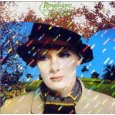
Dreams: Grace Slick's 1980 album, with a title track that's come hurtling back into my life

What makes a song come hurtling back up from the depths of the memory? Just occasionally, something that defined a time in your life – a few hours, a week, a month – but that you haven’t given a second thought to for years, decades, rears up from the past with all its old power. The response, the feelings, the connection you made with that particular piece of music, with its potent combination of voice, lyric, melody – above all, the ‘sound’ it made in your life – clout you with all of their original force. It’s extraordinary, like travelling in time.

I don’t know what made me search for Grace Slick’s “Dreams” on YouTube the other day. It was a random, almost unthinking act. A bit of displacement therapy to postpone some mundane task. But the great thing is that I did it. And ever since, the song has been playing on a continuous loop in my head. I was astonished and touched by its familiarity, the words returning effortlessly to mind after three decades, those epic cadences just as thrilling, and Slick’s fascinating, textured, contralto resonating through an apocolyptic yet compelling vision of the terrors of the night.

“Dreams” was the title track of Slick’s 1980 solo album. I remember the first time I heard it on BBC Radio 1 – how much more adventurous its playlist was in those days! – and how completely enthralled I was by its symphonic qualities, and by Slick’s blistering vocal attack. At that stage – and for a long time afterwards – I knew nothing about her, that pedigree steeped in the legendary psychedelia of Jefferson Airplane in its various guises. I just knew that this was a voice that commanded attention, that was hypnotic in the way it charged on with something that sounded like controlled rage, almost fighting with the majestic beauty of the song’s arrangement. At least, looking back, I think that’s what I thought. Only probably less specifically. I was only 18, after all. I just knew what I liked, and there wasn’t a lot of it about in those days.

Fortunately, “Dreams” got a plenty of airplay, none of which helped to make the song a hit, although it meant I got to hear it a lot. I suppose that gives it cult status today, because it obviously has a lot of fans out there. Sean Delaney’s lyrics paint a wonderfully lurid picture of the sinister parade that storms, tantalises, disturbs and ravages sleep. I now understand, of course, that the album was at heart a concept project that explored the AA 12-step programmes, Slick having recently emerged from a prolonged stay in rehab.

“To be honest, doing solo albums scared the shit out of me; making music was no longer fun, it was nerve-wracking pressure,” she wrote in her absorbing 1998 autobiography, Somebody to Love? “For someone who couldn’t handle a quarter cup of coffee without wondering where the quaaludes were, working solo was just a couple of steps short of flinging myself off a 150-foot diving board.”

The really odd thing is that I’ve only heard the rest of the album in the last few days. The song “Dreams” was always enough in the completeness of the story, the vision it rolled out. But when I found the video on YouTube (a word about that: it’s very much of its time! Slick looks hard and big-haired, her eyes demonic in a Myra Hindley-ish way, but she is still riveting, a performance artist through and through. The Dolly Parton wig is a stroke of genius) and found myself transported back – not to an actual experience but to a sense of my teenaged self – I wanted to know more about the album. A search for MP3 downloads was fruitless. So it was off to Amazon.

In her book, Slick points out that her solo albums didn’t sell. That she didn’t tour on the back of them, which was a mistake. Well, Grace, thanks to a Japanese import and a rather silly amount of money, Dreams just notched up another royalty and I hope you get it. Because it’s a marvellous album, an explosion of musical references that’s surely overdue for a release. It’s gone straight onto my smartphone and I’m just letting the stories it tells play out on the commute, building a complex picture around a song that’s come back into my life like an old friend.

I know that there was much more to Slick’s music than this, and I’ve since discovered the wonders of “Somebody to Love” and “White Rabbit”, and the unique contribution that arresting voice made to a seminal period in rock history. And even the commercial hits of Starship – Slick has since made no secret of her lack of interest in them –  have the ability to generate a nostalgia for the 1980s, powered by her unmistakable vocals.

Grace Slick at 70: a successful artist with the presence of a tribal elder

She stopped performing at 49, believing that rock stars over 50 should stop inflicting their ageing presence on an audience. That’s a shame because from the sound of it, she could still knock seven bells out of her iconic numbers – including “Dreams”. Today, she is a successful artist, renowned for her work in acrylic, particularly studies of her rock star contemporaries, many of whom didn’t have her resilience and instinct for self-preservation. In interviews she appears a wise elder of the global tribe: fiercely intelligent, plain-spoken, as uncompromising as ever, warm, compassionate and very funny, a mane of white hair pulled tightly back so that her interrogator gets the full benefit of that frank, experience-laden gaze. More power to her. And huge thanks for “Dreams”.
CD Review – Monica Mancini: I’ve Loved These Days

25 Jul

Monica Mancini proves her musical pedigree at the Montreux Jazz Festival

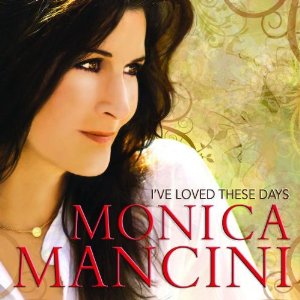
I've Loved These Days: a cherry-picked playlist of rare quality

It isn’t often that I’m tempted to call an album “flawless”. There is usually a track or two that misses the mark, doesn’t connect with the whole, has a slight hint of beating the deadline about it – good enough but not quite in the zone. But Monica Mancini’s I’ve Loved These Days has such a calm sense of completeness about it that I’ve found myself staring at the Bose in astonishment. During the first listen, round about an absorbing reinvention of “How Can I Be Sure” – a number I’ve only ever associated with Dusty Springfield, despite David Cassidy’s best efforts – I actually caught myself thinking, “They really don’t make records like this any more.”

And to be honest, in the best possible way, there is a strong retro feel about the whole thing, not least because Mancini’s phrasing and diction are so effortlessly cool. You don’t miss a single lyric – and how often does that happen these days? Every word is considered, explored and offered up with an honesty that brings to mind female pop singers of the highest calibre: Karen Carpenter or Dionne Warwick at their instinctive best.

The choice of songs also adds to the sense of a time slip. Mancini has cherry-picked a 1960s playlist of rare quality – and in many cases enlisted the help of their originators: Jackson Browne plays guitar and sings backing vocals on “These Days”; Stevie Wonder’s unmistakable harmonica burnishes “Blame it on the Sun”; and Brian Wilson – vocally ageless – features on an intriguingly pared-down “God Only Knows”, giving Mancini the chance to show her mettle against a taste of those legendary Beach Boy harmonies.

These collaborations are testament to Mancini’s musical pedigree, as the daughter of Henry Mancini, the composer behind some of the most iconic film soundtracks of the 20th century. Many of the songwriters she honours here were her father’s peers and clearly exerted a profound influence on her own musical development. Indeed, she calls them her “musical heroes” and offers I’ve Loved These Days as a discovery of what their songs continue to reveal. In that sense, the album makes an interesting comparison with Barb Jungr’s The Men I Love. They both raise a musical toast to Paul Simon, for example: Jungr with “My Little Town” and Mancini with “American Tune”.

Although this album isn’t exclusively American in content – there is a poignant take on the Lennon/McCartney number “I’ll Follow the Sun” – an undercurrent of oblique commentary on the modern emotional landscape of her homeland occasionally ripples to the surface, particularly in the compassion of the Fran Landesman classic “Ballad of the Sad Young Men”, Billy Joel’s “I’ve Loved These Days”, and the flute-dusted beauty of Janice Ian’s “Joy”.

The arrangements are spare, acoustic and almost regal in their simplicity. Mancini clearly didn’t want to simply do an all-purpose album of cover versions. Instead, these are gleaming reinterpretations in which the lyrics take centre stage. Producer Phil Ramone – who had a hand in the original versions of many of these songs – has brought all his skill to the mixing desk, giving Mancini’s fluent, elegant vocal line all the air and space it needs to soar above the tasteful, sympathetic arrangements of Jorge Calandrelli. “I’ve Loved These Days” is a breath of fresh air in a musical climate that is so often hell-bent on over embellishment and extravagance. Perfect.

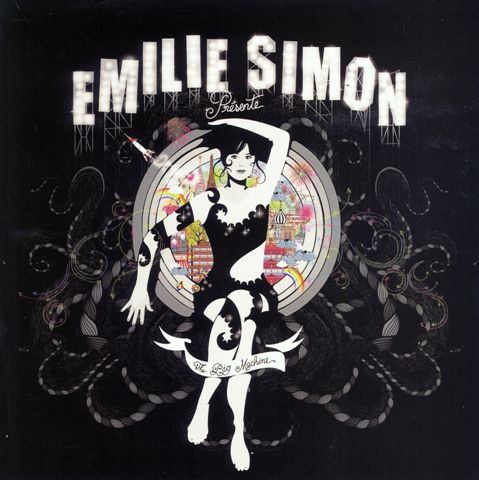
CD Review: Emilie Simon, The Big Machine

11 Jul

Rainbow: a track from Emilie Simon’s new album, The Big Machine

The Big Machine: a new musical vision of an iconic city

A few weeks ago I berated PRs who use the “New Kate Bush” tag to try and snatch a bit of space for the latest quirky singer in a niche that, despite the heralding of numerous would-bes, has only ever really been occupied by one talent. Here, for one night only, I’ll eat my words.

Emilie Simon, a French electro-pop singer and composer (or “sonic auteur” according to the slightly pretentious blurb) with a strong track record in her home country, is already a cult figure in her adopted hometown of New York. Her new album, The Big Machine, a conceptual tribute to the city, is about to hit the UK on a tide of gathering interest. And it doesn’t take more than a couple of spins for the aptness of the Bush comparison to make itself abundantly clear.

At times, the extraordinary swoops and intervals of Simon’s vocals are so reminiscent of Bush’s early work, the timbre so similar, that for a second, it’s like being transported back 30 years to a time when the idiosyncratic masterpieces of the UK’s most singular female singer-songwriter carved such a significant path through contemporary pop. But the comparison works – and is a tribute to both women – because once the frisson has passed, it’s quite clear that Simon is a formidable and unique talent in her own right.

Not for her the metaphysical expeditions across the inner landscape of Bush’s child-woman, with their obscure literary and philosophical references. Simon’s lyrics are emphatically 21st-centry urban, rooted in accomplished, synthesised beats.

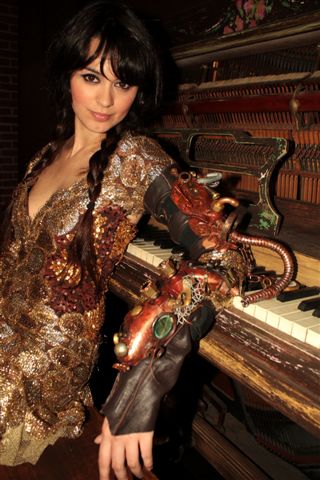
She’s a one-woman electro-band, a pioneer of “The Arm” – a rather startling, customised sleeve that gives her complete control over her musical gadgets and voice manipulation technology and which, in live performance, allows her to replicate the complex, symphonic qualities of her recordings.

Brick by brick this Brooklyn resident constructs a musical picture of an iconic city that obviously has her firmly in its grasp. Simon’s is a different kind of skyline, far removed from the art deco canyons or concrete jungle conjured by the likes of Gershwin and Bernstein.

Emilie Simon: one-woman electro-band

The album is full of arresting juxtapositions: the near cacophony of the urgent brassy intro to “Rainbow” setting up the first appearance of Simon’s deceptively girlish voice; the retro electronica – almost Thompson Twin-like – of the hypnotic “Dreamland”; the brilliant, glittering vocals of “Nothing to do With You” (the most Bush-like of all the tracks, and for me, the album’s standout number, along with “Closer”); the brooding promise of adventure in “Chinatown”.

Moods shift in the flicker of a neon light as Simon subtlely works the technology to give her voice a new resonance. It’s great to hear a genuinely different sound cutting through the increasingly homogenised legions of young female singer songwriters.

Concert Review – Barb Jungr, Jazz at the Fleece (Stoke-by-Nayland), 9th July 2010

10 Jul
The River”: Barb Jungr sings the Springsteen totem at the Carlyle, in cooler conditions than we enjoyed last night

Barb Jungr: a triumphant night for Jazz at the Fleece

In another triumph for Jazz at the Fleece last night, Barb Jungr took on the hottest evening of the year so far, and the throbbing beats of a corporate ball being held in the conference suite next door, and she beat them both into submission. Her key weapon was her sublime ability to conjure a succession of images from lyrics, letting them swirl and merge in the minimal space between the stage and an audience that was hooked, mesmerised, by every word. There can’t be a finer spinner of tales on the live music scene today.

Jungr has evolved a unique performance style that is at once uncompromising and vulnerable. In this intimate setting, she surrendered herself to tremendous risks, using her breadth and range in ways that only a singer who is utterly at ease with her craft could possibly do. And song after song, she pulled it off, through two sets based on her recent album, The Men I Love (conceived, originally, for a highly successful run at the legendary Carlyle Cafe in Manhattan), dusted here and there with a handful of surprises. Concluding the first set with a keening version of “Ferry Cross the Mersey” created an intriguing shift in mood after the gathering intensity of a sequence of songs descending step by step into the darker reaches of emotion.

The Men I Love: conceived for a run at the Carlyle Cafe

At the start, Jungr promised us a journey from fun through pain and loss – recurring themes in her work – to redemption. It was a route peppered with anecdotes and observations: Paul Simon’s grim face amidst the vibrant enthusiasm of a World Cup concert; the hilarious excitement when Micky Dolenz was nearly spotted in a Fulham greengrocer’s; the opposite trajectories of hope and expectation as life goes on (David Byrne’s “Once in a Lifetime”); a salutary encounter with Janet Street Porter during a Radio 4 panel discussion; an early acquaintance with Todd Rundgren’s ex-wife and her quest for a rock star replacement.

But everything came back to the songs. Jungr described how critics have been divided about her treatment of Springsteen’s “The River”, with the more proprietorial lamenting her audacity at tackling one of the Boss’s totem numbers. Her spare, searing exploration of his bittersweet take on a relationship that’s run into the ground had us enthralled and was ample riposte to the nay-sayers. Tears trickled unashamedly as during “Everything I Own”, each word a poignant nudge to a private memory, Jungr enveloped us in a collective recognition of grief and loss. “Red Red Wine” became a keening anthem to recovery – aided, perhaps, by a hint of belligerence. With wry references to the intruding bass thuds from next door, she set her chin high and simply outsung the competition. Neil Diamond’s “I’m a Believer” became a torch-song: who else could achieve that with a Monkees number? The medley of “This Old Heart of Mine” and “Love Hurts” was almost unbearably moving. Paul Simon’s “My Little Town” revealed Jungr’s narrative brilliance at its best.

At the end, she thanked the audience for supporting live music. So a word of praise for the efforts of the team behind Jazz at the Fleece, which continues to be a beacon of live music in this corner of Suffolk. They manage to attract an extraordinary calibre of artist each Friday night, turning a bland hotel function room into a small arena of excellence, and each season features music for a huge variety of tastes. To see even a small number of empty seats is always a disappointment so if you find yourself out here for a weekend and love live music, do check out who’s playing or singing.

Who pays the songwriter?

2 Jul

Audra McDonald sings “Stars and the Moon” from Jason Robert Brown’s musical, Songs for a New World

Jason Robert Brown: taking on the sheet music file sharers

A singer is largely defined by her repertoire, whether she writes it herself or – as is the case for most people – digs into the great treasure chest of work produced, and constantly added to, by a myriad talented songwriters. Their product becomes a vital part of her currency, so forking out a very little for the sheet music that will allow her to study the song, learn the notes and words, come up with an arrangement that suits, give a professional-looking audition, sounds like a no-brainer. Just so the talent on which she is building her own gets a little payback.

Not quite, it would seem. Jason Robert Brown has been having  a fascinating and lively exchange of views on this subject with an ambitious young performer on his excellent blog.

Brown is one of the finest modern American writers of musicals. His complex, profoundly human, songs rightly feature in many an audition repertoire.

In what sounds almost like an idle moment of curiosity, he decided to investigate the extent to which the sheet music for his own songs were being ‘shared’ online, and as the scale of the situation became clear, he began politely requesting on file sharers’ posts that they didn’t do it with his songs any more. After all, $3.99 isn’t a whole lot to spend on something so important to your progress and if you really can’t afford it, the library will help. Either way, the songwriter gets his or her (modest) royalty, and that seems like a good deal.

Many responded respectfully, although with sometimes staggering naivete that they were doing anything dubious. But one feisty correspondent took him on. His patience and reasoning are as impressive as her articulate but way-off-the-mark argument is staggering. This is a hitherto overlooked but very important element of the whole music file sharing debate – and one which all aspiring singers should study.

CD Review – Taeko, Voice

29 Jun

Taeko sings “What are you doing the rest of your life?” from her previous album, One Love

Voice: Taeko's new album - multiple influences knock sparks off each other

Take a talented young Japanese singer, transplant her to New York in her formative musical years, immerse her in what is probably the world’s richest jazz scene, then stand back and listen to all those influences collide, knocking sparks off each other. That’s the story of Taeko Fukao’s career so far, and the result is a fascinating blend of bebop and scat, underscored at times by a poignant serenity fired by her native folk heritage, and at others by the smooth, tasteful sheen that defines the best of modern, mainstream jazz vocalists.

Taeko’s new album, Voice, is a vibrant patchwork of styles that reveals, above all, the passion with which she has explored the range of the jazz idiom. In some ways, it’s a showcase for the benefits of intense study – and just occasionally, the impact is almost overwhelming as she tears up a furious-paced “On A Clear Day” with the dexterity of Ella in her prime, or launches into the bebop delights of the Monk/Hawkins/Hendricks number “I Mean You”, recalling Annie Ross or Cleo Laine at the peak of their vocal powers.

Then she shifts tone and mood with a sublime rendition of the 1940s Japanese ballad “Soochow Serenade” and later, with the self-penned “Spring Nocturne”. Think Sade, with attitude. For all the pace and energy in the surrounding numbers, these are the most effective moments on the album: passages of reflection and melancholy in which a softer, mellow timbre is allowed to flourish on a more burnished melodic line, taken to the limit on Wayne Shorter’s “Infant Eyes”.

This is where Taeko sounds genuinely at home, in the telling of stories, and not least on a subtle, swinging, modernised “Biwako”, a folk song about the Japanese lake near her birthplace at Shiga. Doug Richardson’s melodica solo comes unexpectedly, adding yet another flavour to the music and reflecting Taeko’s confidence in choosing musicians who can complement her eclectic vision with considerable ease: Richardson also plays drums, with Greg Lewis on the organ, guitarist Kevin McNeal, pianist Lou Rainone, and bass player Gaku Takanashi. All have their moments to shine – a sure sign of a generous vocalist.

Such is her versatility that the overall effect is sometimes like being strafed by a benign scattergun loaded with different styles. All of which makes the album’s title more appropriate. She shares one of her most promising vocal qualities – the ability to be part of the band rather than just the singer out front – with the greats. Taeko veers from the soulful funk of the opening track, Herbie Hancock’s “Cantaloupe Island” (lyrics by one of her mentors Juanita Fleming) to Marvin Gaye’s “Inner City Blues”, using her sound in an assertive, challenging way without straying into aggression.

Her phrasing and diction are impeccable, with interesting nuances generated by the occasional hint of an accent rarely heard in jazz. It’s 12 years since she answered the call of the Big Apple. They’ve been well spent and the city has served her well. But if this album is anything to go by, Taeko’s horizons are set for rapid expansion. There’s a big jazz world out there and it’s beckoning an unusual and singular talent.

Torch Songs Aplenty Promised at the Pheasantry

16 Jun

Jessie Buckley and the Joe Thompson Trio: More Than You Know

Claire Martin: jazz royalty heading for The Pheasantry (picture by Kate Eastman)

After the will they, won’t they confusion surrounding the demise of cabaret venue Pizza on the Park – it will definitely close for the last time on Saturday – it’s all systems go at the new location, The Pheasantry in Chelsea’s King’s Road.

Producer Samuel Joseph has switched his programme to The Pheasantry and the good news for torch-song fans is that it offers plenty to look forward to throughout the summer.

Jessie Buckley – an Art of the Torch Singer favourite since I saw her at Pizza in March, and judging by the number of visits you’ve made to that review, I’m not alone! (the uninitiated should click on the video link above) – kicks things off on Saturday 26th June.

If she and pianist Joe Thompson don’t bring the house down with “More Than You Know” and “The Man That Got Away”, I’ll be very surprised.

Then, from 30th June to 3rd July, British jazz royalty in the form of Claire Martin and her trusty accomplice, composer and pianist Richard Rodney Bennett, will deliver their trademark mixture of effortless swinging and emotional subtlety for a short run.

Jessie will be followed by more West End talent, including Avenue Q’s Cassidy Janson (4th July), Kelly Price (18th July), and Shona White (25th July) – who should all be burning up a few torch numbers along the way.

Art of the Torch Singer hopes to make it to some of these gigs and I’ll report back from what is clearly going to be London’s cabaret hot spot. Here’s hoping for some sultry summer nights to match the music.

CD Review – Jude Cowan: Doodlebug Alley

15 Jun

Jude Cowan singing Doodlebug Alley, the title track from her new album

Doodlebug Alley: bringing back memories of a teenage record producer

When I was13, I was a producer for a day. Armed with my trusty Phillips cassette recorder (dodgy mic lead but it worked if you held it in a certain position), I persuaded my seven-year-old sister Isabel to make a record with me. We spent a busy hour extemporising. I know we reached far and wide for our cultural allusions but for some reason only the films of Joan Crawford (there was a Saturday afternoon season on television) and Clark Gable, and sexy underwear (always worth a childish giggle) linger in the memory after all this time.

We came up with some basic tunes, beat the rhythms on a pile of books and, making it up as she went along, Isabel plucked her own lyrics out of thin air with a facility beyond her years. Before we ran out of steam, we had a whole C60 side of material – enough for a whole album – and armed with scissors, a couple of photographs and a black felt tip, I quickly rustled up a cover. I can still see it. Bella, it was called. And I know the words “Includes the hit single…” appeared somewhere, together with my all-important producer’s credit. It must still be around somewhere at the back of a cupboard.

What prompted this flood of reminiscence? A few spins of Jude Cowan’s new album, Doodlebug Alley. Not that I’m suggesting Cowan is stranded in early adolescence or that there is anything remotely childish about the production or concept, or her stridently poetic lyrics. But the overall effect is of a similarly chaotic, random clash of references and influences – and yes, more than a hint of the precocity that makes me wince slightly as I look back down the corridor of years.

Doodlebug Alley is nothing if not experimental and uncompromising. But it’s telling that the first time I grabbed the sleeve for more information was midway through “She Sits at the Window” – itself a nostalgic treat, as it conjured hours of listening to obscure Radio 4 afternoon dramatisations during the afternoon ‘rests’ of childhood – and discovered that the eerie beauty of the piano solo was down to composer Nicky Bendix rather than Cowan herself.

Easy listening, this is not, and Bendix’s interlude provides a welcome respite from Cowan’s acerbic and jagged adventure across a rich landscape of folklore, literature and, in the title track, popular history, in which she mainly accompanies herself on her disconcertingly cheerful ukelele.

The publicity blurb generated high expectations: John Gay meets Hogarth, say, they bump into Brecht and Brel, and the essence of their artistic collaboration is channelled by Cowan as a latter-day Agnes Bernelle. And occasionally, there is the real prospect of those expectations being met – particularly in the visceral bleakness of “Remember Sinners” (an homage to the French poet François Villon), with Tom Fawcett contributing a grim guest appearance, disturbingly bringing the first-hand gallows experience to life (and death). “Jolly Roger” takes a long, hard look at unwanted pregnancy, finding a rare dark humour in the depths of experience. There is some fine, topical, satire too in the vicious “Naughty Daddy”, a timely anti-capitalist swipe.

But the high points are undermined by moments of startling banality particularly in the title track, which is supposed to evoke the live-for-the-moment intensity of London during the Blitz. The awkward rhythmic shifts, a burst of finger-clicking, the rhyming of arse with St Pancreas, and a bzzzz more reminiscent of a dying bluebottle than the drone of an approaching V1, had me glaring at the speakers in disbelief and instead, brought my old Phillips days vividly to life.

I wanted to love Doodlebug Alley (note to PRs: Please stop comparing any hard-to-categorise female artists with Kate Bush. It’s a tired old cliché these days, and rarely flatters either party). But despite its sardonic darkness, it’s left me frustrated. Jude Cowan, a cultural historian, clearly has genuinely original talents to be reckoned with. I’d like to see them harnessed with more discipline and a clearer vision next time round.

Annie Haslam – Renaissance Woman

8 Jun

“Northern Lights” – the song has lasted better than this 1970s promo video

Annie Haslam: back at the mic, where she belongs (picture by Richard Barnes)

One of the great things about being a journalist is that every now and then, you get – or create – the opportunity to connect with somebody whose work, for whatever reason, has provided a soundtrack to, or influenced in some way, your own life. Of course there is also the old adage that you should never meet your heroes in case they turn out to have feet of clay but I’ve been lucky during my years of interviewing singers. Very few have disappointed, and Annie Haslam was no exception.

“Northern Lights” is one of those songs that transports me instantly back to my youth. I was 16  when prog-rock band Renaissance had their only major hit single in the summer of 1978, but 32 years later just a couple of bars of Annie’s soaring lead vocal takes me right back and the song still sounds as fresh and poignant as it did then. I loved songwriter Betty Thatcher’s imagery and in those days, before I had traveled much beyond my own back garden, the idea of turning to see the northern lights shimmering above an aeroplane wing was intensely romantic.

Song for all Seasons: the album that brought us "Northern Lights"

I’ve been a fan of Annie’s scintillating five-octave voice ever since and always felt that Renaissance, who made some brilliantly inventive albums in the 1970s, didn’t get the attention they deserved. So when I discovered that she now lives in the States and combines singing with painting, I decided to track her down for a feature I was writing on singers who have portfolio careers.

During the course of three lengthy telephone conversations, I spoke to Annie about her childhood in Bolton and her early years as a singer, the rise of Renaissance, her later solo career and her discovery of a style of painting known as dream expressionism. At the time, she was ambivalent about the music business – adamant that she hadn’t actually stopped singing, emphatic that her art was simply an extension of her vocal work, but weary of toiling on the road and the effort of managing a career.

So it’s wonderful to report that now, reunited with Michael Dunford – who was responsible for the bulk of Renaissance’s symphonic, folk- and jazz- influenced music – she is back in front of the mic, touring through the summer and recreating many of those epic numbers from the height of the band’s success. Alas for us in the UK, the tour is currently limited to the American circuit, but with Japanese dates also scheduled, hopefully some inspired British promoter will rise to the challenge and bring them back home to their roots.

My conversations with Annie eventually led to a feature about Renaissance in Classic Rock Presents Prog magazine and a proposed profile for an art publication which never saw the light of day. I’m publishing it here for the first time; obviously the emphasis is on Annie’s painting rather than the music, but I still think it gives some insight into the person behind one of the finest – and undervalued – female voices of modern popular music.

Anne Haslam: Singer and Artist

Annie Haslam with her painting "Embryonic Dream" (picture by Scott Weiner)

When singer Annie Haslam woke up one morning in 2002 with the gut feeling that it was time to start painting, she knew she had to go with it. After more than 30 years in the music business, she’d long since learned to recognise the all-important moments that contain the germ of a new artistic direction.

With her soaring, five-octave voice, Annie is best known as the lead singer of influential 1970s classical rock band Renaissance but she has also enjoyed a successful solo career that has taken her around the world. By 2002, however, the rigours of life in a relentlessly commercial industry were taking their toll. She was ready for a change and despite the fact that she hadn’t picked up a brush since her student days at Redruth Art School in Cornwall in the 1960s, her inner voice was insistent.

“I’ve no idea where it came from but I knew from my past experience that I should act on it,” she says. “Although I’d never really painted before. I’d studied fabric printing, photography and lettering at art school. I think I did one watercolour but I didn’t have the patience for it and it wasn’t very good. We didn’t get on!”

Today, Annie lives in the pretty Pennsylvanian haven of Doylestown, a long way from her Lancashire roots, where she has remained since the end of her marriage to American businessman Marc Hoffman. Armed only with a profound trust in her own instincts, she turned her large, light-filled sunroom into a studio, and went out to buy an easel, canvases and paints, and a ‘how-to’ book on oil painting. But she didn’t get beyond page one.

“Everything stayed in that room for two months,” she remembers. “I’d walk through and water the plants and look at that blank canvas. But there was nothing going on inside. Then one day I just felt it was time to sit down and try it, do something. I went out and picked a huge tiger lily. And I started with the grass. Then I did the sky, and put the lily in between. But it wasn’t very good and I was very disappointed, thinking there must be millions of people out there who could paint better than this.”

Upset because she still couldn’t connect with the feeling that had compelled her to start painting, Annie looked again at her work and to her surprise, realised that the grass she had rendered on the canvas was very detailed and textured. So she launched herself on a second attempt, this time concentrating on the greenness of the lawn.

“It was quite weird, because I felt as if someone was holding my hand,” she says. “The detail was exciting and I really liked the feeling. It was real, yet it wasn’t. The next painting I did was of a UFO hovering over an ocean! They were definitely other worldly images and it was as if they were fighting to get through the door. They couldn’t wait. Suddenly I was doing six or seven paintings a day and I found myself working at one o’clock in the morning. It was like a fever, I couldn’t stop. And I was thrilled!”

During this explosion of creativity, she quickly developed a free-flowing, organic style that makes spectacular use of colour to create dream-like landscapes and mysterious, fantastical images: mountains and dragons, moonlit lakes and starry skies. Dubbed ‘dream expressionism,’ it’s a type of art that commands a huge following and Annie soon found her reputation spreading beyond the fan-base she enjoyed as a singer.

“At that stage, nothing was ever preconceived,” she explains. “I would just pick some colours and put them on the brush and start painting. It’s still like that. I don’t know where they come from – and I don’t like looking at other people’s pictures to get an idea of how something should look. If somebody wants a commission done, I ask for their favourite colours and as much information about themselves as they can give me. Then I make a painting. And sometimes they come back and say that I’ve captured them and I can’t tell you what it feels like, quite incredible.”

Annie only had to wait a year for her first solo exhibition. In 2003 a Philadelphia radio station invited her to show a few pieces in its annual classic rock art show, where they appeared alongside the work of Rolling Stone Ronnie Wood and legendary crooner Tony Bennett. Local gallery owner Colm Rowan spotted her work and offered her his entire space. She displayed 63 pieces and sold 26 of them in just three weeks. Further proof of the appeal of her style came in 2005 when she was asked to show three paintings at the Florence Biennale contemporary art exhibition

“Sometimes I’ll get a title immediately, others I’ll be looking at the work for weeks before it comes,” she says. “But the day the invitation arrived from Florence, I’d been working on a 3’ x 4’ oil painting in lavender and golden yellow, and I’d already decided to call it ‘Tuscan Sun!’ I almost fell off my stool when the email came through – the painting took on a whole different meaning after that.”

One thing that has changed since she started her ‘second career’ is the medium. She found that the combined fumes of the oil paints and turps were making her feel ill. Ever mindful of her own health – Annie survived a battle with breast cancer in 1992 – she reluctantly altered her working materials.

“I loved the oils with a passion,” she says. “The colours were a little more subtle and soft, and I could move them around very easily. But when I realised I was making myself sick, I started using acrylics, which have a very different feel. They took me quite a while to get used to and they aren’t as smooth; you can buy different mediums to thin them down but I didn’t want to bring a lot of chemicals back into it. They are far brighter and have a different, vibrant look, which is very healing.”

Annie is adamant that painting is an extension of her singing rather than a replacement for it. She has used her own artwork on her CD covers and a further musical link is crystallised in the instruments she has painted, including four violins for the Trans Siberian Orchestra and two guitars – “What a beautiful instrument to hold and paint” – which now hang in Hard Rock Cafes in Cleveland and San Diego.

“I’ve decided I really have to move on from the past and let it go but I wouldn’t change anything about it,” she says. “If it had been any different, I might not be where I am now, painting. It might not have had the opportunity to come out. I’m so thankful for it because I love to do it, and I don’t have to worry about dealing with many other people, which you do in the music industry.”

Profile

Born in Bolton in1947, Annie Haslam studied art in Cornwall and was briefly a fashion designer in London before she started to sing professionally. In 1971 she joined Renaissance and her five-octave voice quickly became one of the group’s defining qualities through a series of acclaimed albums. In 1978 they had a major hit single with Northern Lights. When the band split in 1987, Annie embarked on a successful solo career. She has worked with the best in the business, including Roy Wood, Justin Hayward, producer Tony Visconti and the Royal Philharmonic Orchestra. She began painting in 2002 and now has a second career as a professional artist, exhibiting her work around the world and accepting private commissions.

Who are Your All-Time Top Ten Eurovision Female Singers?

27 May

55 years of Eurovision history: Oslo hosts the latest installment

The 55th Eurovision Song Contest – Europe’s annual televised pop music extravaganza – takes place in Oslo on Saturday 29th May. Why do I still love this much mocked and derided event? I suspect it’s largely to do with nostalgia. I’ve seen every show since 1971 and if I’m perfectly honest, watching it is more a habit than an eagerly anticipated event these days.

The glory years of a live orchestra – for me, always an element that heightened the excitement – bringing the best (or worst) out of the artists, and occasionally conjuring an unexpected silk purse from a sow’s ear of a song, are long gone. So too are the days when singers were expected to use their native tongue, which was always as much a part of Eurovision’s unique, idiosyncratic appeal as the preposterous voting system.

The whole thing has become a victim of its surge in camp popularity during the last decade: a sporting event, held in vast arenas, which has shed its concert-focused origins. I haven’t attended Eurovision since Copenhagen in 2001, when the to-ing and fro-ing of the live audience throughout the evening completely ruined any sense of occasion. The singing is still live, but today it’s really all about the decibels of the backing tracks, the eccentricity of the costumes and the litheness of the dancers.

However, I will be watching on Saturday as usual. And as always, the big lady singers will command my particular attention. Female solo artists have dominated the contest throughout its history, winning many more times than their male counterparts or group entries. And the competition has attracted some pretty big names, whose reputation extends well beyond their own countries, in its time.

This is my personal top ten, in descending order. They weren’t all winners – my favourite entries rarely have come out on top! – but on the night, the combination of artist and song gelled to create a memory that still rises above all the ridicule. Do you agree? Why not share your top ten with us?

10 – Semiha Yanki: Seninle Bir Dakika, Turkey (1975)

This was Turkey’s first ever entry. Semiha Yanki was just 17 but sung this ambitious, elaborate and symphonic ballad with a conviction well beyond her years. She came last, with just three points – a result that still seems baffling 35 years later. Yanki has continued recording.

9 – Mariza Koch: Panaghia Mou, Panaghia Mou, Greece (1976)

Greek folk singer Mariza Koch presented this absorbing protest song (a reaction to Turkey’s 1974 invasion of Cyprus) complete with bazouki accompaniment. Her dignified stage presence and powerful voice really captured my imagination; remember, this was the year that Brotherhood of Man won for the UK! Compare and contrast… Koch still performs and records.

8 – Remedios Amaya: Quién Maneja Mi Barca, Spain (1983)

Flamenco singer Remedios Amaya stormed the 1983 event in Munich – and scored the dreaded nul points. Why? This torrid, authentic entry was an uncompromising masterpiece, and makes a mockery of the faux-ethnicity of songs like last year’s Norwegian winner. Elfish folksiness be gone. Give me Remedios and her hearfelt wail every time.

7 – Mia Martini: Rapsodia, Italy (1992)

Class, with a side order of razor blades. This was Mia Martini’s second attempt for Italy, a glorious, rambling ballad of pained love, presented with simplicity and all the assurance of an artist who knows that whoever tops the leader board, she has the only seriously good song in the competition. Martini died too young, but her marvellously ravaged voice lives on in the memory.

6-  Kathy Kirby: I Belong, United Kingdom (1965)

I know Sandie Shaw should be on the list, but everyone knows “Puppet on a String” and this performance epitomises the brittle, high-octane talent of a singer who really should have enjoyed a longer career. Kathy Kirby lives quietly in London these days but her music remains hugely popular with her loyal fan base.

5 – Alice (and Franco Battiato): I Treni di Tozeur (1984)

OK, not exactly a solo artist on the night but Alice’s moody glamour and resonant voice rose above songwriter Franco Battiato’s awkwardness so magnificently that I became an instant fan. The song is a classic: haunting, singular and atmospheric, complete with the surprise of an operatic chorus. Alice’s career went from strength to strength and she remains one of Italy’s most important and inventive musical artists.

4 – Paloma San Basilio: La Fiesta Terminó, Spain (1985)

Spain’s greatest musical theatre star (she played Evita) should have walked the contest with this stately torch song. But in the end, the performance was just a little underpowered and instead, Paloma San Basilio had to settle for a lowly 14th place. Eurovision juries really are a law unto themselves.

3 – Patricia Kaas: Et S’il Fallait le Faire, France (2009)

Another moment of class, this time from the modern age of Eurovision. I’ve been a fan of Patricia Kaas since hearing her 1990 hit “Les Mannequins d’Osier” and saw her live at Hammersmith back in 1994. Her participation in the 2009 contest was a welcome surprise, and she didn’t disappoint with this austere, slightly haughty performance of a top-quality chanson.

2 Anne-Marie David: Tu Te Reconnaîtras, Luxemburg (1973)

Anne-Marie David’s three-time ballad was polished and perfectly suited the attractive emotional timbre of her voice. She saw off the challenges of Spain’s equally strong entry from Mocedades, “Eres Tu” and Cliff Richard’s “Power to all our Friends” to gain Luxemburg’s second win in a row.

1 – Vicky Leandros: Après Toi, Luxemburg (1972)

The winner that does it for me, every time I hear it. Vicky Leandros swept to victory with this all-or-nothing declaration of love, an up tempo ballad with a loud, brassy refrain that I used to play at full volume. And this is why I still love Eurovision.