Florence Rawlings sings the studio version of Love Can Be A Battlefield
Florence Rawlings: a lesson in delivering emotion with restraint
An enthusiastic crowd packed Cadogan Hall last night for Mike Batt’s trip through four decades of hit making and film score composition. A Songwriter’s Tale pushed all the right buttons – music from Watership Down (including “Bright Eyes”), Caravan and The Wombles (the wave of nostalgia which rippled through the audience as it recognised the opening oom-pahs of “The Wombling Song” injected another shot of warmth into an already very hot evening), “A Winter’s Tale” and a Simon Bates-narrated segment from his ill-fated musical The Hunting of the Snark.
It all served as a great reminder of Batt’s significant contribution to British pop music. Not just through the novelty value of The Wombles who dominated the 1970s when the children’s television show brought Elizabeth Beresford’s books to life, but also through his skills as a lyricist and composer, forging hits for a host of great singers (and having a few of his own) and writing some truly beautiful scores, some of which were revisited last night in the sumptuous playing of his self-styled Secret Symphony Orchestra. And his encore – “The Closest Thing to Crazy” – was a reminder that the hits keep on coming, together with his shrewd eye for talent. The song was of course a huge success for Katie Melua, who sat discreetly in the gallery, paying tribute to the man who has been such an important influence on her career.
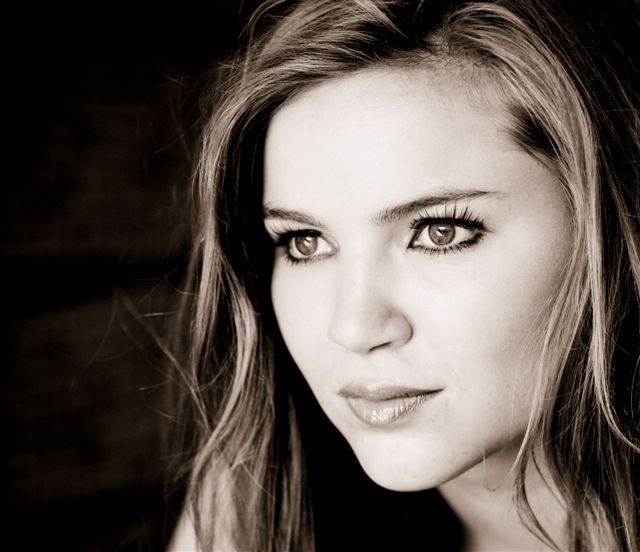
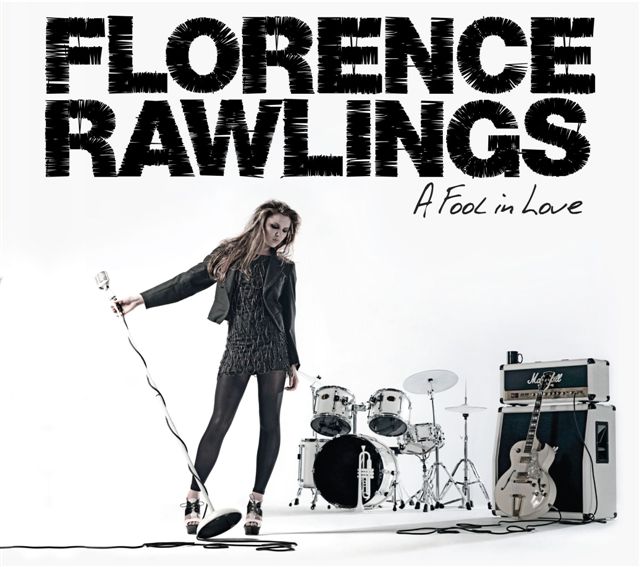
With the best will in the world, Batt is not the greatest singer himself – there always seems to be too much else going on that requires his attention. Last night those particular honours surely went to another of his protégées, Florence Rawlings, who supplied assured and classy backing vocals as Batt worked his way through the hits, but came into her own with a solo number in each set. Her soulful, slightly smoky timbre brought a new resonance to “Caravan Song”, Batt’s epic journey of a ballad, which provided such a memorable moment in Barbara Dickson’s chart career. And in the second, “Love Can Be a Battlefield” – one of those metaphorical explorations of the dubious spoils of profound emotion at which he excels – was a taste of Rawlings’ current album, A Fool in Love.
A Fool in Love: produced by Mike Batt
Rawlings is only 21, yet here were two lessons in how to deliver songs that carry considerable emotional clout with restraint and dramatic conviction, and without resorting to the exaggerated hand-wringing and gurning that defined the finalists on Saturday night’s hunt for Dorothy, BBC1’s Over the Rainbow. Here was a genuine, modest talent, offered simply and without artifice to an audience that as well as Melua, included another fine singer, Mari Wilson: ample evidence that Batt really knows how to pick them.
Barb Jungr’s recent album, The Men I Love, continues to be one of the most talked about records of the year. I just read this excellent post by New York blogger J.B., which sums up the boldness and bravery of this great, category-defiant singer in her choices of song and arrangement.
Summertime Lullaby: tasteful listening for a sultry evening
Here in the UK, on the first evening of the year that could remotely be called sultry, Peggy Duquesnel’s latest album, Summertime Lullaby, makes for a classy hour on the terrace. The California-based singer has come up with some smooth arrangements for a clutch of well loved jazz standards, interspersed with four of her own compositions including the languid title track, which sets the scene for a thoroughly enjoyable set.
An upbeat “My Romance” swings along thanks to Duquesnel’s nifty work at the keyboard – she’s also an accomplished jazz pianist (she later lets fly with a free-flowing instrumental, “On Green Dolphin Street” and a cool “Mack the Knife”) – leading easily into another of her own songs, an elegant tribute to a long relationship, “In the Quiet Hours”. “Drivin’ Blues” will give a wry laugh to anyone who knows the bumper-to-bumper frustrations of the homeward commute, especially when there’s a date waiting at the end.
Duquesnel has assembled a sympathetic, fluent band – guitarists Grant Geissman and Mike Higgins, bass players Jim DeJulio and Ernie Nunuz, and drummers Kendall Kay and Dave Owens – who presumably take turns in the trio although they aren’t credited on individual tracks. Between them they generate a warm, sophisticated tone that’s epitomised in a boldly phrased “Fly Me to the Moon” and another instrumental, Billy Strayhorn’s “Take the ‘A’ Train”.
The album is dedicated to Duquesnel’s husband and culminates in a touching, spare version of “Stay as Sweet as You Are”, the perfect sign-off at the end of a tasteful journey around what is obviously a very personal musical landscape. It’s a perfect soundtrack for the magic hour, as evening turns to night.
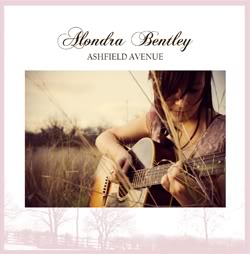
Ashfield Avenue: Alondra Bentley's absorbing debut album
There’s something of the Tardis about the contemporary, thriving young female singer/songwriter market. Just when you think there can’t possibly be room for another one, along comes yet another distinctive, highly individual voice with a new perspective; and the boundaries expand to accommodate them. This is the upside of the Internet as a democratic market place in which the listener is completely in control. Success or failure is no longer defined by the limited vision of music marketers in their air-cooled offices – or the soulless calculations of Simon Cowell.
So welcome to the scene, Alondra Bentley and her debut album Ashfield Avenue, with her delicate acoustic sound, deft use of strings and literate lyrics that command attention with their subtlety and honesty.
If I call Bentley’s voice ‘sweet’, it isn’t because I want to start dealing in twee clichés. There’s nothing saccharine about it. Rather, she has a purity and instinct that evokes the integrity and folk sensibilities of Mary Hopkin or Vashti Bunyan, occasionally giving way to a more resonant, bluesy timbre that comes to life on the bittersweet, jaunty “Giants are Windmills”.
Bentley evokes Don Quizote with “Giants are Windmills”
Bentley was born in Lancaster in 1983 – in a house in the Ashfield Avenue of the album’s title – but has spent most of her life in Spain, and this has obviously had a profound effect on her music, which brings to mind an extraordinary range of influences. There is an adventurous spirit behind the melodies of these charming, occasionally unsettling, songs and while some of the effect might be down to producer Cesar Verdu, the self-taught Bentley’s own musicality – she accompanies herself on the guitar but is joined variously by guest musicians on banjo, charango, piano double bass and trumpet – is clearly a force to be reckoned with.
This is an album for sultry summer afternoons, the songs rippling around the room like tantalising breezes. Each number is a lyrical journey, presented with an attention to detail that allows every musical component to shine: the lilting, honky-tonk banjo; the plink of a guitar string; a sudden, sombre bass piano note. And above it all, Bentley’s assured but intimate voice as she weaves her potent stories. “Some Things of My Own” is a delightful tale of the troubadour’s material poverty. “Sunglasses” plays out the emotions and realisations that follow in the wake of a mundane accident. “I Feel Alive” is a delightful sensory tapestry of memories colliding in the present. This is absorbing stuff.
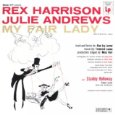
I Could Have Danced All Night from the original Broadway case recording of My Fair Lady
My Fair Lady - an album cover full of nostalgia
Here’s the thing. I’ve been a fan of Julie Andrews since the first time I heard the original Broadway cast recording of My Fair Lady as a child. The LP, one of my mother’s souvenirs from a trip to New York in 1956 when the show was playing, was almost constantly on the turntable, and that crystalline Andrews soprano had me enthralled as she metamorphosed from guttersnipe to lady through those brilliant Lerner and Lowe songs.
In due course, My Fair Lady was joined in my affections by The Sound of Music and Mary Poppins, and much later, Victor/Victoria, which I saw on Broadway in 1996, admiring Andrews’ fascinating stage presence – that artful mixture of regal poise and sophisticated comedy, and still-commanding vocal artistry.
Since then, the consequences of a notorious operation on her vocal chords have been widely reported and Andrews has spoken movingly about the loss of one of the greatest instruments in the history of stage and film musicals. But she has soldiered on with her career as a movie actress and children’s author, coming to terms with it in a way that probably owes everything to the show-must-go-on discipline of her vaudeville roots.
My musical tastes have expanded in all sorts of directions but Andrews has continued to command a special place in my affections. Never exactly fashionable and much – if affectionately – mocked for the clarity of her diction, she nonetheless represents a style of singing that epitomises the glory days of the Broadway musical in a way that few of today’s pop-influenced performers can approach.
And since the singing came to its premature halt, Andrews has continued to grace any film lucky enough to have her in the cast with the same considerable acting skills that won her an Oscar for Mary Poppins and made her the definitive Maria von Trapp. All of which makes writing what must follow feel like an act of sacrilege.
Julie Andrews returned to the concert stage in London for the first time in more than 30 years on Saturday 8th May at the O2 Arena. The show, billed as The Gift of Music – An Evening With Julie Andrews, was a tribute to the work of Rodgers and Hammerstein, whose words and music have been such a constant thread in Andrews’ career. Their songs provided the framework for the first half of the evening, while the second was a semi-staged performance of Simeon’s Gift, a musical adaptation of one of Andrews’ most successful children’s books, co-written with her daughter Emma Walton.
As a concept, alas, the concert was doomed to disappoint on multiple levels: two unequal halves welded together by the singing of five Broadway artists (Stephen Buntrock, Christiane Noll, Kevin Odekirk, Anne Runolfsson and Jubilant Sykes), overseen by a gracious Andrews who too often resembled a benevolent teacher encouraging her charges through a public master class.
How could it fall so far short of expectations? Let’s start with the venue. The O2 is a vast cavern, pure and simple. There could hardly be a less appropriate arena for a concert that by its very title promised a warm, intimate exchange between the star of the show and her audience.
Then there was the title itself, which suggested that even if Andrews would not be singing a great deal, she would at least be a constant presence on the stage, doing rather more than supplying brief introductions for her guest artists. Competent as they generally were, they were not the reason we had trekked out to North Greenwich, and the programme’s over-reliance on their efforts created a constant sense of impatience for something more from the Dame herself.
Instead, she came and went during a first half that was little more than a loosely linked selection of ballads and waltzes, occasionally – and not nearly enough – dropping in a short anecdote.
Which brings us to the voice, a subject on which sensitivity must inevitably be tempered by reality. Andrews had been brutally honest in keeping our expectations of her own vocal performance realistic, explaining that her discovery of a handful of bass notes now allows her to talk-sing her way through a number.
Even so, it was impossible not to feel a wave of nostalgia and sadness when on the giant screen, at the start of the evening, the young Julie in her novice’s habit came running towards us across the Alpine fields and that voice soared direct from the soundtrack above the Royal Philharmonic Orchestra’s live accompaniment.
The audience was so galvanised by this poignant moment that Andrews’ emergence in the spotlight as “The Sound of Music” reached its climax was greeted by a prolonged and passionate ovation. And here was the evening’s major problem. What more could we expect, apart from simply basking in her presence – albeit at a distance of several hundred feet for most of us – for the next two hours? In truth, the answer was, not as much as we would have liked.
Occasionally, a note was held with all the old power, and the audience whooped with appreciation. But Andrews’ strength was always in her melodic line and the enforced changes to accommodate her limited range sounded mechanical rather than fluid and instinctive.
My Funny Valentine: a poignant moment at the O2
Plenty of older singers find ways to develop their story telling and phrasing to compensate for diminishing vocal qualities, and it would be good to hear her exploring these possibilities. Judging by her poignant renditions of “My Funny Valentine” and “Cockeyed Optimist” – the only two complete numbers she performed at the O2 – that would be an effective route, and it would certainly allow her to build a more autobiographical programme with plenty of options for interacting with video of her younger self, if that is her preferred medium.
These two songs aside, we were left with the snippets that she contributed to numbers largely performed by the guest singers, and if we felt a little short-changed, I don’t think anyone could blame us.
Simeon’s Gift, with music by Ian Fraser, who also conducted the Royal Philharmonic Orchestra throughout the evening, is a thoroughly decent, old-fashioned family entertainment. As a chamber musical, it would work a treat. Fraser’s songs are big, sumptuous ballads, and the story is a touching fable of the importance and triumph of ideas and music.
But even with Andrews as the narrator, firmly steering things along, it was entirely swallowed by the darkness of the cavernous arena. And it simply felt too unconnected with the first half of the programme. The steady trickle of early leavers who contributed to a slightly restive feel around the audience suggested that I was not alone in my reservations.
If Julie Andrews ever returns to London with a programme that does more justice to the considerable whole of her career, finds new ways to bring the stories of her best-loved songs alive herself, and offers it in a more meaningful auditorium so that the audience really can connect with her, I’ll happily pay to go and see her again. Until then, I’ll stick to the albums. With the ‘best’ seats at more than £80 and souvenir programmes at £12, the cost of this evening was way too high, even for two hours in the presence of a legend.
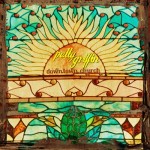
Downtown Church: Patty Griffin - Country without too much twang
My review of Patty Griffin’s new album, Downtown Church, is just up on the excellent Folkingcool web site. I’m usually on the fence about country music, but this album stole my heart with a minimum of twang.
There must be something in Canada’s water. Diana Krall and Michael Bublé are just the cream of a crop of exceptional jazz singers from across the Atlantic who have led something of a global invasion over the last decade or so.
To be honest, I have always found something Krall’s style a bit laconic and chilly, while respecting her tremendous musicality and technique. And giving in to the temptation to categorise that I criticise so frequently elsewhere in the music industry, I must admit that I turned to Vancouver-born Tammy Weis expecting to hear something in a similar vein.
I was soon disabused. With the exception of a pensive reinvention of Lennon and McCartney’s “Help” – an unlikely candidate for a ballad, but it works wonderfully well here – Where I Need to Be (TW2010) finds Weis pouring her life-tales into a delicate patchwork of self-penned songs. Now living in London, she has produced a taking-stock album in which nostalgia and regret are evenly balanced by optimism and poignant musical snapshots.
Tammy Weis explains why she included “Help” on the album, and sings it
For several tracks, she joins forces with pianist/composer Tom Cawley, and their songs provide the album’s most intimate, emotional high points, book-ending it with two elegant, beautifully accompanied numbers, “I Kept Going” and “Heading Home”. There is texture along the way, most notably the Latin beat of “Everyone But Me”, with Weis’s lyrics a dry Martini short of self-pity, and the shimmering “I’ll Spend Forecer”. She swings too, throwing down the gauntlet with “Don’t Want to Fall in Love Again”, co-written with Terry Britten, an articulate account of teetering on the brink in the best traditions of the great American songbook.
“I love delving into my mind and imagination, which can be scary,” says Weis, suggesting that the writing might not be as easy as her fluid interpretations make it sound. “But the song at the end is my reward for expressing what’s inside.”
Weis’s voice is assured and true, just a hint of hardness cutting through when the lyric demands. She plays deftly with the melody without ever sacrificing clarity – every word is given its due. The band is impeccable – Al Cherry on guitar, Arnie Somogyi on bass and Seb de Krom on drums, with several guest players including steel guitarist B. J. Cole (particularly yearning on “Where Did the Time Go”, an end-of-the-affair ballad), and pianist Julian Joseph (“All Because of You”) whom Weis credits as her prime motivator for making an album of original songs.
Auditions are brutal. Meat racks by another name, as even the greatest Broadway and West End stars will tell you. But at least in the real world, rejection is swift, delivered as if by an exquisitely sharp, stainless steel blade. The cut is clean. Scar tissue minimal, at least in the early years. Healing is quick, hope springs eternal and you’re soon off to the next one. Which is why there is something profoundly unpleasant about the prolonged agony of television-based audition shows. Forget stainless steel. They wield a rusty knife with a jagged edge that will leave gaping wounds in all but the toughest of egos.
Over The Rainbow, currently filling the BBC’s early evening prime time slot at the weekend, is the cruellest so far. For non-UK readers, this format has been used to find ‘stars’ to fill plum roles in various Andrew Lloyd Webber West End productions – to date, Maria in The Sound of Music, Joseph, and Nancy in Oliver! Now it’s the turn of The Wizard of Oz. Every week, a group of would-be Dorothys loses a member and we’re now down to the last eight. Which makes it sound more like an endurance sport, and that is basically what Over The Rainbow is.
Lloyd Webber is obviously a kind-hearted man, and his reluctance to inflict a killer criticism always makes his presence seem a tad disingenuous. The real grit is provided by the judging panel – one-time Mrs Lovett and current Mother Superior in Sister Act, Sheila Hancock (who has been given a Cruella de Ville look for the occasion), West End stalwart and Eastenders actor John Partridge, and former voice of an angel Charlotte Church – who give the participants nuggets of tough love after each performance. Hancock and Partridge at least have the benefit of years of stage experience. Church is less convincing as a tutor-cum-judge. She clearly rates her own diva credentials, seizing the chance to out-belt all the contestants in a group performance of the Streisand/Summer disco anthem “Enough is Enough (No More Tears)”. But her youthful success with operatic arias has left her with zero understanding of theatrical performance.
Between them, however, they epitomise the dilemma faced by any musical producer today. Not a single one of this week-end’s performances was in any way convincing from a theatrical point of view. It’s a familiar complaint from composers and directors that too many young performers bring a pop sensibility to musical numbers. They belt and they emote, they strain and they sob, but the songs – deeply embedded in the characters they have been written to represent – require a more complicated treatment, a more flexible, shaded voice, than the full-on style propagated by today’s pop stars. And here is ample justification for those criticisms.
Week by week on Over The Rainbow, these young women are being coached to sell pop songs as two-minute dramas – principally for the quick-fix demands of television. And with very few exceptions, the challenge is beyond them. They are told to focus on the emotion and the story – often a ridiculous demand if it’s a song of experience. Then they are hauled over the coals for failing to deliver truth and credibility. Witness this week-end’s “Cry Me A River” from Danielle Hope, delivered at maximum velocity to cheers from the audience, with absolutely zero concept of the many subtle layers of irony in Arthur Hamilton’s biting, classic torch song.
Missing the point: Cry Me A River on Over The Rainbow
The two who come bottom of the television vote are then exposed to the further cruelty of a sing-off for Lloyd-Webber – the knife being given an extra twist for the one told that she is the “audience’s least favourite”. Finally, when the composer has delivered his verdict and saved one of them for next week’s repeat ritual, the loser must participate in a ghastly sob-fest rendition of “Over the Rainbow”, bravely smiling through her tears and thanking everyone for taking her on a marvellous journey… to where, it remains to be seen.
My advice to all of them would be to sit down with a DVD of Sunday night’s South Bank Show Revisited (ITV), in which Melvyn Bragg returned to New York to interview Stephen Sondheim on the eve of his 80th birthday. The conversation was heavily weighted towards Sweeney Todd, the subject of a 1980 programme which provided plenty of archive footage – it was great to glimpse Hancock’s Mrs Lovett in the original London production at Drury Lane. There were also brief segments from the New York revival of A Little Night Music, revealing why Catherine Zeta Jones’s Desirée so divided the critics. Her “Send in the Clowns” is an acquired taste.
Catherine Zeta Jones sings “Send in the Clowns” and divides the critics
As an exploration of his canon, it hardly scratched the surface. But to hear the clarity and modesty with which Sondheim answered Bragg’s questions was a joy. And in just a couple of sentences, he encapsulated the difference between a technically proficient singer and a dramatically gifted singer interpreting his songs. This was a far more valuable observation on the art and skill of musical performance than anything uttered during those interminable hours of Over The Rainbow.
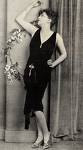
Helen Morgan: a strong legacy for today's torch singers
It’s been a fine week on BBC4 for lovers of old- and new-style torch singing. The channel’s celebration of the Great American Songbook was stuffed with profiles, documentaries and performances rich in the genre, from a biography of Ella Fitzgerald to a welcome repeat of Walk on By, a series on the history of popular song.
One of the highlights was a BBC4 Sessions concert featuring Gwyneth Herbert giving an exemplary take on the Ruth Etting classic, “Love Me or Leave Me”, Melody Gardot’s exquisitely underplayed “Over the Rainbow”, and a great “September in the Rain” from Sharleen Spiteri – all demonstrating that the torch song has never been in better hands.
But most poignant of all was the excellent Clint Eastwood-produced exploration of the life of lyricist Johnny Mercer, The Dream’s on Me. One hundred minutes sped past in a succession of comments and performance snippets – Julie Andrews, Cleo Laine, Margaret Whiting, Maude Maggart (singing a wonderfully touching “Skylark”, accompanied by Jamie Cullum.)
During one of the numerous interview clips of Mercer talking about his craft he mentioned, in passing, Helen Morgan as an example of somebody you would write a particular type of song for. It struck a real chord. Morgan was briefly a huge Broadway star and created the role of Julie in Jerome Kern’s Showboat. But even by the time Mercer referred to her in the 1970s, she had been dead for more than 30 years, and today her name is scarcely heard.
Her style of singing in a light, throbbing soprano, is light years from modern popular taste. Yet Morgan was one of the first of the great torch singers. And a few weeks ago, I had no hesitation in drawing a comparison between Jessie Buckley’s intense, touching way with torch songs in her performance at Pizza on the Park, and Morgan’s way of luring the listener into her lamentations of love gone wrong.
When Helen Morgan’s picture flashed across the television screen, it reminded me of what sparked my interest in the torch idiom over two decades ago. So after focusing on some of the young singers who have piqued my curiosity in recent weeks, here’s a trip back to the roots of the genre.
Helen Morgan was a tragic figure – not in a hell-raising Amy Winehouse way, although she was equally profligate with her talent. When things got too troubled, she’d quietly have another brandy, eventually fulfilling a destiny that was pretty much prescribed in her first starring role as the doomed Julie. But it says much for her legacy that every now and then, a modern performance can still evoke her name and a nod back down the years to a great, if shooting, star.
Helen Morgan sings “Bill”
This is an article I wrote about her in the late 1980s, which hasn’t seen the light of day until now. It’s a bit stodgy and essay-ish in places – and naïve in its approach – but I’m posting it here because in many ways it sums up the elements of torch-singing that I continue to find so compelling – and because I can illustrate it with video, something that would have seemed impossible back then!
Why Was She Born? – The Legacy of Helen Morgan (1988)
Morgan's voice had a unique, pleading quality
Since its plaintive genesis in the early 1920s, the torch song has proved a consistent link between a galaxy of female singers who in other respects could hardly differ more greatly. As an idiom, it provides a historic, if unlikely bridge from Fanny Brice to Barbra Streisand, from Judy Garland to Kiri te Kanawa, from Ruth Etting to Shirley Bassey and from Jane Froman to Dusty Springfield. None of these ladies has ever limited themselves to the genre of the torch song. But each at one time or another has sung from the point of view of the woman on the losing side in love.
If Fanny Brice lit the first torch with her rendering of the classic “My Man”, (“Mon Homme”), consider how Billie Holiday interpreted the same song as a blues number and made it in turn her own. And if Edith Piaf ran the gamut of emotions, she certainly included in her repertoire chansons of a very torchy sentiment. All of these singers at one time or another have reflected through the torch song the suffering of a woman at the hands of a man who does nothing but let her down, but whom she can’t help loving.
Just as the idiom has become more lush and plangent, more downright dramatic, so it has tended to obscure its quieter and more tremulous origins. Now that Dame Kiri has extended her range to include classic torch by George Gershwin, and with a revival of interest in Dusty Springfield’s fulsome entreaty, “You Don’t Have to Say You Love Me”, not to mention the interest that never went away in Garland bemoaning “The Man That Got Away”, it is high time to re-evaluate the contribution of the women who started it all with such sentiments as “Why Was I Born?”
With the release of a full-length, universally well-received recording of Showboat, it might be appropriate to focus on the woman who made its two classic torch songs, “Bill” and “Can’t Help Lovin’ Dat Man of Mine” her own. Her name was Helen Morgan and she might be even less remembered here had not Robyn Archer selected her as an example for her show A Star is Torn.
Helen Morgan made these two songs her own by stamping the torch style with her own delicate lilting soprano. At least two recordings of her renderings survive and are reasonably available. The later pressings can be heard on what amounts to the first cast recording of Showboat which is actually a record of the show’s 1932 revival.
They are remarkable not only for their clarity but for the freshness and immediacy of Morgan’s performances at a distance of over half a century. Her voice has little in common with modern popular tastes but through its unique pleading quality and her astute use of a natural huskiness on key lyrics, it is quite heart-rending in its subtlety.
“I See Two Lovers” – a quintessential Helen Morgan performance
Anybody seeking for an introduction to her lamentably brief recording career should start right here. The extraordinary effect she achieved owes much to her own talent and the light orchestra or band backing favoured by artistes of the day, and little to the dramatic and histrionic lamentations of her future sisters in song. Perhaps the closest we can get these days is to listen to Julia McKenzie’s interpretation of Sondheim’s “Losing My Mind” in Follies. This is at once a pastiche and wholly authentic.
Song of Dreamer: great close-ups of a troubled torch singer
Although tracks by Morgan turn up from time to time on compilation albums (FLAPPERS, VAMPS AND SWEET YOUNG THINGS, Living Era 1982, AJA 5015), it is largely thanks to the Take Two label that a sizeable volume of her work has been gathered together. They have compiled a generous selection for the album HELEN MORGAN-Legacy of a Torch Singer, (1986, TT220) although it is rather biased in favour of her earlier material. Much of this is of interest more for its definitive period flavour than as classic torch singing.
It is really in the sessions recorded in the thirties that the depth of Morgan’s voice had matured considerably from the tremulous high notes which mark songs such as “Just Like a Butterfly”. But there are some real gems on this album, most especially the hauntingly regretful “I See Two Lovers”, which also turns up on the album FALLING IN LOVE AGAIN – Classic Female Vocalists of the ‘30s (Conifer 1987, TQ 155). This recording demonstrates to perfection the wistful catch in Morgan’s voice, a sadness which she was able to convey through restraint rather than high drama.
For a more general introduction, Take Two dips into the careers of four singers including Helen Morgan on its album THE ORIGINAL TORCH SINGERS 91980 TT207). The others are Fanny Brice, Libby Holman and Ruth Etting. The latter was probably the most prolific female recording artist of the thirties and numerous collections of her material are widely available. She seems to have endured the test of time more readily than Helen Morgan, while Fanny Brice is better know as Funny Girl these days.
Helen Morgan was a performance chanteuse who, apart from her major stage roles, sang in nightclubs and starred in the Ziegfeld Follies. She might have been a great film actress but after an auspicious debut in Applause the right parts never came along. She might have been an even greater recording artist but performing was her forte and she did other things only as time permitted. Nevertheless diligent searching can result in the discovery of rare pressings, including previously unreleased radio broadcasts which are increasingly becoming a source for the nostalgia buff.
Perhaps the greatest torch song of all is Gershwin’s “The Man I Love”. Yet Morgan never recorded the song commercially. It would be nice to think that an unpublished pressing or wireless performance lurks in a vault somewhere awaiting discovery. In its original working, as sung by Morgan, it would undoubtedly be a far cry from the lavish interpretations of more recent times.
As it is, we can still appreciate the difference in concept between then and now by listening to Helen Morgan’s soufflé-light rendering of “Why Was I Born?” which in accordance with more modern tastes is usually belted out over a rich orchestral backing. Suddenly, to hear how it was originally performed is to hear how it should be performed. The surprise is genuinely moving.
And Helen Morgan perhaps more than any other singer of her generation comes closest to crossing the line between torch and blues. Not that her voice bore any resemblance to Bessie Smith or Billie Holiday. But listen to her interpretation of “Frankie and Johnny” and hear how the divide between them is not so great after all.
There was clearly a brief revival of interest in Helen Morgan’s career after her sad life was given typical Hollywood treatment in a 1954 biopic (The Helen Morgan Story, with Ann Blyth’s singing voice dubbed by Gogi Grant, herself a great torch singer of the 1950s). Collections of her rarer recordings including standards like “Body and Soul” and “More Than You Know” were issued, usually pairing her off with Fanny Brice. There is also a 1969 album issued by RCA Victor in its vintage series which boasts a very discering selection of her material.
These recordings are obviously harder to come by but well worth seeking out. In many ways the quality of these pre-digital mastering issues is clearer than more recent efforts, mainly because the sound is completely true to the original.
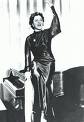
Helen Morgan in characteristic pose atop a grand piano
Despite the quality of her more obscure material, the greatest testimony to her rare talent as a torch singer is her legacy of the show-stopping standards which enraptured her audience wherever she was performing, usually characteristically perched atop a grand piano. That such a quality can still capture the imagination after so many years is surely a reason for restoring Helen Morgan to her rightful place in the gallery of all-time-great female performers.
Love Me or Leave Me – a feature I wrote for Gay Times on the classic torch singers, from December 1991 read
Handing on the Torch – a piece for The Wire magazine, tracing torch singing from its roots to modern smart pop read
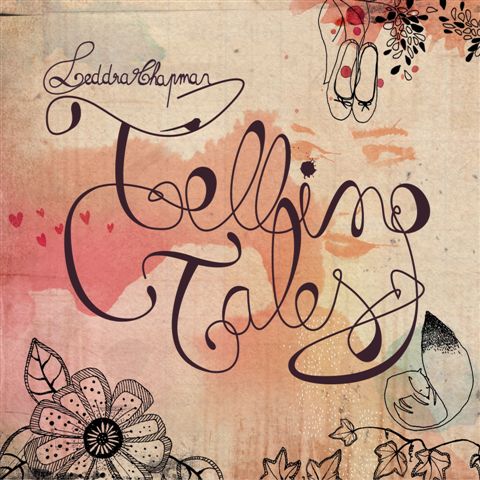
If musical influences were sweets, Leddra Chapman wouldn’t have wasted any time with her nose pressed up against the shop window. She’d have walked in, charmed the owner and been given free rein to create her own special selection. That’s the joyful impression left by her first album, Telling Tales.
At a time when young British female singer/songwriters are enjoying an unprecedented boom, hype is easily mistaken for genuine talent. Not in Chapman’s case. She rallies her musical instincts with flair and assurance. These songs are rounded stories, folk tales of love, fate and friendship for the 21st century, sung with crystal-clear diction and minimal embellishment, worthy of the all-important airplay they’ve been getting.
Those diverse musical influences lap at the edges without dominating or tipping into pretentiousness: a hint of Vaughan Williams here, Joni Mitchell there; the evocation of a brass band that momentarily transports you to a village green in summer (“Story”); a weakness for her toy piano on “Picking Oranges”.
Telling Tales: an auspicious debut
“Edie” is one of the highlights, a searing vignette of a short, tragic life. Another, “Wine Glass” cleverly distils the trivial gesture – toying with a drink – that becomes overwhelmingly significant for the one left behind in a long-distance relationship. And the poignant “Wrap Me Up”, with its melancholy piano intro, is a bittersweet account of two people wanting different things from their love affair.
On stage, Chapman has an engaging charm that belies the depth of her lyrics; her showcase at the BBC Club last November was a shaft of sunshine on a bitterly cold winter’s day. Telling Tales is a pleasing and auspicious debut.
Someone who sings about love and loss, and the pain of experience. The power of torch-singing lies in its effect on the listener. For me, it transcends musical genres. These pages explore the dazzling, and sometimes dark, world of the female singer through history and in the present. Concert and CD reviews, interviews and articles combine to create a comprehensive view of this vital strand of popular culture. Why not share your views and experiences of your favourite artists, suggest performers you would like to see featured - and let me know what makes a torch singer for you?





What do you think?