The making of the album: Joyce Cobb and Michael Jefry Stevens in the studio
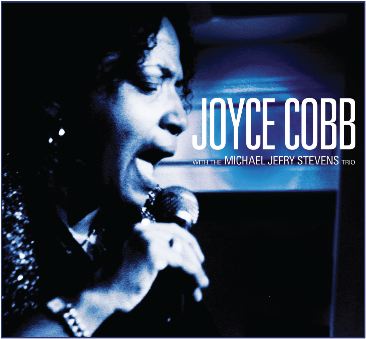
Joyce Cobb with the Michael Jefry Stevens Trio: an album of considerable quality
I’d never claim to be a jazz expert, so when I listen to a singer who’s been filed in that particular section, it’s as the eternal novice. As with the work of a painter or a sculptor, my response is always visceral. I like it instantly or I don’t. Very occasionally, something grows on me after several plays or over the course of a set at a gig. But usually, it’s that first reaction that sticks. I’ll leave the hardcore analysis to the genre’s aficionados.
So what was my first reaction to Joyce Cobb with the Michael Jefry Stevens Trio? Aside from the fact that it doesn’t exactly trip off the tongue as an album title, I was hooked. “Right, here we go,” says Joyce Cobb , one of Memphis’s finest exports, at the start, launching into a harmonica intro to “Moanin’” before unleashing her warm, honeyed tones on the lyrics. It’s a potent combination that leaves you in doubt that you’re in the presence of an assured, class act.
Cobb might be billed as a jazz singer, but there is plenty of soul in her voice too. That means comparisons with Ella (coming through in Fats Waller’s “Jitterbug Waltz”), Billie (whose ghost is surely hovering in “If You Know Love”) and Sarah are inevitable. She certainly doesn’t come up short in the bold phrasing or the way she takes the melody and unravels it like a fine thread of gold. She bends it and stretches it but never lets go of the line. That’s a singer’s singer for you. And in the company of Michael Jefry Stevens on the piano, with Jonathan Wires on the bass and Renardo Ward on drums, she has precisely the framework she needs to work some intriguing magic with this set of standards. And comparisons aside, what comes across most clearly is the art of Cobb herself, in absolute command of every song, serene and completely comfortable within the music. Her voice is a prism of shifting moods and emotions.
There’s a beautifully restrained “Skylark”, with Stevens sublime on the piano, a playful “My Heart Belongs to Daddy” that banishes the threat of Earth Kitt-style outrageousness to the far reaches, and a lovely mash-up of the Dorothy Fields/Jimmy McHugh ballad “I’m in the Mood for Love” with some new lyrics from James Moody. “If You Never Come to Me” has a breezy samba quality. Stevens lays on the atmosphere again at the start of the plaintive Jimmy van Heusen/Johnny Mercer number, “I Thought About You”. It’s Wires’ turn to shine with a spare accompaniment to Duke Ellington’s lament “Daydream”. By the time Cobb gets scatting – something, I’ll admit, I’ve always found an acquired taste – on Thelonious Monk’s “It’s Over Now (Well You Needn’t)”, she’s long since had us in the palm of her hand.
This is an album of considerable quality that rewards repeated listening, which is just as well for us here in the UK. In the absence of any London gigs from Cobb, we’ll have to make do with it for the time being.
Lucky readers in mainland Europe, however, can find her with the Michael Jefry Stevens Trio on tour right now in the following cities: 5th October, Prague (Jazz Dock); 6th October, Graz, Austria (Stockwerk); 7th October, Vienna (Reigen-live); 8th October, Darmstadt, Germany (Knabenschule); 9th October, Luxemburg (L’Inoui Café); 10th October, Brussels (L’Archiduc); 11th October, Frankfurt (Jazz Keller); 12th October, Reutlingen (Artgallery Reutlingen); 13th October, Neustadt (Katakombe); 14th October, Paderborn (Jazz Club), 15th October, Lausanne (Chorus); 16th October, Chur, Switzerland (Jazz Club).
A legend in her own living room: Gwyneth Herbert’s acoustic version of “My Narrow Man”
Gwyneth Herbert: a vocal chameleon in statement shoes
It was quite a night to head up to Snape on the wild side of Suffolk for the premiere of Gwyneth Herbert’s sea-inspired new song cycle. The heavens seemed to be hurling buckets of water in rapid succession at the windscreen, making the A12 in the rush hour even more of a challenge than usual.
In the 30 seconds it took to dart from the car to the dry haven of the Britten Studio foyer, some of us had good reason to consider returning our waterproofs to their manufacturer with a stinging reference to the Trade Descriptions Act. Out on the salt marsh, curtains of rain continued to blow in from the North Sea. Autumn had arrived with a wet fanfare. Could Herbert’s experimental piece – the fruit of a six-month Aldeburgh Residency – possibly live up to such an appropriately elemental setting?
Yes, indeed it could. First, however, she sharpened our appetites with a set based mainly on songs from her most recent album, All the Ghosts, setting off at a cracking pace in statement heals and polkadots. “So Worn Out” was an instant showcase for one of the most fascinating, multi-textured female voices on the scene. Herbert can veer from smoky blues to a keening falsetto in a single phrase – a stiff challenge for the dextrous sound engineer, on his mettle throughout the evening. One minute, she has the sweet, clear timbre of the innocent folk singer. The next, she’s growling Grace Slick-style with the throaty rasp of a leather-lunged survivor. She’s a vocal chameleon, and it suits the rich imagery of songs that tell eccentric, sad, joyful and vibrant stories of life in London town that ring with authenticity.
All the Ghosts: vibrant stories of London life
Herbert’s virtuosity, and her eclectic taste in obscure instruments, asks a lot of her band: guitarist Al Cherry, Dave Price on a multitude of percussion, and Steve Holness on the double bass. And they did her proud through a roller-coaster repertoire, from the jaunty ode to a quaint boyfriend (“My Narrow Man”) to the melancholy torch-song “Some Days I Forget”, as close to an English chanson as you will find. “My Mini and Me” rang bells with anyone who finally has to say farewell to their first car, and “Annie’s Yellow Bag” struck a bittersweet blow for creative individuality. Sung live, “Put Your Mouth Where Your Money Is” came across like a gallows march for the critics, and despite Herbert’s disarmingly cheery wink, had some of us shifting uneasily in our seats.
But for me, the most affecting moment in the first half was the detour she made via a song from the score Herbert was commissioned to write for a screening of the Marion Davies silent film The Patsy. Even out of context, “Not the Sort of Girl” was an exquisite portrait of a whimsical creature, brought to life by Herbert’s plain, restrained vocal work.
That gift for conjuring characters in the space between the stage and the audience became even more apparent after the interval. For the eagerly awaited second set, Herbert and her band were joined by writer Heidi James and idiosyncratic folk trio The Rubber Wellies for a piece described as “An exploration of the sea”. Weaving the spoken word with Herbert’s evocative lyrics and audio tracks, the enlarged group proceeded to paint an aural seascape, populated by figures who sprang readily to life in the mind’s eye.
Herbert explained how she’d been inspired by her walks on the Aldeburgh shingle, by random conversations and encounters, to create a song cycle that roams far and wide for its references. In her pungent lyrics and engaging melodies, tavern drinkers rub shoulders with the redoubtable Fishguard women who repelled the invaders at the end of the 18th century; a captain thinks longingly of home; the brilliantly-sketched Miss Wittering – my favourite – sighs her way around the decaying gentility of her seaside hotel. And all are linked via Heidi James’s absorbing tale of the beachcomber, obsessively cataloguing her finds and sorting them in the shack, her “museum”. You waited agog to find out what the next list of detritus would contain.
The audience was enthralled. This was a mesmerising set, peppered with moments of drama, that found its way to the heart of our intense, ambivalent relationship with the seaside. There was, for example, a minute of eerie magic as Herbert, who had disappeared from sight, hypnotically rolling pebbles across the stretched hide of a drum to replicate the ebb and flow of the sea, reappeared at the back of the auditorium, her siren voice floating unaccompanied down to the front row.
As a subject, the sea plays to all Herbert’s strengths as a songwriter, and she has responded in kind with laments and shanties to stir the heart. Any quibbles are minor – a cluttered stage, which sometimes prevented her from moving fluidly from mic to piano, for example, and the lack of an imaginative lighting plot that would have heightened the drama – and will surely be resolved as the piece evolves from being a freshly minted work in progress.
This is only the beginning for Gwyneth Herbert’s sea song cycle, which surely has an exciting future in live performance and – please, Mr Producer – a good recording.
Maini Sorri’s biographical video for her participation in I’m a Hollywood Star features clips from several songs featured on Someday
Someday: deceptively simple lyrics combine with melancholic undertones to generate an ABBA-esque frisson
Not everyone can take a quirky little ditty and make it credible. It takes sincerity, a deal of musical sensibility and a belief in the ultimate message of a song that is probably greater than the sum of its parts. Maini Sorri seems to have the ability in spades. How about this for a couplet?
“Truth is you were selfish and a phoney.
I shouldn’t have trusted you and your baloney.”
It’s one of my favourite snippets from her new EP Someday, a small collection of five songs that frequently reveal a melancholy undercurrent beneath their whimsical lyrics and well-crafted melodies. Does that sound reminiscent of a certain other Scandinavian outfit? I’m not suggesting that there are huge similarities between Sorri’s work and the nuances of Benny and Bjorn’s finest numbers. But in the deceptive simplicity of lyrics that can sound banal, even childlike, at the first hearing before they work their way under your skin, and the layered arrangements, guitar-driven and piano-based, with their minor accents, it’s impossible not to detect a hint of ABBA’s mastery of the accessible pop tune with the dark back story. And it’s no surprise that she cites Agnetha Faltskog as one of her main singing influences.
Sorri is a Finn who lives mainly in Sweden and is gifted with a pure, crystalline voice that easily covers the ground between pop and the more mainstream reaches of modern folk. Her accent – more shades of that ABBA-like appeal – gives these songs an air of innocence, a lack of guile, that surely belies her all-round musical strengths. She knows exactly what she’s doing and the sound she wants to achieve, and the result is a modest little box of jewels, from the catchy, twinkling intro of the title track (don’t be fooled, it soon gets elemental and philosophical, and has its eye on the great hereafter) to the gently contemptuous “I Shouldn’t Have Trusted You” (source of the baloney reference) and the sadly defiant “I Am Leaving”, which is also offered in Finnish as “Lahden Yksin”.
My first thought on playing “Someday” was that it has a certain Eurovision quality – in a good way. I don’t know if Sorri has tried her luck yet in the Finnish or Swedish selection processes for the contest, but reading her thoughtful and intelligent blog posts on the subject, I wouldn’t be surprised if she has ambitions in that direction. With a growing following – not just in Europe but also in the US and Canada – this could be a prime time for her to make that particular move.
Caroline O’Connor: triple threat gives it large in the West End
Caroline O’Connor seems to have the West End in the palm of her hand if reviews of The Showgirl Within are anything to go by…
Liza Minnelli talks about choosing the songs for new album Confessions
The latest work from Broadway royalty is on its way to me in the shape of Patti LuPone’s autobiography and Liza Minnelli’s eagerly awaited studio album Confessions. Reviews will follow in due course but my appetite has already been whetted by Michael Miyazaki’s tantalising reports on Ms LuPone’s tell-it-exactly-as-it-was writing style and Minnelli’s indestructible gifts as an interpreter of lyrics…
Listen to Sandie Shaw’s live performance of Made in Dagenham
Sandie Shaw has been popping up all over the place ahead of the release of the much-vaunted British film Made in Dagenham, a fictionalised feel-good account of the impact of Ford’s female workers on the equal pay movement in the 1960s. Shaw, of course, is a Dagenham girl who – albeit for a few weeks, before her stratospheric rise to pop stardom – actually worked in the factory. Who better to sing the title track? And what a joy to hear that unique voice, cool and stylish, after too many years’ absence. A clutch of live performances seems to have rekindled her appetite for singing but she told BBC Radio 2’s Steve Wright that she needs loads of encouragement to get back into the studio. If someone wants to start a petition, I’ll certainly sign it…
Barbara Dickson: touring early in 2010
Happy Birthdays this week to Barbara Dickson, who has a major UK tour lined up for early 2011, coinciding with the release of a new album (recording has been going well according to her tweets) and publication of the paperback edition of her autobiography A Shirtbox Full of Songs. I recently interviewed her about her book, and you’ll be able to read all about it soon…
Curiosity value: Forget the sound quality and see how Mari Wilson styles Lili Marlene
and to Mari Wilson, also with a new album release imminent, an eagerly awaited one-woman musical about to test the London water and the revival of the fizzing, wry and brilliantly acerbic cabaret trio Girl Talk scheduled for 2011… Girl Talk will reunite Mari and Barb Jungr, and they’ll be joined by a soon to be announced replacement for Claire Martin…
Autotune be damned: why Barb Jungr is the real deal
It’s X Factor season again, apparently. The Art of the Torch Singer would happily let that pass without any comment whatsoever, but for the great autotune debate. Barb Jungr recently raised the issue on her Passport From Pimlico blog and asks why nobody is making the anti-autotune argument. It seems to me that she’s made it eloquently herself in a couple of heartfelt sentences. And here’s an interesting new angle on her hit album The Men I Love…
Juliette Greco: chanteuse sans pareil
Finally, existentialist icon Juliette Greco is coming to the Royal Festival Hall on 21st November for a concert that forms part of the London Jazz Festival. It’s 10 years since I saw this legend of chanson at the Barbican on a highly memorable evening. My tickets are booked and you’ll be able to read the definitive review right here!
The blues are just torch-songs: Dolores Scozzesi in performance
Dolores Scozzesi: there's nothing like discovering a new voice
There is one good thing about returning from holiday: a healthy pile of CDs for review has accumulated during the summer, promising plenty of interest to lighten the darkening autumn evenings. An even better thing is when you pick one, randomly, from the pile, put it on and out of nowhere, a new voice stops you in your tracks.
After all these years of listening, and not to sound too blasé about it, the “Wow” factor needs to be pretty strong to have that kind of effect. And it really has to be something different. So thank you, Dolores Scozzesi, for working a little magic as the last dregs of summer evaporate.
A Special Taste appears to be New York-born Scozzesi’s first album – and it’s long overdue, given her credentials: Lee Strasberg Institute alumna, one-time voice student of Phil Moore, improv specialist who has performed alongside Robin Williams and Jay Leno, former ex-pat resident of Lyon who has toured Europe with her own jazz troupe, and singular cabaret performer who has ripped up Sondheim and Sting to great acclaim on the West Coast.
It’s the voice that grabs you to begin with. A rich contralto with edge, snapping from molten serenity to a predatory growl in a single phrase, and a timbre that makes you want to place your hands on the speakers just so you can capture something of its individuality. She switches easily between the ominous (“Stay Out of the Moonlight” is a glorious don’t-do-as-I-did word to the wise) and the edgy. “Jazz is a Special Taste” is a stop/start exploration of the allure of the genre to which Scozzesi has loosely hitched her star.
I say ‘loosely’ only because throughout the album, she seems to be daring the listener to put her in a specific box. The phrasing sounds so spontaneous that I doubt any two live performances of a song are ever exactly the same, in the great tradition of artists like Billie Holiday and Sarah Vaughan. And as with those greats, the story telling is commanding. You have no choice but to listen. The arrangements by Eli Brueggemann and Gary Fukishima give her the ideal springboard to create these vivid word pictures.
Then there is the choice of songs. Standards from Cy Coleman and Carolyn Leigh (it’s a long time since I heard anyone treat “You Fascinate Me So” with such dry wit) and Fred Ahler and Joe Young (“I’m Going to Sit Right Down and Write Myself a Letter”) have strange but fascinating bedfellows in a pair of Bob Dylan numbers, an astringent take on “One More Cup of Coffee” and a moving, bossa nova treatment of “Just Like a Woman”.
I don’t know what the Dylan purists will have to say about that, but as a late comer to the Dylan lyrics appreciation society myself (I’m no lover of his voice, and that’s been something of a barrier to enjoying his work), I’m fascinated by the endless reinvention that he attracts these day, particularly from female vocalists. Long may it continue.
Scozzesi’s liner notes shed significant light on the final number on the disk, an acoustic treatment of “Autumn Leaves”, melding Johnny Mercer’s English lyrics with the original French words of Jacques Prevert and culminating in a self-penned vocalese tribute to her late husband, dark, raw and touching. This is an album to be enjoyed in discerning company, with firelight and good wine.
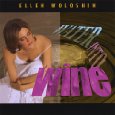
Ellen Woloshin sings “Joanna”, a song from new album Water Into Wine
"Water Into Wine": sophisticated, literate and absorbing
“Where does all the time go?” asks Ellen Woloshin on the fifth track of her new album, Water into Wine. It’s a good question, coming half way through a collection of largely self-penned songs that have already taken us through several shades of loss and the cyclical nature of relationships.
By this stage, what starts out like a break-up record, with a touch of Carole King-style self-affirmation (“Making My Way Back (To Free)”), has marked itself out as a sophisticated piece of work, defined by literate lyrics, absorbing key changes and modulations, and underpinned by a shifting, restless quality as the core of each song crystalises before Woloshin moves on to another point of view.
She has a lot to say about life experience and – the sign of an assured and skilful songwriter – she says it with clarity and economy. Music Connection Magazine described her approach as “decidedly female-friendly”, an epithet that strikes me as unnecessarily limiting for such universal lyrics; sure, one or two numbers – “Just Come Home” and “The Words” – might be tagged ‘women’s songs’ but nobody should be put off by such rigorous demarcation.
New Yorker Woloshin is the daughter of celebrated jingle writer Sid, and made her own early way spinning jingles for some well-known American brands. For some time, she’s written successfully for other people, including Dionne Warwick, Ben Vereen and LaToya Jackson. It’s an impressive career path that must have been invaluable in honing her gift for blending instant accessibility with personal reference. Woloshin’s pure alto voice has emerged as a fine, elegant vehicle in its own right, adept at expressing sentiment without pitching into sentimentality.
“Joanna” is a song about the ache of loss; “Round We Go Again” captures the relief of a relationship recovered from the brink; “Don’t Talk to Me That Way” captures the stealthy, destructive blight with which a cruel word can infect a love affair; “Let It Go Now” is a pick-yourself-up message of hope.
There are two odd songs out: Lennon and McCartney’s “We Can Work It Out”, punctuating the line of experience described by Woloshin and her songwriting partner Jennifer Dent with a loose, almost jaunty interpretation of the Beatles classic; and Barney Griffin’s “You Break My Fall”, which brings the set to a calm, poignant resolution. Astutely produced by Steely Dan veteran Kevin Bents, Water Into Wine is a smart, polished advertisement for an impressive talent.
Broadway Baby: Caroline O’Connor signals her return to London at the Sondheim Prom
Carolin O'Connor's The Showgirl Within hits the Garrick Theatre on 27th September
I recently interviewed Caroline O’Connor for a major feature on how to perform the work of John Kander and Fred Ebb in The Singer magazine. At the time, she was touring in Chicago in Australia, clearly having a whale of a time as brittle Velma Kelly – “Like a cat falling down the wall, clawing at it just to hang on,” as she described the character – and eager to speak about the impact the work of these titans of musical theatre has had on her successful career.
Caroline was born in the UK – in Oldham, in fact, a town that has produced its fair share of theatrical talent over the years – but her family moved to Australia when she was still a small child, and ever since she has split her professional life between the two countries, with the occasional Broadway foray thrown in for good measure. Thanks to the big Chicago revival and other successful projects, Oz has had by far the better deal during the last couple of years. So with all due respect to her fans down under, the news that Caroline is bringing her new one-woman show, The Showgirl Within, to London (at the Garrick Theatre from 27th September) means that for a little while at least, we can reclaim this firecracker of a star for our own.
Her “Broadway Baby” at the Stephen Sondheim Prom gave a taste of the dynamism we can expect from the show. But it would be a huge surprise if Kander and Ebb didn’t loom equally large in the programme. In the Singer article, Caroline shared centre stage with a host of other musical theatre luminaries, including her heroine Chita Rivera, Karen Ziemba, Joel Grey and Brent Barrett. As a result, I could only use a fraction of the insight and enthusiasm she provided over the course of our interview. So the impending arrival of The Showgirl Within is a great excuse for sharing the conversation in full. Here it is.
Sally Bowles is so iconic among the great female musical roles that even understudying the star in the faint hope that you might get on for a matinee once in a blue moon is too good an opportunity for a young actress to miss. That was certainly Caroline O’Connor’s view in 1986 when, towards the end of her stint in the chorus of Me and My Girl, she was cast as a Kit Kat girl in Cabaret with understudy duties. It required all her pleading and acting skills to earn an early release from her contract to take the job.
“I was dance captain on Me and My Girl, so I had to go and beg my boss to let me go,” she says. “I think I shed tears, even! I said I’d train my replacement without any pay, I wanted the Cabaret job so badly. I’ve never been so excited in my life, being cast in something, because of its reputation. Gillian Lynn was directing, and of course she was so well known at the time because of Cats. Anyway, I was able to take it, and we took the show on the road then took it into the Strand Theatre.
“It was an amazing experience, maybe not the most renowned production ever, but just to get to do that music every night… Also, there is the depth of the story, it’s so incredibly moving. And that’s where I met my husband, too, so it’s had a big impact on my life. We opened on the Tuesday night in London and I went on to play Sally Bowles the following Saturday matinee, so it was a pretty fast intro to play that role that everybody was so familiar with. I remember them saying, “You don’t have to go on because we’ve only been in town for five days and you haven’t even had an understudy call yet.” But I insisted: ‘No, let me at it! I can’t wait to get on.’
Nobody who plays Sally is immune to the shadow cast by Liza Minnelli’s Oscar-winning performance in the film, an experience that gave Caroline her first hint of how fixed some audience’s preconceptions can be.
“When I went on to play Sally, my agent was in the audience and behind him were a couple of American tourists,” she says. “And of course I played the role with an English accent, as that’s what Sally had. And they hated the show, whining all the way through. At the end, as they were putting on their coats, one turned to the other and said, ‘As for that Sally Bowles, well she didn’t even try to do an American accent.’ I thought it was hilarious. You can appreciate it because of the popularity of the film but at the same time, I was a little bit offended because I’d put so much effort into my beautiful pseudo English accent.”
That little baptism aside, Caroline is quick to nail the old cliché that Americans don’t get irony – particularly when it comes to Kander and Ebb.
“You read their shows and listen to them, and think that these are two people who really understand irony and are able to include it in their work. That tongue-in-cheek referring to the general public – as the Emcee does in Cabaret, and Billy Flynn and all the other characters do in Chicago. They look at the audience and they’re saying, ‘You know what I’m talking about.’ It’s quite incredible.
“Chicago is such a beautifully written piece of work. Here in Sydney it’s been wonderfully well received. It’s only been 11 years since the show was last here in Australia, and yet it is garnering great reviews and is doing fantastic business. So again it’s found its niche.”
Casual theatre-goers are often surprised to discover that the creators of Cabaret were also responsible for Chicago, and a host of other great work besides. For Caroline, there is always great satisfaction in spreading the word, particularly when it comes to their lesser-known pieces. She first met them in person during the short-lived 1988 production of The Rink at the Cambridge Theatre, where she was understudying Diane Langton in the role of Angel.
“Because Angel is such a demanding part to sing, and Diane preferred not do all the performances, I was playing the matinees,” she recalls. “That meant I was actually contracted to do some performances and I could revel in the extraordinary experience: the storyline, the concept, the humour in their work. It makes it so easy to play as a performer. It’s so beautifully written – they write so well for men, but I just think the way they write for women is mesmerising, a bit like Sondheim. They seem to understand us so well, especially older or troubled women! And when the show came off, there was an outcry because it was such a wonderful piece of work. No-one could believe it.”
Caroline was fascinated by Kander and Ebb’s approach to the London production. They weren’t interested in resting on the laurels of The Rink’s Broadway success.
“What was extraordinary was that they wanted to cut a number at the end called ‘All the Children in a Row’, which I think is a brilliantly written song,” she says. “And Diane Langton had to pretty much audition to have it kept in the show. They wanted to write something new, and [director] Paul Kerrison was so determined to keep it in that he asked Diane to sing it for them, give it everything she’d got. Which made it really interesting – to think that these writers, who were so brilliant, questioned their work and thought maybe it wasn’t quite right. For me all the other stuff was great fun, there were great moments to sing but as a performer, to go out and do that song is so exciting, because it’s like telling the most wonderful story. I remember sitting in the stalls watching this happen and thinking, Oh my God, they’re really not sure. And they’re willing to say no, let’s do something else.
“I also got to do a concert version of Zorba, which is very rarely performed. We were doing Chicago back in 1998-9 here in Australia, and John Dietrich, who was playing Billy Flynn, is a huge Kander and Ebb fan. And because he’d always loved Zorba he decided to produce a concert version of the show, which we did as a late nighter for two nights. It was incredible how many people were interested in coming to see that, because it was such a rarity. I’d no idea, I was a little bit in the dark as far as Zorba was concerned, but I thought it was a fantastic piece of work, too. Probably not as commercial as some of the other pieces, but really interesting.”
Caroline says Kander and Ebb’s work places unique demands on the performer. The choreography, so much of it devised and influenced by the great Bob Fosse, means that you are rarely simply singing a number. Your whole body and imagination is engaged. And it takes a certain calibre of artist to bring that to the stage.
“When you look at the sort of people that were cast in their shows for so many years, the quality of their work, what they can do, their versatility, and not just that they can dance a little or belt or whatever, you can tell what’s required,” she continues. “If you can execute a Kander and Ebb show eight times a week for a long period of time, then you should give yourself a little pat on the back. It’s quite demanding and compared to some other shows – especially the elements that Bob Fosse brought with Cabaret and Chicago – It’s a big ask.
“You have to get the right type of person that’s going to give it all it deserves – and they’re the sort of people you want on the stage: the Gwen Verdons, the Chita Riveras, the Liza Minnellis, the Karen Ziembas. They’re my idols. I got to do the anniversary concert of Chicago in New York and in London, and for me to able to share the stage with Chita Rivera – whether it was just the bows or even being on the same bill – was extraordinary. The fact that she still gets on stage and performs live after all those years of doing eight shows a week, you can see why they held her in such high esteem. She is just so good at what she does. I recently watched a clip of her in Nine on Youtube, and she is so mesmerising. This is a woman that’s been doing it for 200 years, and she’s still as enthusiastic and magnetic as she was.”
Caroline tells a couple of poignant stories about sharing the bill with Rivera that encapsulate the ripples of respect and love generated by association with the creators of great work.
Caroline O’Connor performs “All That Jazz”
“We were rehearsing Chicago at the Ambassadors Theatre and I did “Velma Takes the Stand”, so I’d just watched Chita do “All That Jazz”. Just hearing that voice that I’d listened to on cassette since about 1978 for real was incredible. And after I’d finished I was walking around the back of the auditorium and she called me over with her finger – ‘Come here!’ and I walked towards her, and she said, ‘I would love to teach you the original choreography.’ I couldn’t believe it, it was such an incredible compliment because she thought I could do it. It was so exciting. And you can see why Kander and Ebb wanted to work with people like her, because they could bring out the best in their work.
“It’s terribly sad that Fred Ebb’s gone. When we did the anniversary concert in New York, we were standing in the wings waiting to go on for the bows, and Chita didn’t notice me watching, but there was a photo of Fred Ebb on a card in one of the offices, and she picked it up off the shelf and kissed it before she went on. I felt so moved and honoured to have actually seen that, the appreciation that she had. It was beautiful.”
Caroline has played both Roxie Hart and Velma Kelly during her career, but it’s brittle, complex Velma who has occupied her most recently, as she returned to a role she last performed in 1998.
“I took it as a compliment that they didn’t change the choreography!” she laughs. “But we’ve been doing a long run, more than 30 weeks. Physically it’s demanding – because of Fosse’s influence. It’s a totally different style of dance, an incredibly particular way of performing. It’s not just the physicalisation of doing the moves, it’s the intensity and style, and it’s quite tiring.
“When you’ve had a ballet background [Caroline’s early ambitions were classical], all of a sudden your muscles hurt in a different way. You get pains in an area that if you were doing a de Mille or Jerome Robins choreography, wouldn’t be the same. Sometimes they can be very large movements, sometimes tiny gestures that say a 1000 words. And just the intensity of that, moving one finger, can be exhausting. And there are all these people who keep the bible going: ‘No, you don’t move the whole wrist, just circle the finger.’ The concentration that goes into that is really ridiculous but it just goes to show how much impact it has, for the performer to execute it and the audience to appreciate it.
“And it’s not like singing “If You Knew Suzy”. It’s pretty full-on, big belting numbers and intensity. Having to be the character up front, not just singing a lovely soprano song and sounding sweet and pretty. You have to give it everything you’ve got, every ounce of intention – if you’re fighting for your life as in “I am my Own Best Friend”, you’re fighting for supremacy. The audience has to leave at the end of Act One thinking, I wonder who’s going to win.
Caroline says a long run in a show like Chicago brings its own rewards, and she has never tired of it.
“The piece is so powerful, I’ve never been bored with it, because the audience isn’t. And you feed off the audience. I do make sure that I remind myself every night how lucky I am to be able to do it, and that I’ve got everything to lose. Because the character of Velma is interesting. Her journey goes downhill. She’s like a cat falling down the wall, clawing to hang on, before she comes back up at the end. I just remind myself that my job is to tell that story and it’s easy because of the quality of the work.
“Kander and Ebb are probably my biggest influence as a performer, and I hope they continue to be so because I’ve still got my eyes on Kiss of the Spider Woman! Isn’t it tremendous that you can look at a composer and writer, and think, I could have a lifetime career just looking at your work, because it suits my voice and my personality. I feel really blessed that there is this work out there I can relate to and appreciate. “
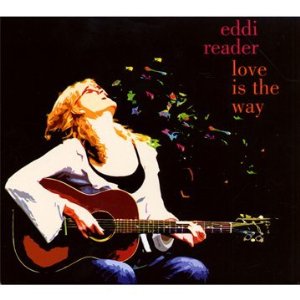
“Dragonflies”: a number from Eddi Reader’s most recent album Love is the Way
"Love is the Way": Eddi Reader's most recent album formed the backbone of her gig at Snape
If you think there’s a more abundantly gifted British female singer than Eddi Reader gigging and recording today, please tell me who she is. The range of ‘voices’ and styles that Reader embraced during a hugely appreciated two-hour+ set, part of this year’s Snape Proms season at Snape Maltings Concert Hall, was extraordinary. She bucked convention at every turn, barely tolerating the notion of an interval, and dismissing the ritual of the encore completely because she – rightly – would rather fit in a couple of extra songs for her and the audience’s pleasure.
The maverick qualities that must make Reader a music marketeer’s nightmare were on show in abundance as she veered from pop to folk to Burns to Piaf and Doris Day, supported by an equally versatile band that included drummer Roy Dodds, Alan Kelly on the accordian, writing partner and guitarist Boo Hewerdine, and life partner and ukelele virtuoso John Douglas.
The recent album Love is the Way formed the backbone of the evening, interwoven with older work and several of Reader’s unforgettable interpretations of Robert Burns poems. She sprung a surprise at virtually every turn as she peppered the playlist with anecdotes and explanations, setting the scene for each number with an almost throw-away nonchalance that belied the intensity and commitment of her vocal delivery. Old favourites like “Simple Soul” – inspired, she pointed out with grim humour, by Reader’s experience of living with an alcoholic – and “What You Do With What You’ve Got” – with the input of guest artist and pianist Thomas Dolby – complemented the clarity and beauty of new work: “Silent Bells”, the delightful, poignant “Dandelion”, the ode to “New York City” and a delicious left-field interpretation of the Cahn/Styne standard “It’s Magic”, which Reader delivered as her late mother Jean, evoking the volatile atmosphere of a Glasgow tenement party with the diffident star turn at its centre.
Tale followed tale. So vividly does Reader paint scenes that the well-oiled Brenda sprang to life in front of us. Memorably vocal during a gig back home in Irvine with her “Sing ‘Perfect’, Eddi” during the sublime Burns poem “Aye Waukin-O”, Brenda was saved from a couple of fast-approaching plods and a few hours in the cooler when Reader got her up on stage for the chorus, and for her trouble was rewarded with a request to sign Brenda’s bra. Less prosaically, we were also treated to stories of Burns’ lusty escapades ahead of a haunting “Ae Fond Kiss”.
Reader herself is a fascinating, even disconcerting presence on stage. Occasionally restless, picking up and replacing her guitar as if undecided quite what she’s going to do next, she describes the harmonies with her hands as she sings, utterly committed to the honesty of the sound she is making.
Like Brenda, we got our “Perfect”, the Fairground Attraction hit that first brought Eddi Reader’s voice to a wide public attention back in 1989. Reader hung on to her guitar and delivered a swinging, jubilant acoustic version to close the first half. For me, though, the highlight in an evening of brilliance was a sudden, completely unexpected, a capella “La Vie en Rose” which hushed the hall.
The only thing missing – and you can’t have everything, even in a set of this quality – was her epic take on Gene Pitney’s “Town Without Pity”. If you also missed it, here’s a reminder of Eddi Reader, the consummate torch-singer:
Barb Jungr serves a breakfast treat with a “Wichita Lineman” to remember
During the last few weeks I’ve been introduced to some great female singer- and cabaret-related blogs around the world. They’re all on my blog roll but I’d like to introduce them properly to Art of the Torch Singer readers.
Cabaret Confessional is a great global resource, currently posting daily about the Edinburgh Fringe Festival and eagerly anticipating Barb Jungr’s upcoming Australian tour (as well as her Edinburgh appearances this week).
CabaretDC is Michael Miyazaki’s excellent blog about all things cabaret in the Washington area – clearly a fertile hunting ground for the genre – and more widely across the Eastern states. This is an indispensible blog for anyone who is passionate about the art of cabaret, written by someone who clearly lives and breathes the subject. There is a great interview archive, Diva 5+1, which includes – naturally – Barb Jungr, Ute Lemper and Liz Callaway, among many others.
New York-based Stu Hamstra’s Cabaret Hotline Online is another must-read blog, packed with news about the global cabaret scene, reviews and articles written by a man who must also have a passion for the genre in his DNA.
Finally, Girl Singers is journalist Doug Boynton’s wonderfully eclectic, informed reviews blog, in which he wonders freely across the landscape of contemporary female artists and introduces their work with great context and cross-references.
Speaking of Barb Jungr – which I frequently do, and make no apologies for that – it’s great to see her insightful interview with BBC Breakfast, from March 2010, finally online. Watch how she kicks the “covers” argument out of court – and delivers an a capella “Wichita Lineman” to entranced presenters Bill and Sian that is simply a great moment of live, artifice-free performance.
Getting There: Mari Wilson singing sweeter than ever at the Wrecking View movie benefit in California
Mari Wilson’s recent appearance singing at the Wrecking View movie benefit was a great warm-up for her upcoming Hollywood gig at Cabaret at the Castle on 22nd August. Lucky California, to get the chance to see and hear how one of our finest song stylists – and Neasden’s greatest export – just keeps getting better. British fans will be able to catch up with Mari when she brings her one-woman musical The Love Thing to the Leicester Square Theatre in November.
David Charles Abell: conducted the BBC Concert Orchestra as it revelled in the original orchestrations (picture by Cory Weaver)
There was never going to be any doubt about the warmth of the reception for Stephen Sondheim when, as eagerly expected, he approached the stage at the culmination of the 19th BBC Prom in this year’s season, conceived to celebrate his 80th birthday. But even he, with his customary humility on these set-piece occasions, must have noted the length of the ovation. The atmosphere in the Royal Albert Hall is unique when the audience rises en masse to greet its heroes, and here was London’s chance at last to salute in person this great “playwright in song” (his words, but who could put it better?) in a year packed with performances and festivities to mark this staging post in his life.
Every element of the preceding concert had been brilliantly layered to heighten expectation and nudge up the myriad emotions of the 5,000 or so Prom-goers gathered to honour the composer. And nobody disappointed, least of all the stirling BBC Concert Orchestra with Sondheim specialist David Charles Abell on the podium, revelling in the chance to take some of those famously complex melodies away from the limitations of the pit and, in returning to the original orchestrations, allow them to breathe with new freedom as they soared out across the heads of the promenaders.
In an evening studded with delights, there were two strokes of genius. The first was to partner the great British actor Simon Russell Beale with Daniel Evans – surely one of the finest ever male singers of Sondheim – for the opening number, “Invocation and Instructions to the Audience”, from The Frogs. His comic timing was a joy, and his on-stage rapport with Evans struck sparks. As the evening went on, each of his subsequent appearances (not least in a sublime rendition of “Everybody Ought to Have a Maid”, when he and Evans were joined by a soft-shoe shuffling Julian Ovenden and, gloriously, that well-known twinkletoes Bryn Terfel) should have had producers wracking their brains for revival ideas to showcase this hitherto unexplored side of his career. What a fabulous Buddy he would make in Follies.
The other moment of genius occurred at the start of the second half when Roderick Elms sounded the first eerie chords of the Prelude from Sweeney Todd on the Albert Hall’s resonant, awe-inspiring organ, and a collective thrill of uneasy delight shuddered down the spines of the audience. There can be no more purposeful passage in musical theatre; it took me all the way back to Drury Lane in 1980 when, from a seat high in the Gods, I was terrified out of my skin by the shrill blast of that factory horn and the mesmerising, darkly funny tale of revenge that followed.
Carolin O'Connor's sassy "Broadway Baby" whetted the appetite for her forthcoming West End run - The Showgirl Within
Evans was quite brilliant in revisiting his success as George, reviving his partnership with Jenna Russell’s Dot for two numbers, “Sunday in the Park with George” and “Move On”. There was also a stellar turn from Caroline O’Connor, back in London after a long tour of Chicago down under, and all set to bring her one-woman show to the Garrick in September. Her “Broadway Baby” was sassy and smart, with just the right hint of desperation. And so what if Judi Dench’s “Send in the Clowns” was slightly more wracked than of yore? This best known of Sondheim’s entire-plays-in-a-single-song has never been in better hands and nobody, apart from the maestro himself, was received more warmly by the assembled masses.
The ensemble numbers were triumphant, even allowing for the limited stage room – The Proms Sondheim Ensemble provided well-rehearsed support, losing just the odd word here and there – and “A Weekend in the Country”, another offering from A Little Night Music sent us spinning out to the bars for the interval, full of anticipation for what was to come.
Julian Ovenden and Maria Friedman had already joined forces for a touching “Too Many Mornings” but both really came into their own in the second half: Friedman with Bryn Terfel, making the case yet again for a full-scale revival of Sweeney Todd with these two in the starring roles as they devoured “A Little Priest” with divine timing and characterisation; and Ovenden with “Being Alive”, another of Sondheim’s great ballads, in which he conveyed utterly Bobby’s conflicted state of mind in Company.
The real lump in the throat moment came, however, Glee-style with “Our Time” from Merrily We Roll Along, delivered by soloists and a chorus from the BBC Performing Arts Fund. They brought this touching, optimistic pop song to life with charming simplicity, setting us up for the tumultuous affirmation of “Sunday” and – the only time when on-stage proceedings looked a little ragged, but who could be blamed when all eyes were trained on the steps to the right, where a flurry of activity signalled the imminent appearance of the man of the moment – finally, “Side by Side by Side”. It was the only way to end an evening that will live long in the memory, and the artists seemed as reluctant to leave the stage as the audience was to wave goodbye to the modest figure who was responsible for everything they had been listening to.
Someone who sings about love and loss, and the pain of experience. The power of torch-singing lies in its effect on the listener. For me, it transcends musical genres. These pages explore the dazzling, and sometimes dark, world of the female singer through history and in the present. Concert and CD reviews, interviews and articles combine to create a comprehensive view of this vital strand of popular culture. Why not share your views and experiences of your favourite artists, suggest performers you would like to see featured - and let me know what makes a torch singer for you?




What do you think?