Archive | Album Review RSS feed for this section

CD Review – Taeko, Voice

29 Jun

Taeko sings “What are you doing the rest of your life?” from her previous album, One Love

Voice: Taeko's new album - multiple influences knock sparks off each other

Take a talented young Japanese singer, transplant her to New York in her formative musical years, immerse her in what is probably the world’s richest jazz scene, then stand back and listen to all those influences collide, knocking sparks off each other. That’s the story of Taeko Fukao’s career so far, and the result is a fascinating blend of bebop and scat, underscored at times by a poignant serenity fired by her native folk heritage, and at others by the smooth, tasteful sheen that defines the best of modern, mainstream jazz vocalists.

Taeko’s new album, Voice, is a vibrant patchwork of styles that reveals, above all, the passion with which she has explored the range of the jazz idiom. In some ways, it’s a showcase for the benefits of intense study – and just occasionally, the impact is almost overwhelming as she tears up a furious-paced “On A Clear Day” with the dexterity of Ella in her prime, or launches into the bebop delights of the Monk/Hawkins/Hendricks number “I Mean You”, recalling Annie Ross or Cleo Laine at the peak of their vocal powers.

Then she shifts tone and mood with a sublime rendition of the 1940s Japanese ballad “Soochow Serenade” and later, with the self-penned “Spring Nocturne”. Think Sade, with attitude. For all the pace and energy in the surrounding numbers, these are the most effective moments on the album: passages of reflection and melancholy in which a softer, mellow timbre is allowed to flourish on a more burnished melodic line, taken to the limit on Wayne Shorter’s “Infant Eyes”.

This is where Taeko sounds genuinely at home, in the telling of stories, and not least on a subtle, swinging, modernised “Biwako”, a folk song about the Japanese lake near her birthplace at Shiga. Doug Richardson’s melodica solo comes unexpectedly, adding yet another flavour to the music and reflecting Taeko’s confidence in choosing musicians who can complement her eclectic vision with considerable ease: Richardson also plays drums, with Greg Lewis on the organ, guitarist Kevin McNeal, pianist Lou Rainone, and bass player Gaku Takanashi. All have their moments to shine – a sure sign of a generous vocalist.

Such is her versatility that the overall effect is sometimes like being strafed by a benign scattergun loaded with different styles. All of which makes the album’s title more appropriate. She shares one of her most promising vocal qualities – the ability to be part of the band rather than just the singer out front – with the greats. Taeko veers from the soulful funk of the opening track, Herbie Hancock’s “Cantaloupe Island” (lyrics by one of her mentors Juanita Fleming) to Marvin Gaye’s “Inner City Blues”, using her sound in an assertive, challenging way without straying into aggression.

Her phrasing and diction are impeccable, with interesting nuances generated by the occasional hint of an accent rarely heard in jazz. It’s 12 years since she answered the call of the Big Apple. They’ve been well spent and the city has served her well. But if this album is anything to go by, Taeko’s horizons are set for rapid expansion. There’s a big jazz world out there and it’s beckoning an unusual and singular talent.
CD Review – Jude Cowan: Doodlebug Alley

15 Jun

Jude Cowan singing Doodlebug Alley, the title track from her new album

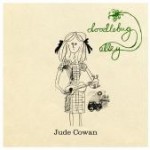
Doodlebug Alley: bringing back memories of a teenage record producer

When I was13, I was a producer for a day. Armed with my trusty Phillips cassette recorder (dodgy mic lead but it worked if you held it in a certain position), I persuaded my seven-year-old sister Isabel to make a record with me. We spent a busy hour extemporising. I know we reached far and wide for our cultural allusions but for some reason only the films of Joan Crawford (there was a Saturday afternoon season on television) and Clark Gable, and sexy underwear (always worth a childish giggle) linger in the memory after all this time.

We came up with some basic tunes, beat the rhythms on a pile of books and, making it up as she went along, Isabel plucked her own lyrics out of thin air with a facility beyond her years. Before we ran out of steam, we had a whole C60 side of material – enough for a whole album – and armed with scissors, a couple of photographs and a black felt tip, I quickly rustled up a cover. I can still see it. Bella, it was called. And I know the words “Includes the hit single…” appeared somewhere, together with my all-important producer’s credit. It must still be around somewhere at the back of a cupboard.

What prompted this flood of reminiscence? A few spins of Jude Cowan’s new album, Doodlebug Alley. Not that I’m suggesting Cowan is stranded in early adolescence or that there is anything remotely childish about the production or concept, or her stridently poetic lyrics. But the overall effect is of a similarly chaotic, random clash of references and influences – and yes, more than a hint of the precocity that makes me wince slightly as I look back down the corridor of years.

Doodlebug Alley is nothing if not experimental and uncompromising. But it’s telling that the first time I grabbed the sleeve for more information was midway through “She Sits at the Window” – itself a nostalgic treat, as it conjured hours of listening to obscure Radio 4 afternoon dramatisations during the afternoon ‘rests’ of childhood – and discovered that the eerie beauty of the piano solo was down to composer Nicky Bendix rather than Cowan herself.

Easy listening, this is not, and Bendix’s interlude provides a welcome respite from Cowan’s acerbic and jagged adventure across a rich landscape of folklore, literature and, in the title track, popular history, in which she mainly accompanies herself on her disconcertingly cheerful ukelele.

The publicity blurb generated high expectations: John Gay meets Hogarth, say, they bump into Brecht and Brel, and the essence of their artistic collaboration is channelled by Cowan as a latter-day Agnes Bernelle. And occasionally, there is the real prospect of those expectations being met – particularly in the visceral bleakness of “Remember Sinners” (an homage to the French poet François Villon), with Tom Fawcett contributing a grim guest appearance, disturbingly bringing the first-hand gallows experience to life (and death). “Jolly Roger” takes a long, hard look at unwanted pregnancy, finding a rare dark humour in the depths of experience. There is some fine, topical, satire too in the vicious “Naughty Daddy”, a timely anti-capitalist swipe.

But the high points are undermined by moments of startling banality particularly in the title track, which is supposed to evoke the live-for-the-moment intensity of London during the Blitz. The awkward rhythmic shifts, a burst of finger-clicking, the rhyming of arse with St Pancreas, and a bzzzz more reminiscent of a dying bluebottle than the drone of an approaching V1, had me glaring at the speakers in disbelief and instead, brought my old Phillips days vividly to life.

I wanted to love Doodlebug Alley (note to PRs: Please stop comparing any hard-to-categorise female artists with Kate Bush. It’s a tired old cliché these days, and rarely flatters either party). But despite its sardonic darkness, it’s left me frustrated. Jude Cowan, a cultural historian, clearly has genuinely original talents to be reckoned with. I’d like to see them harnessed with more discipline and a clearer vision next time round.

Barb Jungr’s The Men I Love Just Keeps on Growing

20 May

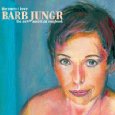
The Men I Love: Jungr's finest album to date

Barb Jungr’s recent album, The Men I Love, continues to be one of the most talked about records of the year. I just read this excellent post by New York blogger J.B., which sums up the boldness and bravery of this great, category-defiant singer in her choices of song and arrangement.

CD Review – Peggy Duquesnel: Summertime Lullaby

20 May

Summertime Lullaby: tasteful listening for a sultry evening

Here in the UK, on the first evening of the year that could remotely be called sultry, Peggy Duquesnel’s latest album, Summertime Lullaby, makes for a classy hour on the terrace. The California-based singer has come up with some smooth arrangements for a clutch of well loved jazz standards, interspersed with four of her own compositions including the languid title track, which sets the scene for a thoroughly enjoyable set.

An upbeat “My Romance” swings along thanks to Duquesnel’s nifty work at the keyboard – she’s also an accomplished jazz pianist (she later lets fly with a free-flowing instrumental, “On Green Dolphin Street” and a cool “Mack the Knife”) – leading easily into another of her own songs, an elegant tribute to a long relationship, “In the Quiet Hours”. “Drivin’ Blues” will give a wry laugh to anyone who knows the bumper-to-bumper frustrations of the homeward commute, especially when there’s a date waiting at the end.

Duquesnel has assembled a sympathetic, fluent band – guitarists Grant Geissman and Mike Higgins, bass players Jim DeJulio and Ernie Nunuz, and drummers Kendall Kay and Dave Owens – who presumably take turns in the trio although they aren’t credited on individual tracks. Between them they generate a warm, sophisticated tone that’s epitomised in a boldly phrased “Fly Me to the Moon” and another instrumental, Billy Strayhorn’s “Take the ‘A’ Train”.

The album is dedicated to Duquesnel’s husband and culminates in a touching, spare version of “Stay as Sweet as You Are”, the perfect sign-off at the end of a tasteful journey around what is obviously a very personal musical landscape. It’s a perfect soundtrack for the magic hour, as evening turns to night.

CD Review – Alondra Bentley: Ashfield Avenue

16 May

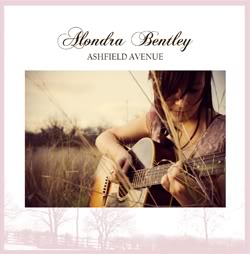
Alondra Bentley: make room for another new voice

Ashfield Avenue: Alondra Bentley's absorbing debut album

There’s something of the Tardis about the contemporary, thriving young female singer/songwriter market. Just when you think there can’t possibly be room for another one, along comes yet another distinctive, highly individual voice with a new perspective; and the boundaries expand to accommodate them. This is the upside of the Internet as a democratic market place in which the listener is completely in control. Success or failure is no longer defined by the limited vision of music marketers in their air-cooled offices – or the soulless calculations of Simon Cowell.

So welcome to the scene, Alondra Bentley and her debut album Ashfield Avenue, with her delicate acoustic sound, deft use of strings and literate lyrics that command attention with their subtlety and honesty.

If I call Bentley’s voice ‘sweet’, it isn’t because I want to start dealing in twee clichés. There’s nothing saccharine about it. Rather, she has a purity and instinct that evokes the integrity and folk sensibilities of Mary Hopkin or Vashti Bunyan, occasionally giving way to a more resonant, bluesy timbre that comes to life on the bittersweet, jaunty “Giants are Windmills”.

Bentley evokes Don Quizote with “Giants are Windmills”

Bentley was born in Lancaster in 1983 – in a house in the Ashfield Avenue of the album’s title – but has spent most of her life in Spain, and this has obviously had a profound effect on her music, which brings to mind an extraordinary range of influences. There is an adventurous spirit behind the melodies of these charming, occasionally unsettling, songs and while some of the effect might be down to producer Cesar Verdu, the self-taught Bentley’s own musicality – she accompanies herself on the guitar but is joined variously by guest musicians on banjo, charango, piano double bass and trumpet – is clearly a force to be reckoned with.

This is an album for sultry summer afternoons, the songs rippling around the room like tantalising breezes. Each number is a lyrical journey, presented with an attention to detail that allows every musical component to shine: the lilting, honky-tonk banjo; the plink of a guitar string; a sudden, sombre bass piano note. And above it all, Bentley’s assured but intimate voice as she weaves her potent stories. “Some Things of My Own” is a delightful tale of the troubadour’s material poverty. “Sunglasses” plays out the emotions and realisations that follow in the wake of a mundane accident. “I Feel Alive” is a delightful sensory tapestry of memories colliding in the present. This is absorbing stuff.

Review – Patty Griffin: Downtown Church

6 May
The Making of Downtown Church – how they did it


Downtown Church: Patty Griffin - Country without too much twang

My review of Patty Griffin’s new album, Downtown Church, is just up on the excellent Folkingcool web site. I’m usually on the fence about country music, but this album stole my heart with a minimum of twang.

Review – Tammy Weis: Where I Need to Be

26 Apr

Where I Need to Be: every word given its due

There must be something in Canada’s water. Diana Krall and Michael Bublé are just the cream of a crop of exceptional jazz singers from across the Atlantic who have led something of a global invasion over the last decade or so.

To be honest, I have always found something Krall’s style a bit laconic and chilly, while respecting her tremendous musicality and technique. And giving in to the temptation to categorise that I criticise so frequently elsewhere in the music industry, I must admit that I turned to Vancouver-born Tammy Weis expecting to hear something in a similar vein.

I was soon disabused. With the exception of a pensive reinvention of Lennon and McCartney’s “Help” – an unlikely candidate for a ballad, but it works wonderfully well here – Where I Need to Be (TW2010) finds Weis pouring her life-tales into a delicate patchwork of self-penned songs. Now living in London, she has produced a taking-stock album in which nostalgia and regret are evenly balanced by optimism and poignant musical snapshots.

Tammy Weis explains why she included “Help” on the album, and sings it

For several tracks, she joins forces with pianist/composer Tom Cawley, and their songs provide the album’s most intimate, emotional high points, book-ending it with two elegant, beautifully accompanied numbers, “I Kept Going” and “Heading Home”. There is texture along the way, most notably the Latin beat of “Everyone But Me”, with Weis’s lyrics a dry Martini short of self-pity, and the shimmering “I’ll Spend Forecer”. She swings too, throwing down the gauntlet with “Don’t Want to Fall in Love Again”, co-written with Terry Britten, an articulate account of teetering on the brink in the best traditions of the great American songbook.

“I love delving into my mind and imagination, which can be scary,” says Weis, suggesting that the writing might not be as easy as her fluid interpretations make it sound. “But the song at the end is my reward for expressing what’s inside.”

Weis’s voice is assured and true, just a hint of hardness cutting through when the lyric demands. She plays deftly with the melody without ever sacrificing clarity – every word is given its due. The band is impeccable – Al Cherry on guitar, Arnie Somogyi on bass and Seb de Krom on drums, with several guest players including steel guitarist B. J. Cole (particularly yearning on “Where Did the Time Go”, an end-of-the-affair ballad), and pianist Julian Joseph (“All Because of You”) whom Weis credits as her prime motivator for making an album of original songs.

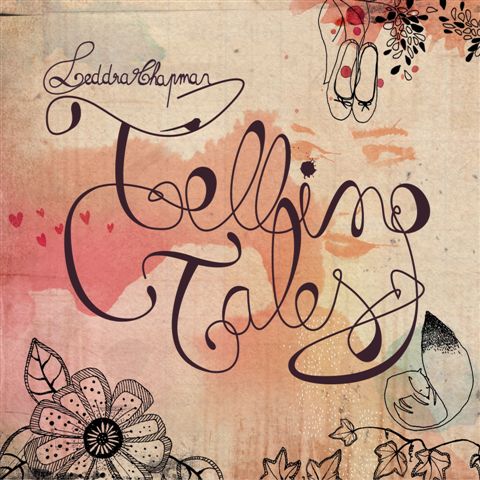
Leddra Chapman – Review: Telling Tales

31 Mar

Leddra Chapman: flair and assurance

If musical influences were sweets, Leddra Chapman wouldn’t have wasted any time with her nose pressed up against the shop window. She’d have walked in, charmed the owner and been given free rein to create her own special selection. That’s the joyful impression left by her first album, Telling Tales.

At a time when young British female singer/songwriters are enjoying an unprecedented boom, hype is easily mistaken for genuine talent. Not in Chapman’s case. She rallies her musical instincts with flair and assurance. These songs are rounded stories, folk tales of love, fate and friendship for the 21st century, sung with crystal-clear diction and minimal embellishment, worthy of the all-important airplay they’ve been getting.

Those diverse musical influences lap at the edges without dominating or tipping into pretentiousness: a hint of Vaughan Williams here, Joni Mitchell there; the evocation of a brass band that momentarily transports you to a village green in summer (“Story”); a weakness for her toy piano on “Picking Oranges”.

Telling Tales: an auspicious debut

“Edie” is one of the highlights, a searing vignette of a short, tragic life. Another, “Wine Glass” cleverly distils the trivial gesture – toying with a drink – that becomes overwhelmingly significant for the one left behind in a long-distance relationship. And the poignant “Wrap Me Up”, with its melancholy piano intro, is a bittersweet account of two people wanting different things from their love affair.

On stage, Chapman has an engaging charm that belies the depth of her lyrics; her showcase at the BBC Club last November was a shaft of sunshine on a bitterly cold winter’s day. Telling Tales is a pleasing and auspicious debut.

www.myspace.com/leddrachapman 

Sarah Blasko – Review: As Day Follows Night

30 Mar

As Day Follows Night: Blasko set for UK breakthrough

Deceptive simplicity is the hallmark of Sarah Blasko’s new album, the optimistically titled As Day Follows Night (Dramatico). Her mordant lyrics emerge from an intriguing musical mist, delivered in a voice far less fragile and little-girl-lost than it sounds on a superficial first hearing.

Spare string and piano arrangements are based on an acoustic, percussive foundation that takes you on an absorbing journey from the bleakness of wrecked love to the painful but ultimately life-affirming recapturing of emotional equilibrium. The images are stark – “Is My Baby Yours?”, “Bird on a Wire”, “Lost and Defeated” – but the mood is pensive and eventually hopeful rather than relentlessly dark.

Australian Blasko was working on the score for a theatre production of Hamlet while writing the album, and the introspection in many of these songs is tinged with a kind of self-revelation that the Danish prince would recognise. “All I Want”, with its windswept, Morricone-style setting, perfectly defines her predicament.

All I Want: windswept, introspective… and great cheek bones

Swedish producer Björn Yttling has created a sense of space that allows Blasko’s alluring voice the freedom to explore some epic themes without ever tipping into clichéd anguish. “I never knew it would hurt like this, to let someone go against my wishes,” she sings, compassionate for the departing lover even as she nurses her raw wounds.

Bird on a Wire: mordant lyrics and epic themes

At 33, Blasko is already a seasoned recording artist, with a growing following in Europe. This is her third album and it’s a haunting piece of work that should mark her breakthrough moment in the UK, where she has based herself for the rest of 2010. She plays the Islington Academy on 15th April and tours with the Temper Trap from 27th April.

www.myspace.com/sarahblasko 

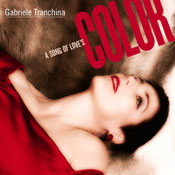
Review – Gabriele Tranchina: A Song of Love’s Color

19 Mar

Gabriele Tranchina: something of an enigma

What a queue-jumper Gabriele Tranchina turns out to be. A pile of CDs sits accusingly on my disk awaiting critical attention. I’d been sampling and tasting here and there, planning an orderly assault. But on Monday, Tranchina’s new album – A Song of Love’s Color (Jazzheads JH1176) – landed fresh from New York, inveigled its way onto my player and has been sitting there ever since, spinning an insistent spell, and demanding listen after listen.

Think Lambert, Hendricks and Ross meet Pink Martini, with a dash of Astrid Gilberto, a streak of Ute Lemper, a hint of Mina and a sense of Anita Baker, and you can begin – just about – to anticipate the startling effect of Tranchina’s voice as she juggles rhythms, styles and languages to create a constantly shifting mood. One minute you’re chilling to late night jazz, the next you’re swept up in a Jobim samba, before being caught in the headlights of a hypnotic, almost Weill-ish lieder.

All of which makes her a bit of a marketer’s nightmare – and precisely the kind of performer that Art of the Torch Singer loves. The cocktail of jazz, world music, vocalese and chant might well be overwhelming if it wasn’t for the relaxed consistency of the band, led by Tranchina’s husband Joe Vincent – who wrote several of the tracks and is responsible for the cool, spare arrangements. Tranchina clearly thrives on the freedom this gives her to swing between techniques and tones.

The album kicks off with a Fugain/Delanoë chanson, “Chante Comme Si Tu Devais Mourir Demain”, which pretty much describes Tranchina’s mission. The title track follows, revealing her dexterity with a melody and some alluring phrasing. Later, a traditional Hindu prayer provides the basis for a swirling, syncopated chant that also includes a brief rap, “Asato Maa (Sat Chit Ananda)”, and a Spanish lullaby – “Duérmete Niño Bonito” – has an authentic, shuffling last-dance-of-the-night atmosphere. “Siehst du Mich” – a poem by Else Lasker-Schüler, set to music by Joe Vincent – concludes the album on a beautifully sombre, brooding note.

A Song of Love’s Color, mixed by Joe Vincent and Randy Klein, and mastered by Gene Paul, was recorded in New York in the summer of 2008. Its release is long overdue. Tranchina herself – German-born and New York-raised – remains something of an enigma, despite the stylish art work on the sleeve. A trawl around Youtube and MySpace yields nothing in the way of clips.

Her people should do something about that fast, because once you’ve heard this you’ll want to know more about an artist who clearly has something different to offer the homogenised world of modern popular music.