“Fall for Me”: an urgent demand is the leitmotif of the opening track
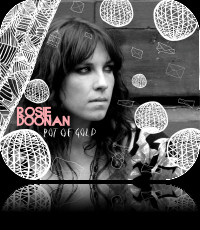
Pot of Gold: folk tales full of complex musical influences
Somewhere on the scale between the husky purity of a young Joni Mitchell and Jacqui McShee’s ethereal clarity comes the voice of Yorkshirewoman Rosie Doonan, insightful and humane, restlessly exploring the vagaries of human relationships through lyrics that are as articulate as they are personal.
Doonan’s new album, Pot of Gold, is like a series of encounters with characters and experiences that always leave their mark – more often the bruise of an emotional clout than the ghost of a lingering kiss, but always provocative and empathetic. From the deceptively upbeat, guitar-driven urgency of “Fall For Me” to the ominous, on-the-edge strumming of “Darker Side of You”, Doonan presents a warts-and-all yet compassionate vision of the relentless cycle of meetings, fallings and break-ups that constitute life.
The single “Lay Your Love” epitomises Doonan’s realistic attitude and intelligence as a lyricist. It might be a break-up song, but the back story isn’t all bad and the relationship is meaningful enough to deserve one last send-off. Lines are drawn in the sand, experiences noted and assimilated, hindsight acknowledged, inevitabilities accepted and understood (“Into the Fire”).
These are folk tales, full of complex musical influences that hint at Doonan’s personal heritage (her father was a uilean piper with Hedgehog Pie) – “Wind That Shakes the Barley”, with its yearning strings, slow marching drums and harmonica, is the most traditional song on the album – while embracing a host of other styles and techniques. “Victor”, for example, comes on like a sentimental Edwardian parlour song with modern nuances.
“Winter Song”, reminiscent of a top quality Judie Tzuke number, is a touching, delicate paean to the comfort of turning back to a love that, despite everything, is still all that matters on a cold, snowy night. “Lady Blue” might be a tribute to Joni Mitchell herself, while the album’s title track has a winning jaunty gait and energy that is equal to anything that’s come so far from the pen of Amy McDonald.
Female singer/songwriters are hot currency at the moment and with this album, her second as a solo artist, Doonan has well and truly staked her claim to a place among the front-runners.
Rosie Doonan is on tour in March at the following venues: 11th – with the Snap Dragons at Wem Town Hall (Shropshire); 12th – with the Snap Dragons at The Brindley, Runcorn; 17th – with the Snap Dragons at Cumberland Arms, Newcastle-upon-Tyne; 19th – Shaw Theatre, Leeds; 20th – The Boardwalk, Sheffield; 23rd – with the Snap Dragons at The Biddulph Arms, Stoke-on-Trent; 25th – Trowbridge Arc Theatre (Shropshire); 26th – with the Snap Dragons at The Beehive, Swindon.
A trailer full of plaudits for Tracie Bennett – with a tantalising snippet of “Over the Rainbow”
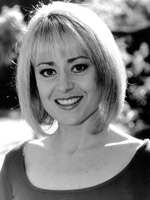
Tracie Bennett: inhabits the role of Judy Garland with assurance and commitment
Two triumphant aspects dominate End of the Rainbow, Peter Quilter’s play-with -music that explores Judy Garland’s turbulent season at London’s Talk of the Town in 1968, months before her death, whose run at the Trafalgar Studios has been extended to April.
The first is Tracie Bennett’s visceral, committed performance as the brittle icon nearing the end of a tether already frayed to breaking point. Bennett inhabits the role with tremendous assurance, layering the multiple nuances between fragile hope and bleak despair with such brilliance that you leave the theatre exhilarated and exhausted in equal measure.
She leads a two-hour guided tour of the ravaged landscape of Garland’s pharmaceutically ravaged psyche, veering from brazen diva-dom to wretched neediness via a clawing desperation, without resorting to a single gimmick or clichéd gesture. And that’s just the acting.
When the back wall of William Dudley’s fantastically evocative set – an expensively vulgar, late 1960s Ritzy hotel suite – rises to reveal the band, it becomes the Talk of the Town stage. And Bennett is also revealed as a superb singer, conjuring the throaty Garland vibrato with such uncanny accuracy that at the height of many of the numbers, it’s easy to forget that you’re watching a play about a long-dead show business superstar.
In this, she is helped immeasurably by Terry Johnson’s meticulous direction and the musical supervision of Gareth Valentine, who discretely helms the band while Garland’s conductor and accompanist Anthony (a nice turn by Hilton McRae, his sympathy for the fading star ebbing torturously away as she becomes ever more unreasonable) effects control on stage.
Using Chris Egan’s sympathetic arrangements with flair, Valentine whips up the authentic sense of a Talk of the Town band of the time, its slightly desperate bounce and verve signifying the authentic struggle for attention over the clatter of cutlery, the chatter of the audience and constant popping of champagne corks – and the battle to keep pace with the capricious demands of the volatile performer they were obliged to serve.
The play is peppered with a selection of Garland classics: “The Trolley Song” and “Come Rain or Come Shine” are typically frantic moments for the band, while “The Man That Got Away”, the inevitable “Somewhere Over the Rainbow” and the defiant “By Myself” give Bennett the chance to extend her performance into the stratosphere. Despite the bang-on-target timbre, at no point is this ever an impersonation or a tribute. You won’t find a more complete dramatic interpretation anywhere on the West End stage.
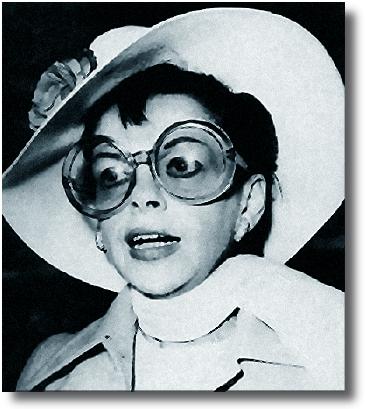
Judy Garland in her final months: a problem subject for playrights
All of which helps to disguise some weaker moments in the play itself. Garland herself is a huge part of the problem. The histrionics, the unstable behaviour, the drink and the drugs, are all so well known that there is nothing new to say about them. Genuine revelations about Garland’s plight are well nigh impossible, and the play’s point occasionally becomes muddled. A previous attempt by Terry Wale in 1986 to dramatise her life (Judy at the Strand Theatre) stumbled in the same way, although it featured an equally compelling and award-winning performance by Lesley Mackie in the title role.
Peter Quilter’s decision to focus on such a specific moment towards the end of Garland’s life, making it a metaphor for all her trials, might have been more effectively served by a monologue in the Piaf mould.
The characters of Anthony – a kind of everyman figure who represents kindness, reason and ultimately, abandonment (most of Garland’s friends necessarily chose self-preservation in the end) – and Mickey Deans, her fifth husband, who was with Garland at the end, are rarely more than ciphers for Garland to fence with. And in the end, she was mainly fencing with herself. Deans, in particular, remains a shadowy character whose influence on Garland as her talent and life drained away could take more scrutiny than End of the Rainbow allows. So, too, could her relationship with her audience – by this stage in her career frequently combative and abrasive, with an unhealthy dash of sadism on both sides.
But if the play isn’t always quite the thing, Tracie Bennett certainly is. Her performance alone is worth the price of a plane ticket and a hotel in town. And with an album of songs from the show in the pipeline, this role places her fairly and squarely on the top rung of musical and dramatic stage actors. Whether you are a Garland fan or not, catch her while you can.
Montage from last year’s Broadway production of Sondheim on Sondheim
The following review also appears in the current issue of The Sondheim Society’s magazine. A London production of the show is anticipated for 2011.
Sondheim on Sondheim: a welcome new approach to revues based on the Broadway composer's work
Does Stephen Sondheim really play pinball on his Mac when the muse doesn’t show up? The sound effects during one of the recorded asides that punctuate “God”, a witty, self-deprecatory number written specially for Sondheim on Sondheim certainly suggest it. I hope it’s true because if he relies on the odd bit of displacement activity – and a vodka shot or two – to get his writing gear working, it would make the rest of us see all the hours we spend procrastinating, dawdling and daydreaming in a much more positive light.
Such revelations pepper the revue, which arrived on Broadway to coincide with Sondheim’s 80th birthday celebrations last April and has been preserved in a two-disk original cast recording that artfully balances entertainment with documentary. And in many ways, they are among the bravest and most revelatory comments he has ever publicly made about himself as a human being and a working artist.
There is an intimacy about his observations that is far more profound than anything Jude Kelly managed to extract, for example, during their interview at the Royal Festival Hall in October. This alone makes for a listening experience that, while completely different from seeing the production at first hand, is compelling –and often touching – in its own right.
On stage, Sondheim’s narration was conveyed through specially filmed interview footage presented on numerous flat-panel screens so that he became a fully integrated character, acknowledged by the performers who could interact with him at several key moments. In a purely aural medium, his commentary inevitably becomes more detached. But thanks to producer Tommy Krasker, a veteran of 14 Sondheim cast recordings, there are still moments of connection that make you blink at the loudspeakers in wonder, not least the final number – “Anyone Can Whistle” – in which you’re suddenly aware that a new singing voice has joined the eight-strong cast for the last stanza; it’s Steve himself, tentatively suggesting that if we whistle, we could do so for him.
If this is showbiz sentimentality, it’s of the highest order and repeated listening doesn’t diminish the impact, coming as it does after Sondheim has analysed his love of theatrical collaboration as compensation for the lack of family life that blighted his youth. As he explains during the course of his commentary, his songs are character and situation based. They are not autobiographical. And yet for those who know and love his work, it’s impossible at certain moments while listening to Sondheim on Sondheim to escape the sense of an artist reaching out to his audience in search of understanding and affection.
“Anyone Can Whistle” is the culmination of a revue that is presented as memoir rather than chronological autobiography. Themes and artistic challenges rather than specific events are the triggers for many of Sondheim’s observations. All that has been important in his life – personal as well as creative – is alluded to.
Important influences and collaborators – Oscar Hammerstein II, Hal Prince, Mary Rodgers – are celebrated. Sondheim’s difficult relationship with his mother is pithily summarised, its long-term ramifications acknowledged. The revelation that he first fell in love at 60 comes almost casually, sandwiched between the charming “The Best Thing That Ever Happened to Me” (Bounce) and numbers from Passion, by any standards one of his most emotionally intense pieces.
The songs, carefully culled, interspersed and, occasionally, amalgamated in telling medleys (never more poignantly than the combination of two of his most dazzling torch songs “Losing My Mind” and “Not a Day Goes By”), become a commentary on Sondheim’s narration. And as has become traditional with a Sondheim anthology, the show’s creator and director James Lapine seizes the chance to raid the archives for songs that were eventually replaced in original productions or revivals. This time, Company proves a fascinating source, the tale of its three endings serving as an excuse to revive two complex numbers: “The Wedding is Off” and “Happily Ever After” (which evolved into “Being Alive”) are worth hearing again, even if they also confirm that sometimes a producer’s reservations about a particular song are spot on.
With great economy, Sondheim describes the process of artistic creation, demystifying his own contribution as part of a collaborative effort, explaining that his work is not self-referential, but that writes for the specific circumstances of a character at that particular moment in the story. “God” is a delicious deconstruction of his own myth, poking gentle fun at his detractors and supporters alike.
It’s ironic that the biggest star of this cast recording is the recorded voice of the show’s central character when the hard work is done by the performers who bring the songs to life with some lightly scripted joshing and interplay that helps to maintain the loose sense of a developing story.
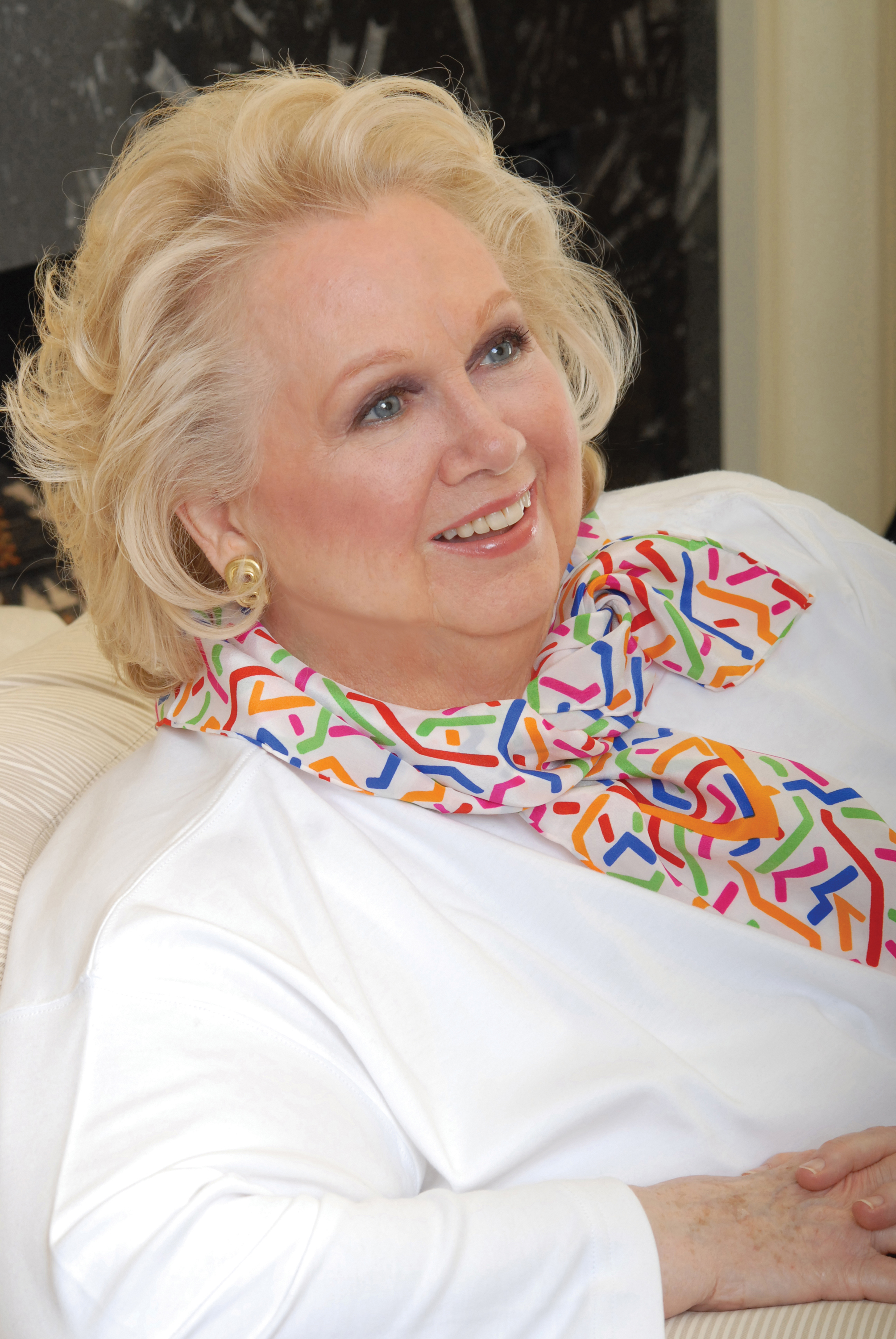
Barbara Cook: one of the wonders of Broadway
Chief among them is Barbara Cook, whose voice remains one of the wonders of Broadway. It might be thickening now in the middle register but the soaring beauty of one of musical theatre’s great sopranos remains a potent force, serving some of Sondheim’s signature numbers – “Not a Day Goes By”, “Send in the Clowns”, “Take Me to the World” and two of Fosca’s ominous, brooding soliloquies “I Read” and “Loving You” – with supremely intelligent interpretations.
Vanessa Williams is under used on the album, although she contributes a rich, creamy “Losing My Mind”. Among the male voices, Tom Wopat delivers a stunning “Finishing the Hat”, Norm Lewis wrings every sliver of meaning from “Being Alive” and Euan Morton brings the developing writer’s dilemma to life in “Franklin Shepard, Inc”.
Sondheim on Sondheim is an expertly produced double album that complements rather than replicates the original stage production. Michael Starobin’s orchestrations are restrained and elegant, supporting some shimmering ensemble work, so that the overall effect is of a holistic collage rather than a staccato series of standalone numbers. This sets it apart from most previous revue-style anthologies and in many ways harks back to the purity and simplicity of that original pioneer piece, Side by Side by Sondheim, albeit with a 21st century angle on the material.
There are some omissions, from the recording at least. Pacific Overtures, one of Sondheim’s most challenging and rewarding pieces, is never mentioned. More puzzling, neither is Sweeney Todd. Given that it is one of his most popular and frequently revived musicals, this seems odd and as the final chords die away, there is inevitably a nagging sense of something missing. But even without the demon barber, Sondheim on Sondheim is a fitting 80th birthday addition to the library of recordings of his work – and one of the best of its kind.
Judi Dench sings “Send in the Clowns”: David Charles Abell’s fondest memory of an unforgettable night
I recently interviewed David Charles Abell, who conducted last summer’s tumultuous Sondheim Prom, for the latest issue of SONDHEIM – the magazine, the house publication of the Sondheim Society. My review of the prom remains one of The Art of the Torch Singer’s most visited posts, so I thought it would be worth publishing the interview here as well. Abell’s insights into Sondheim’s music, his memories of working with Bernstein, and recall of the logistics of an unforgettable evening, are well worth hearing.
SOME ENCHANTED EVENING
David Charles Abell: the brains behind a memorable night at the Proms (picture by Cory Weaver)
As the sun sets on this annus Sondheimus, many events, award-winning revivals and concerts jostle for attention in the memory. But one – Prom 19 on 31st July – really stands out as an emblem of just what this year-long celebration of one man’s work has meant on this side of the Atlantic.
Simply entitled Stephen Sondheim at 80, the evening was at once unabashedly sentimental and joyously affirmatory: a recognition that Sondheim’s work has earned its place in the wide panoply of classical music embraced by the annual festival; and a chance for his British admirers to demonstrate their affection, rising at the end to salute the man responsible for such lyrical and melodic treasure.
Sondheim at 80 was the brainchild of American conductor David Charles Abell, a long-time London resident, who first approached Proms director Roger Wright in 2007 with the suggestion that a celebration of Sondheim’s 80th birthday would be more than appropriate fare for such a knowledgeable and enthusiastic classical music audience. Wright agreed, and over a series of meetings they came up with a format for the concert that would give a sense of the breadth and variety of Sondheim’s work.
Abell’s passion for Sondheim’s musicals was ignited at the age of 16, when he saw the touring production of A Little Night Music in Chicago. “The Miller’s Song” made an immediate impression.
“Get it while you can, basically,” he says. “At that age, when your sexuality was just awakening, it was a very powerful song. The first time a musical gave me a life lesson. Mind you, I didn’t act on it immediately but it stayed with me. As did the whole show: the cleverness of the lyrics, the singing, the beauty of the production, the intricacy of the plot. It’s a work of perfection, I think.
“Then I was in New York [Abell is a Juillard School and Yale University graduate] at the time of Sweeney Todd, Merrily We Roll Along, Sunday in the Park With George and Into the Woods. Sunday… took me two or three times to get. Now it’s probably one of my favourite shows because it has such personal resonance for anyone who works as an artist. And I saw Bernadette Peters in Into the Woods. I happened to be sitting in the box that she appeared in as the Witch at one point, and she stepped on my toes – ‘Oh sorry, honey’ – as she tried to get into place.”
Ironically, despite a 30-year career as a leading conductor and musical director, Abell’s professional connection with Sondheim’s work had been limited to A Funny Thing Happened on the Way to the Forum (for the Covent Garden Festival in 2001) and some concerts. He had, however, worked for some time as Leonard Bernstein’s assistant in the 1980s – a relationship rooted in his experiences singing in the boys’ choir at the 1971 Washington premiere of Mass, Bernstein’s ambitious allegorical treatment of the liturgical structure, and as assistant conductor on its 1981 revival.
“I don’t think I ever talked to Lenny about Sondheim, which would have been interesting,” he says. “Mass was interesting and innovative – and Steve would probably say, pretentious. And he might be right because Lenny was a pretentious person, in a good way: he was ambitious and wanted to do new things artistically. Steve does as well and they’re very similar in some ways, and of course they worked together years before I knew either of them.
“Mass was a great piece of American musical theatre but deeply flawed as well. I think Steve doesn’t have a lot of time for it because he’s about specific characters, specific situations, specific problems, specific goals. And this was about a universal theme, an allegory, although there is allegory in Steve’s work as well, like the archetypal characters of Into the Woods.
Being Alive: Julian Ovenden’s intense interpretation was another highlight of the evening
“But Steve will work from an everyday idea – the Baker and the Baker’s Wife want to have a baby – and take you to a grand theme: sometimes people leave you halfway through the woods, they die. And it’s devastating. And when you get there in the show, it’s shattering. But that’s the brilliance of his work. It will help you to deal with something as a person. That’s why people are so crazy about his work. They’re crazy about Bernstein as well, and the interesting thing about them is that when they worked together on West Side Story, they tempered each other and produced one of the great pieces.”
With his partner Seann Alderking, a musical supervisor and arranger, Abell edited the score of West Side Story for Bernstein, researching the different versions and getting the parts into decent order, clearing up what Abell recalls was “a mess”. More than 20 years later, they would find themselves doing something similar with some of the numbers for the Sondheim Prom – after Abell had been through the difficult process of choosing the programme in consultation with Roger Wright and concert director Martin Duncan.
“In preparation, I listened to all of the original cast albums, even though I knew most of them pretty well,” says Abell. “But now I was listening with a view to what was going to work in the Albert Hall, at the Proms, for people who might have heard Mahler the night before and would hear Mozart the night after. What would they appreciate? What would resonate with them? Which songs would work in a 6,000-seat arena, which has a pretty large reverberation time? Not a patter song like “Not Getting Married Today”, because there are too many lyrics for that space. At the same time, you want to present his most compelling melodies.
“I thought we should present the music in its original form as much as possible. If you hear Mozart at the Proms, it’s likely to be done by the Orchestra of the Age of Enlightenment on period instruments. So I felt we owed it to the audience to create the theatrical context, use the original orchestrations as much as possible. Another gala might be all about mash-ups, and that’s great. But for the Proms, I wanted to have a sense of being there at the original premiere of these shows. The Follies Overture was the original orchestration from 1971, with a few extra strings, and it was pretty much what you would have heard back then, when they had big orchestras – around 30 players. We only have 21 on Love Never Dies [Abell is the Lloyd Webber show’s musical director] – and that’s the biggest there has been in the West End for years.”
But it was a huge challenge. While some of Sondheim’s shows have been edited, with scores available in modern, computerised format, others are not in such great shape. As Abell explains, musical scores are often left in the same state as they were at their last performance, full of additions and deletions, musicians’ marks and notes. It’s very hard to find a definitive text. The original orchestrator’s score is not the best source because it might contain wrong notes and rhythms, later corrected during rehearsals, try-outs, previews and tours.
“I knew I couldn’t put that sort of material in front of the BBC Concert Orchestra, so Seann put the parts from some of the numbers [particularly A Little Night Music and Company] into Sibelius, a music notation programme, and created a full score that, in most cases, we were able to compare with Jonathan Tunick’s originals – he allowed me to go and look at them in his New York apartment – and make sure that we were being accurate. Every song took a week to get into shape! We also asked Jason Carr to do some orchestrations on Sunday… The original orchestrations are very small, so we asked him to create symphonic versions and he did a brilliant job. They’re based on Sondheim’s piano score so it is the original sound, just bigger.”
One of the most extraordinary aspects of the evening was the line-up of performers. Abell says they got nearly everyone they wanted, with artists willing to alter longstanding personal arrangements and juggle demanding professional engagements just to take part. Would Bryn Terfel give up part of his holiday? Yes, he would. Could Jenna Russell manage to be at the dress rehearsal, dash across town for a run-through of Into the Woods at Regent’s Park and get back to the Albert Hall for the concert, while making sure her baby was all right? Yes, she could. Would Daniel Evans be able to work around his duties as artistic director at the Sheffield Crucible, which severely limited his rehearsal time? Absolutely.
“It was a magnet, people wanted to do it,” says Abell. “That’s why we had people who would normally be soloists in the West End willing to be in the ensemble. Everyone mucked in, learned the choreography and music. And all the kids from the BBC Performing Arts fund did it for free. We had to ask them to show up at 9am in their concert gowns at the studio in Maida Vale so we could make sure the colours matched. There they were in their high heels. It was a collaboration, and that’s the joy of working with great people. They bring things you wouldn’t have thought of.”
So what of the man himself? Abell had kept Sondheim informed during the months of preparation. Most of the artists were established exponents of his work, with the exception of Simon Russell Beale – a personal friend of Sondheim – whose singing ability was already known, and Caroline O’Connor, who Abell had worked with in a production of On The Town at the Châtelet in Paris, and knew would be ideal for “Broadway Baby”. All the same, Abell wonders if Sondheim knew quite what to expect. But he threw himself into the fullest possible day with the zest of someone half his age.
“Steve flew in overnight, arrived at the airport at 6.30am, I guess went to the hotel to wash his face, then came straight to rehearsal where he stayed for three hours,” Abell recalls. “He made some incredibly useful suggestions, mostly to do with his own work – lyrics in the published scores that he wasn’t happy with – and asked the singers to adjust a couple of things. He made one or two remarks about tempo, which were very useful to me. He was just really helpful. He’s a theatre man who knows what’s possible at the last minute, and what isn’t.
“Then he went to his hotel, met some friends, came back to give a talk with me at the Royal College of Music, went and met more friends, came to the concert, then to the party, and met more friends afterwards! I don’t think he slept until two in the morning. What tremendous energy, and what a kind, generous colleague. And that’s what he considers himself to be, a colleague.”
Abell never doubted Sondheim’s right to be the subject of a Promenade Concert. As a conductor whose work has straddled opera and musical theatre, and the dreaded crossover – “I know, it’s a terrible word, but you understand what I mean” – he feels there are apt comparisons to be made with, for example, Puccini. Although from different worlds and times, both men’s strengths lie in story telling, being inspired by the characters and circumstances to write their best music.
“Then, [Steve] can create, have the characters learn something in the song,” he says. “And by teaching them something, he teaches the audience something. So I would put him up there with Puccini, certainly. It’s all contextual, because Puccini was a late 19th/early 20th century Italian from a world where people expressed themselves very differently. Steve grew up in New York in the 1940s and 1950s, and he expresses himself through what he saw and sees in New York society. The contemporary pieces – Company, parts of Merrily We Roll Along, Follies – are very specific to their time and place. Only a hard, successful New York woman like Phyllis could sing those lines, “Leave you, leave you…” But there’s also a universal theme from those situations.”
Abell also never doubted that the evening would work, musically and artistically. He says that from the first rehearsal, the soloists, the direction, the choreography, the orchestra, all gelled. On the podium, he looked from the start – and with justification – like the cat who’d had the cream. And like many among the audience in the hall and at home, the highpoint for him was Judi Dench’s consummate performance of “Send in the Clowns”.
“Not just because she was so great, she sang and acted it so beautifully,” he says. “But from a conductor’s perspective. Technically, it’s a difficult song because you’re always waiting for the singer and you’ve got to come in with the pizzicato on the double bass, on a certain word on the downbeat. Luckily, I had a wonderful principal bass player in Dominic Worsley, who listened to Judi and played at exactly the right moment for her, so I didn’t have to worry about it. That song is difficult, harder than anything that goes fast.”
Abell’s association with Sondheim’s work is about to blossom yet further, with a production of Sweeney Todd in Paris next year, at the Châtelet, followed by Pacific Overtures, in Japanese, in Kanagawa and then, possibly, a Follies somewhere in Europe. But the Stephen Sondheim at 80 Prom will linger long in the memory for its emotional impact.
“It sounds pretentious but what defines Steve’s work for me is the philosophy, and the life lessons,” he says. “I always feel I’ve learned something when I hear one of his songs. Sometimes it’s just entertaining and of course you’re delighted by it. But others resonate and you think, oh yes, that’s my life. By the time he was writing those great shows in his thirties and forties, he understood an awful lot about human nature.”
Those were the the days: Mary Hopkin sings her signature song on a very strange choice of set
You Look Familiar: Mary Hopkin shakes off the shreds of nostalgia with a fascinating new album
It’s hard to believe that more than 40 years have passed since a Welsh teenager with a melancholy, angelically crystalline voice and a curtain of blonde hair won a British TV talent show – Opportunity Knocks (how quaint that now seems compared with the global machine that is X Factor today) – and secured a substantial chart career that lasted into the early 1970s.
The name Mary Hopkin will be forever associated with the Paul McCartney-produced “Those Were the Days”, a fatalistic traditional folk song, probably originally from somewhere east of the Urals, which gave her a number one hit. Hopkin was an important early signing for the Beatles’ iconic Apple label.
A blast from the past: Mary Hopkin sings Temma Harbour, produced by Mickie Most, on Top of the Pops in 1970
She went on to work with Mickie Most on a number of hits and represented the United Kingdom in the 1970 Eurovision Song Contest. But while she came second with “Knock Knock, Who’s There?”, the experience of singing a song that she has never made a secret of loathing only added to her growing distaste for the manipulation of the music industry – and a lack of influence over her own career that was the lot of most young female singers at the time.
Although she continued recording intermittently through the 1970s and 1980s, much of Hopkin’s subsequent work was within the collaborative security of project bands Sundance and, later, with Peter Skellern and Julian Lloyd Webber, Oasis (long before a pair of Mancunian brothers changed the trajectory of British rock with a group of the same name).
Hopkin seemed bent on putting as much water between her and the days of her greatest commercial success as possible. And although there have been occasional snippets of new work in the intervening years, interviews became rare and accordingly, she acquired a reclusive, increasingly enigmatic reputation – not unlike that of Kate Bush.
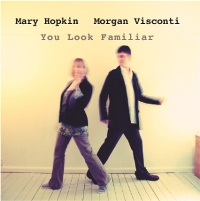
Now, she has released a fascinating new album (You Look Familiar) written and produced in partnership with her son Morgan Visconti – and it’s a treat from start to finish, not least because those pristine vocals are utterly undiminished by the years. But it is also a work of real, thought-provoking depth that references Hopkin’s folk roots (“Chime” is the most overtly folk-accented track) and influences as she relates a sequence of rounded, modern stories, from the opening track (“America”) with its tale of the young stowaway heading East to the uneasy warnings of “Eve’s Revenge” and the easy, resigned chug of “Dog Eat Dog” – a catchy pub song.
Intriguingly, many of the arrangements are cradled in infectious, synth-style riffs, beats and echoing overlaid harmonies (some courtesy of daughter Jessica Lee Morgan, a singer in her own right) that often create a retro sense of lush 1980s electronic pop.
But don’t be seduced simply by the sound. Piercing barbs lurk in the lyrics, reminders that Hopkin now has the lifetime of experience that she was only able to hint at as the 18-year old singer of “Those Were the Days”. There is darkness and stinging cynicism, too. I don’t know who she had in mind, writing “Heaven Knows”. But even if her target was personal, the stinging words could equally apply to higher, more public figures and I can think of one or two politicians who would be usefully caught in their firing line.
I love “People Say”, a wise and touching account of an unexpected encounter that could lead to something more, the motherly advice of “Walk Like Me” and the epic, hypnotic forebodings of “Pretenders”. With You Look Familiar, Hopkin has emphatically shaken off the shreds of nostalgia and reminded us of a voice and pedigree that have much to offer in 2011. Don’t leave it so long next time, Mary. We’d like some more – and soon.
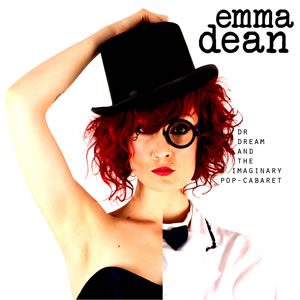
“Sincerely Fearful”: a track from Emma Dean’s new album, Dr Dream and the Imaginary Pop-Cabaret
Dr Dream and the Imaginary Pop-Cabaret: a record with huge ambitions
I know it makes me a failure on so many levels as a gay man but I’ve never really understood the Kylie phenomenon. Those Stock, Aitken and Waterman years were anathema to me. And give or take a couple of genuinely interesting floor fillers since then – and the lady’s occasional flirtations with jazz and Nick Cave – I’ve always found that tiny sliver of a voice totally at odds with her diva status and the outrageous production values of her arena tours. For such a small talent, she’s had a spectacular career. But now that she’s post-40 and has successfully battled breast cancer, she has also earned her ‘show-business survivor’ stripes. So good luck to her, I guess.
Emma Dean is something altogether different: bold, edgy, clearly determined to plough her own creative furrow and to hell with the consequences, and possessed of a raw, outsize talent that will take some steering. And with a new album – Dr Dream and the Imaginary Pop-Cabaret – just out, she is in pole position to be Australia’s next big cultural export.
This is a record with huge ambitions – epic arrangements (catch those strings on “Sharks”), swooping vocals (that have had some critics reaching yet again for Kate Bush comparisons), lyrics that plunge with vertigo-inducing speed from existential streams of consciousness to the gut punch of rock balladry and the occasional crude verbal laceration.
Dean herself says, “It’s [the album] about letting go of all the things I’m normally too afraid and ashamed to speak of and unashamedly airing them in song.” If you have sensitive pretentiousness antennae, they’re probably twitching already. And the album’s concept – Dean spilling the contents of her sub-conscious to the eponymous Dr Dream – is no small hurdle, for a start. But once you get beyond that and start listening to the words, the cascade of characters, dark tales, threats, dangers and sensual motifs, is innovative and promising.
It’s a long while since I heard a lyric as challenging as: “Once a thieving scoundrel dared me to steal your underwear. The silk did trickle down your legs to your ankles pink as pigs,” the opening lines to the hymn-like “Thieving Hearts”.
Can’t get her out of my head? Well Dean is certainly a bold and refreshing new voice, and there are several tracks I’ll happily have on my iPod. To be honest, I don’t get Kate Bush so much as Sparks (“Sincerely Fearful”) with a dash of Tori Amos and Berlin cabaret. Dean’s fascinating vocal texture also reminds me very much of Melinda Miel, a performer of dark, bloodstained cabaret material, who captured the imagination of London’s club scene all too briefly in the early 1990s.
Melinda Miel sings “Delirium’s Mistress”: dark, bloodstained cabaret from the early 1990s
Dean has combined idiosyncrasy and a strong, fetishistic visual impact with a promisingly commercial sound, epitomised by one of the best tracks, the anthemic “Thunder”.
At the same time, this points to another hurdle: Dr Dream is a character from her alternative cabaret show, and there is sometimes a sense with the album that the listening experience is only giving you half the story. Not all the songs are wholly effective in a pure audio format. So hopefully, she’ll soon be following that well-trodden path to London and we’ll get the chance to see and hear the complete picture.
Meanwhile, if you’re going to be in Australia this summer, you can catch her as Sally Bowles in Zen Zen Xo Physical Theatre’s production of Cabaret in Brisbane.
Renée Oxon sings “Gee Baby, Ain’t I Good to You” on a fire escape in Ottawa. The sound quality on her album, Let’s Call it a Day, (reviewed below) is much better!
Wilson, Jungr and Herbert: the new Girl Talk line-up hits London in February
Congratulations to Barb Jungr, whose album The Men I Love has just been named Cabaret CD of the Year by Time Out New York.
Barb and Mari Wilson will be joined in the new year by the equally talented Gwyneth Herbert, as they launch a revived Girl Talk with a new show – I Am Woman. Girl Talk begin a week-long residence at The Pheasantry in London’s King’s Road on 8th February.
Mari has just released a fabulous slab of electro-pop, with a slash of retro hi-energy, collaborating with Boisounds on a party floor filler, “O.I.C.”, which is available for free download.
Horses & High Heels: Marianne Faithfull's new album, out in March
Marianne Faithfull’s new album Horses & High Heels comes out in March. “I don’t really do conventional,” she warns us in advance publicity. As if we didn’t know. A taster track, the self-penned “Why Did We Have to Part”, is available for free download until 19th January.
Back at The Pheasantry, there is a really good reason for fans of Stephen Sondheim’s work to join the Sondheim Society. In tandem with the Society, producer Sam Joseph has conceived a series of Monday night cabarets starring some of the biggest names from all areas of London musical theatre. Society members benefit from advance notice of the programme and discounted ticket prices. Confirmed so far are: Alex Young (10th January), Sally Ann Triplett (21st February) and Mrs Lovett-to be – at Chichester later in the year – Imelda Staunton (14th March). Future appearances are expected by Rosemary Ashe, Janie Dee, Robert Meadmore, Adrian Grove, Graham Bickley, Michael Peavoy and leading West End musical director Gareth Valentine.
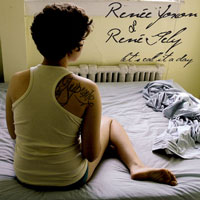
Let's Call it a Day: an auspicious debut from Renée Yoxon
Who’d have thought a physics degree would be the ideal foundation for a career as a torch singer? OK, so she was doing a little music on the side, but Renée Yoxon’s decision to ditch formulae for the jazz clubs of Ottawa is one of those left-field decisions that can occasionally lead to thrilling careers. And on the evidence of her first album, Let’s Call it a Day, this young Canadian could be the biggest female talent to emerge in her field since Diana Krall.
It’s an assured and auspicious debut. Accompanied only by veteran virtuoso René Gely on a selection of guitars – his steel string, in particular, rings with marvellously crisp authority – and occasional piano, Yoxon has reinvented a selection of standards with a refreshing boldness. Not in a revolutionary way, but mainly by re-establishing the lyric as the focus of attention, stripping it away from the overblown tendencies of so many younger interpreters at the moment.
Yoxon’s voice is something to treasure. Like one of the UK’s rising stars, Rumer, with her slightly husky accents and bang-on vocal authority, nothing seems to intimidate Yoxon. The opening track, “The Look of Love”, is a case in point. Bacharach’s off-beat melodies are notoriously tricky to do well, but Yoxon slides through it with lightly-oiled ease.
Undercurrents of melancholy and Billie Holiday-like phrasing seep through her interpretations of “Willow Weep for Me”, a shimmering “The Masquerade is Over” and of course – with an intimacy that’s almost audaciously spare – “Don’t Explain”. Two self-penned numbers, “Let’s Call it a Day” and “Lovers’ Lullaby” add to the album’s sense of freshness. There’s also a French-language version of Rodgers and Hammerstein’s “It Might as Well be Spring”.
If the final track, “One For My Baby”, betrays her youthfulness and lack of cynicism – catharsis seekers will probably miss the spirit of a wracked and bloodshot Sinatra – equally, it hints at what we can expect from Yoxon in the future. She’s set herself a high bar indeed.
Memory Box: a number from Tanja Maritsa’s previous album, Child in My Heart
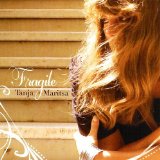
Fragile: a little piece of magic
Here’s proof that it’s possible to be gentle, understated, enigmatic and provocative, all at the same time. London-based Tanja Maritsa’s second album, Fragile, insinuates itself into your head and drifts around, underscoring the changing moods of the day. Not in a ghastly, earworm fashion. But in the way her intimate vocals – so soft that they’re almost whispered rather than sung, daringly close to the mic (she has an assured technical confidence) – wrap themselves around you.
Maritsa’s top-class band provide jazz inflections and undertones that shimmer around her voice – James Graydon’s guitar and Richard Cottle (who works regularly with Claire Martin) on the piano deserve special mention for the delicacy of their playing – as she swings her way delicately through Colette Meury’s pristine arrangements. Richard Niles has done a masterful production job, pulling together a diverse range of musical references and nuances in such a way that the shifts in tone, style and tempo never jar.
Maritsa keeps your expectations on their toes. The lilting opening track, “Live for Today”, promises a retro, 1950s nightclub experience, full of simple optimism, which is revisited later on in “No More the Blues”. But don’t be fooled, because there is plenty of food for the soul’s darker side to come, not least in Maritsa’s treatment of Sting’s “Fragile” – the title track and one of two imported numbers (the others are all from Maritsa’s pen) – and the poignant “Fading Grace” and “Always With You”. Loss, renewal and moving on are constant themes. The final ballad, “Fading Grace”, is a poignant acceptance of grief and lost innocence, its emotional impact only heightened by the spare delivery.
There are hints of chanson in “Won’t You Dance” and “In Love Again”, jazz-tinged folk in “On the Other Side of the World”, and bossa nova in the Astor Piazzolla number “Libertango”, but every time you think you’ve identified a specific style, Maritsa spins you on to a new perspective in her subtle, irresistible way. Fragile is a thoughtful, beautifully conceived little piece of magic.
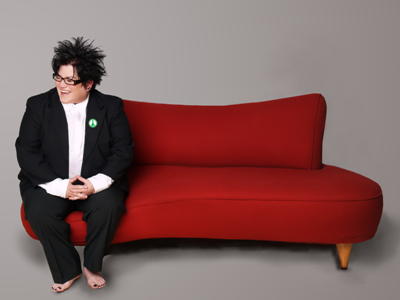
Lea DeLaria: a one-woman melting pot of serious musicianship and showbiz
What makes a great Christmas album? For me, it’s a performer’s ability to bring something new to those familiar songs and carols, with a dash of wit and intelligence – and even mischief. I want something that has a shelf-life which easily overflows the frantic couple of weeks leading up to the day itself, and that I’ll be quite happy to listen to on its merits well into January without the ennui setting in.
So while I’m sure Mariah Carey’s multitude of fans have been thrilled by the melismatic orgy that is Merry Christmas II You, it won’t be agitating my CD player this year or next. And although I’ve been a diehard Annie Lennox fan since her Tourists days – when there weren’t that many of us around – it pains me to say that the earnest intensity of her Christmas Cornucopia had me turning down the volume in irritation, until I was left in silence, watching the snow drift in the darkness through the window.
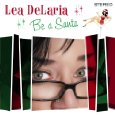
Be a Santa: one of the best jazz flavoured Christmas albums from a female singer since Cleo Laine's Christmas at the Stables
Then Lea DeLaria’s Be a Santa arrived, and promptly joined that small, select set of Christmas albums on my shelf that I’ll start reaching for every November in search of something to make the winter solstice swing.
Be a Santa is steeped in DeLaria’s trademark vocal dexterity. With her musical partner in crime Janette Mason, she’s taken a host of favourites and whipped them up into a jazzy triumph of verve and invention. She’s all whisky-and-honey tones for a bluesy, brazen take on Loesser’s “What Are You Doing New Year’s Eve?”, tears the house down with a rip-roaring “God Rest Ye Merry Gentlemen” – the band, incidentally, is dazzling throughout – then puts her own thoughtful, close-to-the-mic stamp on “Have Yourself a Merry Little Christmas” that takes you a million miles away from Judy Garland’s trembling vibrato. It’s a rare moment of intimate calm in an album that is otherwise delivered at a fair old lick.
DeLaria doesn’t put a foot wrong as she gets her tongue around some quick-fire lyrics (“The Man With the Bag”) without ever sacrificing clarity. That’s singing of the highest quality. And even when there aren’t words – witness the exuberant scatting on “White Christmas” – you forget you’re listening to songs that should have a strictly seasonal appeal and revel in one of the finest, most fluid voices on the scene. There is novelty, too. DeLaria and Mason have included one of their own compositions – “A Modern Christmas Tale” – which manages to combine a nostalgic, retro melody with allusions to all the angst-inducing banalities of getting ready for the big day in 2010.
When I last interviewed DeLaria, I called her a one-woman melting pot of serious musicianship and showbiz. The integrity of the music is incredibly important to her, she told me, but so is what happens between the songs, and the desire to give a good show on stage is paramount.
“There’s a language to jazz and the numbers, structures and harmonics are all built into it,” she said. “Do I have a talent? It seems to be. If you’d asked me five years ago, I don’t know whether I’d have said that. But having put out three records and worked with the people I’ve worked with, I am ready to say that yes, I do.”
Now, she’s put out four records, and Be a Santa is prime evidence of a vocalist in her prime – and probably the best jazz-flavoured album from a female singer since Cleo Laine’s Christmas at the Stables. The wit is all in the interpretation and if there’s just one thing missing, it’s a risqué, festive “Dirty Martini” moment. If you want to know what I mean, check out Play it Cool, and enjoy. Or just make do with DeLaria’s Egg Nog recipe, included in the liner notes.
Signe Tollefsen sings You, Me & The Brewers. Folk at its noirest
I’ve just been reading Richard Metzger’s fascinating analysis of torch singing on the exciting and eclectic Dangerous Minds blog, in which he gives a generous assessment of the Art of the Torch Singer. Thank you, Richard. Metzger draws particular attention to male artists who have specialised in the genre and his post is well worth a visit. It’s already attracted some interesting comments about singers who should be included in the genre. You’ll find plenty of other connected, music-related material on the site as well. And now, here’s some folk noir for these dark winter days…
Signe Tollefsen's eponymous album. Think dark, then darker still.
You know how the idea of a crisp, snowy December twilight will occasionally work its way into your mind on a steamy summer day, shocking you with a pang of longing to sip whisky in the halo of a flickering log fire while everything hibernates in the shadows beyond?
That’s the effect Signe Tollefsen had on me as I spun her eponymous offering for the first time just a few months ago: perverse, edgy, hankering for the kind of emotional workout that only comes with alcohol-soaked, troubled and troubling relationships. Yikes.
This is folk noir, apparently. And it’s as dark and compelling as anything you’ll find this side of Brel. Tollefsen spins brilliant, diamond-hard images against a gently loping undercurrent of guitar – lots and lots of guitar (some of it of the steel-pedal variety, which in the right hands is always good for conjuring a sense of knives twisting in wounded souls) – banjo, accordion, wailing fiddles and dulcimer. Misery has rarely sounded this inviting.
Dutch-American and an Amsterdam resident, Tollefsen is a born troubadour with a sound as capable of evoking solitary journeys across interminable plains as it is of hypnotic story-telling in the intimacy of a cellar bar.
A cool musicality is revealed in this work (she studied classical singing at the Royal Northern College of Music in her teens) as she plays with rhythms that showcase her bleakly sensual lyrics. “Mama tell me why can’t I sing… Mama let me wallow in my pain,” she sings with uncompromising purity. “I am an art, deprived of a king,” she laments at the receding figure of a dead lover. Vulnerability is exposed. Characters spring to life, doomed unions are played out in a voice of considerable range and, despite the essential gloom of the material, sweetness. ‘The other woman’ is regularly referenced, and themes of duplicity and infidelity creep insidiously into the picture.
And Tollefsen has created a sound that’s very much her own, too. Occasionally, I found myself reminded of Joni Mitchell or the steel-eyed clarity of June Tabor. More prosaically, there is a rather shouty outburst in “History Class” that will certainly appeal to lovers of the full-throated Florence Welch approach to singing. But for the most part, vocally, she keeps her own counsel.
As for the songs, each one is a complete story, told by turns viscerally, through a sequence of potent sensual images, or through a more conventional narrative. I love the opening track, “It Smells of You”, about how the essence of a departed lover hangs around long after the physical presence is gone; the ominous sense of entrapment in “Hooked (You Spit in my Whiskey)”; and the gritty emotional bargaining at the heart of “Up to No Good”. And any lyric that contains the line “I wake up to the smell of gin and regret” (the song has the rather unpromising title, “It Was Ooo”) will always get my undivided attention. Tollefsen sounds like she’s been there. I’ve certainly been there. Haven’t we all? And wouldn’t we all go back for more?
Now those December nights have closed in, the fire is flickering and I’m ready for a bit of heavy catharsis, and Signe Tollefsen is at the top of my playlist. Just thinking about it gives me a chill. Oh go on, then. Pass the bottle, dammit.
Someone who sings about love and loss, and the pain of experience. The power of torch-singing lies in its effect on the listener. For me, it transcends musical genres. These pages explore the dazzling, and sometimes dark, world of the female singer through history and in the present. Concert and CD reviews, interviews and articles combine to create a comprehensive view of this vital strand of popular culture. Why not share your views and experiences of your favourite artists, suggest performers you would like to see featured - and let me know what makes a torch singer for you?




 The Art of the Torch Singer
What do you think?