Archive | Video RSS feed for this section

CD Review – Julie Atherton: No Space for Air

16 Nov

Julie Atherton: a rocking live performance of “Blind” from her new album, No Space for Air

A closer look at Julie Atherton’s new album in a second. But first… Producers of the mooted 2011 London Follies revival apparently don’t think Bernadette Peters is sufficiently “box office” to carry a production on this side of the Atlantic. So murmurs the rumour mill. Ye gods. Here is one of the great leading ladies of our time – sure, a superstar on Broadway, but also a performer whose status and reputation is global as far as anybody who knows anything about musical theatre is concerned. And she is a luminary among actors who have specialised in Sondheim. You can’t buy the kind of gold dust she would sprinkle across the West End.

Never mind. Let’s wait 10 years. Then Dannii Minogue can give us her Sally, Cheryl Cole can step up to the plate as Phyllis, Susan Boyle’s “Broadway Baby” can raise the roof and Amanda Holden can summon her acting skills to deliver “I’m Still Here” with all the dramatic irony she can muster. And we’ll have the television audience-friendly Follies we apparently deserve. I can hardly wait. So I’ll probably curb my impatience with a trip to Washington DC in the spring, where Peters is scheduled to be a fascinating Sally, and Elaine Page will appear as Carlotta Campion, US producers apparently still being able to think outside the box just a little.

No Space for Air: a fascinating collection of modern pop and theatre songs

Julie Atherton will be a prime candidate to play Sally if there’s a revival to mark Sondheim’s centenary in 2030 – although she’d better make sure she’s got a television profile by then or she’ll have a tough job convincing the impresarios of the future.

Atherton is one of a handful of young West End leading ladies who composers would have been queuing up to write parts for in the old days. She’s a veteran of the cult hit Avenue Q and in the age of juke box musical dominance, through her involvement with the Notes From New York project, she consistently does her bit to promote new musical work in London.

When I saw her in their production of Jason Robert Brown’s chamber piece The Last Five Years last summer, it was clear that she was the genuine article: an actor with the instinctive ability to interpret lyrics in character so that they become part of the dialogue. Even so, I approached her new album, No Space For Air, with some trepidation. Musical actors ‘doing’ pop can be wince-inducing; I refer you to some of John Barrowman’s big finale numbers on the BBC’s Tonight’s the Night.

But Julie Atherton rocks. This modern, thoughtful collection of songs – produced with obvious attention to detail – is provactive and inspiring by turns. There are a couple of theatrical numbers: the tricky tale of “Lost in Translations” from Craig Adams’s Lift; and the most radical reworking of Sondheim’s Follies torch song “Losing My Mind” since Liza Minnelli’s 1989 electric disco collaboration with the Pet Shop Boys. But the bulk of the material is from the pens of edgy, contemporary songwriters like Mark Tremonti (“Broken Wings”) and Jake Hook (“Silent Whispers”).

Atherton is well served by arranger and pianist Craig Adams, with a string quartet adding some evocative accents to the pristine sound of the band. She launches into the opening track, “Weak”, with a cross between Emmylou Harris’s crystalline soprano and the finer emotive qualities of Celine Dion, sweet, country-flavoured tones shot through with moments of controlled power. The effect is exhilarating.

“Crawling” matches anything else on offer from the current clutch of young female artists. Atherton’s ability to inhabit a song and tell its story with emotional conviction but none of the artifice that so many singers rely on – let’s call it the curse of X Factor – is refreshing. She switches in a breath from subtle and gentle (“Never Saw Blue Like That”) to quirky and vulnerable (Tori Amos’s “Leather”).

The title of “Encore”, technically the last track on the album, raises the prospect of theatrical resonance but turns all such expectations on their head with a soaring exhortation to live in the present. But leave the disk on the player for a hidden treat: Atherton’s poignant take on the John Denver classic “Annie’s Song”.

CD Review: Home – Rosie Nimmo

13 Nov

Timeclock: Rosie Nimmo’s unsettling exploration of life’s rapid pace

Home: the follow-up to Rosie Nimmo's first album, Lazy and Mellow

Mid-November, with a gale flinging the leaves against the window and a darkening sky that seems to promise eternal winter: it’s the perfect time to be listening to Home, a second album from Edinburgh singer Rosie Nimmo.

Not because Nimmo’s lyrics are relentlessly bleak and introspective – although they have their moments – but because despite a sheen of melancholy, little beacons of hope, comfort and warm humanity flicker across her complex vision of life’s travails. Just when you think the darkness is closing in for good, there’s a nip of something strong and reviving to pick you up and give you a wry laugh.

“The secret’s to enjoy the view

If you can enjoy the people too,”

Nimmo sings with cool irony in the opening track, “Never go Back”. And there’s the rub, of course, because it’s people who tend to get in the way. Nature can be a more rewarding companion. Songs like “Moonglow Music” and the title track are like little oases in a landscape of experience that in other numbers – the desolate “Life Can Pin You to the Wall” and “Low Blue Way” with its aching harmonica (a Nimmo speciality) – is often obscured by mist.

Rosie Nimmo in concert at Queen's Hall, Edinburgh (Picture by Marc Marnie)

“The End” is a frank and simple account of leaving things too late in a relationship. Perhaps, as Nimmo suggests in “Listen to Your Own Voice”, it’s ultimately best to be accountable to your own instincts. That way lies inner strength.

This is a wise collection of songs that faces up to some rough realities, not least in the unsettling, driven “Timeclock”, a sensory exploration of life’s rapid passage that really works its way under your skin. But there are moments of joy in the infantile escapism of “Being a Child Again (in the Snow)”, and even the sad tale of “Little Bird” ends on a note of fragile hope.

Nimmo’s style veers between soft, gentle folk and an edgier, almost bluesy quality that keeps you guessing where the mood will lead her. There is some exemplary, unfussy accompaniment from, among others, producer Marc (Hobotalk) Pilley on guitar, keyboard player Ali Petrie (the much-neglected Hammon organ comes into its own on several tracks) and fiddler Mairi Campbell.

Subtle, understated and sure-footed, Home is an intelligent, rewarding piece of work full of quirky hooks and rhymes that send your thoughts spinning off in all kinds of unexpected directions.

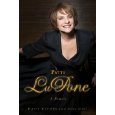
Book Review – Patti LuPone: A Memoir

3 Nov

Being Alive: Patti LuPone sings up a storm with a Sondheim classic

In a recent interview for Cabaret Confessional, I was asked some searching questions about my interest in torch singers and in response came up with a phrase – “The ‘bruised’ type of lady singer” – that has been flitting around my mind ever since. I think it sums up what I’m listening for or responding to in a woman’s singing voice, regardless of where she sits in the spectrum of musical styles and genres.

Patti LuPone's new memoir: bruising tales of backstage life

When it comes to representatives from the musical theatre faction, there’s no doubt that Patti LuPone fits the bill on many levels. She is a genuine Broadway Diva. OK, that’s often a carelessly and over used term but LuPone’s qualifications speak for themselves: Broadway’s first Evita; the original musical Norma Desmond; the West End’s first Fantine – that small but pivotal role in Les Misérables, which gave us the immortal “I Dreamed a Dream”; a triumphant Reno Sweeney; and relatively late in a career that’s still going strong after four decades, an acclaimed interpreter of Sondheim’s music and lyrics in a series of revivals that have included Sweeney Todd (Mrs Lovett) and a Tony Award-winning turn as Rose in Gypsy. She has also made some fine albums that endorse her torch-singing credentials, particularly Matters of the Heart (1999) and The Lady With the Torch (2008).

But as she reveals in her new autobiography, Patti LuPone: A Memoir, many of those experiences have been bruising, and one or two left scars that that have yet to heal properly. There is much more to LuPone than her musical career, and if anything, the sections of the book that relate the development of her craft, her association with David Mamet and her life as a working actor, are the most objective, resonant and thoughtful passages. Musical theatre is always fraught. The slings and arrows are so damned personal. Even with Evita, to all outward appearances a career highpoint, LuPone has battles to fight, takes some vicious critical hits and suffers the ravages of vocal damage.

But musical aficionados will skip straight to the lengthy chapters detailing how she won – and, as things turned out, survived – the role of Norma Desmond in Sunset Boulevard. They won’t be disappointed because she tells her side of the story with hard-eyed, revenge-served-cold clarity.

And what a tale of a leading lady scorned it is. From the moment the casting decision is made, she is undermined and threatened by a swirl of media rumours, receives no support from her producers and is handled by Andrew Lloyd Webber with a bumbling incompetence that contrasts rather starkly with the paternal image he has cultivated towards his would-be stars in BBC talent shows like How Do You Solve a Problem Like Maria? and Over the Rainbow. He will not be flattered by this portrait. Even at this distance in time, LuPone’s disdain is chillingly palpable. Tellingly, Glenn Close, the actress who eventually played Norma on Broadway after the smoke and mirrors had done their work, doesn’t escape a well-aimed swipe from LuPone’s primed paw either.

There is no reason to doubt her account of events – presumably it was well vetted by the lawyers before it went near the printing press. So it is hard to avoid the conclusion that she was anything other than betrayed by a composer whose show could only benefit from the rumour-stirred publicity, but who wasn’t brave or courteous enough to tell the woman at the heart of the storm what was really going on. This is one of the juiciest back-stage tales in the history of modern musical theatre. Like so many other episodes in LuPone’s memoir, it offers a salutary lesson in the importance of good agents and hard negotiation. And of holding out for a decent settlement. Which, satisfyingly, is how The Andrew Lloyd Webber Memorial Swimming Pool came about in LuPone’s back garden.

I Dreamed a Dream: not the Susan Boyle version

LuPone is clearly a formidable personality, one forged in the fires of her early, post-Juilliard days as a touring actress, and toughened by traumatic stints in failed musicals (The Baker’s Wife was one such trial but at least it gave her a signature song in “Meadowlark”). I interviewed her once, briefly, on the telephone for an article on the skill of singing Sondheim. She was brisk, helpful and businesslike, juggling our conversation with a consultation with her web master at her Connecticut home, and presumably had one eye on the clock, as she was due in town for that evening’s performance of Gypsy. Warm pleasantries were hardly the order of the day. And that’s pretty much the impression that emerges from these pages. Fools are not suffered. Cantankerous co-stars – Topol in The Baker’s Wife and later, Bill Smitrovich in the long running television show Life Goes On – are handed the Lloyd Webber treatment. The chorus and dancers on Anything Goes are stingingly rebuked as a group of “C-team players” who “approached their roles in the show with a tremendous sense of entitlement and little sense of responsibility”. At the same time, some burnt bridges are restored. A seemingly terminal rupture between LuPone and the legendary librettist Arthur Laurents is touchingly healed when she approaches him about playing Rose in Gipsy.

LuPone makes some percipient observations about professional behaviour and expectations. But she has acquired a reputation for a certain imperiousness over the years and there are also moments when, pleasingly, her inner Diva breaks through. She doesn’t bother with excuses. Ensemble duties on Les Misérables are not for her, she decides, and one day she gets back to her dressing room after expiring as Fantine, kicks off her shoes and switches off the stage speakers, committing the unforgivable actor’s sin of missing her cue.

References to her close family and the occasional co-worker aside, genuine professional warmth emerges most poignantly at the end of the book when LuPone finally gets to play some of Sondheim’s most notable leading ladies. Why did it take so long? She had regularly included his songs in her concert and recording repertoire – her scorching “Being Alive” had become another signature number – but had never been given a sniff at an actual role. Quite simply, it seems that producers didn’t really consider her a ‘Sondheim’ actor.

So when she was first asked to play Mrs Lovett in a concert production of Sweeney Todd, the casting choice came out of left field. “It just wasn’t a part my name would normally be associated with,” she writes. And yet through this initially surprising offer, and a five-year programme of Sondheim productions initiated by Welz Kauffman at the Ravinia Festival, LuPone perhaps finds her ultimate destiny as a musical actress. Her Rose is lauded on Broadway, even by critics who had been the bane of her life, and there is a real sense of music and character combining and being channelled by the actor in a moment of professional completeness.

This is a must-read memoir for anyone who wants to understand better what drives a performer, and an astringent insight into the backstage machinations that are intrinsic to an entertainer’s life. Patti LuPone has certainly earned those bruises but these days, you sense she could hold her own against pretty much anyone.

Concert Review: Baby Dee and the Elysian Quartet, Shoreditch Church, 16th October 2010

20 Oct

“Black But Comely”: a song of doomed, elemental passion

A Book of Songs for Anne Marie formed the basis for the concert at Shoreditch Church

Baby Dee had already shambled on stage and struck up the first chords of a song about slugs in Shoreditch Church, late on Saturday night, before the audience became fully aware of her presence and let out a welcoming cheer. She turned and smiled over her shoulder with a knowing, ‘this is me, folks’ shrug and launched into one of her characteristically poetic, impressionistic lyrics, accompanied by her own sublime piano playing, sending the notes soaring up into the lofty shadows of the church ceiling.

Wrapped in a capacious coat with dalmatian spotted leggings underneath and something that resembled nothing so much as a red tea cosy on top, she cut a singular dash. Dee could have been an eccentric aunt who had simply wandered in from Shoreditch High Street, put down her shopping and absent-mindedly started tinkling the ivories.

Appearances are deceptive. This avant-garde transexual creator and singer of art songs – a one-time Coney Island performance artist and organist for a Catholic church in the Bronx – might indeed be eccentric. But there is nothing chaotic about her musicianship – she is a classically trained pianist and harpist – or the extraordinary instrument that is her voice: a resonant tenor that occasionally rises in a counter screech or descends into a filthy, cackling vibrato rasp.

Songs about insects feature large in her repertoire – the evening would end with a paean to bees – but the slugs, it transpired, were just the hors d’oeuvre to the main feast: a set largely based on Baby Dee’s mesmerising album, A Book of Songs for Anne Marie, for which she was joined by the assuredly ethereal strings of the Elysian Quartet, an oboist, and a guest cellist whose name, alas, I couldn’t catch because Dee’s spasmodic inter-song links were so sotto voce that the sound system didn’t pick them up.

The concert (a Frieze Music event), played out in front of the alter against a backdrop of flickering candles and beneath strings of  fairy lights, had a hypnotic beauty.

Dee’s free-ranging ballads are eerily, deceptively delicate. Snatches work their way under your skin and re-emerge in dreams, balmy yet ominous. “Love’s Small Song”, for example, is the sort of thing you might expect to hear on the wind if you ever found yourself wondering the passages of an Elizabethan palace in the dead of night. “Black But Comely”, brimming with doomed elemental passion, is, like so many of Dee’s numbers, a torch-song of masochistic brilliance.

“I am less the writer of these songs than I am their unfit mother,” she writes in the album notes, hinting at the weight of experience from which they poured. The lyrics are vital to understanding her work but were ill-served by the venue’s acoustics on this occasion, at least for those of us at the back of the hall. Even so, their dark, brooding preoccupation with loss and ruin, studded with flashes of celestial hope and references to nature and the seasons, provided a compelling leitmotif.

The playing was sublime. Dee herself ambled between piano and harp – creating moments of broad comedy defined by some jaunty ‘travelling music’ courtesy of the Quartet – playing each with an absorbing delicacy. But perhaps the most exquisite moment of the evening was when she descended from the stage for a yearning accordion solo, gazing up into a spotlight: defiantly unclassifiable, away with the fairies, but a mesmerising class act.

Book Review: Bloody Mary, Mary Coughlan

13 Oct

She’s Bad: Mary Coughlan sings up a storm at the recent Tribute to Kirsty MacColl in London

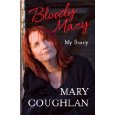
Bloody Mary: not your average showbiz autobiography

If Holiday, Piaf and Garland wrote the torch-singer’s handbook between them, Irish siren Mary Coughlan has spent the best part of her 54 years doing her utmost to surpass to their collective example and write the final chapter.

But despite her best efforts at self-destruction, she has come through the requisite abused childhood, the drug addiction, alcoholism and suicide attempt, psychiatric treatment and hospitalisation, the car crashes (marital and literal) and dodgy recording contracts to emerge as one of the genre’s most magnificent interpreters: a genuine survivor who, in those darkly wry Kirsty MacColl lyrics that she nails so instinctively, has “been an awful woman all my life”. And who has also, with the great torch-singer’s alchemy, transformed that ‘awfulness’ into the sublime ability to hold her audience entranced as she spins her musical tales, with their self-referential undertones, in a voice like honeyed whiskey poured over gravel.

Coughlan’s autobiography – Bloody Mary, My Story (Hachette, published on 4th November) – could have been just another misery memoir. Instead, it’s a raw, often bawdy and rollicking, clear-eyed look at the several lives she’s packed into half a century.

From the prologue, in which she is sharing the hearse with her mother’s coffin and issues a last, desperate plea for a way to take control of the chaos, to the domesticity and gentle optimism of the closing pages, a remarkable lack of bitterness and self-pity is one of the book’s most compelling qualities.

The journey to sobriety requires the ransacking of some pretty appalling memories, but there are also countless high spots and occasional passages of almost Utopian tranquillity. Who would have thought, for example, that the hell-raising Mary who blazes her way across the music business was also a one-time macrobiotic fanatic drifting through a commune-style existence in the dwindling wake of the hippy movement?

The House of Ill Repute: experience and circumstance strike sparks

Coughlan never shirks responsibility for her own behaviour, least of all in the heartbreaking – and frustrating, for everybody who has ever fallen under the spell of her voice or worked hard to make it heard – passages that deal with her alcohol intake and its impact on her children. But it’s always clear that to a great extent, this is a shared responsibility. The sexual abuse she suffered at the hands of the shadowy grandfather and uncle who stalk the early pages, her mother’s textbook denial, and the relentless beatings meted out by her father (there is ultimately rapprochement, forgiveness, a coming to terms) were surely the triggers for teenaged Mary’s break for freedom, her flight to London, and a restless spirit that, even as others spotted her considerable singing talent, would find ever more ingenious ways to undermine and waste it.

Given the amount of time she’s spent under the influence of one recreational substance or another, it’s a wonder that Coughlan can still find her way through the lyrics of a song, let alone recall the finer details of such a roller-coaster life with such clarity. Her professional breakthrough came in 1985, with an invitation to appear on The Late Late Show. Her spontaneous acapella rendition of “Strange Fruit” remains one of the programme’s watershed moments, blasting her into the nation’s consciousness as a fascinating interpreter of lyrics who could stake a claim to her own territory where jazz, folk and blues and meet. Even by that stage, she’d lived a hell of a life and, by her own admission, was hardly prepared for the kind of exposure, expectations and above all, business decisions that come with such rapid stardom.

However – always cunning when it came to camouflaging her dependencies (at one point, she kept the vodka hidden behind a life ring on the seafront close to her home; the book is peppered with such darkly humorous anecdotes) – she found a niche in Ireland’s cultural set, even trying her hand at film acting in Neil Jordan’s High Spirits, and soon found a loyal international audience as a singer. Coughlan’s descriptions of how outward appearances were so at variance with her inner turmoil go well beyond the usual triumph-over-tragedy truisms of the average showbiz autobiography.

Equally, Bloody Mary is a fascinating account of the resilience of a great talent, and how difficult it is to sustain a level of success in an industry that is notoriously difficult to navigate. Personal troubles aside, Coughlan has endured most of the clichéd setbacks familiar to any performer who’s survived beyond their first 10 minutes in the spotlight.

And she clearly is a survivor, indomitable in spite of herself, finally at peace with her talent and, as she says, now singing some of the best material she has ever performed: bleak, Brechtian torch songs that resonate with grim wit, longing and, yes indeed, hope. Bloody Mary offers a powerful explanation of how the clash of experience and circumstance strikes something unique in a singer’s voice and enhances the revelatory quality of the lyrics she sings.

The House of Ill Repute, Coughlan’s most recent album, is being re-released to coincide with the publication of her autobiography, complete with new tracks.

Concert Review: Maria Friedman Sings Sondheim, Cadogan Hall, London 6th August 2010

9 Oct

Maria Friedman as Mrs Lovett at the BBC Proms: she reprised the role a week later for her concerts at Cadogan Hall

My review of Maria Friedman Sings Sondheim, which follows, appears in the current issue of SONDHEIM the magazine, the journal of the Stephen Sondheim Society. Also mentioned in the magazine is the tantalising possibility that Trevor Nunn’s eagerly awaited production of Follies will finally materialise at the Theatre Royal, Haymarket, with none other than Bernadette Peters as Sally. Rumours abound, of course, but that would be genuinely exciting casting. As Peters is committed to A Little Night Music on Broadway until the show closes on 9th January, we’ll have to hold our breath a while yet.

It ought to be disconcerting when a composer to whose work you are about to dedicate two evenings of top class entertainment puts his head in his hands at the prospect and asks, with great feeling, “Won’t you be doing anybody else’s songs?” But few would have understood Stephen Sondheim’s predicament as acutely as Maria Friedman, and accepted his absence from her Cadogan Hall concerts with such good-humoured grace. This, after all, was a woman who had already endured the scary indignity of being arrested by US immigration officials en route to sing at his 80th birthday celebrations in New York for having the wrong visa and could still see the funny side.

Coming barely a week after the euphoria of his salutary BBC Prom, Maria Friedman Sings Sondheim was a revue too far for the man of the moment. But for an audience to whom the concept of too much Sondheim simply wouldn’t exist, it was a chance to hear a mixture of some of his best loved songs in a more intimate setting, in a programme that was also studded with one or two welcome rarities, delivered by one of the most instinctive and sensitive interpreters of his work to emerge from her generation.

Certainly on Friday 6th August, the second night of this short run, Friedman’s emotional connection with the songs – and with an audience that was frequently spellbound by the authority of her performances, song by song – was at its peak, and she achieved the rare feat of rendering the familiar – “Send in the Clowns”, “Losing my Mind”, “Broadway Baby”, “Being Alive” – in fresh shades, drawing us into a sequence of shared personal experiences in which the truths at the heart of Sondheim’s lyrics have rarely been as eloquently expressed.

Friedman’s accompanists, pianist and MD Jason Carr and cellist James Potter, must take much of the credit for the clarity of the evening’s high points, their sympathetic playing blending so perfectly with the singer’s fluid phrasing. But in truth it was a personal triumph for one of Sondheim’s most committed leading ladies from the start, opening as she did with a medley from Passion, recalling her performance as Fosca in the original London production.

She moved nimbly from the ominous, unsettling cadences of those early numbers to a pair of songs from Company – the demanding, urban call of “Another Hundred People” and the tongue-twisting complexity of “You Could Drive a Person Crazy” – artfully balanced on either side of “I Remember” from Evening Primrose, delivered with the aching simplicity it deserves.

If there were any quibbles still hanging in the air from the previous week’s Prom, they were largely nailed tonight.  At least one critic had found Friedman’s vocals ill-served by the Royal Albert Hall’s sound system. There was certainly no question of that at Cadogan Hall where every word sailed pristinely out across the auditorium.

Another had questioned the wisdom of using so many songs from the undeniably cerebral Sunday in the Park With George in a concert format that gave the Sondheim novice no real handle on the source material. When Friedman told the composer she too would be including a medley from the show, he asked her to please explain the context of the songs so that the audience would have a better idea what they are about. This she did, against her declared better judgement that she prefers to let the songs speak for themselves.

She need not have worried. In fact, the sequence from Sunday was one of the evening’s most intensely moving passages. Playing Dot was obviously a seminal phase in Friedman’s career and her reconnection with the piece through fragments of the title number, “Color and Light”, “Finishing the Hat”, “We Do Not Belong Together” and the rising inspiration of “Sunday” was palpable.

For various reasons, the Sweeney Todd excerpts that opened the second half of the concert were at once the most entertaining and frustrating elements of the programme. Mrs Lovett has wonderful moments of broad comedy and pathos throughout the show, but they require a foil – usually Sweeney himself – to work effectively.  Bringing a delighted member of the audience on stage to bear the brunt of “The Worst Pies in London” allowed Friedman to indulge in Lovett’s essential vulgarity to the full, but a more po-faced purist might think the business involving the gentleman’s lap, her rolling pin and some rather pointed gestures about size pushed things in a far too obvious direction.

And when it came to “A Little Priest”, with Jason Carr standing in as Sweeney but necessarily tied to his grand piano, the discipline that held the rest of the evening together was at its most ragged. “Think Bryn Terfel”, said Friedman archly (and with all due respect to Carr, we probably did). But the compromise was almost worth it for Carr’s glibly acid response: “Think Julia McKenzie”, which went down very well with this audience of Sondheim cognoscenti.

While Friedman disappeared in search of a more elegant gown, and to dispense with Mrs Lovett’s top-knots – “The Angela Lansbury memorial hairpiece,” as Carr put it so deliciously – James Potter treated us to a sublime cello version of “Later” from A Little Night Music.

Elsewhere, medleys from Into the Woods and Follies, not to mention her taut, artifice-free “Send in the Clowns” were welcome reminders that Friedman still has plenty to explore as an actor in future revivals of Sondheim shows. She will surely be a memorable Sally, one day, in a full-scale production of Follies, for example, although judging by her determined onslaught on “The Story of Lucy and Jessie” she also fancies a crack at Phyllis.

But in signing off with a profoundly touching “Isn’t He Something?” from Road Show, which has been evolving through various incarnations for the best part of a decade, Friedman could also have been making the poignant observation that we are now pretty much looking at the complete works of this genius.

Sondheim himself has turned chief curator of his canon with the imminent publication of Finishing the Hat, and we must reluctantly accept that the prospect of substantial new work is remote. Friedman and her fellow Sondheim ‘specialists’ must in turn make the transition from muse to archivist, tending and reinvigorating the work through their own reinterpretations and making authoritative contributions to productions of the future, which will reinvent this endlessly fascinating and humane material for new generations. On the evidence of Maria Friedman Sings Sondheim, that process will be in safe hands for many years to come.

CD Review: Joyce Cobb with the Michael Jefry Stevens Trio

5 Oct

The making of the album: Joyce Cobb and Michael Jefry Stevens in the studio

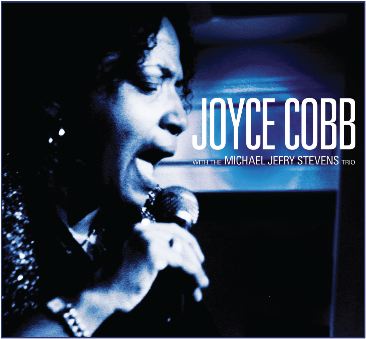
Joyce Cobb with the Michael Jefry Stevens Trio: an album of considerable quality

I’d never claim to be a jazz expert, so when I listen to a singer who’s been filed in that particular section, it’s as the eternal novice. As with the work of a painter or a sculptor, my response is always visceral. I like it instantly or I don’t. Very occasionally, something grows on me after several plays or over the course of a set at a gig. But usually, it’s that first reaction that sticks. I’ll leave the hardcore analysis to the genre’s aficionados.

So what was my first reaction to Joyce Cobb with the Michael Jefry Stevens Trio? Aside from the fact that it doesn’t exactly trip off the tongue as an album title, I was hooked. “Right, here we go,” says Joyce Cobb , one of Memphis’s finest exports, at the start, launching into a harmonica intro to “Moanin’” before unleashing her warm, honeyed tones on the lyrics. It’s a potent combination that leaves you in doubt that you’re in the presence of an assured, class act.

Cobb might be billed as a jazz singer, but there is plenty of soul in her voice too. That means comparisons with Ella (coming through in Fats Waller’s “Jitterbug Waltz”), Billie (whose ghost is surely hovering in “If You Know Love”) and Sarah are inevitable. She certainly doesn’t come up short in the bold phrasing or the way she takes the melody and unravels it like a fine thread of gold. She bends it and stretches it but never lets go of the line. That’s a singer’s singer for you. And in the company of Michael Jefry Stevens on the piano, with Jonathan Wires on the bass and Renardo Ward on drums, she has precisely the framework she needs to work some intriguing magic with this set of standards. And comparisons aside, what comes across most clearly is the art of Cobb herself, in absolute command of every song, serene and completely comfortable within the music. Her voice is a prism of shifting moods and emotions.

There’s a beautifully restrained “Skylark”, with Stevens sublime on the piano, a playful “My Heart Belongs to Daddy” that banishes the threat of Earth Kitt-style outrageousness to the far reaches, and a lovely mash-up of the Dorothy Fields/Jimmy McHugh ballad “I’m in the Mood for Love” with some new lyrics from James Moody. “If You Never Come to Me” has a breezy samba quality. Stevens lays on the atmosphere again at the start of the plaintive Jimmy van Heusen/Johnny Mercer number, “I Thought About You”. It’s Wires’ turn to shine with a spare accompaniment to Duke Ellington’s lament “Daydream”. By the time Cobb gets scatting – something, I’ll admit, I’ve always found an acquired taste – on Thelonious Monk’s “It’s Over Now (Well You Needn’t)”, she’s long since had us in the palm of her hand.

This is an album of considerable quality that rewards repeated listening, which is just as well for us here in the UK. In the absence of any London gigs from Cobb, we’ll have to make do with it for the time being.

Lucky readers in mainland Europe, however, can find her with the Michael Jefry Stevens Trio on tour right now in the following cities: 5th October, Prague (Jazz Dock); 6th October, Graz, Austria (Stockwerk); 7th October, Vienna (Reigen-live); 8th October, Darmstadt, Germany (Knabenschule); 9th October, Luxemburg (L’Inoui Café); 10th October, Brussels (L’Archiduc); 11th October, Frankfurt (Jazz Keller); 12th October, Reutlingen (Artgallery Reutlingen); 13th October, Neustadt (Katakombe); 14th October, Paderborn (Jazz Club), 15th October, Lausanne (Chorus); 16th October, Chur, Switzerland (Jazz Club).

Concert review: Gwyneth Herbert, An Exploration of the Sea, Britten Studio, Snape, 1st October 2010

2 Oct
A legend in her own living room: Gwyneth Herbert’s acoustic version of “My Narrow Man”

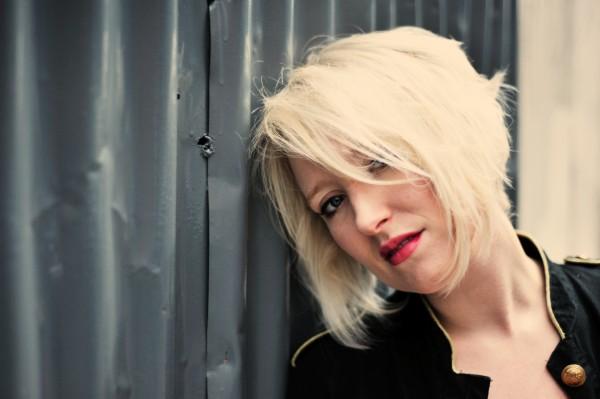
Gwyneth Herbert: a vocal chameleon in statement shoes

It was quite a night to head up to Snape on the wild side of Suffolk for the premiere of Gwyneth Herbert’s sea-inspired new song cycle. The heavens seemed to be hurling buckets of water in rapid succession at the windscreen, making the A12 in the rush hour even more of a challenge than usual.

In the 30 seconds it took to dart from the car to the dry haven of the Britten Studio foyer, some of us had good reason to consider returning our waterproofs to their manufacturer with a stinging reference to the Trade Descriptions Act. Out on the salt marsh, curtains of rain continued to blow in from the North Sea. Autumn had arrived with a wet fanfare. Could Herbert’s experimental piece – the fruit of a six-month Aldeburgh Residency – possibly live up to such an appropriately elemental setting?

Yes, indeed it could. First, however, she sharpened our appetites with a set based mainly on songs from her most recent album, All the Ghosts, setting off at a cracking pace in statement heals and polkadots. “So Worn Out” was an instant showcase for one of the most fascinating, multi-textured female voices on the scene. Herbert can veer from smoky blues to a keening falsetto in a single phrase – a stiff challenge for the dextrous sound engineer, on his mettle throughout the evening. One minute, she has the sweet, clear timbre of the innocent folk singer. The next, she’s growling Grace Slick-style with the throaty rasp of a leather-lunged survivor. She’s a vocal chameleon, and it suits the rich imagery of songs that tell eccentric, sad, joyful and vibrant stories of life in London town that ring with authenticity.

All the Ghosts: vibrant stories of London life

Herbert’s virtuosity, and her eclectic taste in obscure instruments, asks a lot of her band: guitarist Al Cherry, Dave Price on a multitude of percussion, and Steve Holness on the double bass. And they did her proud through a roller-coaster repertoire, from the jaunty ode to a quaint boyfriend (“My Narrow Man”) to the melancholy torch-song “Some Days I Forget”, as close to an English chanson as you will find. “My Mini and Me” rang bells with anyone who finally has to say farewell to their first car, and “Annie’s Yellow Bag” struck a bittersweet blow for creative individuality. Sung live, “Put Your Mouth Where Your Money Is” came across like a gallows march for the critics, and despite Herbert’s disarmingly cheery wink, had some of us shifting uneasily in our seats.

But for me, the most affecting moment in the first half was the detour she made via a song from the score Herbert was commissioned to write for a screening of the Marion Davies silent film The Patsy. Even out of context, “Not the Sort of Girl” was an exquisite portrait of a whimsical creature, brought to life by Herbert’s plain, restrained vocal work.

That gift for conjuring characters in the space between the stage and the audience became even more apparent after the interval. For the eagerly awaited second set, Herbert and her band were joined by writer Heidi James and idiosyncratic folk trio The Rubber Wellies for a piece described as “An exploration of the sea”. Weaving the spoken word with Herbert’s evocative lyrics and audio tracks, the enlarged group proceeded to paint an aural seascape, populated by figures who sprang readily to life in the mind’s eye.

Herbert explained how she’d been inspired by her walks on the Aldeburgh shingle, by random conversations and encounters, to create a song cycle that roams far and wide for its references. In her pungent lyrics and engaging melodies, tavern drinkers rub shoulders with the redoubtable Fishguard women who repelled the invaders at the end of the 18th century; a captain thinks longingly of home; the brilliantly-sketched Miss Wittering – my favourite – sighs her way around the decaying gentility of her seaside hotel. And all are linked via Heidi James’s absorbing tale of the beachcomber, obsessively cataloguing her finds and sorting them in the shack, her “museum”. You waited agog to find out what the next list of detritus would contain.

The audience was enthralled. This was a mesmerising set, peppered with moments of drama, that found its way to the heart of our intense, ambivalent relationship with the seaside. There was, for example, a minute of eerie magic as Herbert, who had disappeared from sight, hypnotically rolling pebbles across the stretched hide of a drum to replicate the ebb and flow of the sea, reappeared at the back of the auditorium, her siren voice floating unaccompanied down to the front row.

As a subject, the sea plays to all Herbert’s strengths as a songwriter, and she has responded in kind with laments and shanties to stir the heart. Any quibbles are minor – a cluttered stage, which sometimes prevented her from moving fluidly from mic to piano, for example, and the lack of an imaginative lighting plot that would have heightened the drama – and will surely be resolved as the piece evolves from being a freshly minted work in progress.

This is only the beginning for Gwyneth Herbert’s sea song cycle, which surely has an exciting future in live performance and – please, Mr Producer – a good recording.

News Roundup: Caroline O’Connor, Patti LuPone, Liza Minnelli, Sandie Shaw, Barbara Dickson, Mari Wilson, Barb Jungr, Girl Talk and Juliette Greco

30 Sep

Caroline O’Connor: triple threat gives it large in the West End

Caroline O’Connor seems to have the West End in the palm of her hand if reviews of The Showgirl Within are anything to go by…

Liza Minnelli talks about choosing the songs for new album Confessions

The latest work from Broadway royalty is on its way to me in the shape of Patti LuPone’s autobiography and Liza Minnelli’s eagerly awaited studio album Confessions. Reviews will follow in due course but my appetite has already been whetted by Michael Miyazaki’s tantalising reports on Ms LuPone’s tell-it-exactly-as-it-was writing style and Minnelli’s indestructible gifts as an interpreter of lyrics…

Listen to Sandie Shaw’s live performance of Made in Dagenham

Sandie Shaw has been popping up all over the place ahead of the release of the much-vaunted British film Made in Dagenham, a fictionalised feel-good account of the impact of Ford’s female workers on the equal pay movement in the 1960s. Shaw, of course, is a Dagenham girl who – albeit for a few weeks, before her stratospheric rise to pop stardom – actually worked in the factory. Who better to sing the title track? And what a joy to hear that unique voice, cool and stylish, after too many years’ absence. A clutch of live performances seems to have rekindled her appetite for singing but she told BBC Radio 2’s Steve Wright that she needs loads of encouragement to get back into the studio. If someone wants to start a petition, I’ll certainly sign it…

Barbara Dickson: touring early in 2010

Happy Birthdays this week to Barbara Dickson, who has a major UK tour lined up for early 2011, coinciding with the release of a new album (recording has been going well according to her tweets) and publication of the paperback edition of her autobiography A Shirtbox Full of Songs. I recently interviewed her about her book, and you’ll be able to read all about it soon…

Curiosity value: Forget the sound quality and see how Mari Wilson styles Lili Marlene

and to Mari Wilson, also with a new album release imminent, an eagerly awaited one-woman musical about to test the London water and the revival of the fizzing, wry and brilliantly acerbic cabaret trio Girl Talk scheduled for 2011… Girl Talk will reunite Mari and Barb Jungr, and they’ll be joined by a soon to be announced replacement for Claire Martin…

Autotune be damned: why Barb Jungr is the real deal

It’s X Factor season again, apparently. The Art of the Torch Singer would happily let that pass without any comment whatsoever, but for the great autotune debate. Barb Jungr recently raised the issue on her Passport From Pimlico blog and asks why nobody is making the anti-autotune argument. It seems to me that she’s made it eloquently herself in a couple of heartfelt sentences. And here’s an interesting new angle on her hit album The Men I Love

Juliette Greco: chanteuse sans pareil

Finally, existentialist icon Juliette Greco is coming to the Royal Festival Hall on 21st November for a concert that forms part of the London Jazz Festival. It’s 10 years since I saw this legend of chanson at the Barbican on a highly memorable evening. My tickets are booked and you’ll be able to read the definitive review right here!

CD Review: Dolores Scozzesi – A Special Taste

17 Sep

The blues are just torch-songs: Dolores Scozzesi in performance

Dolores Scozzesi: there's nothing like discovering a new voice

There is one good thing about returning from holiday: a healthy pile of CDs for review has accumulated during the summer, promising plenty of interest to lighten the darkening autumn evenings. An even better thing is when you pick one, randomly, from the pile, put it on and out of nowhere, a new voice stops you in your tracks.

After all these years of listening, and not to sound too blasé about it, the “Wow” factor needs to be pretty strong to have that kind of effect. And it really has to be something different. So thank you, Dolores Scozzesi, for working a little magic as the last dregs of summer evaporate.

A Special Taste appears to be New York-born Scozzesi’s first album – and it’s long overdue, given her credentials: Lee Strasberg Institute alumna, one-time voice student of Phil Moore, improv specialist who has performed alongside Robin Williams and Jay Leno, former ex-pat resident of Lyon who has toured Europe with her own jazz troupe, and singular cabaret performer who has ripped up Sondheim and Sting to great acclaim on the West Coast.

It’s the voice that grabs you to begin with. A rich contralto with edge, snapping from molten serenity to a predatory growl in a single phrase, and a timbre that makes you want to place your hands on the speakers just so you can capture something of its individuality. She switches easily between the ominous (“Stay Out of the Moonlight” is a glorious don’t-do-as-I-did word to the wise) and the edgy. “Jazz is a Special Taste” is a stop/start exploration of the allure of the genre to which Scozzesi has loosely hitched her star.

I say ‘loosely’ only because throughout the album, she seems to be daring the listener to put her in a specific box. The phrasing sounds so spontaneous that I doubt any two live performances of a song are ever exactly the same, in the great tradition of artists like Billie Holiday and Sarah Vaughan. And as with those greats, the story telling is commanding. You have no choice but to listen. The arrangements by Eli Brueggemann and Gary Fukishima give her the ideal springboard to create these vivid word pictures.

Then there is the choice of songs. Standards from Cy Coleman and Carolyn Leigh (it’s a long time since I heard anyone treat “You Fascinate Me So” with such dry wit) and Fred Ahler and Joe Young (“I’m Going to Sit Right Down and Write Myself a Letter”) have strange but fascinating bedfellows in a pair of Bob Dylan numbers, an astringent take on “One More Cup of Coffee” and a moving, bossa nova treatment of “Just Like a Woman”.

I don’t know what the Dylan purists will have to say about that, but as a late comer to the Dylan lyrics appreciation society myself (I’m no lover of his voice, and that’s been something of a barrier to enjoying his work), I’m fascinated by the endless reinvention that he attracts these day, particularly from female vocalists. Long may it continue.

Scozzesi’s liner notes shed significant light on the final number on the disk, an acoustic treatment of “Autumn Leaves”, melding Johnny Mercer’s English lyrics with the original French words of Jacques Prevert and culminating in a self-penned vocalese tribute to her late husband, dark, raw and touching. This is an album to be enjoyed in discerning company, with firelight and good wine.