Downtown Church: Patty Griffin - Country without too much twang
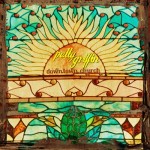
My review of Patty Griffin’s new album, Downtown Church, is just up on the excellent Folkingcool web site. I’m usually on the fence about country music, but this album stole my heart with a minimum of twang.
There must be something in Canada’s water. Diana Krall and Michael Bublé are just the cream of a crop of exceptional jazz singers from across the Atlantic who have led something of a global invasion over the last decade or so.
To be honest, I have always found something Krall’s style a bit laconic and chilly, while respecting her tremendous musicality and technique. And giving in to the temptation to categorise that I criticise so frequently elsewhere in the music industry, I must admit that I turned to Vancouver-born Tammy Weis expecting to hear something in a similar vein.
I was soon disabused. With the exception of a pensive reinvention of Lennon and McCartney’s “Help” – an unlikely candidate for a ballad, but it works wonderfully well here – Where I Need to Be (TW2010) finds Weis pouring her life-tales into a delicate patchwork of self-penned songs. Now living in London, she has produced a taking-stock album in which nostalgia and regret are evenly balanced by optimism and poignant musical snapshots.
Tammy Weis explains why she included “Help” on the album, and sings it
For several tracks, she joins forces with pianist/composer Tom Cawley, and their songs provide the album’s most intimate, emotional high points, book-ending it with two elegant, beautifully accompanied numbers, “I Kept Going” and “Heading Home”. There is texture along the way, most notably the Latin beat of “Everyone But Me”, with Weis’s lyrics a dry Martini short of self-pity, and the shimmering “I’ll Spend Forecer”. She swings too, throwing down the gauntlet with “Don’t Want to Fall in Love Again”, co-written with Terry Britten, an articulate account of teetering on the brink in the best traditions of the great American songbook.
“I love delving into my mind and imagination, which can be scary,” says Weis, suggesting that the writing might not be as easy as her fluid interpretations make it sound. “But the song at the end is my reward for expressing what’s inside.”
Weis’s voice is assured and true, just a hint of hardness cutting through when the lyric demands. She plays deftly with the melody without ever sacrificing clarity – every word is given its due. The band is impeccable – Al Cherry on guitar, Arnie Somogyi on bass and Seb de Krom on drums, with several guest players including steel guitarist B. J. Cole (particularly yearning on “Where Did the Time Go”, an end-of-the-affair ballad), and pianist Julian Joseph (“All Because of You”) whom Weis credits as her prime motivator for making an album of original songs.
Helen Morgan: a strong legacy for today's torch singers
It’s been a fine week on BBC4 for lovers of old- and new-style torch singing. The channel’s celebration of the Great American Songbook was stuffed with profiles, documentaries and performances rich in the genre, from a biography of Ella Fitzgerald to a welcome repeat of Walk on By, a series on the history of popular song.
One of the highlights was a BBC4 Sessions concert featuring Gwyneth Herbert giving an exemplary take on the Ruth Etting classic, “Love Me or Leave Me”, Melody Gardot’s exquisitely underplayed “Over the Rainbow”, and a great “September in the Rain” from Sharleen Spiteri – all demonstrating that the torch song has never been in better hands.
But most poignant of all was the excellent Clint Eastwood-produced exploration of the life of lyricist Johnny Mercer, The Dream’s on Me. One hundred minutes sped past in a succession of comments and performance snippets – Julie Andrews, Cleo Laine, Margaret Whiting, Maude Maggart (singing a wonderfully touching “Skylark”, accompanied by Jamie Cullum.)
During one of the numerous interview clips of Mercer talking about his craft he mentioned, in passing, Helen Morgan as an example of somebody you would write a particular type of song for. It struck a real chord. Morgan was briefly a huge Broadway star and created the role of Julie in Jerome Kern’s Showboat. But even by the time Mercer referred to her in the 1970s, she had been dead for more than 30 years, and today her name is scarcely heard.
Her style of singing in a light, throbbing soprano, is light years from modern popular taste. Yet Morgan was one of the first of the great torch singers. And a few weeks ago, I had no hesitation in drawing a comparison between Jessie Buckley’s intense, touching way with torch songs in her performance at Pizza on the Park, and Morgan’s way of luring the listener into her lamentations of love gone wrong.
When Helen Morgan’s picture flashed across the television screen, it reminded me of what sparked my interest in the torch idiom over two decades ago. So after focusing on some of the young singers who have piqued my curiosity in recent weeks, here’s a trip back to the roots of the genre.
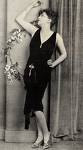
Helen Morgan was a tragic figure – not in a hell-raising Amy Winehouse way, although she was equally profligate with her talent. When things got too troubled, she’d quietly have another brandy, eventually fulfilling a destiny that was pretty much prescribed in her first starring role as the doomed Julie. But it says much for her legacy that every now and then, a modern performance can still evoke her name and a nod back down the years to a great, if shooting, star.
Helen Morgan sings “Bill”
This is an article I wrote about her in the late 1980s, which hasn’t seen the light of day until now. It’s a bit stodgy and essay-ish in places – and naïve in its approach – but I’m posting it here because in many ways it sums up the elements of torch-singing that I continue to find so compelling – and because I can illustrate it with video, something that would have seemed impossible back then!
Why Was She Born? – The Legacy of Helen Morgan (1988)
Morgan's voice had a unique, pleading quality
Since its plaintive genesis in the early 1920s, the torch song has proved a consistent link between a galaxy of female singers who in other respects could hardly differ more greatly. As an idiom, it provides a historic, if unlikely bridge from Fanny Brice to Barbra Streisand, from Judy Garland to Kiri te Kanawa, from Ruth Etting to Shirley Bassey and from Jane Froman to Dusty Springfield. None of these ladies has ever limited themselves to the genre of the torch song. But each at one time or another has sung from the point of view of the woman on the losing side in love.
If Fanny Brice lit the first torch with her rendering of the classic “My Man”, (“Mon Homme”), consider how Billie Holiday interpreted the same song as a blues number and made it in turn her own. And if Edith Piaf ran the gamut of emotions, she certainly included in her repertoire chansons of a very torchy sentiment. All of these singers at one time or another have reflected through the torch song the suffering of a woman at the hands of a man who does nothing but let her down, but whom she can’t help loving.
Just as the idiom has become more lush and plangent, more downright dramatic, so it has tended to obscure its quieter and more tremulous origins. Now that Dame Kiri has extended her range to include classic torch by George Gershwin, and with a revival of interest in Dusty Springfield’s fulsome entreaty, “You Don’t Have to Say You Love Me”, not to mention the interest that never went away in Garland bemoaning “The Man That Got Away”, it is high time to re-evaluate the contribution of the women who started it all with such sentiments as “Why Was I Born?”
With the release of a full-length, universally well-received recording of Showboat, it might be appropriate to focus on the woman who made its two classic torch songs, “Bill” and “Can’t Help Lovin’ Dat Man of Mine” her own. Her name was Helen Morgan and she might be even less remembered here had not Robyn Archer selected her as an example for her show A Star is Torn.
Helen Morgan made these two songs her own by stamping the torch style with her own delicate lilting soprano. At least two recordings of her renderings survive and are reasonably available. The later pressings can be heard on what amounts to the first cast recording of Showboat which is actually a record of the show’s 1932 revival.
They are remarkable not only for their clarity but for the freshness and immediacy of Morgan’s performances at a distance of over half a century. Her voice has little in common with modern popular tastes but through its unique pleading quality and her astute use of a natural huskiness on key lyrics, it is quite heart-rending in its subtlety.
“I See Two Lovers” – a quintessential Helen Morgan performance
Anybody seeking for an introduction to her lamentably brief recording career should start right here. The extraordinary effect she achieved owes much to her own talent and the light orchestra or band backing favoured by artistes of the day, and little to the dramatic and histrionic lamentations of her future sisters in song. Perhaps the closest we can get these days is to listen to Julia McKenzie’s interpretation of Sondheim’s “Losing My Mind” in Follies. This is at once a pastiche and wholly authentic.
Song of Dreamer: great close-ups of a troubled torch singer
Although tracks by Morgan turn up from time to time on compilation albums (FLAPPERS, VAMPS AND SWEET YOUNG THINGS, Living Era 1982, AJA 5015), it is largely thanks to the Take Two label that a sizeable volume of her work has been gathered together. They have compiled a generous selection for the album HELEN MORGAN-Legacy of a Torch Singer, (1986, TT220) although it is rather biased in favour of her earlier material. Much of this is of interest more for its definitive period flavour than as classic torch singing.
It is really in the sessions recorded in the thirties that the depth of Morgan’s voice had matured considerably from the tremulous high notes which mark songs such as “Just Like a Butterfly”. But there are some real gems on this album, most especially the hauntingly regretful “I See Two Lovers”, which also turns up on the album FALLING IN LOVE AGAIN – Classic Female Vocalists of the ‘30s (Conifer 1987, TQ 155). This recording demonstrates to perfection the wistful catch in Morgan’s voice, a sadness which she was able to convey through restraint rather than high drama.
For a more general introduction, Take Two dips into the careers of four singers including Helen Morgan on its album THE ORIGINAL TORCH SINGERS 91980 TT207). The others are Fanny Brice, Libby Holman and Ruth Etting. The latter was probably the most prolific female recording artist of the thirties and numerous collections of her material are widely available. She seems to have endured the test of time more readily than Helen Morgan, while Fanny Brice is better know as Funny Girl these days.
Helen Morgan was a performance chanteuse who, apart from her major stage roles, sang in nightclubs and starred in the Ziegfeld Follies. She might have been a great film actress but after an auspicious debut in Applause the right parts never came along. She might have been an even greater recording artist but performing was her forte and she did other things only as time permitted. Nevertheless diligent searching can result in the discovery of rare pressings, including previously unreleased radio broadcasts which are increasingly becoming a source for the nostalgia buff.
Perhaps the greatest torch song of all is Gershwin’s “The Man I Love”. Yet Morgan never recorded the song commercially. It would be nice to think that an unpublished pressing or wireless performance lurks in a vault somewhere awaiting discovery. In its original working, as sung by Morgan, it would undoubtedly be a far cry from the lavish interpretations of more recent times.
As it is, we can still appreciate the difference in concept between then and now by listening to Helen Morgan’s soufflé-light rendering of “Why Was I Born?” which in accordance with more modern tastes is usually belted out over a rich orchestral backing. Suddenly, to hear how it was originally performed is to hear how it should be performed. The surprise is genuinely moving.
And Helen Morgan perhaps more than any other singer of her generation comes closest to crossing the line between torch and blues. Not that her voice bore any resemblance to Bessie Smith or Billie Holiday. But listen to her interpretation of “Frankie and Johnny” and hear how the divide between them is not so great after all.
There was clearly a brief revival of interest in Helen Morgan’s career after her sad life was given typical Hollywood treatment in a 1954 biopic (The Helen Morgan Story, with Ann Blyth’s singing voice dubbed by Gogi Grant, herself a great torch singer of the 1950s). Collections of her rarer recordings including standards like “Body and Soul” and “More Than You Know” were issued, usually pairing her off with Fanny Brice. There is also a 1969 album issued by RCA Victor in its vintage series which boasts a very discering selection of her material.
These recordings are obviously harder to come by but well worth seeking out. In many ways the quality of these pre-digital mastering issues is clearer than more recent efforts, mainly because the sound is completely true to the original.
Helen Morgan in characteristic pose atop a grand piano
Despite the quality of her more obscure material, the greatest testimony to her rare talent as a torch singer is her legacy of the show-stopping standards which enraptured her audience wherever she was performing, usually characteristically perched atop a grand piano. That such a quality can still capture the imagination after so many years is surely a reason for restoring Helen Morgan to her rightful place in the gallery of all-time-great female performers.
Love Me or Leave Me – a feature I wrote for Gay Times on the classic torch singers, from December 1991 read
Handing on the Torch – a piece for The Wire magazine, tracing torch singing from its roots to modern smart pop read
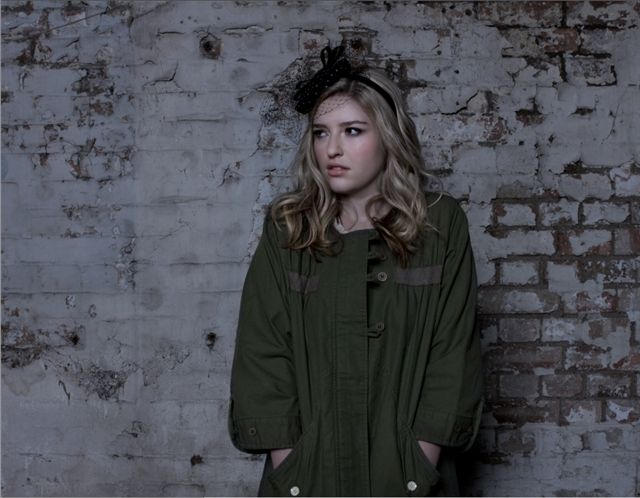
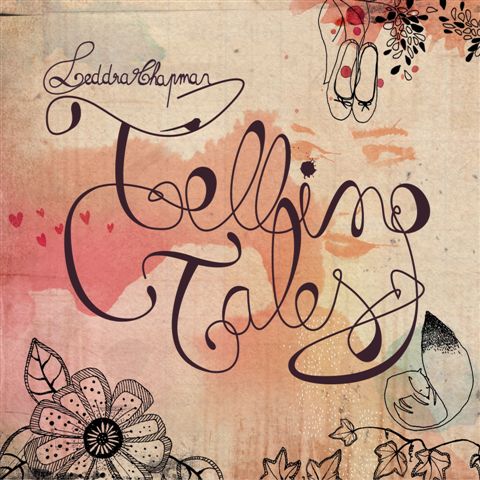
If musical influences were sweets, Leddra Chapman wouldn’t have wasted any time with her nose pressed up against the shop window. She’d have walked in, charmed the owner and been given free rein to create her own special selection. That’s the joyful impression left by her first album, Telling Tales.
At a time when young British female singer/songwriters are enjoying an unprecedented boom, hype is easily mistaken for genuine talent. Not in Chapman’s case. She rallies her musical instincts with flair and assurance. These songs are rounded stories, folk tales of love, fate and friendship for the 21st century, sung with crystal-clear diction and minimal embellishment, worthy of the all-important airplay they’ve been getting.
Those diverse musical influences lap at the edges without dominating or tipping into pretentiousness: a hint of Vaughan Williams here, Joni Mitchell there; the evocation of a brass band that momentarily transports you to a village green in summer (“Story”); a weakness for her toy piano on “Picking Oranges”.
Telling Tales: an auspicious debut
“Edie” is one of the highlights, a searing vignette of a short, tragic life. Another, “Wine Glass” cleverly distils the trivial gesture – toying with a drink – that becomes overwhelmingly significant for the one left behind in a long-distance relationship. And the poignant “Wrap Me Up”, with its melancholy piano intro, is a bittersweet account of two people wanting different things from their love affair.
On stage, Chapman has an engaging charm that belies the depth of her lyrics; her showcase at the BBC Club last November was a shaft of sunshine on a bitterly cold winter’s day. Telling Tales is a pleasing and auspicious debut.
As Day Follows Night: Blasko set for UK breakthrough
Deceptive simplicity is the hallmark of Sarah Blasko’s new album, the optimistically titled As Day Follows Night (Dramatico). Her mordant lyrics emerge from an intriguing musical mist, delivered in a voice far less fragile and little-girl-lost than it sounds on a superficial first hearing.
Spare string and piano arrangements are based on an acoustic, percussive foundation that takes you on an absorbing journey from the bleakness of wrecked love to the painful but ultimately life-affirming recapturing of emotional equilibrium. The images are stark – “Is My Baby Yours?”, “Bird on a Wire”, “Lost and Defeated” – but the mood is pensive and eventually hopeful rather than relentlessly dark.
Australian Blasko was working on the score for a theatre production of Hamlet while writing the album, and the introspection in many of these songs is tinged with a kind of self-revelation that the Danish prince would recognise. “All I Want”, with its windswept, Morricone-style setting, perfectly defines her predicament.
All I Want: windswept, introspective… and great cheek bones
Swedish producer Björn Yttling has created a sense of space that allows Blasko’s alluring voice the freedom to explore some epic themes without ever tipping into clichéd anguish. “I never knew it would hurt like this, to let someone go against my wishes,” she sings, compassionate for the departing lover even as she nurses her raw wounds.
Bird on a Wire: mordant lyrics and epic themes
At 33, Blasko is already a seasoned recording artist, with a growing following in Europe. This is her third album and it’s a haunting piece of work that should mark her breakthrough moment in the UK, where she has based herself for the rest of 2010. She plays the Islington Academy on 15th April and tours with the Temper Trap from 27th April.
This piece draws on several interviews I’ve had during the last few years with Stephen Sondheim and many of the women (and Michael Ball!) who have sung his roles and songs so brilliantly on both sides of the Atlantic. It’s about just one aspect of his work, but I hope it’s a fitting tribute to a man who has contributed so much to musical theatre – indeed, music itself – throughout the last half-century, as he celebrates a landmark birthday.
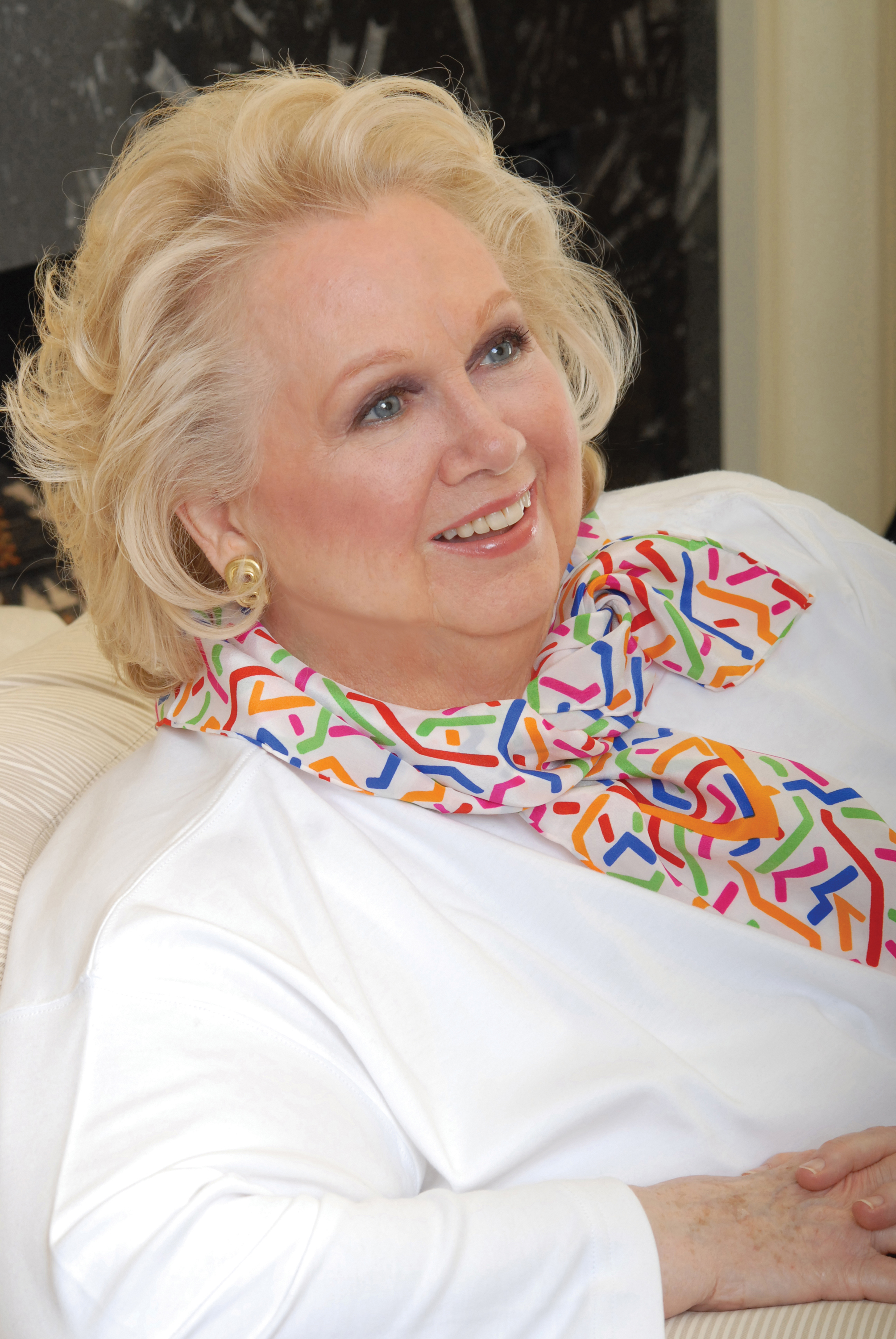
Barbara Cook: one of Sondheim's leading ladies
To say that Stephen Sondheim writes exceptionally well for female singers and actors is to deal in a partial truth. The inference is that his male characters are of secondary importance. And of course nobody playing Sweeney Todd, singing in the all-male ensemble of the much-neglected Pacific Overtures, starring as Company’s distressed Bobby or the equally troubled Franklin Shepard in Merrily We Roll Along, or revelling in Giorgio’s glorious arias in Passion, has any need – or right – to feel short-changed. But the fact remains that his work has had a profound effect on the careers of many of the women who have been closely associated with his roles during the last 50 years.
Where would people like Julia McKenzie, Bernadette Peters and Maria Friedman – who cites him as the reason for her career choice, having been enraptured by the 1980 London production of Sweeney Todd at Drury Lane – be if their professional paths hadn’t encountered Sondheim’s trajectory at critical moments? Hugely successful, no doubt. Such wide-ranging talent will always out. But certainly missing the depth, the experience and the kudos of an indelible association with his work. Each in her way can testify to the extraordinary sensitivity and accuracy of his writing for the female performer, whether strictly in character or taking a particular song away from its theatrical context and turning it into a standalone, solitary gem that reveals yet more meaning beneath the lyrics and the intricate melodies.
And there is no getting away from the fact that in so many of his shows, the female characters often command the stage at critical moments. Follies, for all its multiple themes of nostalgia, the uneasy relationship between past and present, and coming to terms with the impact of time on youthful dreams, is also a celebration of the show girl in all her glory. Ben and Buddy have their show-stopping turns but much of the show’s bittersweet joy comes from the brilliant pastiche numbers and anthems that allow the women to relive their moments in the vaudeville spotlight: Sally’s torch-songs (“In Buddy’s Eyes” and “Losing My Mind”), Phyllis’s acerbic, teasing burlesque number (“Ah, But Underneath,” which replaced the original and more complex “The Story of Lucy and Jessie” when the show finally reached London in 1987), Hattie’s poignant take on the rather grim realities of the hoofer’s life (“Broadway Baby”) and of course Carlotta’s show-business survival anthem, “I’m Still Here”.
Judi Dench: wracked masterpiece
Desirée Armfeldt is always the real focus of A Little Night Music while the relationship dramas unravel around her in three-time, culminating in the magnificent “Send in the Clowns” – Sondheim’s most popular and most abused hit – which marks her lowest ebb and the tragedy of bad timing. It’s become a calling card for every star who has played the role, from Glynis Johns and Jean Simmonds to Judi Dench. Sondheim told Dench, “It’s yours now,” when her wracked masterpiece of an interpretation was one of the highlights of the National Theatre’s 1995 revival. But Trevor Nunn’s recent production notably returned Desirée to young middle age with marvellous results. Hannah Waddingham gave a magnificently constrained performance in London, tears only falling in the final stanza to indicate the extent of her desolation. But here, too, is evidence of Sondheim’s ability to capture even a minor character in the moment: “The Miller’s Son”, sung by Petra the maid, is a perfect evocation of a young woman who knows exactly what her destiny is, and that however underwhelming the ultimate prospect of drooping bosoms and a matronly figure, that can wait a while. There are plenty of rosebuds to be gathered in the here and now.
In Company, bilious, vodka-hardened Joanne has one of the standout numbers in “The Ladies Who Lunch”, a lascerating attack on herself and her own kind. Others have sung it to great effect but for many people the original, Elaine Stritch, still has copyright on the role. Just check out the D. A. Pennebaker documentary of the making of the 1970 cast album, as she wrestles with the song to the point of exhaustion, missing her mark, extemporising to Sondheim’s obvious dismay. Take after take slip by until you can almost taste the acrid, used-up atmosphere of the studio. Then she comes in the next morning and nails it with the first take of the day.
Elaine Stritch: has earned her copyright
“‘The Ladies Who Lunch’ is one of the toughest three-act plays I’ve ever done, you know what I mean?” she told me in a 2008 interview. She calls Sondheim a “romantic realist”. And she’s still singing the song in her one-woman show 40 years later, better than ever.
“In this song he’s sending up a class of dame, of which I am also a member – or have been in my time. I hasten to add, I don’t Martini-lunch any more. So that’s a big kick that I get out of it. When I sing the song, I am part of that whole bunch and I know about them. I am absolutely staggered, dazzled by his ability, his talent. Ability is what I really mean. It’s so believable and so unbelievable at the same time. Everything he says in his lyrics rings a bell with me.”
Bernadette Peters: “Not a Day Goes By” is an emotional peak
For Bernadette Peters (Dot/Marie in Sunday in the Park With George and The Witch in Into the Woods), Maria Friedman (Fosca in Passion and Dot/Marie), Julia McKenzie (The Witch, Sally and Mrs Lovett in Sweeney Todd), the value of gift of a Sondheim role has been proved time and again. Each can, in many ways, define her career by the importance of his work in allowing them to demonstrate not only their talents as singers but as dramatic actors and comedians. And they have also proved adept at developing his songs away from their musical theatre roots. Peters’ signature tune, “Not a Day Goes By” (from Merrily We Roll Along) is invariably an emotional peak in her concerts, for example. Like Friedman, Barbara Cook and many others, her repertoire is enriched by the Sondheim canon.
Patti LuPone has taken Bobby’s last-act song of affirmation, “Being Alive” from Company, and turned it into a virtuoso powerhouse performance. Again, this is possible because of the truth in a lyric that finally resolves the character’s anguish at the end of the show. Given the wealth of female songs in the canon, this might smack of poaching. Michael Ball says, “I always have an argument with him [Sondheim]. I tell him he writes the most amazing shows – difficult bloody things, most of them – and then he always gives the eleventh hour number to the women! That’s why I insisted on doing “Broadway Baby”. But take these songs out of the shows and they’re universal.”
Patti LuPone: virtuoso powerhouse performance
Sondheim’s double-whammy skills as a lyricist and composer lie at the heart of this quality in his work. A few years back in an interview for Gramophone magazine, he told me that a song is written to reflect a character’s state of mind at that particular moment in the play. If a singer can find something beyond that, which gives the song an external life outside the play, all well and good – but that will always be incidental to the song’s primary meaning and intention. “But to have the songs interpreted in different ways helps to keep them alive,” he said.
Julia McKenzie: “He’s a dramatist and a poet. And to the performer, the rewards are tremendous because every song is like a one-act play or at least, a soliloquy. “Losing My Mind” is a soliloquy, even though in Sally’s mind it is the epitome of a torch song. You can see precisely how her day progresses.”
Maria Friedman: “For me, everything he writes about comes back to a very basic thing: love – the desperate need of a human being to love and be loved. As an actor and a singer – I can’t distinguish which one leads the other – both co-exist perfectly when you’re doing one of his pieces because the demands on you are always truthful, honest. If you can get to the core of it, you just have to serve it, not do anything, and it will do the rest for you. But that means quite often you’ve got to be thinking two or three things at once. It’s layered, you’ll be saying “I don’t love you” at the same time as thinking “I wish I could love you”, “I did love you,” all together. On the face of it, it could be quite cold but underneath it’s layered with warmth and hope and yearning. Plus he’s the most extraordinary lyricist, the rhymes are dazzling, so you’ll be working on that at the same time, making sure that they ring and you don’t miss the internal rhymes. And he writes as we speak, so you have to understand how that woman would have talked and the music falls into place.”
Patti LuPone: His songs are very dramatic pieces in their own right, so I don’t have to create another story to sing them out of context. You always want the piece to be universal if it’s going to live and his work is really brilliant in that universal way: there’s that whole concept of theatre, emotion, love. That’s what makes something like “Being Alive” [Merrily We Roll Along] or “Loving You” [Passion] so perfect.
Elaine Stritch: “Everything he says in his lyrics rings a bell with me. He knows what’s right and what’s wrong, what’s fake and what’s real. And like Shakespeare, every time you do good work, something new comes out of it. The quality of the material absolutely matters. I love his humour. It’s real humour – real: they call that wit!”
Barbara Cook: I’d known Stephen socially, through the 1950s and 1960s, but didn’t actually do much of his work until Follies. I’d occasionally put a song in my act but I always felt that unless I did a whole Sondheim section, they didn’t really abut against the others. I thought of them as ‘art songs’. But when I did Follies [in concert, 1985], I fell deeply in love with his work, and a lot of that was to do with the quality of his lyrics, which are so universal and moving. They are witty and clever, of course, but most of all very emotional. They almost always say something that I want to say. Take “No More” [Into the Woods], a song I’ve been doing a lot in the last year or so. It seems to have a lot more meaning with the world in this difficult state:
What a queue-jumper Gabriele Tranchina turns out to be. A pile of CDs sits accusingly on my disk awaiting critical attention. I’d been sampling and tasting here and there, planning an orderly assault. But on Monday, Tranchina’s new album – A Song of Love’s Color (Jazzheads JH1176) – landed fresh from New York, inveigled its way onto my player and has been sitting there ever since, spinning an insistent spell, and demanding listen after listen.
Think Lambert, Hendricks and Ross meet Pink Martini, with a dash of Astrid Gilberto, a streak of Ute Lemper, a hint of Mina and a sense of Anita Baker, and you can begin – just about – to anticipate the startling effect of Tranchina’s voice as she juggles rhythms, styles and languages to create a constantly shifting mood. One minute you’re chilling to late night jazz, the next you’re swept up in a Jobim samba, before being caught in the headlights of a hypnotic, almost Weill-ish lieder.
All of which makes her a bit of a marketer’s nightmare – and precisely the kind of performer that Art of the Torch Singer loves. The cocktail of jazz, world music, vocalese and chant might well be overwhelming if it wasn’t for the relaxed consistency of the band, led by Tranchina’s husband Joe Vincent – who wrote several of the tracks and is responsible for the cool, spare arrangements. Tranchina clearly thrives on the freedom this gives her to swing between techniques and tones.
The album kicks off with a Fugain/Delanoë chanson, “Chante Comme Si Tu Devais Mourir Demain”, which pretty much describes Tranchina’s mission. The title track follows, revealing her dexterity with a melody and some alluring phrasing. Later, a traditional Hindu prayer provides the basis for a swirling, syncopated chant that also includes a brief rap, “Asato Maa (Sat Chit Ananda)”, and a Spanish lullaby – “Duérmete Niño Bonito” – has an authentic, shuffling last-dance-of-the-night atmosphere. “Siehst du Mich” – a poem by Else Lasker-Schüler, set to music by Joe Vincent – concludes the album on a beautifully sombre, brooding note.
A Song of Love’s Color, mixed by Joe Vincent and Randy Klein, and mastered by Gene Paul, was recorded in New York in the summer of 2008. Its release is long overdue. Tranchina herself – German-born and New York-raised – remains something of an enigma, despite the stylish art work on the sleeve. A trawl around Youtube and MySpace yields nothing in the way of clips.
Her people should do something about that fast, because once you’ve heard this you’ll want to know more about an artist who clearly has something different to offer the homogenised world of modern popular music.
Two sad spectacles during the last fortnight have exposed the pitfalls that can puncture a singer’s career in this day and age: the fact that the most expensive production techniques in the world can’t come to the rescue when she’s trying to prove herself in ‘live’ performance; and the discovery that a once great vocal talent has been dissipated by self-destructive traits utterly in keeping with the dark side of show business.
Cheryl Cole and Whitney Houston come from opposite ends of the singing talent spectrum. Cole’s appearance at the Brits, ‘singing’ “Fight for This Love” – yes I know, the fourth-fastest selling UK single of 2009 – was the perfect distillation of this empty shell of an event. No expense had been spared with the choreography, the massed ranks of dancers or the outrageously faux-military costumes.
But whose bright idea was it to bring in a session singer with decent chops to cover the bridge between the first and second sections of the song – cruelly exposing the thinness of the vocals on the master track? Perhaps the same person who switched the mic on at the end: Cole’s winded “Thank-you” after some rather dodgy lip-synching was the only credibly ‘live’ element of her performance.
She won’t be troubling these pages in the future, unless she reinvents herself as a tragedienne de la chanson and pours her life experience into song. And it’s difficult to do that if you haven’t got a voice to begin with. Cheryl’s a pop princess whose music will only ever be a footnote to her role as a style icon of the Primark age.
Whitney Houston, on the other hand, is the real deal. So news of her meandering, unfocused performance in concert in Brisbane as she kicked off an Australian tour is real cause for concern. While it was not in the Judy Garland league – she had one of her most spectacular meltdowns in Australia and was booed off stage – audience comments suggested that her concentration wondered too often, and the golden voice that they remembered from the 1980s and 1990s had lost much of its range and shine.
That might have been expected; last year’s comeback album I Look to You was respectable but bore little resemblance to the vocal work she produced during her period of greatest success. Houston was the pioneer of the power torch ballad. Depending on your taste, we have her to thank or curse for all that followed: Carey, Dion, Braxxton, and a host of X Factor wannabes who see mimicking her melismatic talent as their best option for joining Simon Cowell’s production line.
The diminution, even partial, of a voice that should now be approaching its peak – Houston is only 46 – is a genuine loss to popular music. But a great singer can still convince as an interpreter of her trademark work, adapting techniques to suit her changing vocal sound; we shouldn’t write her off yet. And there are plenty of beacons to light the way when it comes to longevity as a singer – not least her aunt, Dionne Warwick, or Shirley Bassey.
DSB’s recent album, The Performance (why no Brit nomination?), was a masterpiece. Her voice, which has not been untroubled by stress and strain over the years, sounds in better shape than ever. The range and texture are astonishing. And working with new songwriters has enabled her to discover a softer, more subtly expressive side of her voice which is remarkable for such an experienced and well-defined singer in her eighth decade.
Chita Rivera is another great dame who can still cut it in the studio – and on the stage. The Broadway star – a dancer in the first instance – had her first major acting role as Anita in West Side Story (1957). She went on to establish herself as a Tony award-winning musical actress, inextricably linked with some of Kander and Ebb’s most famous shows, including Chicago, The Rink and Kiss of the Spiderwoman. She is also a legendary cabaret performer. But despite all those cast recordings, until now, she has never made an album in her own right.
The release of And Now I Swing puts that right. “It’s very difficult but I had the best training in the world,” she told me in an interview last year, when I asked her how she has sustained her vocal technique through the decades.
“Jerome Robbins and Leonard Bernstein are responsible for giving me the strength to be able to sing and dance at the same time. It goes back to Anita. Mind you, I’m extremely obedient. I go back to an era when you did what you were told – so consequently you last longer.
“Fortunately, I’ve worked with geniuses –and I really feel I have – but it takes stamina and placement of the voice, and of course it must be written so that they give you time to breathe. And great composers know that. It’s a wonderful challenge and it keeps your lungs really fit and strong.”
Review – Chita Rivera: And Now I Swing
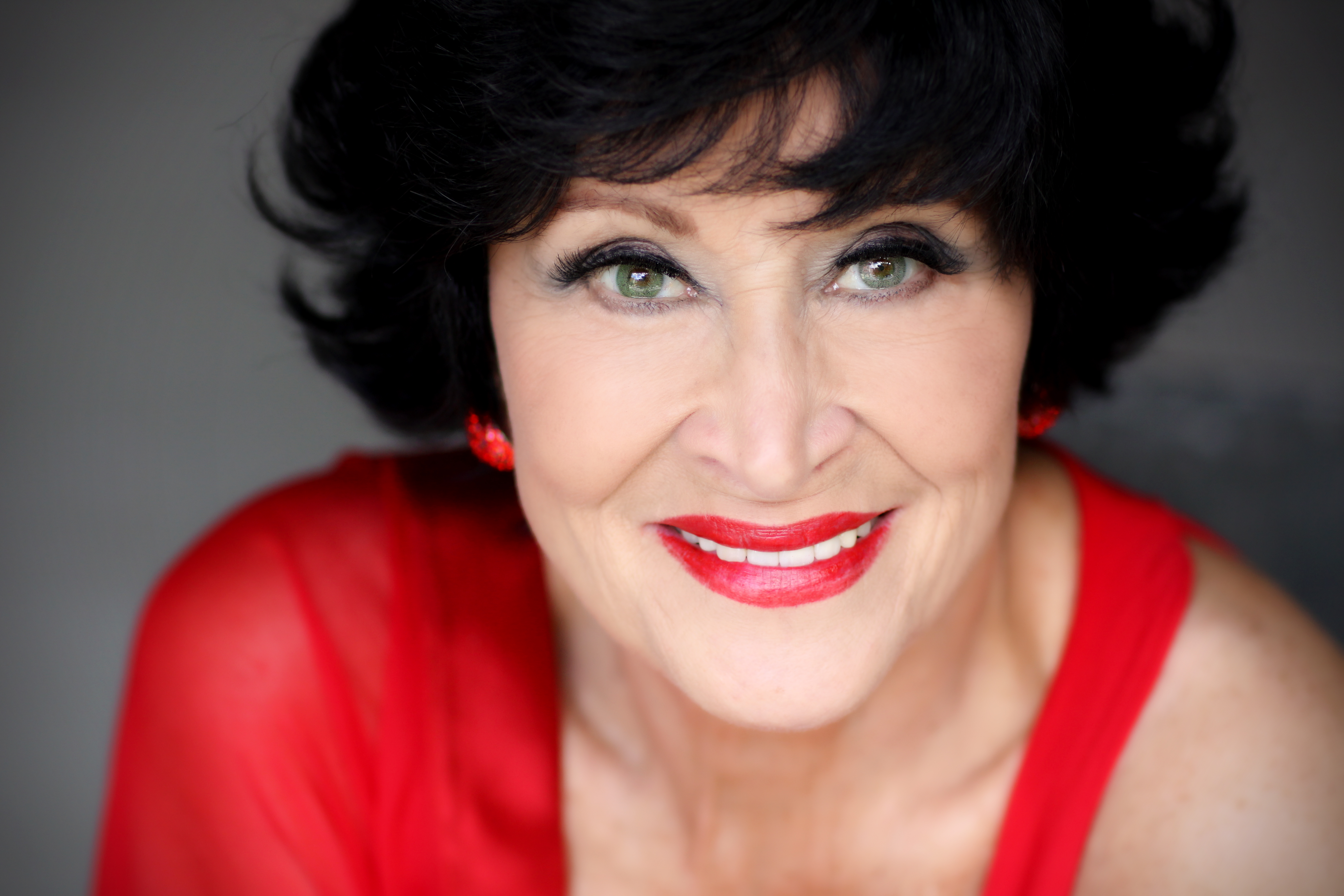
Chita Rivera: "I go back to an era when you did what you were told – so consequently you last longer." (photo by Laura Marie Duncan)
Chita Rivera’s first solo album, recorded in New York City last summer, is overdue by about 50 years. It’s been worth the wait. During that half-century, Rivera has forged a career as a musical actress of range and emotional clout. She is one of that handful of Broadway stars who can honestly claim the sobriquet, ‘Legend’. And she brings the weight of her experience to a selection of songs that reflect her own musical theatre heritage as well as giving new meaning to some familiar standards.
And Now I Swing (YSL 566473) is a jazz-informed album. Rivera declares her influences on the liner notes – Rosemary Clooney and Mel Tormé – but every song carries her own imprint: a mixture of artful, instinctive phrasing that never loses touch with the original melody; intimate vocal delivery – the voice is lived-in and pleasingly oakey; and the ability to suggest a story that only comes with years of commanding audience attention in big theatres and smoky supper clubs, each with equal aplomb.
Rivera is well supported by some delightful, spare arrangements that never overwhelm the telling of the tale, and by the attentive playing of a band in which the strings are a particularly resonant feature.
As you’d expect, her beloved Kander and Ebb are well represented. “Nowadays” from Chicago (arranged by Mary Ann McSweeney) recalls her triumph as the original Velma Kelly. “I Don’t Remember You” (from the little-remembered The Happy Time, arranged by Carmel Dean and Rivera’s percussionist Michael Croiter) demonstrates her talent for unravelling the human experience at the heart of so many of Ebb’s best lyrics. And “Love And Love Alone” from The Visit gives us a rare chance to hear a number from a show that has been a personal triumph for Rivera but is yet to receive a major presentation on Broadway or in the West End.
Elsewhere, the old torch song “More Than You Know” is given a swirling, up tempo treatment, and “A Nightingale Sang in Berkeley Square” – a nostalgic chestnut in so many other hands – is a lump-in-the-throat moment, expertly handled.
Given her narrative skills, Rivera’s take on Brel’s “Carousel” hardly comes as a surprise, but it’s a welcome and unexpected detour from the album’s core Broadway focus. And her Hispanic roots also get a good work-out with a deftly combined “Sweet Happy Life” and “Mas Que Nada”, whipped into a brassy bossa nova.
After 20 years of interviewing female singers of every genre, I’ve decided to start blogging. The fruits of many of these interviews have appeared in publications ranging from The Singer and Gay Times to Wire, Wall Street Journal Europe, Songlines and Gramophone. This diverse array of titles suggests I’m not alone in my fascination with the woman in the spotlight with just a microphone for company, spinning tales of passion, betrayal, love and hurt: the quintessential image of the torch-singer.
Girl singers are big with the marketeers right now. Quite right too. But they’re hardly a new invention! And being flavour of the season only begins to redress the balance in terms of coverage, clout and status in the entertainment universe. In this blog, I’ll be thinking aloud, reviewing new work, recalling old conversations, posting new interviews and generally exploring the role and world of the female singer as an artist and an icon.
Torch-singing is not limited by the genre of the music. It’s more about a sensibility evoked by a combination of the singer, her voice, the melody, the story, her performance and the lyric, that touches the listener in a special way. It’s a mood. A particular sound. So armed with my own flexible definition, I’ll continue to look for the torch-singer in likely and unexpected places. There is so much more to her than the holy triumvirate of Garland, Piaf and Holiday – great as they are.
Barb Jungr and the ‘Lost’ Generation
Barb Jungr: reinventress of songs (photo by Steve Ullathorne)
They aren’t really lost, of course. Just undervalued. They’ve always been there if you could find them. But if you were led solely by the crass credentials of the music marketing machine, you would hardly know that singers of the calibre of Barb Jungr, Claire Martin, Sarah Jane Morris, Mari Wilson and Clare Teal even existed.
They’ve been out there, doing it for the last 20 years and more – building their fan bases, producing work of the highest quality, earning plaudits in niche genres and garnering small but good reviews for their albums in the catch-all-the-rest jazz sections of the nationals. Yet they’ve never troubled Brits nominations committees.
Stuart Maconie makes the point well in next week’s Radio Times (“Going Gaga for Girls”) – praising this year’s nominations for the high ratio of British female singers while casting an eye back to the sexism and blinkers of the years when the music industry couldn’t bring itself to look beyond the commercial security of yet another nod for Kate Bush and Annie Lennox – acceptable, instantly recognisable totems for a host of female artists who were too complex or sophisticated for the marketeers to categorise.
As Maconie also suggests, this long overdue recognition of female talent is welcome – but tinged with cynicism. The Brits, to a great extent, reward commercial success. Florence Welch, Amy Winehouse, Lily Allen, Duffy, Pixie Lott and the rest are all delivering on that front. The reality is that for the moment, girl singers are big business. And on those grounds alone, why shouldn’t Susan Boyle get a nod, too?
But back to the ‘lost’ generation. Barb Jungr epitomises the craft, integrity and painstaking approach required to build a successful career as a singer without the weight – and will – of a big label behind you. Like so many of her peers, she has too often had to settle for snippets in the reviews pages rather than serious profile space in the features pages.
Jungr is the supreme reinventress of songs. She has taken material indelibly associated with her musical heroes – Dylan, Presley, Nina Simone, Brel – and recast them in her own, determinedly idiosyncratic, style through a series of highly-praised albums. Her voice is a startling vehicle for the introspection and emotional observation of so many of the lyrics: true, bell-like in its clarity but also capable of a keening, visceral anguish that takes the listener to the darkest places in the songs she favours.
The connection is often electric – as it was at a notable evening of chanson at the Almeida Theatre in July 2008; or, for this previously Dylan-sceptic listener, last summer when Jungr came to Jazz at the Fleece, deep in rural Suffolk, outsang the wedding reception that was sharing the venue, and opened a window into the great man’s lyrics for the first time.
In performance, any heaviness is balanced by her easy, off-hand banter. Jungr involves her audience with her self-deprecatory references, relating the material to experiences they might also have had – and that might, too, seem utterly ridiculous in the cold light of day. But which are also utterly devastating.
That, in part, is why she has found her natural home as a cabaret artist among New York audiences. Her ability to imply a hinterland of meaning behind a lyric doesn’t make for easy listening. But the story-telling is compelling.
Review – The Men I Love: The New American Songbook
Jungr’s new album – The Men I Love: The New American Songbook – released on 8th March on Naim – is as audacious as anything she has produced to date. Dylan’s material again figures large, along with Neil Diamond, Leonard Cohen and David Byrne, all with new and category-defying arrangements that have arisen from a fruitful collaboration with pianist Simon Wallace.
The spare, keyboard-centric accompaniment of recent albums has been extended to include cello (Frank Schaeffer), double bass (Steve Watts) and flute (Clive Bell). Jungr’s voice ranges across the resulting rich harmonic tapestry with a new freedom and assurance.
The feverish insistence of the Talking Heads classic “Once in a Lifetime” becomes an almost wistful meditation with an unexpectedly oriental flavour (courtesy of Bell on the shakahachi). Diamond’s “I’m a Believer” is revealed as a sweet, revelatory, impassioned love song light years from the frenetic pop of The Monkees, while “Red Red Wine” lays bare the torment at the end of a love affair.
Springsteen’s “The River” is all the evidence you need of Jungr’s subtelty and honesty, honouring the lyric and story without compromising her own style. And then there is her take on “Wichita Lineman” – perhaps her boldest move on the album: Jimmy Webb’s strange, haunting tale of loneliness and separation, originally a hit for Glen Campbell, is three minutes of distilled, crystalline beauty – and frankly, it’s the high point of Jungr’s finest work to date. No Brit required.
If you can find a more intimate, sensitive interpretation of this great song, let me know.
Someone who sings about love and loss, and the pain of experience. The power of torch-singing lies in its effect on the listener. For me, it transcends musical genres. These pages explore the dazzling, and sometimes dark, world of the female singer through history and in the present. Concert and CD reviews, interviews and articles combine to create a comprehensive view of this vital strand of popular culture. Why not share your views and experiences of your favourite artists, suggest performers you would like to see featured - and let me know what makes a torch singer for you?





What do you think?