Florence Rawlings sings the studio version of Love Can Be A Battlefield
Florence Rawlings: a lesson in delivering emotion with restraint
An enthusiastic crowd packed Cadogan Hall last night for Mike Batt’s trip through four decades of hit making and film score composition. A Songwriter’s Tale pushed all the right buttons – music from Watership Down (including “Bright Eyes”), Caravan and The Wombles (the wave of nostalgia which rippled through the audience as it recognised the opening oom-pahs of “The Wombling Song” injected another shot of warmth into an already very hot evening), “A Winter’s Tale” and a Simon Bates-narrated segment from his ill-fated musical The Hunting of the Snark.
It all served as a great reminder of Batt’s significant contribution to British pop music. Not just through the novelty value of The Wombles who dominated the 1970s when the children’s television show brought Elizabeth Beresford’s books to life, but also through his skills as a lyricist and composer, forging hits for a host of great singers (and having a few of his own) and writing some truly beautiful scores, some of which were revisited last night in the sumptuous playing of his self-styled Secret Symphony Orchestra. And his encore – “The Closest Thing to Crazy” – was a reminder that the hits keep on coming, together with his shrewd eye for talent. The song was of course a huge success for Katie Melua, who sat discreetly in the gallery, paying tribute to the man who has been such an important influence on her career.
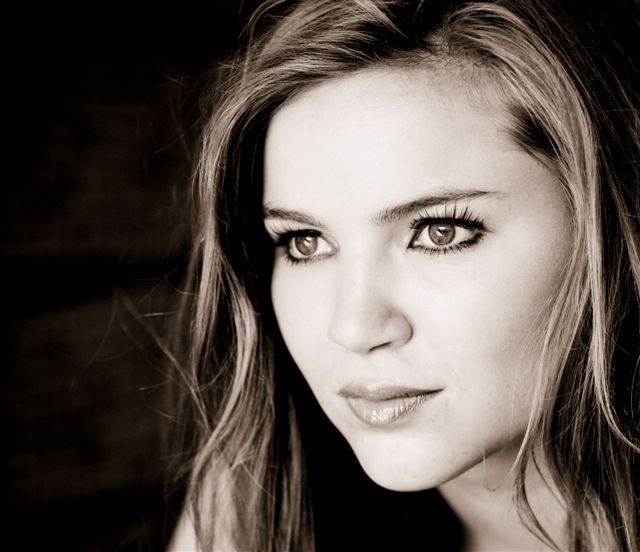
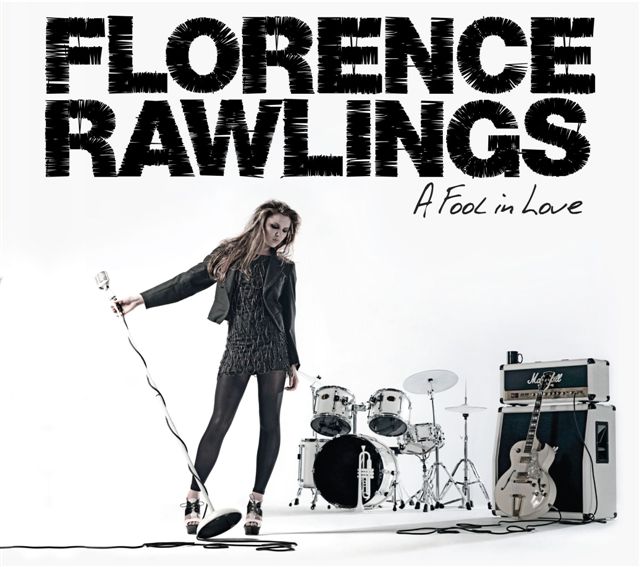
With the best will in the world, Batt is not the greatest singer himself – there always seems to be too much else going on that requires his attention. Last night those particular honours surely went to another of his protégées, Florence Rawlings, who supplied assured and classy backing vocals as Batt worked his way through the hits, but came into her own with a solo number in each set. Her soulful, slightly smoky timbre brought a new resonance to “Caravan Song”, Batt’s epic journey of a ballad, which provided such a memorable moment in Barbara Dickson’s chart career. And in the second, “Love Can Be a Battlefield” – one of those metaphorical explorations of the dubious spoils of profound emotion at which he excels – was a taste of Rawlings’ current album, A Fool in Love.
A Fool in Love: produced by Mike Batt
Rawlings is only 21, yet here were two lessons in how to deliver songs that carry considerable emotional clout with restraint and dramatic conviction, and without resorting to the exaggerated hand-wringing and gurning that defined the finalists on Saturday night’s hunt for Dorothy, BBC1’s Over the Rainbow. Here was a genuine, modest talent, offered simply and without artifice to an audience that as well as Melua, included another fine singer, Mari Wilson: ample evidence that Batt really knows how to pick them.
Barb Jungr’s recent album, The Men I Love, continues to be one of the most talked about records of the year. I just read this excellent post by New York blogger J.B., which sums up the boldness and bravery of this great, category-defiant singer in her choices of song and arrangement.
Summertime Lullaby: tasteful listening for a sultry evening
Here in the UK, on the first evening of the year that could remotely be called sultry, Peggy Duquesnel’s latest album, Summertime Lullaby, makes for a classy hour on the terrace. The California-based singer has come up with some smooth arrangements for a clutch of well loved jazz standards, interspersed with four of her own compositions including the languid title track, which sets the scene for a thoroughly enjoyable set.
An upbeat “My Romance” swings along thanks to Duquesnel’s nifty work at the keyboard – she’s also an accomplished jazz pianist (she later lets fly with a free-flowing instrumental, “On Green Dolphin Street” and a cool “Mack the Knife”) – leading easily into another of her own songs, an elegant tribute to a long relationship, “In the Quiet Hours”. “Drivin’ Blues” will give a wry laugh to anyone who knows the bumper-to-bumper frustrations of the homeward commute, especially when there’s a date waiting at the end.
Duquesnel has assembled a sympathetic, fluent band – guitarists Grant Geissman and Mike Higgins, bass players Jim DeJulio and Ernie Nunuz, and drummers Kendall Kay and Dave Owens – who presumably take turns in the trio although they aren’t credited on individual tracks. Between them they generate a warm, sophisticated tone that’s epitomised in a boldly phrased “Fly Me to the Moon” and another instrumental, Billy Strayhorn’s “Take the ‘A’ Train”.
The album is dedicated to Duquesnel’s husband and culminates in a touching, spare version of “Stay as Sweet as You Are”, the perfect sign-off at the end of a tasteful journey around what is obviously a very personal musical landscape. It’s a perfect soundtrack for the magic hour, as evening turns to night.
Ashfield Avenue: Alondra Bentley's absorbing debut album
There’s something of the Tardis about the contemporary, thriving young female singer/songwriter market. Just when you think there can’t possibly be room for another one, along comes yet another distinctive, highly individual voice with a new perspective; and the boundaries expand to accommodate them. This is the upside of the Internet as a democratic market place in which the listener is completely in control. Success or failure is no longer defined by the limited vision of music marketers in their air-cooled offices – or the soulless calculations of Simon Cowell.
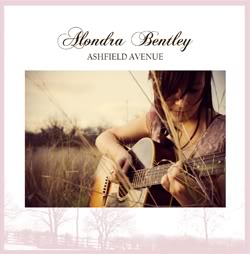
So welcome to the scene, Alondra Bentley and her debut album Ashfield Avenue, with her delicate acoustic sound, deft use of strings and literate lyrics that command attention with their subtlety and honesty.
If I call Bentley’s voice ‘sweet’, it isn’t because I want to start dealing in twee clichés. There’s nothing saccharine about it. Rather, she has a purity and instinct that evokes the integrity and folk sensibilities of Mary Hopkin or Vashti Bunyan, occasionally giving way to a more resonant, bluesy timbre that comes to life on the bittersweet, jaunty “Giants are Windmills”.
Bentley evokes Don Quizote with “Giants are Windmills”
Bentley was born in Lancaster in 1983 – in a house in the Ashfield Avenue of the album’s title – but has spent most of her life in Spain, and this has obviously had a profound effect on her music, which brings to mind an extraordinary range of influences. There is an adventurous spirit behind the melodies of these charming, occasionally unsettling, songs and while some of the effect might be down to producer Cesar Verdu, the self-taught Bentley’s own musicality – she accompanies herself on the guitar but is joined variously by guest musicians on banjo, charango, piano double bass and trumpet – is clearly a force to be reckoned with.
This is an album for sultry summer afternoons, the songs rippling around the room like tantalising breezes. Each number is a lyrical journey, presented with an attention to detail that allows every musical component to shine: the lilting, honky-tonk banjo; the plink of a guitar string; a sudden, sombre bass piano note. And above it all, Bentley’s assured but intimate voice as she weaves her potent stories. “Some Things of My Own” is a delightful tale of the troubadour’s material poverty. “Sunglasses” plays out the emotions and realisations that follow in the wake of a mundane accident. “I Feel Alive” is a delightful sensory tapestry of memories colliding in the present. This is absorbing stuff.
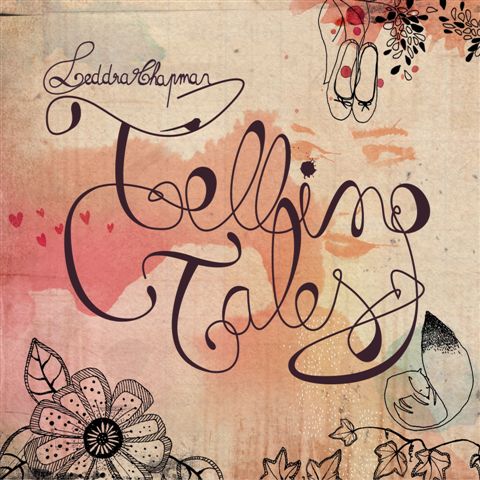
If musical influences were sweets, Leddra Chapman wouldn’t have wasted any time with her nose pressed up against the shop window. She’d have walked in, charmed the owner and been given free rein to create her own special selection. That’s the joyful impression left by her first album, Telling Tales.
At a time when young British female singer/songwriters are enjoying an unprecedented boom, hype is easily mistaken for genuine talent. Not in Chapman’s case. She rallies her musical instincts with flair and assurance. These songs are rounded stories, folk tales of love, fate and friendship for the 21st century, sung with crystal-clear diction and minimal embellishment, worthy of the all-important airplay they’ve been getting.
Those diverse musical influences lap at the edges without dominating or tipping into pretentiousness: a hint of Vaughan Williams here, Joni Mitchell there; the evocation of a brass band that momentarily transports you to a village green in summer (“Story”); a weakness for her toy piano on “Picking Oranges”.
Telling Tales: an auspicious debut
“Edie” is one of the highlights, a searing vignette of a short, tragic life. Another, “Wine Glass” cleverly distils the trivial gesture – toying with a drink – that becomes overwhelmingly significant for the one left behind in a long-distance relationship. And the poignant “Wrap Me Up”, with its melancholy piano intro, is a bittersweet account of two people wanting different things from their love affair.
On stage, Chapman has an engaging charm that belies the depth of her lyrics; her showcase at the BBC Club last November was a shaft of sunshine on a bitterly cold winter’s day. Telling Tales is a pleasing and auspicious debut.
As Day Follows Night: Blasko set for UK breakthrough
Deceptive simplicity is the hallmark of Sarah Blasko’s new album, the optimistically titled As Day Follows Night (Dramatico). Her mordant lyrics emerge from an intriguing musical mist, delivered in a voice far less fragile and little-girl-lost than it sounds on a superficial first hearing.
Spare string and piano arrangements are based on an acoustic, percussive foundation that takes you on an absorbing journey from the bleakness of wrecked love to the painful but ultimately life-affirming recapturing of emotional equilibrium. The images are stark – “Is My Baby Yours?”, “Bird on a Wire”, “Lost and Defeated” – but the mood is pensive and eventually hopeful rather than relentlessly dark.
Australian Blasko was working on the score for a theatre production of Hamlet while writing the album, and the introspection in many of these songs is tinged with a kind of self-revelation that the Danish prince would recognise. “All I Want”, with its windswept, Morricone-style setting, perfectly defines her predicament.
All I Want: windswept, introspective… and great cheek bones
Swedish producer Björn Yttling has created a sense of space that allows Blasko’s alluring voice the freedom to explore some epic themes without ever tipping into clichéd anguish. “I never knew it would hurt like this, to let someone go against my wishes,” she sings, compassionate for the departing lover even as she nurses her raw wounds.
Bird on a Wire: mordant lyrics and epic themes
At 33, Blasko is already a seasoned recording artist, with a growing following in Europe. This is her third album and it’s a haunting piece of work that should mark her breakthrough moment in the UK, where she has based herself for the rest of 2010. She plays the Islington Academy on 15th April and tours with the Temper Trap from 27th April.
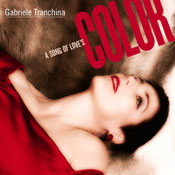
What a queue-jumper Gabriele Tranchina turns out to be. A pile of CDs sits accusingly on my disk awaiting critical attention. I’d been sampling and tasting here and there, planning an orderly assault. But on Monday, Tranchina’s new album – A Song of Love’s Color (Jazzheads JH1176) – landed fresh from New York, inveigled its way onto my player and has been sitting there ever since, spinning an insistent spell, and demanding listen after listen.
Think Lambert, Hendricks and Ross meet Pink Martini, with a dash of Astrid Gilberto, a streak of Ute Lemper, a hint of Mina and a sense of Anita Baker, and you can begin – just about – to anticipate the startling effect of Tranchina’s voice as she juggles rhythms, styles and languages to create a constantly shifting mood. One minute you’re chilling to late night jazz, the next you’re swept up in a Jobim samba, before being caught in the headlights of a hypnotic, almost Weill-ish lieder.
All of which makes her a bit of a marketer’s nightmare – and precisely the kind of performer that Art of the Torch Singer loves. The cocktail of jazz, world music, vocalese and chant might well be overwhelming if it wasn’t for the relaxed consistency of the band, led by Tranchina’s husband Joe Vincent – who wrote several of the tracks and is responsible for the cool, spare arrangements. Tranchina clearly thrives on the freedom this gives her to swing between techniques and tones.
The album kicks off with a Fugain/Delanoë chanson, “Chante Comme Si Tu Devais Mourir Demain”, which pretty much describes Tranchina’s mission. The title track follows, revealing her dexterity with a melody and some alluring phrasing. Later, a traditional Hindu prayer provides the basis for a swirling, syncopated chant that also includes a brief rap, “Asato Maa (Sat Chit Ananda)”, and a Spanish lullaby – “Duérmete Niño Bonito” – has an authentic, shuffling last-dance-of-the-night atmosphere. “Siehst du Mich” – a poem by Else Lasker-Schüler, set to music by Joe Vincent – concludes the album on a beautifully sombre, brooding note.
A Song of Love’s Color, mixed by Joe Vincent and Randy Klein, and mastered by Gene Paul, was recorded in New York in the summer of 2008. Its release is long overdue. Tranchina herself – German-born and New York-raised – remains something of an enigma, despite the stylish art work on the sleeve. A trawl around Youtube and MySpace yields nothing in the way of clips.
Her people should do something about that fast, because once you’ve heard this you’ll want to know more about an artist who clearly has something different to offer the homogenised world of modern popular music.
It’s practically impossible for any singer to tackle “The Man That Got Away” without the distracting shade of Judy Garland lurking on the edge of the spotlight. But when Jessie Buckley stepped up to the mic at London’s Pizza on the Park on Saturday, nobody was interested in the ghost of an old legend. Why would you be, when such a vibrant living talent materialises in front of your eyes?
If it wasn’t for the evidence of her slender frame and a pristine voice that has more than a hint of Doris Day at her youthful best, it would be hard to believe that Buckley is only 20. She’s already been runner-up in the BBC’s find-a-Nancy mission, I’d Do Anything (and now we see why Andrew Lloyd Webber could barely contain his exasperation when the public vote imposed a different leading lady on his production). And last year, she achieved the near-impossible feat of making shrill, shallow Anne Egerman a halfway sympathetic and complex character in Trevor Nunn’s revival of A Little Night Music.
Hushing a busy room in a West End eatery on a Saturday night, and holding the audience’s attention through two sophisticated sets of standards is a tall order for the most experienced, battle-hardened singer. But from the first note, it’s clear that Buckley has the necessary tools – not just the pipes and an appealing, unfussy presentation but crucially in this environment, where the diners tend to know their music, an astonishingly mature flair for jazz.She rips up “Blue Skies”, “Birth of the Blues”, “Dream a Little Dream of Me”, “Love Me or Leave Me” and “Take the A Train”, telling us what a privilege it is to be able to sing such great lyrics. Her phrasing is instinctive, adventurous and occasionally audacious – she’ll try anything , and usually pull it off. And her joy at unleashing this skill, recently discovered and relatively unexplored, free from the constraints of a musical theatre performance, is palpable.
Buckley’s pianist Joe Thompson tells us that he and double bassist Rob Rickenberg don’t care much for singers as a rule. They’re too troublesome and self-regarding. But Jessie, he says simply, has taught them both so much; this is praise indeed from a musician of Thompson’s calibre. The rapport between the three of them strikes sparks – and even if there is the odd moment when discipline dissolves into banter, it is clear that the performance is rooted in complete, mutual respect for each other’s musicality.
But it’s the ballads that linger longest as the memory of the evening fades. “The Man That Got Away” of course, stripped of all that Garland vibrato but losing nothing in the telling of the story – or the conviction that the singer is reliving it. When Buckley sings an intimately wistful “The Way You Look Tonight”, you feel you’re eavesdropping on her innermost thoughts. And when she gazes into the distance on “More Than You Know” she is, whether she knows it or not, joining the ranks of the finest torch-singers who trace their lineage back to the great Broadway star Helen Morgan.
Jessie Buckley is one of the last performers to grace the stage at Pizza on the Park. The room is to close in the summer, depriving London of a venue steeped in showbusiness history. Never mind the overpriced food and the so-so wine list that have been part of its idiosyncratic charm over the years – just catch a rising star in her element.
However, she will launch a new season of cabaret – Live at the Pheasantry – at The Pheasantry in London’s Kings Road on 13th June. She also plays the Delfont Room on 31st July and appears at The Stables near Milton Keynes on 20th August.
After 20 years of interviewing female singers of every genre, I’ve decided to start blogging. The fruits of many of these interviews have appeared in publications ranging from The Singer and Gay Times to Wire, Wall Street Journal Europe, Songlines and Gramophone. This diverse array of titles suggests I’m not alone in my fascination with the woman in the spotlight with just a microphone for company, spinning tales of passion, betrayal, love and hurt: the quintessential image of the torch-singer.
Girl singers are big with the marketeers right now. Quite right too. But they’re hardly a new invention! And being flavour of the season only begins to redress the balance in terms of coverage, clout and status in the entertainment universe. In this blog, I’ll be thinking aloud, reviewing new work, recalling old conversations, posting new interviews and generally exploring the role and world of the female singer as an artist and an icon.
Torch-singing is not limited by the genre of the music. It’s more about a sensibility evoked by a combination of the singer, her voice, the melody, the story, her performance and the lyric, that touches the listener in a special way. It’s a mood. A particular sound. So armed with my own flexible definition, I’ll continue to look for the torch-singer in likely and unexpected places. There is so much more to her than the holy triumvirate of Garland, Piaf and Holiday – great as they are.
Barb Jungr and the ‘Lost’ Generation
Barb Jungr: reinventress of songs (photo by Steve Ullathorne)
They aren’t really lost, of course. Just undervalued. They’ve always been there if you could find them. But if you were led solely by the crass credentials of the music marketing machine, you would hardly know that singers of the calibre of Barb Jungr, Claire Martin, Sarah Jane Morris, Mari Wilson and Clare Teal even existed.
They’ve been out there, doing it for the last 20 years and more – building their fan bases, producing work of the highest quality, earning plaudits in niche genres and garnering small but good reviews for their albums in the catch-all-the-rest jazz sections of the nationals. Yet they’ve never troubled Brits nominations committees.
Stuart Maconie makes the point well in next week’s Radio Times (“Going Gaga for Girls”) – praising this year’s nominations for the high ratio of British female singers while casting an eye back to the sexism and blinkers of the years when the music industry couldn’t bring itself to look beyond the commercial security of yet another nod for Kate Bush and Annie Lennox – acceptable, instantly recognisable totems for a host of female artists who were too complex or sophisticated for the marketeers to categorise.
As Maconie also suggests, this long overdue recognition of female talent is welcome – but tinged with cynicism. The Brits, to a great extent, reward commercial success. Florence Welch, Amy Winehouse, Lily Allen, Duffy, Pixie Lott and the rest are all delivering on that front. The reality is that for the moment, girl singers are big business. And on those grounds alone, why shouldn’t Susan Boyle get a nod, too?
But back to the ‘lost’ generation. Barb Jungr epitomises the craft, integrity and painstaking approach required to build a successful career as a singer without the weight – and will – of a big label behind you. Like so many of her peers, she has too often had to settle for snippets in the reviews pages rather than serious profile space in the features pages.
Jungr is the supreme reinventress of songs. She has taken material indelibly associated with her musical heroes – Dylan, Presley, Nina Simone, Brel – and recast them in her own, determinedly idiosyncratic, style through a series of highly-praised albums. Her voice is a startling vehicle for the introspection and emotional observation of so many of the lyrics: true, bell-like in its clarity but also capable of a keening, visceral anguish that takes the listener to the darkest places in the songs she favours.
The connection is often electric – as it was at a notable evening of chanson at the Almeida Theatre in July 2008; or, for this previously Dylan-sceptic listener, last summer when Jungr came to Jazz at the Fleece, deep in rural Suffolk, outsang the wedding reception that was sharing the venue, and opened a window into the great man’s lyrics for the first time.
In performance, any heaviness is balanced by her easy, off-hand banter. Jungr involves her audience with her self-deprecatory references, relating the material to experiences they might also have had – and that might, too, seem utterly ridiculous in the cold light of day. But which are also utterly devastating.
That, in part, is why she has found her natural home as a cabaret artist among New York audiences. Her ability to imply a hinterland of meaning behind a lyric doesn’t make for easy listening. But the story-telling is compelling.
Review – The Men I Love: The New American Songbook
Jungr’s new album – The Men I Love: The New American Songbook – released on 8th March on Naim – is as audacious as anything she has produced to date. Dylan’s material again figures large, along with Neil Diamond, Leonard Cohen and David Byrne, all with new and category-defying arrangements that have arisen from a fruitful collaboration with pianist Simon Wallace.
The spare, keyboard-centric accompaniment of recent albums has been extended to include cello (Frank Schaeffer), double bass (Steve Watts) and flute (Clive Bell). Jungr’s voice ranges across the resulting rich harmonic tapestry with a new freedom and assurance.
The feverish insistence of the Talking Heads classic “Once in a Lifetime” becomes an almost wistful meditation with an unexpectedly oriental flavour (courtesy of Bell on the shakahachi). Diamond’s “I’m a Believer” is revealed as a sweet, revelatory, impassioned love song light years from the frenetic pop of The Monkees, while “Red Red Wine” lays bare the torment at the end of a love affair.
Springsteen’s “The River” is all the evidence you need of Jungr’s subtelty and honesty, honouring the lyric and story without compromising her own style. And then there is her take on “Wichita Lineman” – perhaps her boldest move on the album: Jimmy Webb’s strange, haunting tale of loneliness and separation, originally a hit for Glen Campbell, is three minutes of distilled, crystalline beauty – and frankly, it’s the high point of Jungr’s finest work to date. No Brit required.
If you can find a more intimate, sensitive interpretation of this great song, let me know.
Someone who sings about love and loss, and the pain of experience. The power of torch-singing lies in its effect on the listener. For me, it transcends musical genres. These pages explore the dazzling, and sometimes dark, world of the female singer through history and in the present. Concert and CD reviews, interviews and articles combine to create a comprehensive view of this vital strand of popular culture. Why not share your views and experiences of your favourite artists, suggest performers you would like to see featured - and let me know what makes a torch singer for you?




What do you think?