Tag Archives: Torch singers

Concert Review – Jessie Buckley at Pizza on the Park

15 Mar

It’s practically impossible for any singer to tackle “The Man That Got Away” without the distracting shade of Judy Garland lurking on the edge of the spotlight. But when Jessie Buckley stepped up to the mic at London’s Pizza on the Park on Saturday, nobody was interested in the ghost of an old legend. Why would you be, when such a vibrant living talent  materialises in front of your eyes?

If it wasn’t for the evidence of her slender frame and a pristine voice that has more than a hint of Doris Day at her youthful best, it would be hard to believe that Buckley is only 20. She’s already been runner-up in the BBC’s find-a-Nancy mission, I’d Do Anything (and now we see why Andrew Lloyd Webber could barely contain his exasperation when the public vote imposed a different leading lady on his production). And last year, she achieved the near-impossible feat of making shrill, shallow Anne Egerman a halfway sympathetic and complex character in Trevor Nunn’s revival of A Little Night Music.

Hushing a busy room in a West End eatery on a Saturday night, and holding the audience’s attention through two sophisticated sets of standards is a tall order for the most experienced, battle-hardened singer. But from the first note, it’s clear that Buckley has the necessary tools – not just the pipes and an appealing, unfussy presentation but crucially in this environment, where the diners tend to know their music, an astonishingly mature flair for jazz.She rips up “Blue Skies”, “Birth of the Blues”, “Dream a Little Dream of Me”, “Love Me or Leave Me” and “Take the A Train”, telling us what a privilege it is to be able to sing such great lyrics. Her phrasing is instinctive, adventurous and occasionally audacious – she’ll try anything , and usually pull it off. And her joy at unleashing this skill, recently discovered and relatively unexplored, free from the constraints of a musical theatre performance, is palpable.

Buckley’s pianist Joe Thompson tells us that he and double bassist Rob Rickenberg don’t care much for singers as a rule. They’re too troublesome and self-regarding. But Jessie, he says simply, has taught them both so much; this is praise indeed from a musician of Thompson’s calibre. The rapport between the three of them strikes sparks – and even if there is the odd moment when discipline dissolves into banter, it is clear that the performance is rooted in complete, mutual respect for each other’s musicality.

But it’s the ballads that linger longest as the memory of the evening fades. “The Man That Got Away” of course, stripped of all that Garland vibrato but losing nothing in the telling of the story – or the conviction that the singer is reliving it. When Buckley sings an intimately wistful “The Way You Look Tonight”, you feel you’re eavesdropping on her innermost thoughts. And when she gazes into the distance on “More Than You Know” she is, whether she knows it or not, joining the ranks of the finest torch-singers who trace their lineage back to the great Broadway star Helen Morgan.

Jessie Buckley is one of the last performers to grace the stage at Pizza on the Park. The room is to close in the summer, depriving London of a venue steeped in showbusiness history. Never mind the overpriced food and the so-so wine list that have been part of its idiosyncratic charm over the years – just catch a rising star in her element.

However, she will launch a new season of cabaret – Live at the Pheasantry – at The Pheasantry in London’s Kings Road on 13th June. She also plays the Delfont Room on 31st July and appears at The Stables near Milton Keynes on 20th August.
Chita Rivera and the Secret of Longevity

26 Feb

Trouble and Strife on the Stage

Two sad spectacles during the last fortnight have exposed the pitfalls that can puncture a singer’s career in this day and age: the fact that the most expensive production techniques in the world can’t come to the rescue when she’s trying to prove herself in ‘live’ performance; and the discovery that a once great vocal talent has been dissipated by self-destructive traits utterly in keeping with the dark side of show business.

Cheryl Cole and Whitney Houston come from opposite ends of the singing talent spectrum. Cole’s appearance at the Brits, ‘singing’ “Fight for This Love” – yes I know, the fourth-fastest selling UK single of 2009 – was the perfect distillation of this empty shell of an event. No expense had been spared with the choreography, the massed ranks of dancers or the outrageously faux-military costumes.

But whose bright idea was it to bring in a session singer with decent chops to cover the bridge between the first and second sections of the song – cruelly exposing the thinness of the vocals on the master track? Perhaps the same person who switched the mic on at the end: Cole’s winded “Thank-you” after some rather dodgy lip-synching was the only credibly ‘live’ element of her performance.

She won’t be troubling these pages in the future, unless she reinvents herself as a tragedienne de la chanson and pours her life experience into song. And it’s difficult to do that if you haven’t got a voice to begin with. Cheryl’s a pop princess whose music will only ever be a footnote to her role as a style icon of the Primark age.

Whitney Houston, on the other hand, is the real deal. So news of her meandering, unfocused performance in concert in Brisbane as she kicked off an Australian tour is real cause for concern. While it was not in the Judy Garland league – she had one of her most spectacular meltdowns in Australia and was booed off stage – audience comments suggested that her concentration wondered too often, and the golden voice that they remembered from the 1980s and 1990s had lost much of its range and shine.

That might have been expected; last year’s comeback album I Look to You was respectable but bore little resemblance to the vocal work she produced during her period of greatest success. Houston was the pioneer of the power torch ballad. Depending on your taste, we have her to thank or curse for all that followed: Carey, Dion, Braxxton, and a host of X Factor wannabes who see mimicking her melismatic talent as their best option for joining Simon Cowell’s production line.

The diminution, even partial, of a voice that should now be approaching its peak – Houston is only 46 – is a genuine loss to popular music. But a great singer can still convince as an interpreter of her trademark work, adapting techniques to suit her changing vocal sound; we shouldn’t write her off yet. And there are plenty of beacons to light the way when it comes to longevity as a singer – not least her aunt, Dionne Warwick, or Shirley Bassey.

DSB’s recent album, The Performance (why no Brit nomination?), was a masterpiece. Her voice, which has not been untroubled by stress and strain over the years, sounds in better shape than ever. The range and texture are astonishing. And working with new songwriters has enabled her to discover a softer, more subtly expressive side of her voice which is remarkable for such an experienced and well-defined singer in her eighth decade.

Chita Rivera is another great dame who can still cut it in the studio – and on the stage. The Broadway star – a dancer in the first instance – had her first major acting role as Anita in West Side Story (1957). She went on to establish herself as a Tony award-winning musical actress, inextricably linked with some of Kander and Ebb’s most famous shows, including Chicago, The Rink and Kiss of the Spiderwoman. She is also a legendary cabaret performer. But despite all those cast recordings, until now, she has never made an album in her own right.

The release of And Now I Swing puts that right. “It’s very difficult but I had the best training in the world,” she told me in an interview last year, when I asked her how she has sustained her vocal technique through the decades.

“Jerome Robbins and Leonard Bernstein are responsible for giving me the strength to be able to sing and dance at the same time. It goes back to Anita. Mind you, I’m extremely obedient. I go back to an era when you did what you were told – so consequently you last longer.

“Fortunately, I’ve worked with geniuses –and I really feel I have – but it takes stamina and placement of the voice, and of course it must be written so that they give you time to breathe. And great composers know that. It’s a wonderful challenge and it keeps your lungs really fit and strong.”

Review – Chita Rivera: And Now I Swing

(Photo by Laura Marie Duncan)

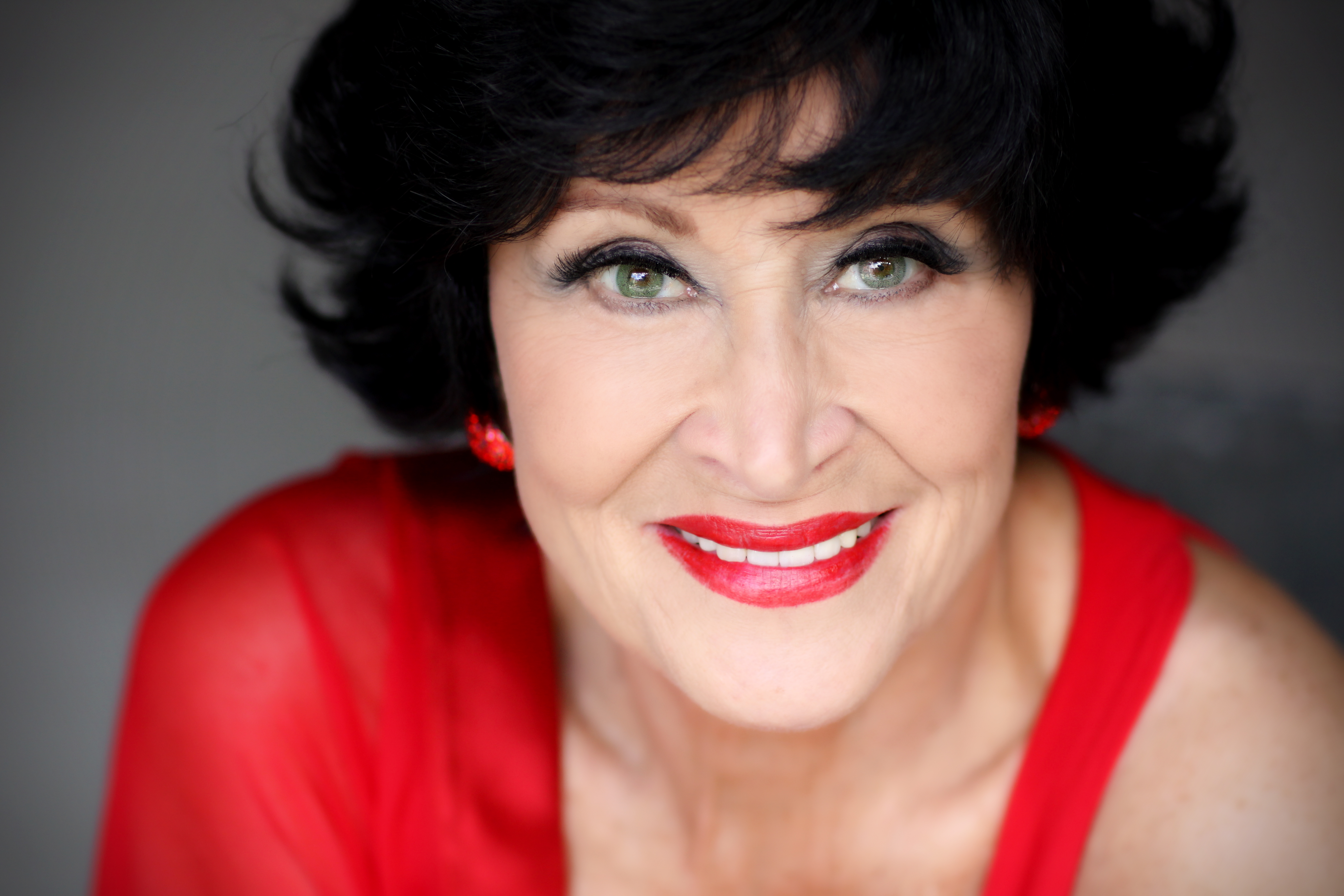
Chita Rivera: "I go back to an era when you did what you were told – so consequently you last longer." (photo by Laura Marie Duncan)

Chita Rivera’s first solo album, recorded in New York City last summer, is overdue by about 50 years. It’s been worth the wait. During that half-century, Rivera has forged a career as a musical actress of range and emotional clout. She is one of that handful of Broadway stars who can honestly claim the sobriquet, ‘Legend’. And she brings the weight of her experience to a selection of songs that reflect her own musical theatre heritage as well as giving new meaning to some familiar standards.

And Now I Swing (YSL 566473) is a jazz-informed album. Rivera declares her influences on the liner notes – Rosemary Clooney and Mel Tormé – but every song carries her own imprint: a mixture of artful, instinctive phrasing that never loses touch with the original melody; intimate vocal delivery – the voice is lived-in and pleasingly oakey; and the ability to suggest a story that only comes with years of commanding audience attention in big theatres and smoky supper clubs, each with equal aplomb.

Rivera is well supported by some delightful, spare arrangements that never overwhelm the telling of the tale, and by the attentive playing of a band in which the strings are a particularly resonant feature.

As you’d expect, her beloved Kander and Ebb are well represented. “Nowadays” from Chicago (arranged by Mary Ann McSweeney) recalls her triumph as the original Velma Kelly. “I Don’t Remember You” (from the little-remembered The Happy Time, arranged by Carmel Dean and Rivera’s percussionist Michael Croiter) demonstrates her talent for unravelling the human experience at the heart of so many of Ebb’s best lyrics. And “Love And Love Alone” from The Visit gives us a rare chance to hear a number from a show that has been a personal triumph for Rivera but is yet to receive a major presentation on Broadway or in the West End.

Elsewhere, the old torch song “More Than You Know” is given a swirling, up tempo treatment, and “A Nightingale Sang in Berkeley Square” – a nostalgic chestnut in so many other hands – is a lump-in-the-throat moment, expertly handled.

Given her narrative skills, Rivera’s take on Brel’s “Carousel” hardly comes as a surprise, but it’s a welcome and unexpected detour from the album’s core Broadway focus. And her Hispanic roots also get a good work-out with a deftly combined “Sweet Happy Life” and “Mas Que Nada”, whipped into a brassy bossa nova.

http://www.yellowsoundlabel.com/artists/Chita_Rivera/

http://www.chitarivera.com

Barb Jungr and the ‘Lost’ Generation

10 Feb

After 20 years of interviewing female singers of every genre, I’ve decided to start blogging. The fruits of many of these interviews have appeared in publications ranging from The Singer and Gay Times to Wire, Wall Street Journal Europe, Songlines and Gramophone. This diverse array of titles suggests I’m not alone in my fascination with the woman in the spotlight with just a microphone for company, spinning tales of passion, betrayal, love and hurt: the quintessential image of the torch-singer.

Girl singers are big with the marketeers right now. Quite right too. But they’re hardly a new invention! And being flavour of the season only begins to redress the balance in terms of coverage, clout and status in the entertainment universe. In this blog, I’ll be thinking aloud, reviewing new work, recalling old conversations, posting new interviews and generally exploring the role and world of the female singer as an artist and an icon.

Torch-singing is not limited by the genre of the music. It’s more about a sensibility evoked by a combination of the singer, her voice, the melody, the story, her performance and the lyric, that touches the listener in a special way. It’s a mood. A particular sound. So armed with my own flexible definition, I’ll continue to look for the torch-singer in likely and unexpected places. There is so much more to her than the holy triumvirate of Garland, Piaf and Holiday – great as they are.

Barb Jungr and the ‘Lost’ Generation

Barb Jungr: reinventress of songs (photo by Steve Ullathorne)

They aren’t really lost, of course. Just undervalued. They’ve always been there if you could find them. But if you were led solely by the crass credentials of the music marketing machine, you would hardly know that singers of the calibre of Barb Jungr, Claire Martin, Sarah Jane Morris, Mari Wilson and Clare Teal even existed.

They’ve been out there, doing it for the last 20 years and more – building their fan bases, producing work of the highest quality, earning plaudits in niche genres and garnering small but good reviews for their albums in the catch-all-the-rest jazz sections of the nationals. Yet they’ve never troubled Brits nominations committees.

Stuart Maconie makes the point well in next week’s Radio Times (“Going Gaga for Girls”) – praising this year’s nominations for the high ratio of British female singers while casting an eye back to the sexism and blinkers of the years when the music industry couldn’t bring itself to look beyond the commercial security of yet another nod for Kate Bush and Annie Lennox – acceptable, instantly recognisable totems for a host of female artists who were too complex or sophisticated for the marketeers to categorise.

As Maconie also suggests, this long overdue recognition of female talent is welcome – but tinged with cynicism. The Brits, to a great extent, reward commercial success. Florence Welch, Amy Winehouse, Lily Allen, Duffy, Pixie Lott and the rest are all delivering on that front. The reality is that for the moment, girl singers are big business. And on those grounds alone, why shouldn’t Susan Boyle get a nod, too?

But back to the ‘lost’ generation. Barb Jungr epitomises the craft, integrity and painstaking approach required to build a successful career as a singer without the weight – and will – of a big label behind you. Like so many of her peers, she has too often had to settle for snippets in the reviews pages rather than serious profile space in the features pages.

Jungr is the supreme reinventress of songs. She has taken material indelibly associated with her musical heroes – Dylan, Presley, Nina Simone, Brel – and recast them in her own, determinedly idiosyncratic, style through a series of highly-praised albums. Her voice is a startling vehicle for the introspection and emotional observation of so many of the lyrics: true, bell-like in its clarity but also capable of a keening, visceral anguish that takes the listener to the darkest places in the songs she favours.

The connection is often electric – as it was at a notable evening of chanson at the Almeida Theatre in July 2008; or, for this previously Dylan-sceptic listener, last summer when Jungr came to Jazz at the Fleece, deep in rural Suffolk, outsang the wedding reception that was sharing the venue, and opened a window into the great man’s lyrics for the first time.

In performance, any heaviness is balanced by her easy, off-hand banter. Jungr involves her audience with her self-deprecatory references, relating the material to experiences they might also have had – and that might, too, seem utterly ridiculous in the cold light of day. But which are also utterly devastating.

That, in part, is why she has found her natural home as a cabaret artist among New York audiences. Her ability to imply a hinterland of meaning behind a lyric doesn’t make for easy listening. But the story-telling is compelling.

Review – The Men I Love: The New American Songbook

Jungr’s new album – The Men I Love: The New American Songbook – released on 8th March on Naim – is as audacious as anything she has produced to date. Dylan’s material again figures large, along with Neil Diamond, Leonard Cohen and David Byrne, all with new and category-defying arrangements that have arisen from a fruitful collaboration with pianist Simon Wallace.

The spare, keyboard-centric accompaniment of recent albums has been extended to include cello (Frank Schaeffer), double bass (Steve Watts) and flute (Clive Bell). Jungr’s voice ranges across the resulting rich harmonic tapestry with a new freedom and assurance. 

The feverish insistence of the Talking Heads classic “Once in a Lifetime” becomes an almost wistful meditation with an unexpectedly oriental flavour (courtesy of Bell on the shakahachi). Diamond’s “I’m a Believer” is revealed as a sweet, revelatory, impassioned love song light years from the frenetic pop of The Monkees, while “Red Red Wine” lays bare the torment at the end of a love affair.

Springsteen’s “The River” is all the evidence you need of Jungr’s subtelty and honesty, honouring the lyric and story without compromising her own style. And then there is her take on “Wichita Lineman” – perhaps her boldest move on the album: Jimmy Webb’s strange, haunting tale of loneliness and separation, originally a hit for Glen Campbell, is three minutes of distilled, crystalline beauty – and frankly, it’s the high point of Jungr’s finest work to date. No Brit required.

If you can find a more intimate, sensitive interpretation of this great song, let me know.

http://www.naimlabel.com/recording-the-men-i-love–the-new-american-songbook.aspx