The blues are just torch-songs: Dolores Scozzesi in performance
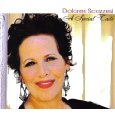
Dolores Scozzesi: there's nothing like discovering a new voice
There is one good thing about returning from holiday: a healthy pile of CDs for review has accumulated during the summer, promising plenty of interest to lighten the darkening autumn evenings. An even better thing is when you pick one, randomly, from the pile, put it on and out of nowhere, a new voice stops you in your tracks.
After all these years of listening, and not to sound too blasé about it, the “Wow” factor needs to be pretty strong to have that kind of effect. And it really has to be something different. So thank you, Dolores Scozzesi, for working a little magic as the last dregs of summer evaporate.
A Special Taste appears to be New York-born Scozzesi’s first album – and it’s long overdue, given her credentials: Lee Strasberg Institute alumna, one-time voice student of Phil Moore, improv specialist who has performed alongside Robin Williams and Jay Leno, former ex-pat resident of Lyon who has toured Europe with her own jazz troupe, and singular cabaret performer who has ripped up Sondheim and Sting to great acclaim on the West Coast.
It’s the voice that grabs you to begin with. A rich contralto with edge, snapping from molten serenity to a predatory growl in a single phrase, and a timbre that makes you want to place your hands on the speakers just so you can capture something of its individuality. She switches easily between the ominous (“Stay Out of the Moonlight” is a glorious don’t-do-as-I-did word to the wise) and the edgy. “Jazz is a Special Taste” is a stop/start exploration of the allure of the genre to which Scozzesi has loosely hitched her star.
I say ‘loosely’ only because throughout the album, she seems to be daring the listener to put her in a specific box. The phrasing sounds so spontaneous that I doubt any two live performances of a song are ever exactly the same, in the great tradition of artists like Billie Holiday and Sarah Vaughan. And as with those greats, the story telling is commanding. You have no choice but to listen. The arrangements by Eli Brueggemann and Gary Fukishima give her the ideal springboard to create these vivid word pictures.
Then there is the choice of songs. Standards from Cy Coleman and Carolyn Leigh (it’s a long time since I heard anyone treat “You Fascinate Me So” with such dry wit) and Fred Ahler and Joe Young (“I’m Going to Sit Right Down and Write Myself a Letter”) have strange but fascinating bedfellows in a pair of Bob Dylan numbers, an astringent take on “One More Cup of Coffee” and a moving, bossa nova treatment of “Just Like a Woman”.
I don’t know what the Dylan purists will have to say about that, but as a late comer to the Dylan lyrics appreciation society myself (I’m no lover of his voice, and that’s been something of a barrier to enjoying his work), I’m fascinated by the endless reinvention that he attracts these day, particularly from female vocalists. Long may it continue.
Scozzesi’s liner notes shed significant light on the final number on the disk, an acoustic treatment of “Autumn Leaves”, melding Johnny Mercer’s English lyrics with the original French words of Jacques Prevert and culminating in a self-penned vocalese tribute to her late husband, dark, raw and touching. This is an album to be enjoyed in discerning company, with firelight and good wine.
Broadway Baby: Caroline O’Connor signals her return to London at the Sondheim Prom
Carolin O'Connor's The Showgirl Within hits the Garrick Theatre on 27th September
I recently interviewed Caroline O’Connor for a major feature on how to perform the work of John Kander and Fred Ebb in The Singer magazine. At the time, she was touring in Chicago in Australia, clearly having a whale of a time as brittle Velma Kelly – “Like a cat falling down the wall, clawing at it just to hang on,” as she described the character – and eager to speak about the impact the work of these titans of musical theatre has had on her successful career.
Caroline was born in the UK – in Oldham, in fact, a town that has produced its fair share of theatrical talent over the years – but her family moved to Australia when she was still a small child, and ever since she has split her professional life between the two countries, with the occasional Broadway foray thrown in for good measure. Thanks to the big Chicago revival and other successful projects, Oz has had by far the better deal during the last couple of years. So with all due respect to her fans down under, the news that Caroline is bringing her new one-woman show, The Showgirl Within, to London (at the Garrick Theatre from 27th September) means that for a little while at least, we can reclaim this firecracker of a star for our own.
Her “Broadway Baby” at the Stephen Sondheim Prom gave a taste of the dynamism we can expect from the show. But it would be a huge surprise if Kander and Ebb didn’t loom equally large in the programme. In the Singer article, Caroline shared centre stage with a host of other musical theatre luminaries, including her heroine Chita Rivera, Karen Ziemba, Joel Grey and Brent Barrett. As a result, I could only use a fraction of the insight and enthusiasm she provided over the course of our interview. So the impending arrival of The Showgirl Within is a great excuse for sharing the conversation in full. Here it is.
Sally Bowles is so iconic among the great female musical roles that even understudying the star in the faint hope that you might get on for a matinee once in a blue moon is too good an opportunity for a young actress to miss. That was certainly Caroline O’Connor’s view in 1986 when, towards the end of her stint in the chorus of Me and My Girl, she was cast as a Kit Kat girl in Cabaret with understudy duties. It required all her pleading and acting skills to earn an early release from her contract to take the job.
“I was dance captain on Me and My Girl, so I had to go and beg my boss to let me go,” she says. “I think I shed tears, even! I said I’d train my replacement without any pay, I wanted the Cabaret job so badly. I’ve never been so excited in my life, being cast in something, because of its reputation. Gillian Lynn was directing, and of course she was so well known at the time because of Cats. Anyway, I was able to take it, and we took the show on the road then took it into the Strand Theatre.
“It was an amazing experience, maybe not the most renowned production ever, but just to get to do that music every night… Also, there is the depth of the story, it’s so incredibly moving. And that’s where I met my husband, too, so it’s had a big impact on my life. We opened on the Tuesday night in London and I went on to play Sally Bowles the following Saturday matinee, so it was a pretty fast intro to play that role that everybody was so familiar with. I remember them saying, “You don’t have to go on because we’ve only been in town for five days and you haven’t even had an understudy call yet.” But I insisted: ‘No, let me at it! I can’t wait to get on.’
Nobody who plays Sally is immune to the shadow cast by Liza Minnelli’s Oscar-winning performance in the film, an experience that gave Caroline her first hint of how fixed some audience’s preconceptions can be.
“When I went on to play Sally, my agent was in the audience and behind him were a couple of American tourists,” she says. “And of course I played the role with an English accent, as that’s what Sally had. And they hated the show, whining all the way through. At the end, as they were putting on their coats, one turned to the other and said, ‘As for that Sally Bowles, well she didn’t even try to do an American accent.’ I thought it was hilarious. You can appreciate it because of the popularity of the film but at the same time, I was a little bit offended because I’d put so much effort into my beautiful pseudo English accent.”
That little baptism aside, Caroline is quick to nail the old cliché that Americans don’t get irony – particularly when it comes to Kander and Ebb.
“You read their shows and listen to them, and think that these are two people who really understand irony and are able to include it in their work. That tongue-in-cheek referring to the general public – as the Emcee does in Cabaret, and Billy Flynn and all the other characters do in Chicago. They look at the audience and they’re saying, ‘You know what I’m talking about.’ It’s quite incredible.
“Chicago is such a beautifully written piece of work. Here in Sydney it’s been wonderfully well received. It’s only been 11 years since the show was last here in Australia, and yet it is garnering great reviews and is doing fantastic business. So again it’s found its niche.”
Casual theatre-goers are often surprised to discover that the creators of Cabaret were also responsible for Chicago, and a host of other great work besides. For Caroline, there is always great satisfaction in spreading the word, particularly when it comes to their lesser-known pieces. She first met them in person during the short-lived 1988 production of The Rink at the Cambridge Theatre, where she was understudying Diane Langton in the role of Angel.
“Because Angel is such a demanding part to sing, and Diane preferred not do all the performances, I was playing the matinees,” she recalls. “That meant I was actually contracted to do some performances and I could revel in the extraordinary experience: the storyline, the concept, the humour in their work. It makes it so easy to play as a performer. It’s so beautifully written – they write so well for men, but I just think the way they write for women is mesmerising, a bit like Sondheim. They seem to understand us so well, especially older or troubled women! And when the show came off, there was an outcry because it was such a wonderful piece of work. No-one could believe it.”
Caroline was fascinated by Kander and Ebb’s approach to the London production. They weren’t interested in resting on the laurels of The Rink’s Broadway success.
“What was extraordinary was that they wanted to cut a number at the end called ‘All the Children in a Row’, which I think is a brilliantly written song,” she says. “And Diane Langton had to pretty much audition to have it kept in the show. They wanted to write something new, and [director] Paul Kerrison was so determined to keep it in that he asked Diane to sing it for them, give it everything she’d got. Which made it really interesting – to think that these writers, who were so brilliant, questioned their work and thought maybe it wasn’t quite right. For me all the other stuff was great fun, there were great moments to sing but as a performer, to go out and do that song is so exciting, because it’s like telling the most wonderful story. I remember sitting in the stalls watching this happen and thinking, Oh my God, they’re really not sure. And they’re willing to say no, let’s do something else.
“I also got to do a concert version of Zorba, which is very rarely performed. We were doing Chicago back in 1998-9 here in Australia, and John Dietrich, who was playing Billy Flynn, is a huge Kander and Ebb fan. And because he’d always loved Zorba he decided to produce a concert version of the show, which we did as a late nighter for two nights. It was incredible how many people were interested in coming to see that, because it was such a rarity. I’d no idea, I was a little bit in the dark as far as Zorba was concerned, but I thought it was a fantastic piece of work, too. Probably not as commercial as some of the other pieces, but really interesting.”
Caroline says Kander and Ebb’s work places unique demands on the performer. The choreography, so much of it devised and influenced by the great Bob Fosse, means that you are rarely simply singing a number. Your whole body and imagination is engaged. And it takes a certain calibre of artist to bring that to the stage.
“When you look at the sort of people that were cast in their shows for so many years, the quality of their work, what they can do, their versatility, and not just that they can dance a little or belt or whatever, you can tell what’s required,” she continues. “If you can execute a Kander and Ebb show eight times a week for a long period of time, then you should give yourself a little pat on the back. It’s quite demanding and compared to some other shows – especially the elements that Bob Fosse brought with Cabaret and Chicago – It’s a big ask.
“You have to get the right type of person that’s going to give it all it deserves – and they’re the sort of people you want on the stage: the Gwen Verdons, the Chita Riveras, the Liza Minnellis, the Karen Ziembas. They’re my idols. I got to do the anniversary concert of Chicago in New York and in London, and for me to able to share the stage with Chita Rivera – whether it was just the bows or even being on the same bill – was extraordinary. The fact that she still gets on stage and performs live after all those years of doing eight shows a week, you can see why they held her in such high esteem. She is just so good at what she does. I recently watched a clip of her in Nine on Youtube, and she is so mesmerising. This is a woman that’s been doing it for 200 years, and she’s still as enthusiastic and magnetic as she was.”
Caroline tells a couple of poignant stories about sharing the bill with Rivera that encapsulate the ripples of respect and love generated by association with the creators of great work.
Caroline O’Connor performs “All That Jazz”
“We were rehearsing Chicago at the Ambassadors Theatre and I did “Velma Takes the Stand”, so I’d just watched Chita do “All That Jazz”. Just hearing that voice that I’d listened to on cassette since about 1978 for real was incredible. And after I’d finished I was walking around the back of the auditorium and she called me over with her finger – ‘Come here!’ and I walked towards her, and she said, ‘I would love to teach you the original choreography.’ I couldn’t believe it, it was such an incredible compliment because she thought I could do it. It was so exciting. And you can see why Kander and Ebb wanted to work with people like her, because they could bring out the best in their work.
“It’s terribly sad that Fred Ebb’s gone. When we did the anniversary concert in New York, we were standing in the wings waiting to go on for the bows, and Chita didn’t notice me watching, but there was a photo of Fred Ebb on a card in one of the offices, and she picked it up off the shelf and kissed it before she went on. I felt so moved and honoured to have actually seen that, the appreciation that she had. It was beautiful.”
Caroline has played both Roxie Hart and Velma Kelly during her career, but it’s brittle, complex Velma who has occupied her most recently, as she returned to a role she last performed in 1998.
“I took it as a compliment that they didn’t change the choreography!” she laughs. “But we’ve been doing a long run, more than 30 weeks. Physically it’s demanding – because of Fosse’s influence. It’s a totally different style of dance, an incredibly particular way of performing. It’s not just the physicalisation of doing the moves, it’s the intensity and style, and it’s quite tiring.
“When you’ve had a ballet background [Caroline’s early ambitions were classical], all of a sudden your muscles hurt in a different way. You get pains in an area that if you were doing a de Mille or Jerome Robins choreography, wouldn’t be the same. Sometimes they can be very large movements, sometimes tiny gestures that say a 1000 words. And just the intensity of that, moving one finger, can be exhausting. And there are all these people who keep the bible going: ‘No, you don’t move the whole wrist, just circle the finger.’ The concentration that goes into that is really ridiculous but it just goes to show how much impact it has, for the performer to execute it and the audience to appreciate it.
“And it’s not like singing “If You Knew Suzy”. It’s pretty full-on, big belting numbers and intensity. Having to be the character up front, not just singing a lovely soprano song and sounding sweet and pretty. You have to give it everything you’ve got, every ounce of intention – if you’re fighting for your life as in “I am my Own Best Friend”, you’re fighting for supremacy. The audience has to leave at the end of Act One thinking, I wonder who’s going to win.
Caroline says a long run in a show like Chicago brings its own rewards, and she has never tired of it.
“The piece is so powerful, I’ve never been bored with it, because the audience isn’t. And you feed off the audience. I do make sure that I remind myself every night how lucky I am to be able to do it, and that I’ve got everything to lose. Because the character of Velma is interesting. Her journey goes downhill. She’s like a cat falling down the wall, clawing to hang on, before she comes back up at the end. I just remind myself that my job is to tell that story and it’s easy because of the quality of the work.
“Kander and Ebb are probably my biggest influence as a performer, and I hope they continue to be so because I’ve still got my eyes on Kiss of the Spider Woman! Isn’t it tremendous that you can look at a composer and writer, and think, I could have a lifetime career just looking at your work, because it suits my voice and my personality. I feel really blessed that there is this work out there I can relate to and appreciate. “
“Dragonflies”: a number from Eddi Reader’s most recent album Love is the Way
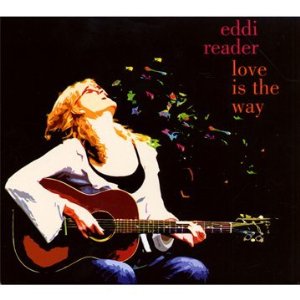
"Love is the Way": Eddi Reader's most recent album formed the backbone of her gig at Snape
If you think there’s a more abundantly gifted British female singer than Eddi Reader gigging and recording today, please tell me who she is. The range of ‘voices’ and styles that Reader embraced during a hugely appreciated two-hour+ set, part of this year’s Snape Proms season at Snape Maltings Concert Hall, was extraordinary. She bucked convention at every turn, barely tolerating the notion of an interval, and dismissing the ritual of the encore completely because she – rightly – would rather fit in a couple of extra songs for her and the audience’s pleasure.
The maverick qualities that must make Reader a music marketeer’s nightmare were on show in abundance as she veered from pop to folk to Burns to Piaf and Doris Day, supported by an equally versatile band that included drummer Roy Dodds, Alan Kelly on the accordian, writing partner and guitarist Boo Hewerdine, and life partner and ukelele virtuoso John Douglas.
The recent album Love is the Way formed the backbone of the evening, interwoven with older work and several of Reader’s unforgettable interpretations of Robert Burns poems. She sprung a surprise at virtually every turn as she peppered the playlist with anecdotes and explanations, setting the scene for each number with an almost throw-away nonchalance that belied the intensity and commitment of her vocal delivery. Old favourites like “Simple Soul” – inspired, she pointed out with grim humour, by Reader’s experience of living with an alcoholic – and “What You Do With What You’ve Got” – with the input of guest artist and pianist Thomas Dolby – complemented the clarity and beauty of new work: “Silent Bells”, the delightful, poignant “Dandelion”, the ode to “New York City” and a delicious left-field interpretation of the Cahn/Styne standard “It’s Magic”, which Reader delivered as her late mother Jean, evoking the volatile atmosphere of a Glasgow tenement party with the diffident star turn at its centre.
Tale followed tale. So vividly does Reader paint scenes that the well-oiled Brenda sprang to life in front of us. Memorably vocal during a gig back home in Irvine with her “Sing ‘Perfect’, Eddi” during the sublime Burns poem “Aye Waukin-O”, Brenda was saved from a couple of fast-approaching plods and a few hours in the cooler when Reader got her up on stage for the chorus, and for her trouble was rewarded with a request to sign Brenda’s bra. Less prosaically, we were also treated to stories of Burns’ lusty escapades ahead of a haunting “Ae Fond Kiss”.
Reader herself is a fascinating, even disconcerting presence on stage. Occasionally restless, picking up and replacing her guitar as if undecided quite what she’s going to do next, she describes the harmonies with her hands as she sings, utterly committed to the honesty of the sound she is making.
Like Brenda, we got our “Perfect”, the Fairground Attraction hit that first brought Eddi Reader’s voice to a wide public attention back in 1989. Reader hung on to her guitar and delivered a swinging, jubilant acoustic version to close the first half. For me, though, the highlight in an evening of brilliance was a sudden, completely unexpected, a capella “La Vie en Rose” which hushed the hall.
The only thing missing – and you can’t have everything, even in a set of this quality – was her epic take on Gene Pitney’s “Town Without Pity”. If you also missed it, here’s a reminder of Eddi Reader, the consummate torch-singer:
Monica Mancini proves her musical pedigree at the Montreux Jazz Festival
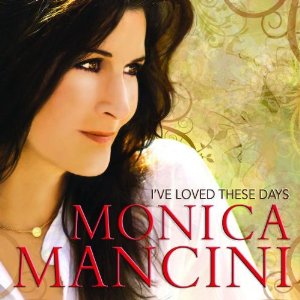
I've Loved These Days: a cherry-picked playlist of rare quality
It isn’t often that I’m tempted to call an album “flawless”. There is usually a track or two that misses the mark, doesn’t connect with the whole, has a slight hint of beating the deadline about it – good enough but not quite in the zone. But Monica Mancini’s I’ve Loved These Days has such a calm sense of completeness about it that I’ve found myself staring at the Bose in astonishment. During the first listen, round about an absorbing reinvention of “How Can I Be Sure” – a number I’ve only ever associated with Dusty Springfield, despite David Cassidy’s best efforts – I actually caught myself thinking, “They really don’t make records like this any more.”
And to be honest, in the best possible way, there is a strong retro feel about the whole thing, not least because Mancini’s phrasing and diction are so effortlessly cool. You don’t miss a single lyric – and how often does that happen these days? Every word is considered, explored and offered up with an honesty that brings to mind female pop singers of the highest calibre: Karen Carpenter or Dionne Warwick at their instinctive best.
The choice of songs also adds to the sense of a time slip. Mancini has cherry-picked a 1960s playlist of rare quality – and in many cases enlisted the help of their originators: Jackson Browne plays guitar and sings backing vocals on “These Days”; Stevie Wonder’s unmistakable harmonica burnishes “Blame it on the Sun”; and Brian Wilson – vocally ageless – features on an intriguingly pared-down “God Only Knows”, giving Mancini the chance to show her mettle against a taste of those legendary Beach Boy harmonies.
These collaborations are testament to Mancini’s musical pedigree, as the daughter of Henry Mancini, the composer behind some of the most iconic film soundtracks of the 20th century. Many of the songwriters she honours here were her father’s peers and clearly exerted a profound influence on her own musical development. Indeed, she calls them her “musical heroes” and offers I’ve Loved These Days as a discovery of what their songs continue to reveal. In that sense, the album makes an interesting comparison with Barb Jungr’s The Men I Love. They both raise a musical toast to Paul Simon, for example: Jungr with “My Little Town” and Mancini with “American Tune”.
Although this album isn’t exclusively American in content – there is a poignant take on the Lennon/McCartney number “I’ll Follow the Sun” – an undercurrent of oblique commentary on the modern emotional landscape of her homeland occasionally ripples to the surface, particularly in the compassion of the Fran Landesman classic “Ballad of the Sad Young Men”, Billy Joel’s “I’ve Loved These Days”, and the flute-dusted beauty of Janice Ian’s “Joy”.
The arrangements are spare, acoustic and almost regal in their simplicity. Mancini clearly didn’t want to simply do an all-purpose album of cover versions. Instead, these are gleaming reinterpretations in which the lyrics take centre stage. Producer Phil Ramone – who had a hand in the original versions of many of these songs – has brought all his skill to the mixing desk, giving Mancini’s fluent, elegant vocal line all the air and space it needs to soar above the tasteful, sympathetic arrangements of Jorge Calandrelli. “I’ve Loved These Days” is a breath of fresh air in a musical climate that is so often hell-bent on over embellishment and extravagance. Perfect.
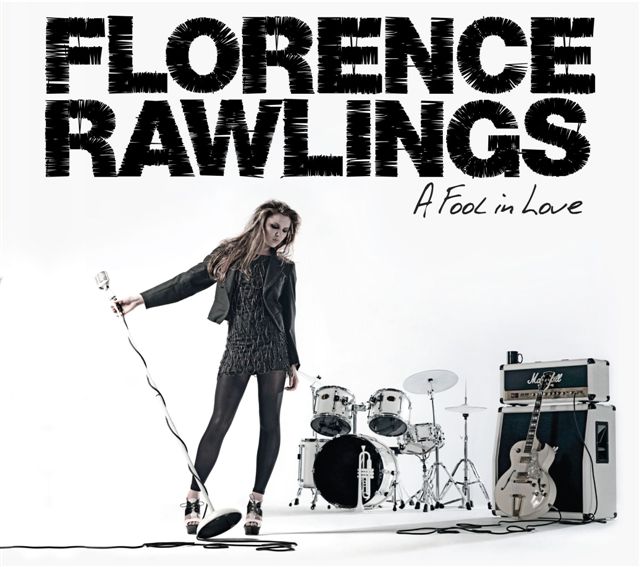
Florence Rawlings sings the studio version of Love Can Be A Battlefield
Florence Rawlings: a lesson in delivering emotion with restraint
An enthusiastic crowd packed Cadogan Hall last night for Mike Batt’s trip through four decades of hit making and film score composition. A Songwriter’s Tale pushed all the right buttons – music from Watership Down (including “Bright Eyes”), Caravan and The Wombles (the wave of nostalgia which rippled through the audience as it recognised the opening oom-pahs of “The Wombling Song” injected another shot of warmth into an already very hot evening), “A Winter’s Tale” and a Simon Bates-narrated segment from his ill-fated musical The Hunting of the Snark.
It all served as a great reminder of Batt’s significant contribution to British pop music. Not just through the novelty value of The Wombles who dominated the 1970s when the children’s television show brought Elizabeth Beresford’s books to life, but also through his skills as a lyricist and composer, forging hits for a host of great singers (and having a few of his own) and writing some truly beautiful scores, some of which were revisited last night in the sumptuous playing of his self-styled Secret Symphony Orchestra. And his encore – “The Closest Thing to Crazy” – was a reminder that the hits keep on coming, together with his shrewd eye for talent. The song was of course a huge success for Katie Melua, who sat discreetly in the gallery, paying tribute to the man who has been such an important influence on her career.
With the best will in the world, Batt is not the greatest singer himself – there always seems to be too much else going on that requires his attention. Last night those particular honours surely went to another of his protégées, Florence Rawlings, who supplied assured and classy backing vocals as Batt worked his way through the hits, but came into her own with a solo number in each set. Her soulful, slightly smoky timbre brought a new resonance to “Caravan Song”, Batt’s epic journey of a ballad, which provided such a memorable moment in Barbara Dickson’s chart career. And in the second, “Love Can Be a Battlefield” – one of those metaphorical explorations of the dubious spoils of profound emotion at which he excels – was a taste of Rawlings’ current album, A Fool in Love.
A Fool in Love: produced by Mike Batt
Rawlings is only 21, yet here were two lessons in how to deliver songs that carry considerable emotional clout with restraint and dramatic conviction, and without resorting to the exaggerated hand-wringing and gurning that defined the finalists on Saturday night’s hunt for Dorothy, BBC1’s Over the Rainbow. Here was a genuine, modest talent, offered simply and without artifice to an audience that as well as Melua, included another fine singer, Mari Wilson: ample evidence that Batt really knows how to pick them.
There must be something in Canada’s water. Diana Krall and Michael Bublé are just the cream of a crop of exceptional jazz singers from across the Atlantic who have led something of a global invasion over the last decade or so.
To be honest, I have always found something Krall’s style a bit laconic and chilly, while respecting her tremendous musicality and technique. And giving in to the temptation to categorise that I criticise so frequently elsewhere in the music industry, I must admit that I turned to Vancouver-born Tammy Weis expecting to hear something in a similar vein.
I was soon disabused. With the exception of a pensive reinvention of Lennon and McCartney’s “Help” – an unlikely candidate for a ballad, but it works wonderfully well here – Where I Need to Be (TW2010) finds Weis pouring her life-tales into a delicate patchwork of self-penned songs. Now living in London, she has produced a taking-stock album in which nostalgia and regret are evenly balanced by optimism and poignant musical snapshots.
Tammy Weis explains why she included “Help” on the album, and sings it
For several tracks, she joins forces with pianist/composer Tom Cawley, and their songs provide the album’s most intimate, emotional high points, book-ending it with two elegant, beautifully accompanied numbers, “I Kept Going” and “Heading Home”. There is texture along the way, most notably the Latin beat of “Everyone But Me”, with Weis’s lyrics a dry Martini short of self-pity, and the shimmering “I’ll Spend Forecer”. She swings too, throwing down the gauntlet with “Don’t Want to Fall in Love Again”, co-written with Terry Britten, an articulate account of teetering on the brink in the best traditions of the great American songbook.
“I love delving into my mind and imagination, which can be scary,” says Weis, suggesting that the writing might not be as easy as her fluid interpretations make it sound. “But the song at the end is my reward for expressing what’s inside.”
Weis’s voice is assured and true, just a hint of hardness cutting through when the lyric demands. She plays deftly with the melody without ever sacrificing clarity – every word is given its due. The band is impeccable – Al Cherry on guitar, Arnie Somogyi on bass and Seb de Krom on drums, with several guest players including steel guitarist B. J. Cole (particularly yearning on “Where Did the Time Go”, an end-of-the-affair ballad), and pianist Julian Joseph (“All Because of You”) whom Weis credits as her prime motivator for making an album of original songs.
Auditions are brutal. Meat racks by another name, as even the greatest Broadway and West End stars will tell you. But at least in the real world, rejection is swift, delivered as if by an exquisitely sharp, stainless steel blade. The cut is clean. Scar tissue minimal, at least in the early years. Healing is quick, hope springs eternal and you’re soon off to the next one. Which is why there is something profoundly unpleasant about the prolonged agony of television-based audition shows. Forget stainless steel. They wield a rusty knife with a jagged edge that will leave gaping wounds in all but the toughest of egos.
Over The Rainbow, currently filling the BBC’s early evening prime time slot at the weekend, is the cruellest so far. For non-UK readers, this format has been used to find ‘stars’ to fill plum roles in various Andrew Lloyd Webber West End productions – to date, Maria in The Sound of Music, Joseph, and Nancy in Oliver! Now it’s the turn of The Wizard of Oz. Every week, a group of would-be Dorothys loses a member and we’re now down to the last eight. Which makes it sound more like an endurance sport, and that is basically what Over The Rainbow is.
Lloyd Webber is obviously a kind-hearted man, and his reluctance to inflict a killer criticism always makes his presence seem a tad disingenuous. The real grit is provided by the judging panel – one-time Mrs Lovett and current Mother Superior in Sister Act, Sheila Hancock (who has been given a Cruella de Ville look for the occasion), West End stalwart and Eastenders actor John Partridge, and former voice of an angel Charlotte Church – who give the participants nuggets of tough love after each performance. Hancock and Partridge at least have the benefit of years of stage experience. Church is less convincing as a tutor-cum-judge. She clearly rates her own diva credentials, seizing the chance to out-belt all the contestants in a group performance of the Streisand/Summer disco anthem “Enough is Enough (No More Tears)”. But her youthful success with operatic arias has left her with zero understanding of theatrical performance.
Between them, however, they epitomise the dilemma faced by any musical producer today. Not a single one of this week-end’s performances was in any way convincing from a theatrical point of view. It’s a familiar complaint from composers and directors that too many young performers bring a pop sensibility to musical numbers. They belt and they emote, they strain and they sob, but the songs – deeply embedded in the characters they have been written to represent – require a more complicated treatment, a more flexible, shaded voice, than the full-on style propagated by today’s pop stars. And here is ample justification for those criticisms.
Week by week on Over The Rainbow, these young women are being coached to sell pop songs as two-minute dramas – principally for the quick-fix demands of television. And with very few exceptions, the challenge is beyond them. They are told to focus on the emotion and the story – often a ridiculous demand if it’s a song of experience. Then they are hauled over the coals for failing to deliver truth and credibility. Witness this week-end’s “Cry Me A River” from Danielle Hope, delivered at maximum velocity to cheers from the audience, with absolutely zero concept of the many subtle layers of irony in Arthur Hamilton’s biting, classic torch song.
Missing the point: Cry Me A River on Over The Rainbow
The two who come bottom of the television vote are then exposed to the further cruelty of a sing-off for Lloyd-Webber – the knife being given an extra twist for the one told that she is the “audience’s least favourite”. Finally, when the composer has delivered his verdict and saved one of them for next week’s repeat ritual, the loser must participate in a ghastly sob-fest rendition of “Over the Rainbow”, bravely smiling through her tears and thanking everyone for taking her on a marvellous journey… to where, it remains to be seen.
My advice to all of them would be to sit down with a DVD of Sunday night’s South Bank Show Revisited (ITV), in which Melvyn Bragg returned to New York to interview Stephen Sondheim on the eve of his 80th birthday. The conversation was heavily weighted towards Sweeney Todd, the subject of a 1980 programme which provided plenty of archive footage – it was great to glimpse Hancock’s Mrs Lovett in the original London production at Drury Lane. There were also brief segments from the New York revival of A Little Night Music, revealing why Catherine Zeta Jones’s Desirée so divided the critics. Her “Send in the Clowns” is an acquired taste.
Catherine Zeta Jones sings “Send in the Clowns” and divides the critics
As an exploration of his canon, it hardly scratched the surface. But to hear the clarity and modesty with which Sondheim answered Bragg’s questions was a joy. And in just a couple of sentences, he encapsulated the difference between a technically proficient singer and a dramatically gifted singer interpreting his songs. This was a far more valuable observation on the art and skill of musical performance than anything uttered during those interminable hours of Over The Rainbow.
Helen Morgan: a strong legacy for today's torch singers
It’s been a fine week on BBC4 for lovers of old- and new-style torch singing. The channel’s celebration of the Great American Songbook was stuffed with profiles, documentaries and performances rich in the genre, from a biography of Ella Fitzgerald to a welcome repeat of Walk on By, a series on the history of popular song.
One of the highlights was a BBC4 Sessions concert featuring Gwyneth Herbert giving an exemplary take on the Ruth Etting classic, “Love Me or Leave Me”, Melody Gardot’s exquisitely underplayed “Over the Rainbow”, and a great “September in the Rain” from Sharleen Spiteri – all demonstrating that the torch song has never been in better hands.
But most poignant of all was the excellent Clint Eastwood-produced exploration of the life of lyricist Johnny Mercer, The Dream’s on Me. One hundred minutes sped past in a succession of comments and performance snippets – Julie Andrews, Cleo Laine, Margaret Whiting, Maude Maggart (singing a wonderfully touching “Skylark”, accompanied by Jamie Cullum.)
During one of the numerous interview clips of Mercer talking about his craft he mentioned, in passing, Helen Morgan as an example of somebody you would write a particular type of song for. It struck a real chord. Morgan was briefly a huge Broadway star and created the role of Julie in Jerome Kern’s Showboat. But even by the time Mercer referred to her in the 1970s, she had been dead for more than 30 years, and today her name is scarcely heard.
Her style of singing in a light, throbbing soprano, is light years from modern popular taste. Yet Morgan was one of the first of the great torch singers. And a few weeks ago, I had no hesitation in drawing a comparison between Jessie Buckley’s intense, touching way with torch songs in her performance at Pizza on the Park, and Morgan’s way of luring the listener into her lamentations of love gone wrong.
When Helen Morgan’s picture flashed across the television screen, it reminded me of what sparked my interest in the torch idiom over two decades ago. So after focusing on some of the young singers who have piqued my curiosity in recent weeks, here’s a trip back to the roots of the genre.
Helen Morgan was a tragic figure – not in a hell-raising Amy Winehouse way, although she was equally profligate with her talent. When things got too troubled, she’d quietly have another brandy, eventually fulfilling a destiny that was pretty much prescribed in her first starring role as the doomed Julie. But it says much for her legacy that every now and then, a modern performance can still evoke her name and a nod back down the years to a great, if shooting, star.
Helen Morgan sings “Bill”
This is an article I wrote about her in the late 1980s, which hasn’t seen the light of day until now. It’s a bit stodgy and essay-ish in places – and naïve in its approach – but I’m posting it here because in many ways it sums up the elements of torch-singing that I continue to find so compelling – and because I can illustrate it with video, something that would have seemed impossible back then!
Why Was She Born? – The Legacy of Helen Morgan (1988)
Morgan's voice had a unique, pleading quality
Since its plaintive genesis in the early 1920s, the torch song has proved a consistent link between a galaxy of female singers who in other respects could hardly differ more greatly. As an idiom, it provides a historic, if unlikely bridge from Fanny Brice to Barbra Streisand, from Judy Garland to Kiri te Kanawa, from Ruth Etting to Shirley Bassey and from Jane Froman to Dusty Springfield. None of these ladies has ever limited themselves to the genre of the torch song. But each at one time or another has sung from the point of view of the woman on the losing side in love.
If Fanny Brice lit the first torch with her rendering of the classic “My Man”, (“Mon Homme”), consider how Billie Holiday interpreted the same song as a blues number and made it in turn her own. And if Edith Piaf ran the gamut of emotions, she certainly included in her repertoire chansons of a very torchy sentiment. All of these singers at one time or another have reflected through the torch song the suffering of a woman at the hands of a man who does nothing but let her down, but whom she can’t help loving.
Just as the idiom has become more lush and plangent, more downright dramatic, so it has tended to obscure its quieter and more tremulous origins. Now that Dame Kiri has extended her range to include classic torch by George Gershwin, and with a revival of interest in Dusty Springfield’s fulsome entreaty, “You Don’t Have to Say You Love Me”, not to mention the interest that never went away in Garland bemoaning “The Man That Got Away”, it is high time to re-evaluate the contribution of the women who started it all with such sentiments as “Why Was I Born?”
With the release of a full-length, universally well-received recording of Showboat, it might be appropriate to focus on the woman who made its two classic torch songs, “Bill” and “Can’t Help Lovin’ Dat Man of Mine” her own. Her name was Helen Morgan and she might be even less remembered here had not Robyn Archer selected her as an example for her show A Star is Torn.
Helen Morgan made these two songs her own by stamping the torch style with her own delicate lilting soprano. At least two recordings of her renderings survive and are reasonably available. The later pressings can be heard on what amounts to the first cast recording of Showboat which is actually a record of the show’s 1932 revival.
They are remarkable not only for their clarity but for the freshness and immediacy of Morgan’s performances at a distance of over half a century. Her voice has little in common with modern popular tastes but through its unique pleading quality and her astute use of a natural huskiness on key lyrics, it is quite heart-rending in its subtlety.
“I See Two Lovers” – a quintessential Helen Morgan performance
Anybody seeking for an introduction to her lamentably brief recording career should start right here. The extraordinary effect she achieved owes much to her own talent and the light orchestra or band backing favoured by artistes of the day, and little to the dramatic and histrionic lamentations of her future sisters in song. Perhaps the closest we can get these days is to listen to Julia McKenzie’s interpretation of Sondheim’s “Losing My Mind” in Follies. This is at once a pastiche and wholly authentic.
Song of Dreamer: great close-ups of a troubled torch singer
Although tracks by Morgan turn up from time to time on compilation albums (FLAPPERS, VAMPS AND SWEET YOUNG THINGS, Living Era 1982, AJA 5015), it is largely thanks to the Take Two label that a sizeable volume of her work has been gathered together. They have compiled a generous selection for the album HELEN MORGAN-Legacy of a Torch Singer, (1986, TT220) although it is rather biased in favour of her earlier material. Much of this is of interest more for its definitive period flavour than as classic torch singing.
It is really in the sessions recorded in the thirties that the depth of Morgan’s voice had matured considerably from the tremulous high notes which mark songs such as “Just Like a Butterfly”. But there are some real gems on this album, most especially the hauntingly regretful “I See Two Lovers”, which also turns up on the album FALLING IN LOVE AGAIN – Classic Female Vocalists of the ‘30s (Conifer 1987, TQ 155). This recording demonstrates to perfection the wistful catch in Morgan’s voice, a sadness which she was able to convey through restraint rather than high drama.
For a more general introduction, Take Two dips into the careers of four singers including Helen Morgan on its album THE ORIGINAL TORCH SINGERS 91980 TT207). The others are Fanny Brice, Libby Holman and Ruth Etting. The latter was probably the most prolific female recording artist of the thirties and numerous collections of her material are widely available. She seems to have endured the test of time more readily than Helen Morgan, while Fanny Brice is better know as Funny Girl these days.
Helen Morgan was a performance chanteuse who, apart from her major stage roles, sang in nightclubs and starred in the Ziegfeld Follies. She might have been a great film actress but after an auspicious debut in Applause the right parts never came along. She might have been an even greater recording artist but performing was her forte and she did other things only as time permitted. Nevertheless diligent searching can result in the discovery of rare pressings, including previously unreleased radio broadcasts which are increasingly becoming a source for the nostalgia buff.
Perhaps the greatest torch song of all is Gershwin’s “The Man I Love”. Yet Morgan never recorded the song commercially. It would be nice to think that an unpublished pressing or wireless performance lurks in a vault somewhere awaiting discovery. In its original working, as sung by Morgan, it would undoubtedly be a far cry from the lavish interpretations of more recent times.
As it is, we can still appreciate the difference in concept between then and now by listening to Helen Morgan’s soufflé-light rendering of “Why Was I Born?” which in accordance with more modern tastes is usually belted out over a rich orchestral backing. Suddenly, to hear how it was originally performed is to hear how it should be performed. The surprise is genuinely moving.
And Helen Morgan perhaps more than any other singer of her generation comes closest to crossing the line between torch and blues. Not that her voice bore any resemblance to Bessie Smith or Billie Holiday. But listen to her interpretation of “Frankie and Johnny” and hear how the divide between them is not so great after all.
There was clearly a brief revival of interest in Helen Morgan’s career after her sad life was given typical Hollywood treatment in a 1954 biopic (The Helen Morgan Story, with Ann Blyth’s singing voice dubbed by Gogi Grant, herself a great torch singer of the 1950s). Collections of her rarer recordings including standards like “Body and Soul” and “More Than You Know” were issued, usually pairing her off with Fanny Brice. There is also a 1969 album issued by RCA Victor in its vintage series which boasts a very discering selection of her material.
These recordings are obviously harder to come by but well worth seeking out. In many ways the quality of these pre-digital mastering issues is clearer than more recent efforts, mainly because the sound is completely true to the original.
Helen Morgan in characteristic pose atop a grand piano
Despite the quality of her more obscure material, the greatest testimony to her rare talent as a torch singer is her legacy of the show-stopping standards which enraptured her audience wherever she was performing, usually characteristically perched atop a grand piano. That such a quality can still capture the imagination after so many years is surely a reason for restoring Helen Morgan to her rightful place in the gallery of all-time-great female performers.
Love Me or Leave Me – a feature I wrote for Gay Times on the classic torch singers, from December 1991 read
Handing on the Torch – a piece for The Wire magazine, tracing torch singing from its roots to modern smart pop read
This piece draws on several interviews I’ve had during the last few years with Stephen Sondheim and many of the women (and Michael Ball!) who have sung his roles and songs so brilliantly on both sides of the Atlantic. It’s about just one aspect of his work, but I hope it’s a fitting tribute to a man who has contributed so much to musical theatre – indeed, music itself – throughout the last half-century, as he celebrates a landmark birthday.
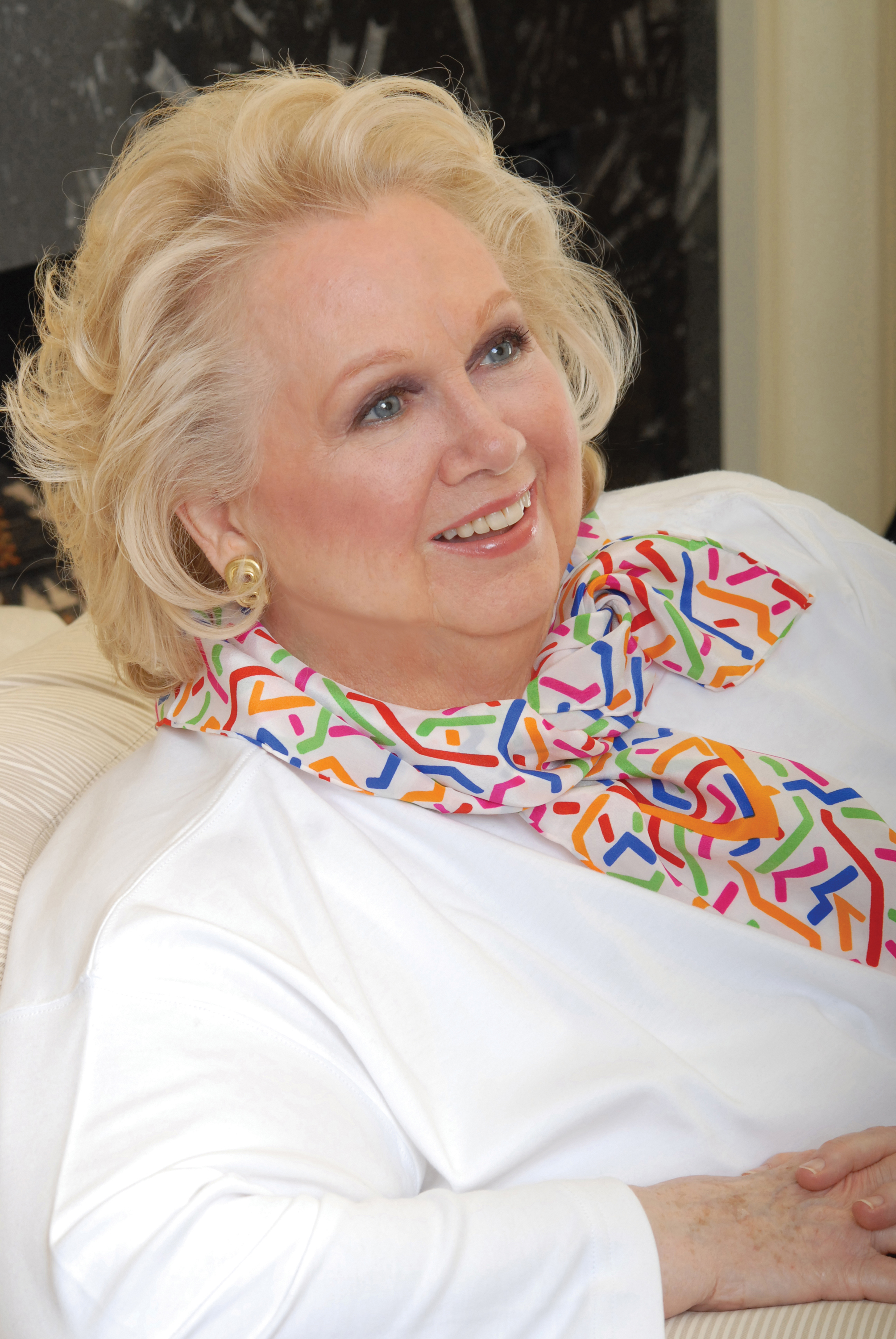
Barbara Cook: one of Sondheim's leading ladies
To say that Stephen Sondheim writes exceptionally well for female singers and actors is to deal in a partial truth. The inference is that his male characters are of secondary importance. And of course nobody playing Sweeney Todd, singing in the all-male ensemble of the much-neglected Pacific Overtures, starring as Company’s distressed Bobby or the equally troubled Franklin Shepard in Merrily We Roll Along, or revelling in Giorgio’s glorious arias in Passion, has any need – or right – to feel short-changed. But the fact remains that his work has had a profound effect on the careers of many of the women who have been closely associated with his roles during the last 50 years.
Where would people like Julia McKenzie, Bernadette Peters and Maria Friedman – who cites him as the reason for her career choice, having been enraptured by the 1980 London production of Sweeney Todd at Drury Lane – be if their professional paths hadn’t encountered Sondheim’s trajectory at critical moments? Hugely successful, no doubt. Such wide-ranging talent will always out. But certainly missing the depth, the experience and the kudos of an indelible association with his work. Each in her way can testify to the extraordinary sensitivity and accuracy of his writing for the female performer, whether strictly in character or taking a particular song away from its theatrical context and turning it into a standalone, solitary gem that reveals yet more meaning beneath the lyrics and the intricate melodies.
And there is no getting away from the fact that in so many of his shows, the female characters often command the stage at critical moments. Follies, for all its multiple themes of nostalgia, the uneasy relationship between past and present, and coming to terms with the impact of time on youthful dreams, is also a celebration of the show girl in all her glory. Ben and Buddy have their show-stopping turns but much of the show’s bittersweet joy comes from the brilliant pastiche numbers and anthems that allow the women to relive their moments in the vaudeville spotlight: Sally’s torch-songs (“In Buddy’s Eyes” and “Losing My Mind”), Phyllis’s acerbic, teasing burlesque number (“Ah, But Underneath,” which replaced the original and more complex “The Story of Lucy and Jessie” when the show finally reached London in 1987), Hattie’s poignant take on the rather grim realities of the hoofer’s life (“Broadway Baby”) and of course Carlotta’s show-business survival anthem, “I’m Still Here”.
Judi Dench: wracked masterpiece
Desirée Armfeldt is always the real focus of A Little Night Music while the relationship dramas unravel around her in three-time, culminating in the magnificent “Send in the Clowns” – Sondheim’s most popular and most abused hit – which marks her lowest ebb and the tragedy of bad timing. It’s become a calling card for every star who has played the role, from Glynis Johns and Jean Simmonds to Judi Dench. Sondheim told Dench, “It’s yours now,” when her wracked masterpiece of an interpretation was one of the highlights of the National Theatre’s 1995 revival. But Trevor Nunn’s recent production notably returned Desirée to young middle age with marvellous results. Hannah Waddingham gave a magnificently constrained performance in London, tears only falling in the final stanza to indicate the extent of her desolation. But here, too, is evidence of Sondheim’s ability to capture even a minor character in the moment: “The Miller’s Son”, sung by Petra the maid, is a perfect evocation of a young woman who knows exactly what her destiny is, and that however underwhelming the ultimate prospect of drooping bosoms and a matronly figure, that can wait a while. There are plenty of rosebuds to be gathered in the here and now.
In Company, bilious, vodka-hardened Joanne has one of the standout numbers in “The Ladies Who Lunch”, a lascerating attack on herself and her own kind. Others have sung it to great effect but for many people the original, Elaine Stritch, still has copyright on the role. Just check out the D. A. Pennebaker documentary of the making of the 1970 cast album, as she wrestles with the song to the point of exhaustion, missing her mark, extemporising to Sondheim’s obvious dismay. Take after take slip by until you can almost taste the acrid, used-up atmosphere of the studio. Then she comes in the next morning and nails it with the first take of the day.
Elaine Stritch: has earned her copyright
“‘The Ladies Who Lunch’ is one of the toughest three-act plays I’ve ever done, you know what I mean?” she told me in a 2008 interview. She calls Sondheim a “romantic realist”. And she’s still singing the song in her one-woman show 40 years later, better than ever.
“In this song he’s sending up a class of dame, of which I am also a member – or have been in my time. I hasten to add, I don’t Martini-lunch any more. So that’s a big kick that I get out of it. When I sing the song, I am part of that whole bunch and I know about them. I am absolutely staggered, dazzled by his ability, his talent. Ability is what I really mean. It’s so believable and so unbelievable at the same time. Everything he says in his lyrics rings a bell with me.”
Bernadette Peters: “Not a Day Goes By” is an emotional peak
For Bernadette Peters (Dot/Marie in Sunday in the Park With George and The Witch in Into the Woods), Maria Friedman (Fosca in Passion and Dot/Marie), Julia McKenzie (The Witch, Sally and Mrs Lovett in Sweeney Todd), the value of gift of a Sondheim role has been proved time and again. Each can, in many ways, define her career by the importance of his work in allowing them to demonstrate not only their talents as singers but as dramatic actors and comedians. And they have also proved adept at developing his songs away from their musical theatre roots. Peters’ signature tune, “Not a Day Goes By” (from Merrily We Roll Along) is invariably an emotional peak in her concerts, for example. Like Friedman, Barbara Cook and many others, her repertoire is enriched by the Sondheim canon.
Patti LuPone has taken Bobby’s last-act song of affirmation, “Being Alive” from Company, and turned it into a virtuoso powerhouse performance. Again, this is possible because of the truth in a lyric that finally resolves the character’s anguish at the end of the show. Given the wealth of female songs in the canon, this might smack of poaching. Michael Ball says, “I always have an argument with him [Sondheim]. I tell him he writes the most amazing shows – difficult bloody things, most of them – and then he always gives the eleventh hour number to the women! That’s why I insisted on doing “Broadway Baby”. But take these songs out of the shows and they’re universal.”
Patti LuPone: virtuoso powerhouse performance
Sondheim’s double-whammy skills as a lyricist and composer lie at the heart of this quality in his work. A few years back in an interview for Gramophone magazine, he told me that a song is written to reflect a character’s state of mind at that particular moment in the play. If a singer can find something beyond that, which gives the song an external life outside the play, all well and good – but that will always be incidental to the song’s primary meaning and intention. “But to have the songs interpreted in different ways helps to keep them alive,” he said.
Julia McKenzie: “He’s a dramatist and a poet. And to the performer, the rewards are tremendous because every song is like a one-act play or at least, a soliloquy. “Losing My Mind” is a soliloquy, even though in Sally’s mind it is the epitome of a torch song. You can see precisely how her day progresses.”
Maria Friedman: “For me, everything he writes about comes back to a very basic thing: love – the desperate need of a human being to love and be loved. As an actor and a singer – I can’t distinguish which one leads the other – both co-exist perfectly when you’re doing one of his pieces because the demands on you are always truthful, honest. If you can get to the core of it, you just have to serve it, not do anything, and it will do the rest for you. But that means quite often you’ve got to be thinking two or three things at once. It’s layered, you’ll be saying “I don’t love you” at the same time as thinking “I wish I could love you”, “I did love you,” all together. On the face of it, it could be quite cold but underneath it’s layered with warmth and hope and yearning. Plus he’s the most extraordinary lyricist, the rhymes are dazzling, so you’ll be working on that at the same time, making sure that they ring and you don’t miss the internal rhymes. And he writes as we speak, so you have to understand how that woman would have talked and the music falls into place.”
Patti LuPone: His songs are very dramatic pieces in their own right, so I don’t have to create another story to sing them out of context. You always want the piece to be universal if it’s going to live and his work is really brilliant in that universal way: there’s that whole concept of theatre, emotion, love. That’s what makes something like “Being Alive” [Merrily We Roll Along] or “Loving You” [Passion] so perfect.
Elaine Stritch: “Everything he says in his lyrics rings a bell with me. He knows what’s right and what’s wrong, what’s fake and what’s real. And like Shakespeare, every time you do good work, something new comes out of it. The quality of the material absolutely matters. I love his humour. It’s real humour – real: they call that wit!”
Barbara Cook: I’d known Stephen socially, through the 1950s and 1960s, but didn’t actually do much of his work until Follies. I’d occasionally put a song in my act but I always felt that unless I did a whole Sondheim section, they didn’t really abut against the others. I thought of them as ‘art songs’. But when I did Follies [in concert, 1985], I fell deeply in love with his work, and a lot of that was to do with the quality of his lyrics, which are so universal and moving. They are witty and clever, of course, but most of all very emotional. They almost always say something that I want to say. Take “No More” [Into the Woods], a song I’ve been doing a lot in the last year or so. It seems to have a lot more meaning with the world in this difficult state:
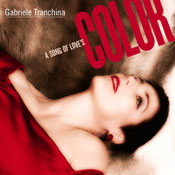
What a queue-jumper Gabriele Tranchina turns out to be. A pile of CDs sits accusingly on my disk awaiting critical attention. I’d been sampling and tasting here and there, planning an orderly assault. But on Monday, Tranchina’s new album – A Song of Love’s Color (Jazzheads JH1176) – landed fresh from New York, inveigled its way onto my player and has been sitting there ever since, spinning an insistent spell, and demanding listen after listen.
Think Lambert, Hendricks and Ross meet Pink Martini, with a dash of Astrid Gilberto, a streak of Ute Lemper, a hint of Mina and a sense of Anita Baker, and you can begin – just about – to anticipate the startling effect of Tranchina’s voice as she juggles rhythms, styles and languages to create a constantly shifting mood. One minute you’re chilling to late night jazz, the next you’re swept up in a Jobim samba, before being caught in the headlights of a hypnotic, almost Weill-ish lieder.
All of which makes her a bit of a marketer’s nightmare – and precisely the kind of performer that Art of the Torch Singer loves. The cocktail of jazz, world music, vocalese and chant might well be overwhelming if it wasn’t for the relaxed consistency of the band, led by Tranchina’s husband Joe Vincent – who wrote several of the tracks and is responsible for the cool, spare arrangements. Tranchina clearly thrives on the freedom this gives her to swing between techniques and tones.
The album kicks off with a Fugain/Delanoë chanson, “Chante Comme Si Tu Devais Mourir Demain”, which pretty much describes Tranchina’s mission. The title track follows, revealing her dexterity with a melody and some alluring phrasing. Later, a traditional Hindu prayer provides the basis for a swirling, syncopated chant that also includes a brief rap, “Asato Maa (Sat Chit Ananda)”, and a Spanish lullaby – “Duérmete Niño Bonito” – has an authentic, shuffling last-dance-of-the-night atmosphere. “Siehst du Mich” – a poem by Else Lasker-Schüler, set to music by Joe Vincent – concludes the album on a beautifully sombre, brooding note.
A Song of Love’s Color, mixed by Joe Vincent and Randy Klein, and mastered by Gene Paul, was recorded in New York in the summer of 2008. Its release is long overdue. Tranchina herself – German-born and New York-raised – remains something of an enigma, despite the stylish art work on the sleeve. A trawl around Youtube and MySpace yields nothing in the way of clips.
Her people should do something about that fast, because once you’ve heard this you’ll want to know more about an artist who clearly has something different to offer the homogenised world of modern popular music.
Someone who sings about love and loss, and the pain of experience. The power of torch-singing lies in its effect on the listener. For me, it transcends musical genres. These pages explore the dazzling, and sometimes dark, world of the female singer through history and in the present. Concert and CD reviews, interviews and articles combine to create a comprehensive view of this vital strand of popular culture. Why not share your views and experiences of your favourite artists, suggest performers you would like to see featured - and let me know what makes a torch singer for you?




 The Art of the Torch Singer
What do you think?