Naj’s Song: never mind the shaky camera work, just listen to Anna MacDonald and the Portobello Orchestra
Paper Flowers: a nightingale sings in George Square?
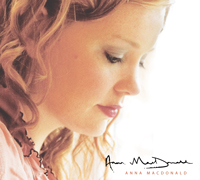
If a nightingale ever sings in Glasgow’s George Square, I’ll bet it sounds just like Anna MacDonald. Her voice has the same combination of urgency, brilliance and beauty that creeps into your sleep in the early hours and makes you wonder if you’re still dreaming.
On the epic “Matty Groves”, one of the standout tracks on her second EP Paper Flowers, it soars and shimmers as if ricocheting off the majestic buildings and echoes into the distant night like a siren call to another world. This traditional folk song is a sad and violent tale that builds on a simple melodic hook. In MacDonald’s feverish version, she seems to meld the bitter rivalry of the street fight with doomed love and murder in a mixture of urban imagery and pastoral folklore.
MacDonald is a gifted songwriter, too. Her ballads – the title track, the atmospheric “Glasgow Rain” and “Naj’s Song” – complement another traditional number, “Banks of Inverurie”, as sweet, melancholy paeans to hearts broken against the gritty background of a city that is clearly a major influence on her work. The texture is an arresting weave of Scottish and Gaelic traditions, with a dash of English folk. A full album would be welcome, and soon.
These are heady days for the female Scottish troubadour. That other notable MacDonald, Amy, already on to her third album, has helped to open a door into mainstream pop music for what seems like an army of young women, each with their own blend of traditional and modern musical tastes. Where Amy favours fierce, guitar-driven narratives in the manner of her breakthrough hit “This is the Life”, Anna is deceptively gentle and contemplative, that angelic voice telling quietly bleak truths about the realities of waning love and loneliness. There is plenty of room for them both.
So Far Away: not Yeats but Carole King, from Christine Tobin’s previous album Tapestry Unravelled
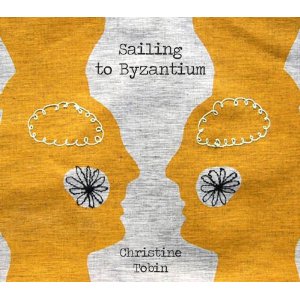
Sailing to Byzantium: Christine Tobin rescues Yeats from memories of academic overload
The rich source material for Christine Tobin’s latest album positively encourages metaphor, so here goes. Sailing to Byzantium is a vibrant, irresistible lake. There’s nothing to be gained from standing suspiciously on its shore. Take a deep breath, plunge in, and let the water draw you down into a musical world of burnished colours, intriguing shades, spine-chilling dangers and soothing sub-aquatic glades.
Tobin’s audacity in setting 13 of W. B. Yeats’s poems to fluid and spacious jazz arrangements pays off on every level. The poet’s characteristic themes of memory, time and place, unattainable love, the artist’s lot, and mythology shine through, heightened but never unnecessarily embellished by some brilliant ensemble playing.
Tobin isn’t the first composer to set Yeats to music. Herbert Hughes, for example, wrote a rollicking tune for “Down by the Sally Gardens”, most recently recorded by Clare Teal for her album, Hey Ho. But Sailing to Byzantium is on a much more ambitious scale. And how Tobin pulls it off.
It would be invidious to single out any band member; plaudits to Liam Noble (piano), Phil Robson (guitar), Gareth Lockrane (flute), Kate Shortt (cello) and Dave Whitford (double bass). With their support, Tobin’s warm timbre wraps itself around the shimmering imagery of Yeats’s verse, taking it into a new and very different space while staying true to the original work.
Like Tobin, I studied Yeats at school, and was so absorbed by the texture and subjects of his poetry that I later seized the opportunity to immerse myself in it at university. Analytical overload was inevitable and it’s been many years since I revisited the glories of poems such as “Long-legged Fly” and “The Wild Swans at Coole”. Tobin’s inspired handling of the material has sent me scurrying to the bookshelf and reaching out for a familiar, yellowing volume as if it was an old friend.
From the sparkling Joni Mitchell-ish guitar intro to the opening track, “When You are Old” to the elegiac tones of actor Gabriel Byrne (who taught at Tobin at school in Dublin) reading “The White Birds” to the backdrop of rising waves and Tobin’s wordless, keening chant, Sailing to Byzantium commands attention. The production is fresh and crisp.
There is turbulent beauty, not least in the cacophonous climax to “The Second Coming”. Characters spring to life, greatly assisted by the sparkling arrangements. “The Song of Wondering Aengus” and “The Fisherman” – that paean to a simple, idealised reader – bristle with energy. Some of the songs are haunted and haunting in equal measure: ghosts gather and whisper as “In Memory of Eva Gore-Booth and Constance Markievicz” conjures a room populated by lost friends, to exquisitely poignant effect, building to the sinister revelation of knowledge that’s come too late. An artistic triumph, brimming with integrity.
Languishing Love: Macy Chen’s JazAsia quest pays dividends
After 75 Years: Macy Chen’s contribution to the East/West cultural exchange
Macy Chen is living proof that jazz is the most international of musical languages. The Taiwan-born singer soon established herself on the pop scene in her home country after graduating from Soochow University. But having realised that her heart was really in jazz, she headed west to New York in search of new influences that would help her to build on this passion.
A decade later, Chen has released a concept album – After 75 Years – that fuses Chinese and Western jazz traditions in a style she has dubbed ‘jazAsia’. It’s a canny modern take on a phenomenon that actually has its roots in the 1930s. As Chen reveals through a selection of songs from old Shanghai, jazz was a highly popular style of music in the more cosmopolitan cities of pre-Communist China; something that possibly escaped her grandfather, a saxophonist who also left Taiwan to pursue a career as a musician but stayed firmly in the Eastern hemisphere, in Japan.
The album is packaged as an imagined correspondence bridging the 75-year gap between these two wondering spirits (they never knew each other), with a sheaf of letters and photographs for the listener to browse while Chen’s mellow and expressive voice works a rather special spell.
The Shanghai numbers are fascinating in themselves, telling exotic tales of “Unrequited Love” and “The Wandering Mistress” in mandarin. Rather than being an obstacle to the non-speaker, the language becomes an intrinsic element of the music as Chen’s voice blends like an instrument with the rest of her nimble, sophisticated band.
She has also written mandarin lyrics for a handful of American jazz standards – “My Only Love” and a mash-up of “Harlem Fantasia” and the Duke Ellington classic “Caravan” – which add an exciting new texture to these familiar tunes. She is at her most effective in languid, melancholy musical territory: “Reminisce” and “Suzhou Nocturne” both showcase a range that swoops effortlessly across the soprano/alto divide with a blend of sweet, instinctive jazz inflections.
Chen rounds things off with a pair of self-penned songs, “Fly Away” and “Good Night, My Love”, that experiment with tempo and elegant melodic lines, suggesting that her unusual quest is set to pay further dividends as her career develops. JazAsia is full of idiosyncratic possibilities.
The Ballad of Andy Jacobs: Kathryn Roberts sings a sad story with a soaring voice
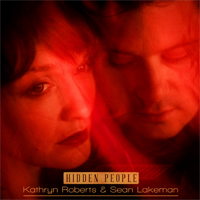
Hidden People: a skilfully woven sonic tapestry
Three songs at the core of Hidden People, the eagerly awaited new album from British folk dynasts Kathryn Roberts and Sean Lakeman, epitomise its sharp brilliance. It isn’t that individually, the surrounding numbers are lesser pieces. It is simply that the gathering sense of an extraordinary listening experience reaches its peak through a trio of story songs that in different ways, showcase the musicianship of Roberts and Lakeman, the lush and plangent arrangements that burnish the album without blurring the clarity of the narrative lyrics, and the range of influences that make it impossible to categorise Hidden People merely as a folk record.
Each of these songs – “Hang the Rowan”, with its witch-like promise of revenge woven into a compelling hook of a melody, the aching beauty of “The Ballad of Andy Jacobs”, with Roberts’ glorious voice rendering the disintegration of a soldier’s marriage almost unbearably poignant, and the mystic fatalism of “The White Hind”, bathed in shimmering production values – in some way exemplifies the record’s potent mixture of the poetic and the prosaic, of timeless tales and modern twists, of violence and passion.
The clues are all there in the first songs on the album, which take us from a bleak Nordic landscape (“Huldra”), announced a cappella before Swedish sisters Baskery chime in, to America (“Oxford, NY”) before bringing us home for a more traditional three-time folk ballad about an ill-starred love affair sparked at the village fair (“Money or Jewels”). Throughout, soaring vocals and tight harmonies, graced with contributions from the likes of Cara Dillon, Sean’s brother Seth, Dave Burland, and Caroline Herring, add ear-catching nuances so that Hidden People yields new treasure with each repeated listening.
Things take a bluegrass turn later, with the story of “Lusty Smith”, and the skiffle beat that announces “Standing at the Window” gives a hint of the influence of the five years that Roberts and Lakeman spent touring the States with Equation before they settled back in Devon to raise their family.
So this, in some respects, is a ‘comeback’ album for the husband-and-wife duo – and particularly for Roberts, who has been enjoying the distractions of motherhood, which might make the noir-ish atmosphere of much of the lyrical content somewhat surprising. She admits to a preference for musical edginess to balance the comfort of her home life, but even after plenty of sturm und drang, there is still space here for the contemplative peace of “The Wisdom of Standing Still”.
Lakeman has spent the time buffing up his considerable talents as a producer, and the layered sounds of Hidden People – so full of unexpected moments (a bouzouki and a mandolin jostle for attention with guitars, Roberts’ keyboards and woodwind) – amount to a sonic tapestry so skilfully woven that it never threatens to overwhelm.
Reviewers need to keep the records moving on, but this one is going to be hard to shift from my MP3 player. As a set of individual, beautifully-crafted songs that amount to a highly satisfying, holistic piece of work, Hidden People is up there with Gretchen Peters’ Hello Cruel World as a contender for my Album of the Year.
Wild is the Wind: Manly’s sublime phrasing bathes you in warmth
The Lies of Handsome Men: world-weary, self-knowing and great singing
If you get the chance to catch Gill Manly singing live, seize it. Even in a London jazz scene crammed with secret treasures, her sublime phrasing, a voice which bathes you in warmth even when the lyrics tell a bitter tale, and her connoisseur’s ear for songs that chime with the musicality which she wears with grace and insouciance, set her apart as a singular talent. The world would be a better place if she were heard more widely – and if there’s any justice, her new album, The Lies of Handsome Men, will bring her the attention she deserves as one of Britain’s finest female singers of any genre.
It’s a carefully selected set of songs that she likens to jewels from her personal treasure trove, put by until the time was right to put her interpretations on the record. Generous, too, at 15 tracks.
Many better-known singers would be hard-pressed to sustain unbroken interest through such an eclectic mix of standards and pop songs. However, Manly has a gift for threading lyrical themes and ideas together with a vocal line that ranges from girlish delight (shades of Blossom Dearie) to arch-vamp (recalling Julie Wilson) but is at its most telling with world-weary, self-knowing material that hints at the emotional texture of a woman’s life, lived fully. Buddy Greco guests on “Second Time Around”, but it’s a measure of the album’s quality that his stardust is a pleasantly incidental contribution rather than the high point of the record.
Despite the occasional tone-lightening favourite (“Peel Me A Grape” and “Witchcraft”), The Lies of Handsome Men sets a contemplative mood from the moment the title track edges into earshot. In that respect, it reminded me very much of a great but little-remembered Judy Holliday album, Trouble is a Man: serious, complex, sophisticated and intelligent readings of heart-breaking songs.
“The Lies of Handsome Men” sets the bar high, but with the glories of the Dudley Moore/Fran Landesman at-least-we-had-a-go classic “Before Love Went out of Style”, the John Scott/Caryl Brahms soliloquy “Woman Talk” and the quietly devastating Rod McKuen testament to survival, “A Single Woman” to follow, the quality never dips. “How Insensitive” is a case study in narrative interpretation, and “Wild is the Wind” a glorious tribute to one of Manly’s main influences, Nina Simone.
Manly’s pianist, Simon Wallace, who also produced the album, must share the credit for this. To make “Mad World” rub shoulders with the damped-down histrionics of “Windmills of Your Mind”, the cynicism of “Charade” and the frustrated longing of a little-heard Goffin/King number, “Go Away Little Boy”, without a single jarring moment is a considerable achievement.
This is a cohesive and coherent piece of work full of endless lessons for any receptive singer – and indeed for the rest of us, picking our way through the emotional minefield of human experience and trying to make sense of it without letting bitterness take hold. When Manly signs off with “Not Like This”, salvaging truth and dignity from the ashes of a love affair, the affirmation is left hanging in the air between the artist and the listener. That’s great singing. Highly recommended.
First Time Ever: Peggy Seeger’s shamen-like vocal takes a classic to another place
Folksploitation: Seeger’s voice rises triumphant above the vocoder treatment
The Pet Shop Boys and Dusty Springfield. Morrissey and Sandie Shaw. The Bee Gees and Dionne Warwick. Jack White and Loretta Lynn. The KLF and Tammy Wynette. There’s a great tradition in pop music of collaboration between iconic female singers and contemporary singer/songwriter producers that brings their work and back stories to the attention of a new generation.
Note that I don’t use the word ‘rescue’, although in the case of Dusty Springfield, the timely approach of the Pet Shop Boys with “What Have I Done to Deserve This?” led directly to a welcome late career revival. I hesitate, too, to use the much-abused word ‘Diva’, although these women had earned such a status in the historical arc of pop long before any second flourishing opened up new territory for them.
I would certainly hesitate to call Peggy Seeger a ‘Diva’, although if anything, she merits the title in her sphere even more than any of the women mentioned above. She is a touchstone for folk singers and songwriters of any age. While she herself has dipped in and out of the music business, always having plenty of other fish to fry as an activist and archivist, her songs, her musicianship and that timeless, multi-textured voice have made her a constant influence on her peers and subsequent generations.
Her long partnership – personal and artistic – with Ewan MacColl, which began when she came to the UK in the 1950s, and their prodigious body of work embracing traditional folk songs and new material, made her in many eyes the founding mother of the modern folk revival.
And it would be patently ridiculous to call her extraordinary new collaboration with experimental dance music pioneer Broadcaster a ‘rescue’. New York-born Seeger has long since returned to live in the UK after several years back in her homeland, and at the age of 77 is still singing and touring (albeit avoiding long flights these days) with great zest and verve. But Folksploitation has already ignited a whole new wave of interest in the woman whose voice cuts like the chant of a shamen across Broadcaster’s edgy techno beats with all the wisdom of the ages. It’s an utterly absorbing and frequently exhilarating experience.
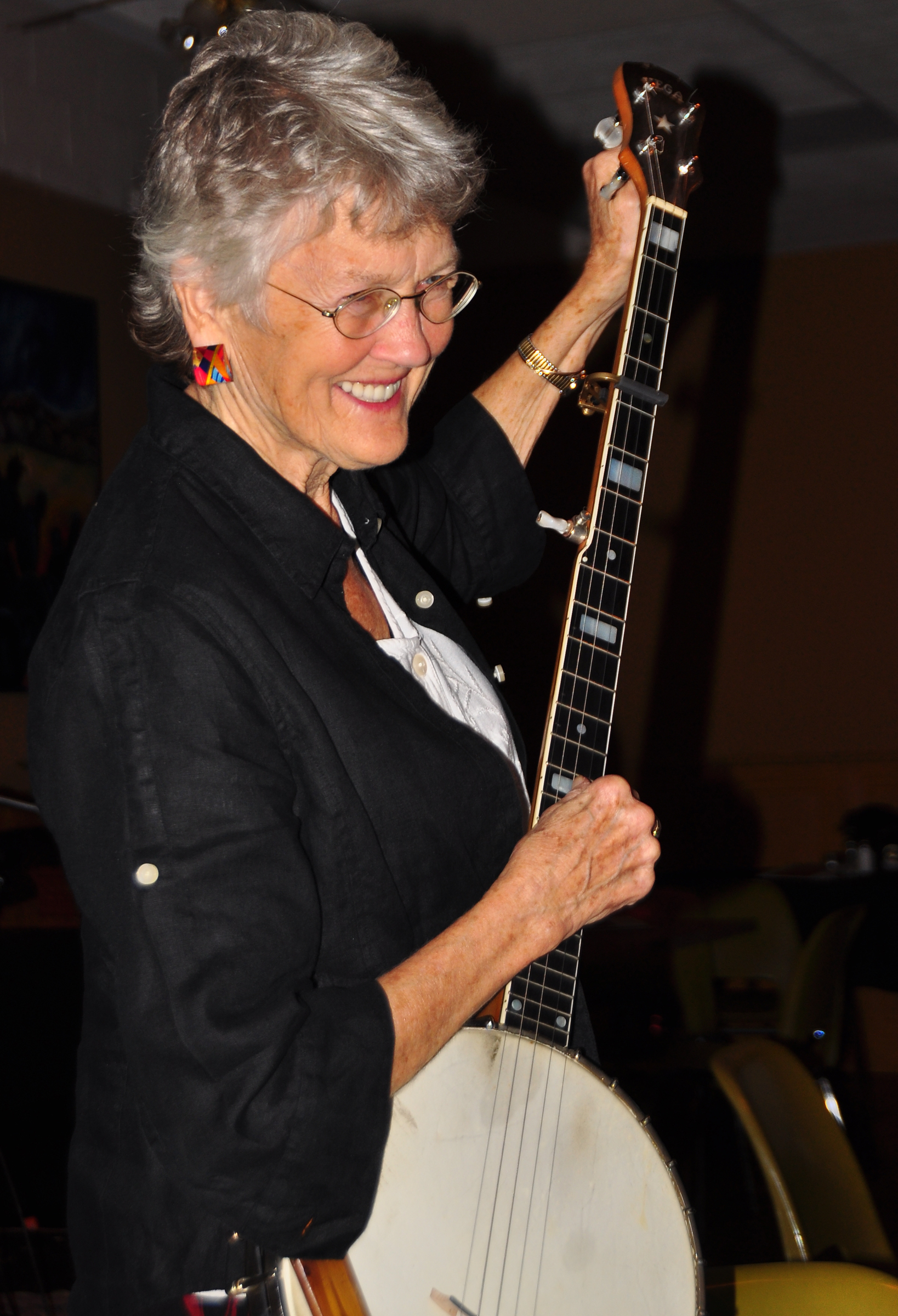
Peggy Seeger today: still pushing the boundaries (photograph: Dale Herbert)
Seeger embraces the world of dubs and samples as if to the manner born. And it’s hard to resist the woman for whom Ewan MacColl wrote “The First Time Ever I Saw Your Face” when she consents to such a radical reworking. Here, as “First Time Ever”, its arrival is signalled by a Numanesque burst of electronica, before fragments of one of the great modern standards build into a remarkable collage that rescues it from the desert of a thousand hotel lobbies and sends it on a completely different trajectory.
The album goes way beyond mere sampling. The compelling beat that underpins the bleak “Little White Grains” is a fascinating juxtaposition, hooking you in even as you’re floored by the grimness of the lyrics. And in the midst of all these new sounds, you never forget that Seeger’s work has always been lyric- (and specifically, story-) centred. As those lyrics often concern timeless themes – drug addiction, violence, abusive relationships – they have a contemporary resonance that’s a perfect match for this hustling, urban treatment. The narrative lines of “Bad, Bad Girl” and “Welcome to the Neighbourhood” are driven by Broadcaster’s insistent riffs, with Seeger’s voice given the full vocoder treatment, from which it emerges astringent and triumphant.
Despite the essential darkness of much of the material, Folksploitation is a thrilling, hypnotic experiment which Seeger’s die-hard fans will probably approach with trepidation. But ultimately, it’s a surprising triumph for this redoubtable singer’s capacity to push the boundaries and make her listeners think again. So yes, let’s add Broadcaster and Peggy Seeger to that list.
La Vie en Rose: Violette leaves the bal musette behind
Simple is Beautiful: a heady mix of pop, torch ballads, soul and chansons
Sorbonne and Berklee College of Music graduate Violette harnesses a complex range of influences on her third album, which give the lie to its title Simple is Beautiful. Sometimes the mix is so broad that it’s tricky to pin down a specific style or direction: “All I Need”, for example, juggles rhythms and pace like there’s no tomorrow. That’s no bad thing in an age when the music industry seems more determined than ever to categorise artists in easy-to-market boxes.
Here are power ballads, soul shuffles with a hint of reggae and, for good measure, a dash of Piaf. The award-winning singer /songwriter’s jazz-tinged pop songs, mostly self-penned (with Rich Mendelsson), are deceptively light, and underpinned by catchy beats, urgent guitar riffs and earthy harmonicas. Quirky references and rhyming couplets abound on numbers like “Superwoman”, interspersed with reflections on the contemporary life and concerns of a young woman about town.
Violette has a sweet voice that reflects the discipline of her classical training – thankfully, the modern trend for all things melismatic has passed her by – and is particularly suited to ballads such as the title song and the bonus track “Miss Your Company”, if a little less robust on the up tempo rock and gospel numbers. There’s a glorious Streisand-style torch song, “Don’t Make Me Beg”, all soaring strings and building key changes, which might have considerably improved France’s recent Eurovision status, if Violette had been tempted to represent her native country.
She lives in New York these days, but there’s a nod to her roots with a couple of French language tracks: “Insomnie”, a swirling love song with an operatic choral backing, and “La Vie en Rose”, a jazz-flecked interpretation of Piaf’s standard that is more Manhattan supper club than Montmartre bal musette, reflecting Violette’s transatlantic transition. Between them she and Mendelsson have produced another album with great clarity. A fourth is already on the way.
Don’t Let the Sun Catch You Crying: Mari Wilson goes all Proustian on us
Cover Stories: a delightful piece of work
The title of Mari Wilson’s new album isn’t just a play on words. Cover Stories takes some beloved songs and gently picks its way through their lyrics, discovering a multitude of unexpected twists and turns, against a subtle backdrop of modern, stripped-down arrangements that make you shiver with pleasure as the tune emerges from each reinvented intro.
It’s bathed in nostalgia but could never be described as just another retro covers project. That’s partly down to Wilson’s sensitive, spot-on vocals which give the album its rather poignant quality. It isn’t that the choice of song is unremittingly sad. Far from it. But as she takes traditionally up-beat numbers like Dusty Springfield’s “I Only Want to be With You” or the Pretenders’ “Don’t Get Me Wrong” and slows them down to meandering threnodies of contemplation, it’s impossible to escape a slight sense of melancholy, of youth seen through the eyes of experience.
I wouldn’t normally expect to describe a new treatment of “Be My Baby” or Gerry Marsden’s “Don’t Let the Sun Catch you Crying” as Proustian, but it’s a measure of the album’s quality, and the thought that has gone into the production (by Simon Hale, who also plays keyboards, and Wilson herself), that its dying chords leave a host of half-memories and elusive dreams hanging in the air, like the scent of autumn on a late summer breeze.
She has chosen these songs very carefully, and with great respect for the writers who have provided her – and us – with such a rich soundtrack of pop music. And while she connects with them through her own story – much of which will be familiar to anyone who has had the good fortune to spend an evening at one of her gigs – her considerable gifts as a singer render them equally a reflection of the listener’s life. We revisit our own stories in parallel, allowing old, benevolent ghosts another outing. And just as when she sings “Be My Baby” in concert, and your eyes fill with unbidden tears for reasons that you can’t quite put your finger on, it’s a moving experience.
Other stand-out tracks include “Disney Girls” (another concert favourite) and the Gillian Welch number “Dear Someone”, which is treated almost like a sentimental Edwardian music-hall song (more ghosts!) The Gibb brothers are represented by “First of May”, Kirsty MacColl by “They Don’t Know”. Cover Stories signs off with a soft, jazzy treatment of “Everybody Needs a Holiday”, an acknowledgement of the power and value of support in a relationship. It’s a reassuring coda to a really delightful piece of work.
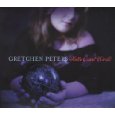
Hello Cruel World: damaged goods make for a fine album of sanguine songs
Hello Cruel World: Gretchen Peters shows you the dark side - and how to survive it
What a trying year Gretchen Peters had in 2010. Worldly and personal challenges hurled themselves at her from every direction. Man-made disaster in the Gulf of Mexico devastated the shore around the Florida bolthole where she writes her songs. Her adopted hometown of Nashville was stricken by catastrophic floods. And one of her oldest friends committed suicide. On the bright side, she married her pianist Barry Walsh after a 20-year relationship; and her child revealed that he was transgender – a shared journey that she says she found inspiring and disorienting in equal parts.
Songwriters of lesser skill might have walked into all the melodramatic traps sprung by such a discomfiting and extended period of life experience, and turned them into a self-indulgent misery fest, shot through with the well-worn leitmotif of the stoic survivor. Not so Peters. “The grain of sand becomes the pearl,” she sings on the title track of her album Hello Cruel World, setting the scene for an unflinching but ultimately hopeful response to her recent ride on the Big Dipper of life.
There’s no hint of smiling bravely through the tears here. Instead, Peters’ lyrics roll with the punches as she picks her way through the wreckage of “Natural Disaster”, the sanguine home truths of “Dark Angel” and a meditation on the testing of faith, “Saint Francis”. Some tracks enter mesmerising art-song territory: the starkly beautiful “The Matador” with its heart-breaking accordion (courtesy of Peters’ husband Barry Walsh); and “Woman on the Wheel”, which takes an old fairground attraction as a metaphor for the listener’s insidious fears.
Peters further proves herself a past mistress in the art of darkness with the glorious “Five Minutes”, a country-tinged torch song that quietly shows how the lingering power of an eternal passion will always manage to disrupt the most mundane, workaday life. “Camille” follows in similar vein, its muted trumpet intro (from Vinnie Giesielski – Peters has surrounded herself with some serious musical talent) heralding a bleak tale of the other woman that is expertly wreathed in whisky vapours and midnight smoke. And “Idlewild” is a throat-catching child’s-eye vision of parental dislocation (and an interesting comparison with Mary Black’s recent take on a similar theme, “The Night Was Dark and Deep”).
It sounds like strong meat for a casual listen but Peters’ essential optimism and resilience mean that even in its bleakest moments, Hello Cruel World offers much more than a fix of suffering for those who tend to roam across shadier emotional plains. Redemption, a tad weary and accepting of the trials that have gone before, comes with the gentle “Little World”, which seizes gratefully on the familiar comforts of home.
This is Peters’ sixth solo album. And thanks to the gimlet-eyed take on life that informs her lyrics, a voice that sings the story straight, and arrangements that imbue the songs with a stark, poignant beauty, it’s an absorbing transformation of adversity into art.
“Better Than Bonnie”: a song for the other woman, with a sneaky dash of Britney Spears
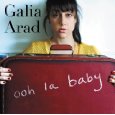
Ooh La Baby: Suzanne Vega meets Marianne Faithfull in the singular new talent of Galia Arad
Concept albums are springing up everywhere. Hot on the heels of Kate Bush’s extended meditation on the white stuff (50 Words for Snow), we have Ooh La Baby, the tale of a fractious love affair with a feckless Irishman told from the perspective of New York-based singer/songwriter Galia Arad.
The genre is where the similarity begins and ends. These two artists occupy completely different territory. But there is one moment – “Snowed in at Wheeler Street”, the duet with Elton John – when Bush’s otherwise largely existential take on the mysterious power of snow chimes with Arad’s earthy, melancholy exploration of the frustrations of an all-consuming passion. Ooh La Baby is a glittering stream of such moments, brought vividly to life in Arad’s wry lyrics and delivered with a voice of deceptive purity and innocence.
Arad is interesting company as she mines a rich seam of rock and roll, blues and folk influences and comes up with a highly individualistic formula of her own – mix the whimsical intensity of a Suzanne Vega with the occasional mordant observation from a Marianne Faithfull and you’ll arrive at something approaching the bittersweet musical spirit of this witty new voice.
One of the standout tracks is the upbeat song of the other woman, “Better than Bonnie”, with its triumphant sideways raid on Britney Spears’s signature song “Oops!… I Did it Again”. Equally good are the slow, gentle ballads like “You’re Always There”, the shuffling “Something Sweet” and the contemplative “Will I Be Loved (By You)”, which edges hesitantly into earshot on the tail of a moving fiddle solo (“Dad’s Intro”).
Moods shift in the blink of an eye, reflecting the emotional ebb and flow of the affair from high intensity to bleak disillusionment. Lyrical beauty is lascerated now and then by moments of Faithfull-esque rage and frustration – nowhere more acerbically than on “Don’t Go”, a prolonged sigh of exasperation and desire.
Less obviously engaging is the input of The Pogues’ Shane MacGowan (on the lilting “Four Leaf Lover Boy” and a foul-mouthed intro to the vicious slugfest “Full of Sh*t”), which is a pity because – perhaps a consequence of the recent annual blast of Christmas evergreen, “Fairy Tale of New York”, a poignant reminder of his glory days – I expected more than the trashed sound of his spoken vocals actually delivers.
The album is beautifully produced by Tommy Faragher, whose track record includes work with Dusty Springfield, Taylor Dayne and Al Green. He’s certainly given Galia Arad the space she and her guitar need to untangle this complex narrative. And there’s enough evidence here to herald the arrival of a compelling new talent.
Someone who sings about love and loss, and the pain of experience. The power of torch-singing lies in its effect on the listener. For me, it transcends musical genres. These pages explore the dazzling, and sometimes dark, world of the female singer through history and in the present. Concert and CD reviews, interviews and articles combine to create a comprehensive view of this vital strand of popular culture. Why not share your views and experiences of your favourite artists, suggest performers you would like to see featured - and let me know what makes a torch singer for you?


 The Art of the Torch Singer
What do you think?