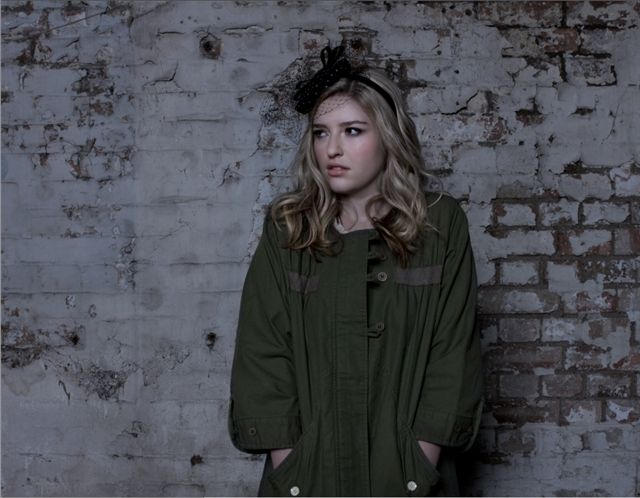
If musical influences were sweets, Leddra Chapman wouldn’t have wasted any time with her nose pressed up against the shop window. She’d have walked in, charmed the owner and been given free rein to create her own special selection. That’s the joyful impression left by her first album, Telling Tales.
At a time when young British female singer/songwriters are enjoying an unprecedented boom, hype is easily mistaken for genuine talent. Not in Chapman’s case. She rallies her musical instincts with flair and assurance. These songs are rounded stories, folk tales of love, fate and friendship for the 21st century, sung with crystal-clear diction and minimal embellishment, worthy of the all-important airplay they’ve been getting.
Those diverse musical influences lap at the edges without dominating or tipping into pretentiousness: a hint of Vaughan Williams here, Joni Mitchell there; the evocation of a brass band that momentarily transports you to a village green in summer (“Story”); a weakness for her toy piano on “Picking Oranges”.
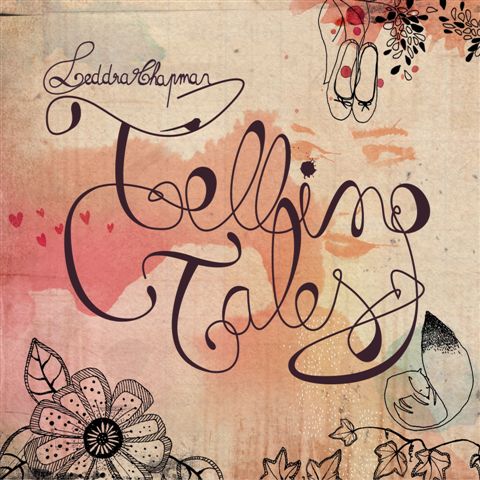
Telling Tales: an auspicious debut
“Edie” is one of the highlights, a searing vignette of a short, tragic life. Another, “Wine Glass” cleverly distils the trivial gesture – toying with a drink – that becomes overwhelmingly significant for the one left behind in a long-distance relationship. And the poignant “Wrap Me Up”, with its melancholy piano intro, is a bittersweet account of two people wanting different things from their love affair.
On stage, Chapman has an engaging charm that belies the depth of her lyrics; her showcase at the BBC Club last November was a shaft of sunshine on a bitterly cold winter’s day. Telling Tales is a pleasing and auspicious debut.
As Day Follows Night: Blasko set for UK breakthrough
Deceptive simplicity is the hallmark of Sarah Blasko’s new album, the optimistically titled As Day Follows Night (Dramatico). Her mordant lyrics emerge from an intriguing musical mist, delivered in a voice far less fragile and little-girl-lost than it sounds on a superficial first hearing.
Spare string and piano arrangements are based on an acoustic, percussive foundation that takes you on an absorbing journey from the bleakness of wrecked love to the painful but ultimately life-affirming recapturing of emotional equilibrium. The images are stark – “Is My Baby Yours?”, “Bird on a Wire”, “Lost and Defeated” – but the mood is pensive and eventually hopeful rather than relentlessly dark.
Australian Blasko was working on the score for a theatre production of Hamlet while writing the album, and the introspection in many of these songs is tinged with a kind of self-revelation that the Danish prince would recognise. “All I Want”, with its windswept, Morricone-style setting, perfectly defines her predicament.
All I Want: windswept, introspective… and great cheek bones
Swedish producer Björn Yttling has created a sense of space that allows Blasko’s alluring voice the freedom to explore some epic themes without ever tipping into clichéd anguish. “I never knew it would hurt like this, to let someone go against my wishes,” she sings, compassionate for the departing lover even as she nurses her raw wounds.
Bird on a Wire: mordant lyrics and epic themes
At 33, Blasko is already a seasoned recording artist, with a growing following in Europe. This is her third album and it’s a haunting piece of work that should mark her breakthrough moment in the UK, where she has based herself for the rest of 2010. She plays the Islington Academy on 15th April and tours with the Temper Trap from 27th April.
This piece draws on several interviews I’ve had during the last few years with Stephen Sondheim and many of the women (and Michael Ball!) who have sung his roles and songs so brilliantly on both sides of the Atlantic. It’s about just one aspect of his work, but I hope it’s a fitting tribute to a man who has contributed so much to musical theatre – indeed, music itself – throughout the last half-century, as he celebrates a landmark birthday.
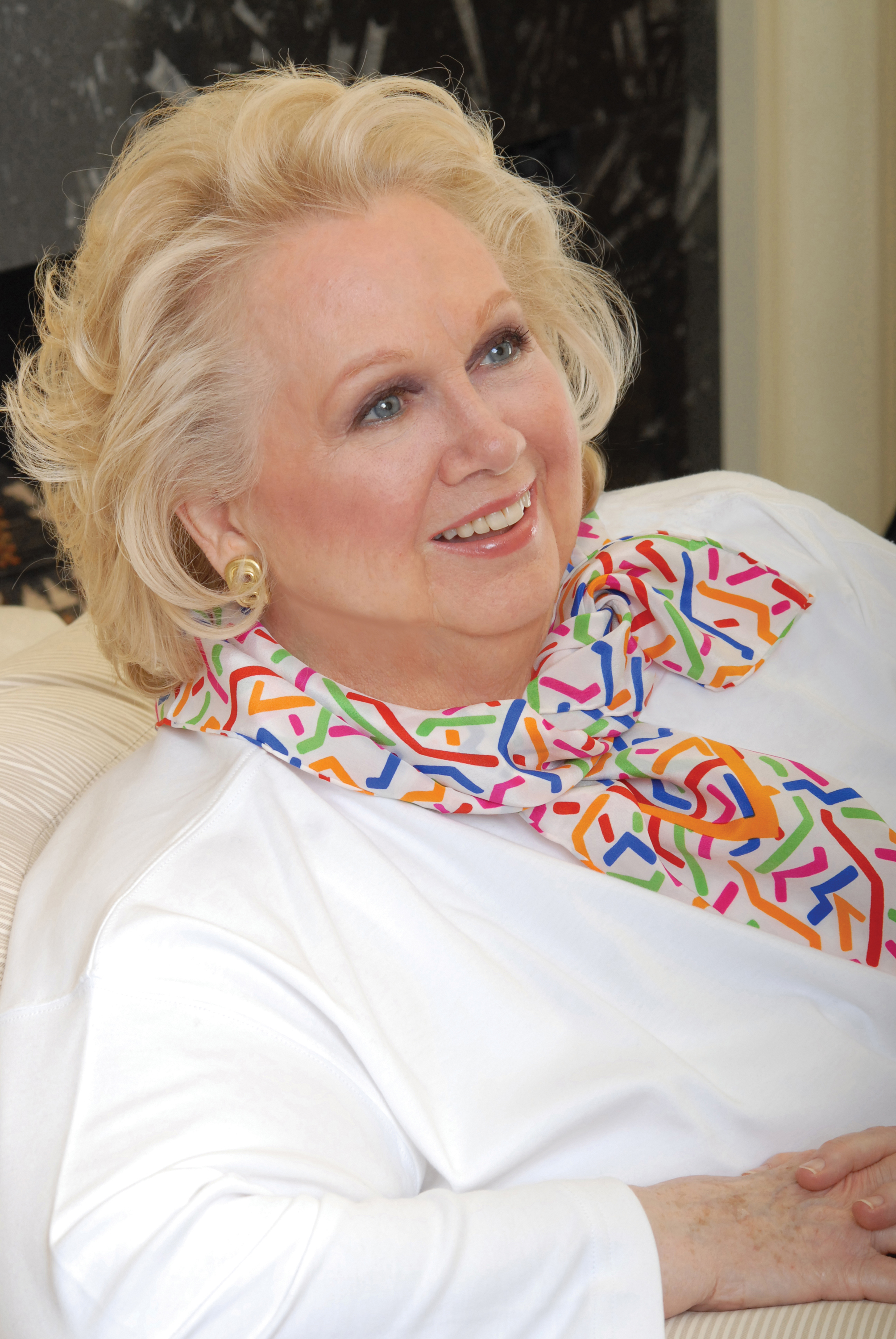
Barbara Cook: one of Sondheim's leading ladies
To say that Stephen Sondheim writes exceptionally well for female singers and actors is to deal in a partial truth. The inference is that his male characters are of secondary importance. And of course nobody playing Sweeney Todd, singing in the all-male ensemble of the much-neglected Pacific Overtures, starring as Company’s distressed Bobby or the equally troubled Franklin Shepard in Merrily We Roll Along, or revelling in Giorgio’s glorious arias in Passion, has any need – or right – to feel short-changed. But the fact remains that his work has had a profound effect on the careers of many of the women who have been closely associated with his roles during the last 50 years.
Where would people like Julia McKenzie, Bernadette Peters and Maria Friedman – who cites him as the reason for her career choice, having been enraptured by the 1980 London production of Sweeney Todd at Drury Lane – be if their professional paths hadn’t encountered Sondheim’s trajectory at critical moments? Hugely successful, no doubt. Such wide-ranging talent will always out. But certainly missing the depth, the experience and the kudos of an indelible association with his work. Each in her way can testify to the extraordinary sensitivity and accuracy of his writing for the female performer, whether strictly in character or taking a particular song away from its theatrical context and turning it into a standalone, solitary gem that reveals yet more meaning beneath the lyrics and the intricate melodies.
And there is no getting away from the fact that in so many of his shows, the female characters often command the stage at critical moments. Follies, for all its multiple themes of nostalgia, the uneasy relationship between past and present, and coming to terms with the impact of time on youthful dreams, is also a celebration of the show girl in all her glory. Ben and Buddy have their show-stopping turns but much of the show’s bittersweet joy comes from the brilliant pastiche numbers and anthems that allow the women to relive their moments in the vaudeville spotlight: Sally’s torch-songs (“In Buddy’s Eyes” and “Losing My Mind”), Phyllis’s acerbic, teasing burlesque number (“Ah, But Underneath,” which replaced the original and more complex “The Story of Lucy and Jessie” when the show finally reached London in 1987), Hattie’s poignant take on the rather grim realities of the hoofer’s life (“Broadway Baby”) and of course Carlotta’s show-business survival anthem, “I’m Still Here”.
Judi Dench: wracked masterpiece
Desirée Armfeldt is always the real focus of A Little Night Music while the relationship dramas unravel around her in three-time, culminating in the magnificent “Send in the Clowns” – Sondheim’s most popular and most abused hit – which marks her lowest ebb and the tragedy of bad timing. It’s become a calling card for every star who has played the role, from Glynis Johns and Jean Simmonds to Judi Dench. Sondheim told Dench, “It’s yours now,” when her wracked masterpiece of an interpretation was one of the highlights of the National Theatre’s 1995 revival. But Trevor Nunn’s recent production notably returned Desirée to young middle age with marvellous results. Hannah Waddingham gave a magnificently constrained performance in London, tears only falling in the final stanza to indicate the extent of her desolation. But here, too, is evidence of Sondheim’s ability to capture even a minor character in the moment: “The Miller’s Son”, sung by Petra the maid, is a perfect evocation of a young woman who knows exactly what her destiny is, and that however underwhelming the ultimate prospect of drooping bosoms and a matronly figure, that can wait a while. There are plenty of rosebuds to be gathered in the here and now.
In Company, bilious, vodka-hardened Joanne has one of the standout numbers in “The Ladies Who Lunch”, a lascerating attack on herself and her own kind. Others have sung it to great effect but for many people the original, Elaine Stritch, still has copyright on the role. Just check out the D. A. Pennebaker documentary of the making of the 1970 cast album, as she wrestles with the song to the point of exhaustion, missing her mark, extemporising to Sondheim’s obvious dismay. Take after take slip by until you can almost taste the acrid, used-up atmosphere of the studio. Then she comes in the next morning and nails it with the first take of the day.
Elaine Stritch: has earned her copyright
“‘The Ladies Who Lunch’ is one of the toughest three-act plays I’ve ever done, you know what I mean?” she told me in a 2008 interview. She calls Sondheim a “romantic realist”. And she’s still singing the song in her one-woman show 40 years later, better than ever.
“In this song he’s sending up a class of dame, of which I am also a member – or have been in my time. I hasten to add, I don’t Martini-lunch any more. So that’s a big kick that I get out of it. When I sing the song, I am part of that whole bunch and I know about them. I am absolutely staggered, dazzled by his ability, his talent. Ability is what I really mean. It’s so believable and so unbelievable at the same time. Everything he says in his lyrics rings a bell with me.”
Bernadette Peters: “Not a Day Goes By” is an emotional peak
For Bernadette Peters (Dot/Marie in Sunday in the Park With George and The Witch in Into the Woods), Maria Friedman (Fosca in Passion and Dot/Marie), Julia McKenzie (The Witch, Sally and Mrs Lovett in Sweeney Todd), the value of gift of a Sondheim role has been proved time and again. Each can, in many ways, define her career by the importance of his work in allowing them to demonstrate not only their talents as singers but as dramatic actors and comedians. And they have also proved adept at developing his songs away from their musical theatre roots. Peters’ signature tune, “Not a Day Goes By” (from Merrily We Roll Along) is invariably an emotional peak in her concerts, for example. Like Friedman, Barbara Cook and many others, her repertoire is enriched by the Sondheim canon.
Patti LuPone has taken Bobby’s last-act song of affirmation, “Being Alive” from Company, and turned it into a virtuoso powerhouse performance. Again, this is possible because of the truth in a lyric that finally resolves the character’s anguish at the end of the show. Given the wealth of female songs in the canon, this might smack of poaching. Michael Ball says, “I always have an argument with him [Sondheim]. I tell him he writes the most amazing shows – difficult bloody things, most of them – and then he always gives the eleventh hour number to the women! That’s why I insisted on doing “Broadway Baby”. But take these songs out of the shows and they’re universal.”
Patti LuPone: virtuoso powerhouse performance
Sondheim’s double-whammy skills as a lyricist and composer lie at the heart of this quality in his work. A few years back in an interview for Gramophone magazine, he told me that a song is written to reflect a character’s state of mind at that particular moment in the play. If a singer can find something beyond that, which gives the song an external life outside the play, all well and good – but that will always be incidental to the song’s primary meaning and intention. “But to have the songs interpreted in different ways helps to keep them alive,” he said.
Julia McKenzie: “He’s a dramatist and a poet. And to the performer, the rewards are tremendous because every song is like a one-act play or at least, a soliloquy. “Losing My Mind” is a soliloquy, even though in Sally’s mind it is the epitome of a torch song. You can see precisely how her day progresses.”
Maria Friedman: “For me, everything he writes about comes back to a very basic thing: love – the desperate need of a human being to love and be loved. As an actor and a singer – I can’t distinguish which one leads the other – both co-exist perfectly when you’re doing one of his pieces because the demands on you are always truthful, honest. If you can get to the core of it, you just have to serve it, not do anything, and it will do the rest for you. But that means quite often you’ve got to be thinking two or three things at once. It’s layered, you’ll be saying “I don’t love you” at the same time as thinking “I wish I could love you”, “I did love you,” all together. On the face of it, it could be quite cold but underneath it’s layered with warmth and hope and yearning. Plus he’s the most extraordinary lyricist, the rhymes are dazzling, so you’ll be working on that at the same time, making sure that they ring and you don’t miss the internal rhymes. And he writes as we speak, so you have to understand how that woman would have talked and the music falls into place.”
Patti LuPone: His songs are very dramatic pieces in their own right, so I don’t have to create another story to sing them out of context. You always want the piece to be universal if it’s going to live and his work is really brilliant in that universal way: there’s that whole concept of theatre, emotion, love. That’s what makes something like “Being Alive” [Merrily We Roll Along] or “Loving You” [Passion] so perfect.
Elaine Stritch: “Everything he says in his lyrics rings a bell with me. He knows what’s right and what’s wrong, what’s fake and what’s real. And like Shakespeare, every time you do good work, something new comes out of it. The quality of the material absolutely matters. I love his humour. It’s real humour – real: they call that wit!”
Barbara Cook: I’d known Stephen socially, through the 1950s and 1960s, but didn’t actually do much of his work until Follies. I’d occasionally put a song in my act but I always felt that unless I did a whole Sondheim section, they didn’t really abut against the others. I thought of them as ‘art songs’. But when I did Follies [in concert, 1985], I fell deeply in love with his work, and a lot of that was to do with the quality of his lyrics, which are so universal and moving. They are witty and clever, of course, but most of all very emotional. They almost always say something that I want to say. Take “No More” [Into the Woods], a song I’ve been doing a lot in the last year or so. It seems to have a lot more meaning with the world in this difficult state:
After 20 years of interviewing female singers of every genre, I’ve decided to start blogging. The fruits of many of these interviews have appeared in publications ranging from The Singer and Gay Times to Wire, Wall Street Journal Europe, Songlines and Gramophone. This diverse array of titles suggests I’m not alone in my fascination with the woman in the spotlight with just a microphone for company, spinning tales of passion, betrayal, love and hurt: the quintessential image of the torch-singer.
Girl singers are big with the marketeers right now. Quite right too. But they’re hardly a new invention! And being flavour of the season only begins to redress the balance in terms of coverage, clout and status in the entertainment universe. In this blog, I’ll be thinking aloud, reviewing new work, recalling old conversations, posting new interviews and generally exploring the role and world of the female singer as an artist and an icon.
Torch-singing is not limited by the genre of the music. It’s more about a sensibility evoked by a combination of the singer, her voice, the melody, the story, her performance and the lyric, that touches the listener in a special way. It’s a mood. A particular sound. So armed with my own flexible definition, I’ll continue to look for the torch-singer in likely and unexpected places. There is so much more to her than the holy triumvirate of Garland, Piaf and Holiday – great as they are.
Barb Jungr and the ‘Lost’ Generation
Barb Jungr: reinventress of songs (photo by Steve Ullathorne)
They aren’t really lost, of course. Just undervalued. They’ve always been there if you could find them. But if you were led solely by the crass credentials of the music marketing machine, you would hardly know that singers of the calibre of Barb Jungr, Claire Martin, Sarah Jane Morris, Mari Wilson and Clare Teal even existed.
They’ve been out there, doing it for the last 20 years and more – building their fan bases, producing work of the highest quality, earning plaudits in niche genres and garnering small but good reviews for their albums in the catch-all-the-rest jazz sections of the nationals. Yet they’ve never troubled Brits nominations committees.
Stuart Maconie makes the point well in next week’s Radio Times (“Going Gaga for Girls”) – praising this year’s nominations for the high ratio of British female singers while casting an eye back to the sexism and blinkers of the years when the music industry couldn’t bring itself to look beyond the commercial security of yet another nod for Kate Bush and Annie Lennox – acceptable, instantly recognisable totems for a host of female artists who were too complex or sophisticated for the marketeers to categorise.
As Maconie also suggests, this long overdue recognition of female talent is welcome – but tinged with cynicism. The Brits, to a great extent, reward commercial success. Florence Welch, Amy Winehouse, Lily Allen, Duffy, Pixie Lott and the rest are all delivering on that front. The reality is that for the moment, girl singers are big business. And on those grounds alone, why shouldn’t Susan Boyle get a nod, too?
But back to the ‘lost’ generation. Barb Jungr epitomises the craft, integrity and painstaking approach required to build a successful career as a singer without the weight – and will – of a big label behind you. Like so many of her peers, she has too often had to settle for snippets in the reviews pages rather than serious profile space in the features pages.
Jungr is the supreme reinventress of songs. She has taken material indelibly associated with her musical heroes – Dylan, Presley, Nina Simone, Brel – and recast them in her own, determinedly idiosyncratic, style through a series of highly-praised albums. Her voice is a startling vehicle for the introspection and emotional observation of so many of the lyrics: true, bell-like in its clarity but also capable of a keening, visceral anguish that takes the listener to the darkest places in the songs she favours.
The connection is often electric – as it was at a notable evening of chanson at the Almeida Theatre in July 2008; or, for this previously Dylan-sceptic listener, last summer when Jungr came to Jazz at the Fleece, deep in rural Suffolk, outsang the wedding reception that was sharing the venue, and opened a window into the great man’s lyrics for the first time.
In performance, any heaviness is balanced by her easy, off-hand banter. Jungr involves her audience with her self-deprecatory references, relating the material to experiences they might also have had – and that might, too, seem utterly ridiculous in the cold light of day. But which are also utterly devastating.
That, in part, is why she has found her natural home as a cabaret artist among New York audiences. Her ability to imply a hinterland of meaning behind a lyric doesn’t make for easy listening. But the story-telling is compelling.
Review – The Men I Love: The New American Songbook
Jungr’s new album – The Men I Love: The New American Songbook – released on 8th March on Naim – is as audacious as anything she has produced to date. Dylan’s material again figures large, along with Neil Diamond, Leonard Cohen and David Byrne, all with new and category-defying arrangements that have arisen from a fruitful collaboration with pianist Simon Wallace.
The spare, keyboard-centric accompaniment of recent albums has been extended to include cello (Frank Schaeffer), double bass (Steve Watts) and flute (Clive Bell). Jungr’s voice ranges across the resulting rich harmonic tapestry with a new freedom and assurance.
The feverish insistence of the Talking Heads classic “Once in a Lifetime” becomes an almost wistful meditation with an unexpectedly oriental flavour (courtesy of Bell on the shakahachi). Diamond’s “I’m a Believer” is revealed as a sweet, revelatory, impassioned love song light years from the frenetic pop of The Monkees, while “Red Red Wine” lays bare the torment at the end of a love affair.
Springsteen’s “The River” is all the evidence you need of Jungr’s subtelty and honesty, honouring the lyric and story without compromising her own style. And then there is her take on “Wichita Lineman” – perhaps her boldest move on the album: Jimmy Webb’s strange, haunting tale of loneliness and separation, originally a hit for Glen Campbell, is three minutes of distilled, crystalline beauty – and frankly, it’s the high point of Jungr’s finest work to date. No Brit required.
If you can find a more intimate, sensitive interpretation of this great song, let me know.
Someone who sings about love and loss, and the pain of experience. The power of torch-singing lies in its effect on the listener. For me, it transcends musical genres. These pages explore the dazzling, and sometimes dark, world of the female singer through history and in the present. Concert and CD reviews, interviews and articles combine to create a comprehensive view of this vital strand of popular culture. Why not share your views and experiences of your favourite artists, suggest performers you would like to see featured - and let me know what makes a torch singer for you?


 The Art of the Torch Singer
What do you think?