La Vie en Rose: Violette leaves the bal musette behind
Simple is Beautiful: a heady mix of pop, torch ballads, soul and chansons
Sorbonne and Berklee College of Music graduate Violette harnesses a complex range of influences on her third album, which give the lie to its title Simple is Beautiful. Sometimes the mix is so broad that it’s tricky to pin down a specific style or direction: “All I Need”, for example, juggles rhythms and pace like there’s no tomorrow. That’s no bad thing in an age when the music industry seems more determined than ever to categorise artists in easy-to-market boxes.
Here are power ballads, soul shuffles with a hint of reggae and, for good measure, a dash of Piaf. The award-winning singer /songwriter’s jazz-tinged pop songs, mostly self-penned (with Rich Mendelsson), are deceptively light, and underpinned by catchy beats, urgent guitar riffs and earthy harmonicas. Quirky references and rhyming couplets abound on numbers like “Superwoman”, interspersed with reflections on the contemporary life and concerns of a young woman about town.
Violette has a sweet voice that reflects the discipline of her classical training – thankfully, the modern trend for all things melismatic has passed her by – and is particularly suited to ballads such as the title song and the bonus track “Miss Your Company”, if a little less robust on the up tempo rock and gospel numbers. There’s a glorious Streisand-style torch song, “Don’t Make Me Beg”, all soaring strings and building key changes, which might have considerably improved France’s recent Eurovision status, if Violette had been tempted to represent her native country.
She lives in New York these days, but there’s a nod to her roots with a couple of French language tracks: “Insomnie”, a swirling love song with an operatic choral backing, and “La Vie en Rose”, a jazz-flecked interpretation of Piaf’s standard that is more Manhattan supper club than Montmartre bal musette, reflecting Violette’s transatlantic transition. Between them she and Mendelsson have produced another album with great clarity. A fourth is already on the way.
Hello Cruel World: damaged goods make for a fine album of sanguine songs
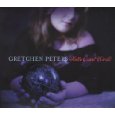
Hello Cruel World: Gretchen Peters shows you the dark side - and how to survive it
What a trying year Gretchen Peters had in 2010. Worldly and personal challenges hurled themselves at her from every direction. Man-made disaster in the Gulf of Mexico devastated the shore around the Florida bolthole where she writes her songs. Her adopted hometown of Nashville was stricken by catastrophic floods. And one of her oldest friends committed suicide. On the bright side, she married her pianist Barry Walsh after a 20-year relationship; and her child revealed that he was transgender – a shared journey that she says she found inspiring and disorienting in equal parts.
Songwriters of lesser skill might have walked into all the melodramatic traps sprung by such a discomfiting and extended period of life experience, and turned them into a self-indulgent misery fest, shot through with the well-worn leitmotif of the stoic survivor. Not so Peters. “The grain of sand becomes the pearl,” she sings on the title track of her album Hello Cruel World, setting the scene for an unflinching but ultimately hopeful response to her recent ride on the Big Dipper of life.
There’s no hint of smiling bravely through the tears here. Instead, Peters’ lyrics roll with the punches as she picks her way through the wreckage of “Natural Disaster”, the sanguine home truths of “Dark Angel” and a meditation on the testing of faith, “Saint Francis”. Some tracks enter mesmerising art-song territory: the starkly beautiful “The Matador” with its heart-breaking accordion (courtesy of Peters’ husband Barry Walsh); and “Woman on the Wheel”, which takes an old fairground attraction as a metaphor for the listener’s insidious fears.
Peters further proves herself a past mistress in the art of darkness with the glorious “Five Minutes”, a country-tinged torch song that quietly shows how the lingering power of an eternal passion will always manage to disrupt the most mundane, workaday life. “Camille” follows in similar vein, its muted trumpet intro (from Vinnie Giesielski – Peters has surrounded herself with some serious musical talent) heralding a bleak tale of the other woman that is expertly wreathed in whisky vapours and midnight smoke. And “Idlewild” is a throat-catching child’s-eye vision of parental dislocation (and an interesting comparison with Mary Black’s recent take on a similar theme, “The Night Was Dark and Deep”).
It sounds like strong meat for a casual listen but Peters’ essential optimism and resilience mean that even in its bleakest moments, Hello Cruel World offers much more than a fix of suffering for those who tend to roam across shadier emotional plains. Redemption, a tad weary and accepting of the trials that have gone before, comes with the gentle “Little World”, which seizes gratefully on the familiar comforts of home.
This is Peters’ sixth solo album. And thanks to the gimlet-eyed take on life that informs her lyrics, a voice that sings the story straight, and arrangements that imbue the songs with a stark, poignant beauty, it’s an absorbing transformation of adversity into art.
“Better Than Bonnie”: a song for the other woman, with a sneaky dash of Britney Spears
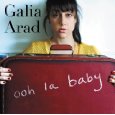
Ooh La Baby: Suzanne Vega meets Marianne Faithfull in the singular new talent of Galia Arad
Concept albums are springing up everywhere. Hot on the heels of Kate Bush’s extended meditation on the white stuff (50 Words for Snow), we have Ooh La Baby, the tale of a fractious love affair with a feckless Irishman told from the perspective of New York-based singer/songwriter Galia Arad.
The genre is where the similarity begins and ends. These two artists occupy completely different territory. But there is one moment – “Snowed in at Wheeler Street”, the duet with Elton John – when Bush’s otherwise largely existential take on the mysterious power of snow chimes with Arad’s earthy, melancholy exploration of the frustrations of an all-consuming passion. Ooh La Baby is a glittering stream of such moments, brought vividly to life in Arad’s wry lyrics and delivered with a voice of deceptive purity and innocence.
Arad is interesting company as she mines a rich seam of rock and roll, blues and folk influences and comes up with a highly individualistic formula of her own – mix the whimsical intensity of a Suzanne Vega with the occasional mordant observation from a Marianne Faithfull and you’ll arrive at something approaching the bittersweet musical spirit of this witty new voice.
One of the standout tracks is the upbeat song of the other woman, “Better than Bonnie”, with its triumphant sideways raid on Britney Spears’s signature song “Oops!… I Did it Again”. Equally good are the slow, gentle ballads like “You’re Always There”, the shuffling “Something Sweet” and the contemplative “Will I Be Loved (By You)”, which edges hesitantly into earshot on the tail of a moving fiddle solo (“Dad’s Intro”).
Moods shift in the blink of an eye, reflecting the emotional ebb and flow of the affair from high intensity to bleak disillusionment. Lyrical beauty is lascerated now and then by moments of Faithfull-esque rage and frustration – nowhere more acerbically than on “Don’t Go”, a prolonged sigh of exasperation and desire.
Less obviously engaging is the input of The Pogues’ Shane MacGowan (on the lilting “Four Leaf Lover Boy” and a foul-mouthed intro to the vicious slugfest “Full of Sh*t”), which is a pity because – perhaps a consequence of the recent annual blast of Christmas evergreen, “Fairy Tale of New York”, a poignant reminder of his glory days – I expected more than the trashed sound of his spoken vocals actually delivers.
The album is beautifully produced by Tommy Faragher, whose track record includes work with Dusty Springfield, Taylor Dayne and Al Green. He’s certainly given Galia Arad the space she and her guitar need to untangle this complex narrative. And there’s enough evidence here to herald the arrival of a compelling new talent.
Rewarding and scintillating: Listen to three tracks from Something to Sing About
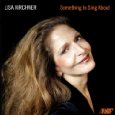
Something to Sing About: a cornucopia of musical genres under the art song umbrella
Tragedy, broken hearts, mortality and violence lie beneath the surface of Lisa Kirchner’s scintillating album, Something to Sing About, like bloodstained rocks. As her vocals spin and gyrate through a cycle of songs that draws on the work of the finest American composers, she covers the range of human experience from girlish hopefulness to world-weary heaviness, exposing these underlying dangers in startling moments of dissonance, shifts in meter and rhythm, and unsettling musical intervals. And all with a lightness of touch that belies the essential darkness of much of the material. These are lullabies with cruel truths at their heart.
Kirchner, the daughter of composer Leon and a doyenne of New York’s cabaret scene, has some pedigree. She has personal associations with many of the composers and songwriters represented in this rich collection, who include her father (“Lily” is one of the most poignant tracks), William Schimmel (who plays accordion on many of the numbers), Charles Ives, Wynton Marsalis, David Del Tredici and, of course, Aaron Copeland. As she explains in her excellent notes, Kirchner met Copeland when she was just eight. His music features large, culminating in a beautiful, gentle, jazz-infused take on his arrangement of “Long Time Ago”, which hangs shimmering in the air at the end of the album.
The result of this inspiring network of connections is a tapestry of musical genres brought together under the umbrella of the art song, revealing the scope of influences on quintessentially American composers whose work often reflects a European heritage in such innovative ways.
It’s impossible, for example, to escape the Brechtian cabaret nuances of Schimmel’s pastiche, “Suicide in C Minor” (the bleak tale of a gangster’s moll); or the chanson flavour of a Ned Rorem melody that provides the setting for Robert Hillyer’s poetic take on the romantic possibilities of Paris, “Early One Morning”. The chanson also informs Kirchner’s own composition, “Crazy Love, Crazy Heart”. Even Lewis Carroll gets a look-in. His ode to Alice Pleasance Liddell finds new life underpinned by Del Tredici’s dreamlike music in “Acrostic Song”. Kirchner herself has written many of the lyrics for the album, most notably for a new version of Paul Chihara’s theme to the Sidney Lumet film, Prince of the City – a gritty paean to betrayal.
Something to Sing About is an impressionistic experience, a sequence of constantly shifting musical tableaux that blur the edges and trace intriguing connections between urban 20th century America, smoky jazz bars, Medieval Europe, Shakespearian England (courtesy of two of Stanley Silverman’s Stratford Shakespeare Festival songs), and even burlesque and casinos. It’s an endlessly inventive proposition, delivered with a streak of humour that leavens the ever-present threats and terrors with quirky songs such as Samuel Barber’s “Under the Willow Tree” and William Bolcom’s “Night Make My Day” or a masterpiece of eccentricity, Silverman’s “Photograph Song”.
At the album’s heart lies Kirchner’s intense knowledge of her material, combined with an ability to render it accessible. While the listener needs to be on their mettle, they never feel part of an academic exercise. Her musicians include pianists Joel Fan and Xavier Davis, saxophonist Sherman Irby, guitarists Ron Jackson and Vicente Archer, bassist Dwayne Burno and drummer Willie Jones III. Between them, they create a warm, richly textured sound that cradles Kirchner’s voice as it veers from velvety reassurance to acerbic rasp. Rewarding and fascinating stuff.
It Ain’t Me Babe: the camerawork might be shaky but here’s a real sense of Barb Jungr’s compelling technique
The Man in the Long Black Coat: Barb Jungr gets closer than ever to Bob Dylan's lyrics
There are three elders at the top of the tree when it comes to British female singers who have an instinctive ability to tell the whole story in a song: Norma Waterson, June Tabor and Barb Jungr. Forget any ungallant connotations. I use the word simply to connote wisdom and an almost forensic approach to their craft. If Waterson is the benevolent earth mother, Tabor is the cool, all-seeing and often bleak eye at the centre of life’s storm. Jungr, on the other hand, hurls herself into the maelstrom, seeking the key to the most visceral experiences in the songs and chansons of the great modern songwriters and rendering them into compelling dramas for the listener.
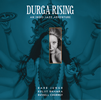
This summer saw the simultaneous release of two albums from Jungr. Strictly speaking, neither is actually ‘new’. Man in the Long Black Coat is a compilation of Bob Dylan recordings made since her groundbreaking 2002 set, Every Grain of Sand, with the bonus of four additional songs laid down in the studio at the start of this year. Durga Rising is the reissue of her 1997 collaboration with renowned Asian music producer Kuljit Bhamra and Jungr’s late, and much-missed, accompanist Russell Churney. Between them, these very different pieces of work showcase an unstinting commitment to innovation and exploration that runs like seams of resilient, glistening black jet through her finest interpretations. Why this important British singer is still waiting to make an appearance on Later… with Jools Holland is a mystery.
Some people have hailed Man in the Long Black Coat as Jungr’s best album yet. And there is certainly a holistic feel to the album; much of this possibly comes from the sense of a ‘journey’, in which Jungr is getting closer and closer to crystallising exactly what Dylan’s lyrics mean to her. In doing so, she becomes increasingly agile with the possibilities and nuances that they offer.
The four most recent tracks – the title track with its ominous, funereal bell, “It Ain’t Me Babe”, the bitter, ironic “With God on Our Side”, and the sublime “Sara” – were all arranged and recorded with pianist Jenny Carr. They reveal a singer at her peak, brimming with confidence in the material. Dylan purists will no doubt perceive liberties being taken. Let them get on with it. There’s an audacity and boldness about these reinvented classics that is rooted in Jungr’s sense of freedom in the world she discovers through them.
From the up tempo “The Times They Are A-Changin’” to the reggae beat of “Just Like a Woman”, a spacey treatment of “Like a Rolling Stone” and the bluesy “High Water”, Jungr pursues the truth in the lyrics with a spirit of adventure and a musicality that is always intriguing. Who else could dream of giving “Blind Willie McTell” the feel of a chanson and make it work with such flair?
Durga Rising: pain and darkness with splashes of dizzying happiness
“Willie McTell” also turns up in a different, more subdued version on Durga Rising. This album, sub-titled ‘An Indo-Jazz Adventure’ is a cornucopia of human experience; bhangra beats meet midnight soul. Jungr and Bhamra have taken it on the road recently, now with exemplary pianist Simon Wallace, to great acclaim.
Jungr’s natural territory is pain and darkness, but she can also spin tails of dizzying happiness. Both extremes are here in a collection of almost entirely self-penned lyrics (Dylan aside), and the music of Bhamra, Churney and her old partner-in-song Michael Parker.
Jungr, Bhamra and Wallace talk Durga Rising on the road
Bhamra’s percussion is ethereal and fleet-fingered, working with Jungr’s vocals in contrapuntal sequences that shimmer with energy. When things get dark, they get really dark. “How Could I Ever”, “Tears in a Bottle” and the lascerating, end-of-the-affair piece of advice, “Choose to be Alone”, offer delicious degrees of cynicism. So do the apocalyptic overtones of “Crimes Against Nature”. But there are plenty of lighter textures in the music, and the exhilarating, life affirming romance of “Bombay Dreaming” – a latin-ish, retro dance hall number – is balm for the most jaded spirit.
Wonderful: Jo Birchall delivers a late blast of summer
Something to Say: Jo Birchall firmly in the driving seat
Here’s a late blast of summer. A collection of bright, guitar-driven pop songs – self-penned, with a handful of faithful covers thrown in – from London-based Liverpudlian Jo Birchall.
A veteran of the first series of Pop Idol, Birchall is blessed with a fine, confident voice and a well-stocked songwriter’s tool chest. Signed to Gary Barlow’s production company in the wake of Pop Idol exposure, she made an album for Decca, which was promptly shelved when the record company restructured. Meanwhile, Barlow, who continued to be a champion of her work, became preoccupied with the revival of Take That, and Birchall’s career was interrupted by family illness and personal loss.
But if the last five years have been a bit of a roller-coaster, she’s very much back in the ascendant following Barlow’s advice to get into the driving seat. Something to Say is a polished production, and Birchall was particularly impressive when she launched the album at a showcase in July.
On a humid evening in the oak-panelled cavern upstairs at Kettners, packed with seasoned music hacks and industry insiders, she commanded the room impressively with a brisk set that easily kept the wailing Soho police sirens at bay: no mean achievement.
Birchall excels at the Nashville-tinged ballad. “All About Love”, “Wonderful” and the title track, “Something to Say”, are well-constructed, radio-friendly earworms with upbeat lyrics. But in true country-influenced tradition, there’s also an underlying melancholy and a more than a hint of bitter experience in some of the low-key numbers, particularly the standout track, “Unanswered”, with its aching, Dusty-style piano.
“Unanswered” unplugged
The covers, which include “I Don’t Want to Talk About It” and Olivia Newton-John’s “I Honestly Love You”, are fine, straight-down-the-middle interpretations. But on the evidence of the rest of the album, Birchall doesn’t really need to bulk out her own song-writing talents with other people’s old crowd-pleasers.
The Dead Princess: Cæcilie Norby’s haunting take on Ravel
Arabesque: contemplative and modern treatments of classic melodies, with astringent lyrics
Arabesque is an edgy, moody collection of songs to thrill the musical iconoclast. Classical purists might run for the hills but Danish jazz singer Cæcilie Norby has come up with some extraordinary settings that shed new light on familiar melodies by Rimsky Korsakov, Satie and Debussy, boldly applying her own astringent lyrical interpretations of the stories behind them.
The result is an impressionistic aural feast, punctuated by a burst of funky swing (“Bei mir bist du schoen”), a couple of Michel Legrand tracks and an inspirational take on Abbey Lincoln’s “Wholly Earth”. In short, Norby, who has been a pioneer of modern Nordic music, straddling the choppy territory between jazz and pop with her refusal to be categorised, has sharpened her maverick credentials and come up with an audacious concept. Just when you think you’ve pinned it down, the musical influence on each track shifts into new territory.
“The Dead Princess” takes Ravel’s haunting theme and turns it into an exploration of the character of the composer’s benefactress, Princess Winnaretta de Polignac. His “Pavane”, so evocative in any setting, is transformed into a brooding meditation on the power of music to arouse memories and sensations.
Norby isn’t the first musician tempted to take liberties with Rimsky Korsakov’s “Scheherazade” – prog rock band Renaissance built an entire album around it in the 1970s – but she treats it with great respect, her Arabian Nights-inspired lyrics swirling among the excellent accompaniment of musicians including pianist Katrine Gislinge, co-producer Lars Danielsson (on bass, cello and organ).
The percussion of Anders Engen and Xavier Devandre-Navarre is a crucial ingredient of Arabesque, fluid and driven, providing a great counterpoint to the fascinating texture of Norby’s voice. There is more than a hint of Berlin cabaret in her timbre – at times, comparisons with Ute Lemper are valid – but her phrasing is always contemplative and modern. Norby is more about the inner monologue than playing to the gallery.
Other highlights include “The Tears of Billie Blue”, a shimmering interpretation of Debussy’s “Claire de Lune”, and “No Air”, which turns Satie’s Gymnopédie into sultry, delicate soliloquy. There is also a Danish version of Legrand’s “Windmills of Your Mind” (“Hvirvelvinden”) and a bonus track, “How Oft”, a tribute to the singer’s father, Erik, who composed it. An absorbing landscape of an album.
Someone Like You: Adele comes of age as a 21st-century torch singer at the Brit Awards 2011
When BBC Breakfast tackled the subject of Adele’s universal appeal and meteoric rise yesterday, the most enlightened comments came not from the ‘experts’ on the sofa but from the people interviewed on the street. One by one, they identified, easily and succinctly why her voice and lyrics strike such a chord with an extraordinary range of listeners. Back in the studio, meanwhile, the conversation got bogged down in sales figures and clichés, and an awkward segue into Cheryl Cole’s appointment as an X Factor judge in the States. What nobody identified as the root of Adele’s success is that she is, above all, the epitome of the torch singer – one of the finest of her generation – whose lyrics, combined with a voice of real range and depth, unravel the epic personal emotions of everyday heartbreak.
In the following article, a version of which appears in the current issue of Theatre & Performance magazine (with some unfortunate graphical errors), I have tried to analyse the eternal popularity of the torch singer, placing singers like Adele, Marianne Faithfull, Justin Bond and Mari Wilson – who here gives a splendid masterclass on the art of torch-singing – in this great tradition.
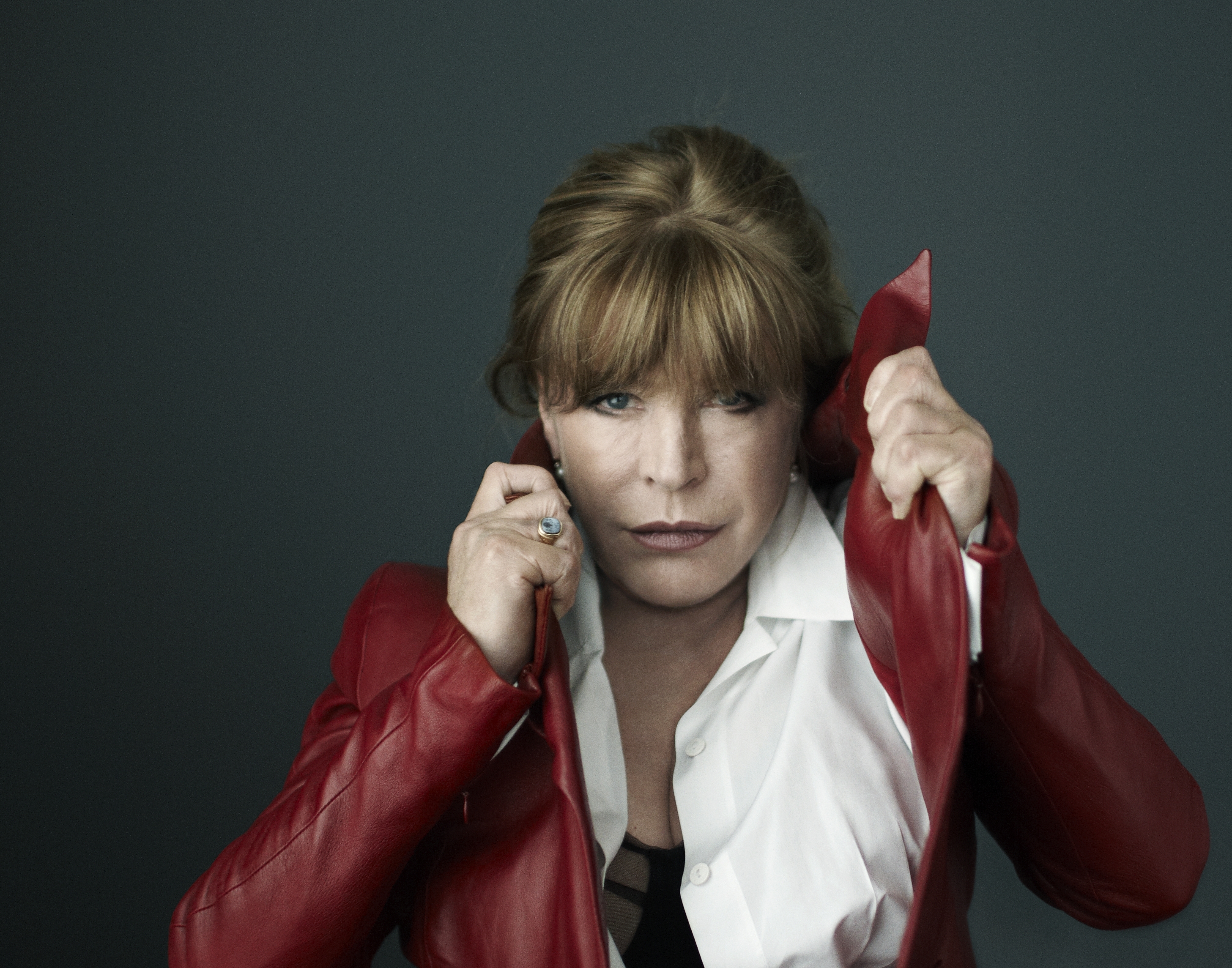
Marianne Faithfull: grande dame of torch singers (photo by Patrick Swirc)
Adele is dominating the pop charts with her lush, wounded ballads. Tracie Bennett is burning up the West End with her visceral performance as Judy Garland in End of the Rainbow. Marianne Faithfull’s new album Horses and High Heels is a useful reminder that there’s no substitute for experience when it comes to unravelling the nuances of lyrics we thought we knew so well.
Yes, the torch song – and our appetite for its cathartic powers – is alive and well. And singers who can deliver one effectively, honestly and with integrity, will always exert a special hold on our broken hearts.
Perhaps it’s the drama: the singer alone in the spotlight, spinning a tale of loss, abandonment, loneliness and longing. Regardless of the genre – rock and pop, country, jazz, cabaret, folk or musical theatre – it’s one of the most totemic images in show business. And it’s served its exponents well since the term ‘torch singer’ was first coined in the 1920s to describe a brace of singers who plied their trade on Broadway, in revues and after-hours nightclubs, and in the early radio and recording studios, specialising in melancholy numbers that struck an emotional chord in the listener that went beyond mere sentiment.
These days, only specialists and enthusiasts will give a second thought to performers like Ruth Etting, Helen Morgan, Fanny Brice Libby Holman or Lee Wiley. But they were all, in their way, trailblazers for the torch singers who have followed in their wake, and not just the great triumvirate of Billie Holiday, Judy Garland and Edith Piaf; three women whose influence on technique, delivery and style continue to resonate with many performers half a century and more after their premature deaths.
Piaf’s place at the top of the tree is a useful reminder that the French chanson has always been a key influence on the concept of the torch song. Brice’s signature song “My Man” – still one of the darkest and most brutal examples of this type of lyric – started life as “Mon Homme”, a lament popularised in Parisian music-halls by the legendary Mistinguett.
Broadway shows have also contributed immeasurably to the evolution of the torch-song, ever since Helen Morgan perched on a piano and delivered a tremulous “Bill” in Showboat, and Libby Holman growled “Moanin’ Low” to a delightedly scandalised audience in The Little Show just before the Wall Street Crash unleashed the Great Depression.
Many great torch songs now recognised as standards started life as stage numbers – a tradition that has been continued by great composers and lyricists, including Stephen Sondheim, Jerry Herman and most recently, Jason Robert Brown.
But broken hearts have also always provided rich material for song writers and, as jazz and big band music moved over to make way for mainstream pop music in the 1950s, they discovered an even broader, global medium to explore the darker side of love. And so the torch was picked up by pop singers like Dusty Springfield, Dionne Warwick, Shirley Bassey and Elkie Brooks, superstars Streisand and Minnelli, and later by Annie Lennox, Sinead O’Connor and a string of rising 21st century stars including Adele and Amy Winehouse.
It’s no coincidence that the iconic status of many of the great torch singers has been assisted by their propensity for living in a way that seemed to perfectly reflect the lyrics to which they brought such insight and emotional substance. Even today, our response to the unique vocal qualities of Piaf, Judy and Billie is complicated by our knowledge of the personal price they each paid for success and affirmation by audiences – and a music industry – who perhaps did not always have their best interests at heart.
How else to explain the contemporary appeal of a play that focuses on the traumas of Garland’s final appearances at The Talk of the Town? In End of the Rainbow, Tracie Bennett has been a revelation as the self-destructing star, peeling back the layers of internal conflict and drug-fogged delusion one by one. And it’s in the songs that her characterisation is rooted, conjuring the essence of Garland with “The Man That Got Away” in a way that’s had the audience mesmerised night after night.
Even playing these women in dramatised accounts of their lives exerts a tremendous physical toll that gives an insight into the close relationship between the torch singer and the material that is her stock in trade. Piaf, Pam Gems’s play, pulls no punches in its depiction of the way the singer’s voice absorbed all the abuse the Little Sparrow inflicted on it, while still emerging powerful as a bell from her wracked body. For Elaine Paige, who played the role in 1992, it was a painful revelation.
“There was something about her I felt akin to, a kind of obsessive quality,” she once recalled in an interview with this writer. “I find something and I get involved and get hooked and it becomes a bit of an obsession. I didn’t realise it was going to be quite as exhausting. I was very fulfilled and very drained. Every night. I’ve had problems with my knees ever since, from walking around with bowed legs, bent double! She isn’t the easiest character to play without suffering a bit yourself.”
There are occasional reminders that self-destructive tendencies in a singer can still fuel an uncomfortable fascination, particularly when an artist seems completely absorbed by the experiences they are singing about. Look at Amy Winehouse who has long since proved herself one of the great torch singers of our age, despite a back-story that evokes the darker excesses of Billie Holiday or Judy Garland.
Winehouse could draw some inspiration from another trailblazer, Marianne Faithfull, who has long since emerged from the chaos of her own tabloid years to become a stately grande dame of dramatic song. Faithfull’s voice testifies to self-inflicted ravages but there is a beauty and an honesty in her lyrical interpretations that remains utterly arresting.
“I’ve always loved story songs,” she says. “I suppose it’s part of my acting thing, to get into character and live the story with the person. But I think it’s got stronger, probably because I’ve got a bit more compassion now, for myself and others!”
While torch singing – and the image of the torch singer – is primarily associated with female performers, there have also been great, intuitive male interpreters capable of twisting the heartstrings in this way. From Brel, Sinatra and Scott Walker to Marc Almond and Ian Shaw, great male vocalists have also demonstrated a way with desolate lyrics that come into their own at midnight.
For New York transgender singer Justin Bond, who prefers the pronoun ‘v’, the best torch songs achieve their power through evocation.
“Great torch singers create a safer space for us to address our desires and heartaches,” v says. “We get to live our pain through them. When singing a torch song, my mission as a singer has always been to reveal ideas and emotions that would allow my audiences to experience things in a communal way that they might ordinarily allow themselves to deal with only in private – thereby validating them and their experiences of loss, anger, loneliness or desire.”
In the End: Justin Bond spins a torch song at Joe’s Pub in New York
But is it really necessary to have lived to the extremes suggested by so many torch song lyrics? Go to a gig by any of our finest contemporary torch singers – Barb Jungr, Mari Wilson, Ian Shaw, Antony Hegarty, Martha or Rufus Wainwright – and at some point in the evening you are guaranteed an emotional workout as prescribed by Bond. But in most cases, the emotional realism that they generate with a particular song is founded on an understanding of the lyric that taps into their own human experiences rather than a 24-hour commitment to excess.
“I don’t think ‘good acting’ alone can put across a torch song,” says Bond. “I was pretty much in touch with my emotions as a child, and I think I was capable of tearing up a Jacques Brel tune even in my teens. You’re never too young to understand great sadness OR sexual desire, trust [me].”
Bond cites Billy Strayhorn’s “Lush Life” as a great torch number – “written from the perspective of a louche gay man coming of age in very tenuous times” – but says the torch song is in good hands with modern song writers.
“I like some of Jarvis Cocker’s songs. “This is Hardcore” is a great torch song,” v says. “Antony [Hegarty] writes beautiful torch songs and Rufus Wainwright has written some lovely examples. My record, Dendrophile, is coming out in the States on April 5th and includes covers of what might be considered torch songs – “Superstar”, “Diamonds and Rust” and Joni Mitchell’s “Court and Spark”.
“The fact that they are called ‘torch songs’ implies a burning,” adds Bond. “The greatest loves and strongest desires come from a deeply spiritual need. Great torch songs evoke a kind of dissatisfaction caused by uncontrollable, even unwanted, desires that aren’t being satisfied.”
The true torch singer, then, is defined by a capacity to touch us, regardless of sexuality or age, and the extravagance of many of the lyrics they interpret is a disguise for deep, shared, ordinary emotions. A great exponent gives us permission to acknowledge those emotions. As long as we need that, the torch singer’s future is assured.
Torch Singing Masterclass With Mari Wilson
Mari Wilson: you can be singing about all kinds of unhappiness (photo by John Haxby)
Choose your torch songs carefully. I was 15 when I first saw Julie London singing “Cry Me A River” in The Girl Can’t Help It. I couldn’t get it out of my head. Then when I started gigging properly in 1981, I was driving along in my Austin A40 and finally it came on the radio. I started singing it in my sets and it felt right – and it still does. It’s such a well-crafted song. Every time I sing it, it’s like being on a football pitch. I’ll decide to take it over there, or stay here in the middle. That’s why you never get bored singing a song of this quality. A great torch song needs that breadth and depth.
Use your experience to tell the story. It’s lovely when people write and tell me that my recording is the best version. But to be honest, I think I sing it much better now because I’ve lived twice as long – and I’m a much better singer! Back then, I hadn’t had my heart broken in a major, adult way. You can only sing from your own experience.
It isn’t all about age. Listen to Adele. She’s only 21 but she’s obviously singing from a deep hurt. Or Judy Garland singing “You Made Me Love You” at 14. Or Amy Winehouse singing “Love is a Losing Game”. You can have the experience to put across a torch lyric at any age. It’s about being able to be honest and vulnerable. You can’t be cynical, you have to be willing to open yourself up, because actually, when you’re singing a torch song, you’re admitting something about yourself and what the lyric means to you.
Write your own material. Trying to find the right songs is difficult. You have to be interested in the lyrics over and over again. I’ve been writing a lot of my own songs [Mari Wilson’s one-woman musical, The Love Thing, had its debut at the Leicester Square Theatre last November]. A lot of the time when you’re singing, you’re also acting. But you have to find an element of truth in the material.
Be your own age. I’m singing “My Love” at the moment and when you’re in your 50s, it’s all about how kind and dependable your love is. Because when you get older, that’s what you want! Friendship and kindness really matter. Of course sex is important but there’s more to it than being great in the sack. And pop music has always been about sex and young people. Jessie J’s “The Price Tag” and “Do it Like a Dude” are fantastic – but where is there to go after that? You need romance and love.
Understand the lyrics. Mick Jagger’s lyrics for “Wild Horses” were written about his relationship with Marianne Faithfull. They were relevant then, to a young person. But they’re equally relevant to me today – “I watched you suffer a dull aching pain…”, “Let’s do some living after we die…” – you can be singing about all kinds of unhappiness. That’s what’s so good about the words: there are so many possible interpretations and they can all have meaning, regardless of what stage you’re at.
Sing according to your venue. It really does make a difference. We did The Love Thing in the basement at Leicester Square, without a proper sound system and nothing between me and the audience. In contrast, I’ve just sung at the Queen’s Hall in Edinburgh, which was really lovely. There’s something special about a larger room when the lights go down and the spotlight’s on you. You have some help creating the mood and it helps you to sing a torch song better. Equally, you need to be able to get up and sing at a party – like Judy Garland or, I’m told, Amy Winehouse who, by all accounts, is extraordinary in those private settings. I once sang “The Folks Who Live on the Hill” at a party. It was song that we played at my mum’s funeral, where it had everyone in a heap, so it’s a tricky one for me. But it was also very special to be able to move people in such an intimate space.
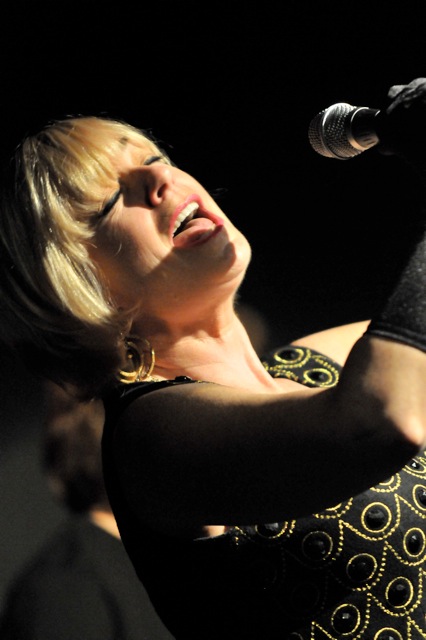
Lizzyspit sings “I Worry, I Wait” at the Troubadour in London, where several tracks from her new EP were recorded live
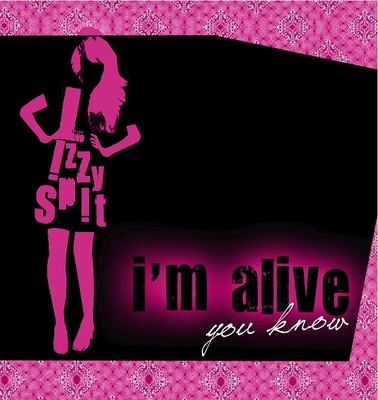
I'm Alive You Know: a voice of Skin-like intensity
London singer/songwriter Lizzyspit’s new 7-track EP I’m Alive You Know is a step up from her well-received first album Egg Box. There’s an assurance about her voice, always of considerable emotional substance, which imparts real urgency to lyrics that range from gentle introspection to flashes of anger without straying in to pretentious territory.
These unplugged songs are snapshots of moments lived and stored, captured in a web of spare, acoustic arrangements, and articulated with a Skin-like intensity that insists you listen to the words.
Lizzyspit (also known as Elizabeth Knights-Ward), 25, has been steadily attracting attention since Radio 2 stalwarts Janice Long and Steve Lamacq gave her some all-important airplay. Long described “Stars in the Water” (the third track on this EP) as “absolutely beautiful” and indeed it is: a delicate and ethereal chant of simple images.
The other standout tracks are the single, “Talk You Down” – a sharp, articulate tale of self preservation, and “Only a Matter of Time”, part cry for help, part reassurance that help will come.
“Little Dan” with its quirky, loping whistled intro, is a touching tribute to individuality, while “Trip” explores the frustratingly enduring remnants of a relationship that’s left its mark. “I Worry, I Wait” is a frank, unsparing account of 21st century neurosis that will echo with anyone afflicted by doubt and uncertainty.
While her first album was self-produced in her bedroom – she made a sound booth out of egg boxes – most of these tracks were recorded in London at the Troubadour, giving a strong sense of Lizzyspit’s strengths as a live performer.
Her voice, with its underlying vibrancy and resonance, is a compelling instrument that sets her apart from the current mainstream of young female singer/songwriters. It’s well served here by her spare guitar accompaniment, but I bet she can equally well let fly with a band and some harder beats behind her.
Someone who sings about love and loss, and the pain of experience. The power of torch-singing lies in its effect on the listener. For me, it transcends musical genres. These pages explore the dazzling, and sometimes dark, world of the female singer through history and in the present. Concert and CD reviews, interviews and articles combine to create a comprehensive view of this vital strand of popular culture. Why not share your views and experiences of your favourite artists, suggest performers you would like to see featured - and let me know what makes a torch singer for you?





 The Art of the Torch Singer
What do you think?