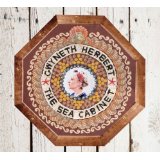
Gwyneth Herbert talks about the genesis of The Sea Cabinet
Haunted and haunting: Gwyneth Herbert’s Sea Cabinet is a triumph of eclecticism
Haunted and haunting. Poignant and achingly beautiful. Ribald and raunchy. Evocative and nostalgic. These are just a few of the adjectives that spring to mind as Gwyneth Herbert’s inspired, crowd-funded and self-released new album scatters and spills its contents before the intrigued listener.
The Sea Cabinet started life at Snape Maltings in Suffolk, following Herbert’s artistic residency with Aldeburgh Music. The concert at which she introduced this cycle of sea-inspired songs was absorbing, heralding a work of great promise, albeit still very much in progress and charmingly rough-hewn in places. Almost three years later, that promise has been fully realised.
Herbert’s wide-ranging musical references – sea shanties, Edwardian parlour songs, folk airs and laments, chansons, bluesy bar songs – are impeccable. And she has woven them into a fluent, multi-textured piece from which her eclecticism emerges triumphant and accessible. There isn’t a trace of pretentiousness. She has laboured over her lyrics, honing and polishing them so that they shimmer across a constantly shifting aural landscape of rhythms and ghostly echoes.
The concept of a solitary woman picking her way along the shore and storing the fruits of her beach-combing in a cabinet, provides a beautifully simple arc for the album. Herbert’s achievement is to populate the memories and ideas inspired by the woman’s discoveries with a cast of characters who spring vividly to life before they are absorbed back into the ebb and flow of diverse melodies.
Mrs Wittering, the owner of the Regal, emerges from the fading gentility of her tea room to take a bow. The petticoat-flashing “Fishguard Ladies” live once more to see off the French fleet. Old salts and soldiers jostle for position. But there is also plenty of underlying darkness and melancholy, not least in the sombre tale of wartime “Alderney”. In the beguiling “Sweet” and the increasingly belligerent “I Still Hear the Bells” there is also a sense of the personal experiences that brought Herbert to the emotional place which inspired The Sea Cabinet.
She is ably assisted by fellow singer/songwriter Fiona Bevan, who collaborates on “I Still Hear the Bells” and “The King’s Shilling”, by The Rubber Wellies, and by regular band Al Cherry, Sam Burgess and David Price. But it’s Herbert’s own voice, ranging from that of a sweet folk siren to jazz canary and late-night blues singer, which gives the album its momentum.
Snatches of the songs continue to swirl and soar in the air long after The Sea Cabinet has spun to a stop, not least the “Sea Theme” which opens and closes the set, tempered with field recordings that add pleasingly disturbing frissons of mystery and unease. In its lovingly-produced completeness, this album is a work of art.
Petula Clark: Crazy, from Jools Holland’s 2012 Hootenanny
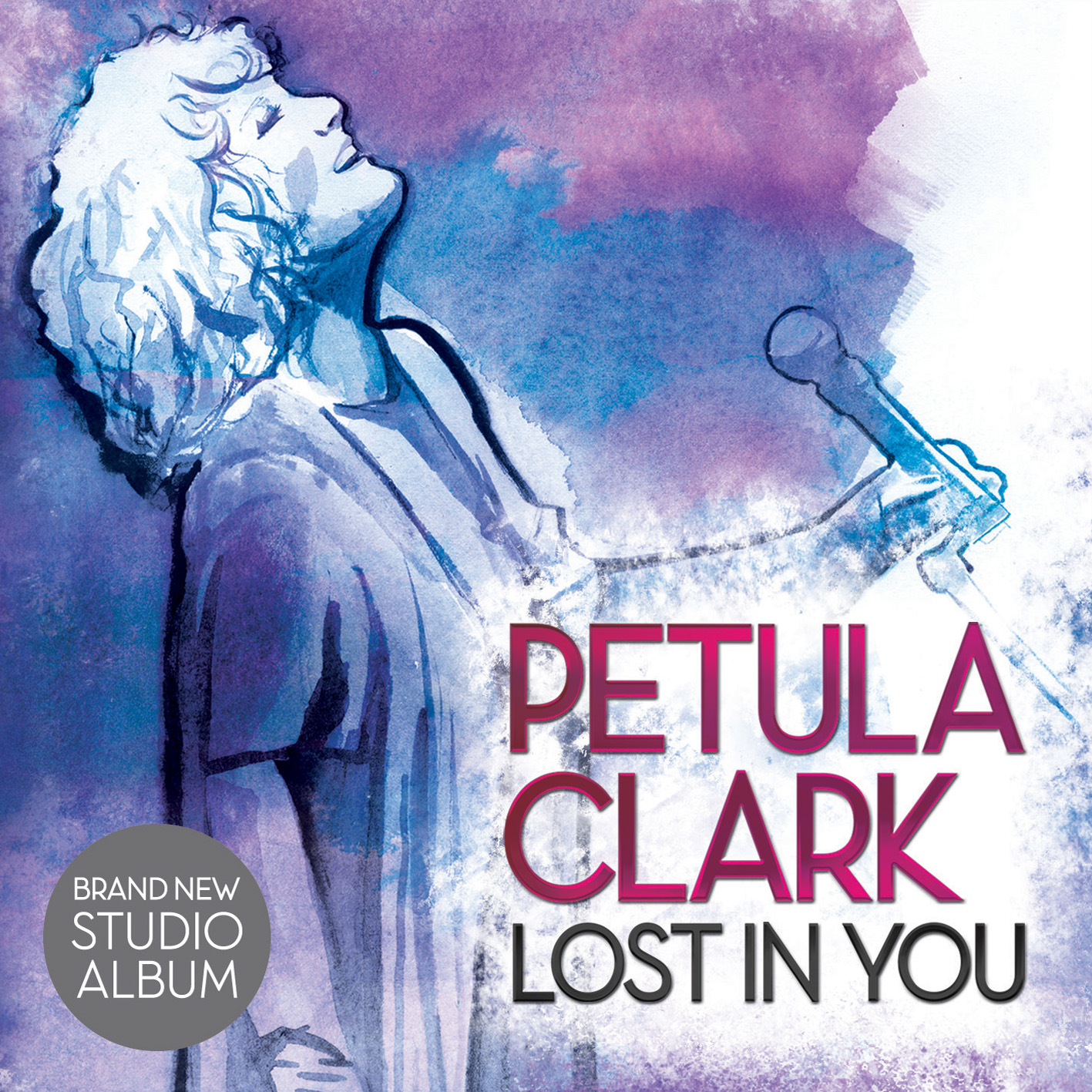
Lost in You: edgy and contemporary tunes from a superstar
At 80 – how is that possible? – Petula Clark has made her first English language studio album in 15 years. Lost in You is crisply produced, utterly devoid of sentimentality and resonates with a contemplative, moody and arresting contemporary vibe. There isn’t a whiff of nostalgia. Even a reinvented “Downtown”, stripped back to an almost bleakly acoustic riff, sounds as if it was written only yesterday.
As a record, Lost in You manages to reflect the nuances of a career that for sheer longevity and breadth of achievement puts Clark among the all-time great entertainers. At the same time, it confirms the lingering sense of a complex and enigmatic performer, a woman who would prefer to let her music speak for her than divulge her views about a world beyond the stage that is sometimes profoundly troubling.
I interviewed her once, in her West End dressing room during her successful stint as Norma Desmond in Sunset Boulevard. It was a trepidatious moment. “Downtown” was number one in the soundtrack of my childhood and I’d been a lifelong fan – always dangerous territory for a journalist meeting a hero. But there were no signs of clay feet. Far from being a grande dame, the friendly yet pensive woman I encountered left a lingering impression of artistic integrity and unfussy professionalism.
“Lyrics are very important to me,” she told me. “When I see a lyric and I say ‘Hey, yes! I know what that means, how it feels. It just flows through, your body is almost like a filter. It’s all filtered through your mind and then it comes out through your mouth. That’s it, you know. That’s the way you feel about something.”
A couple of the covers here – “Imagine” and “Love Me Tender” – could have languished as record company-requested interludes between her edgy treatments of more 21st-century material, but there is not the slightest hint of a phoned-in vocal. Everything is handled with that distinctive Clark sound: those unique, idiosyncratic vowels, combined with a subtle technique and phrasing that has defined her work at every turn.
“Reflections” is a self-penned, hymn-like paean to little Sally Olwen, the girl who snatched precious moments of childhood in Wales, even while the machinery of show-business was propelling her to child stardom and beyond.
As the prototype 1950s girl singer, she would rescue herself from the cul-de-sac of novelty pop by marrying a Frenchman and discovering the dramatic possibilities of the chanson, absorbing the potent influences of Brel and Piaf. “Next to You” thrums with barely contained emotion – the mark of a great dramatic singer who doesn’t need to resort to melisma or histrionics to make an emotional connection with the story.
Clark reveals another facet of her versatility on the country-tinged “Never Enough”, which she delivers with subtle verve and warmth. The set finishes with a statelier take on romantic relationships: “I Won’t Care”, a big, modern ballad that is the closest thing to formulaic among the twelve tracks.
Cut Copy Me: a lesson in ethereal pop
But overall, the album’s slightly melancholy, troubled atmosphere, established across the first three numbers, is its most fascinating asset. “Cut Copy Me” is a lesson in dreamy, ethereal pop singing without artifice; the title track “Lost in You”, an echoing piano-driven ballad with nifty key changes reminiscent of Clark’s glory chart years with ace songwriters Tony Hatch and Jackie Trent; and best of all, a fascinating version of Gnarls Barkley’s “Crazy”, which Clark turns into an epic, intelligent exploration of human frailty, dappled with cynicism.
80? The maths say it must be so. But on this evidence, Petula Clark has no intention of being out any time soon. Lost in You is a little triumph.
River: Barb Jungr and the Northampton and Derngate Community Choir raise the roof for Christmas
Stockport to Memphis: some of Barb Jungr’s finest work to date
Substrata of autobiography, moments caught in time and the inherited trove of familial memories lurk beneath the polished surface of Barb Jungr’s new album, Stockport to Memphis. The occasional jagged shard among the softer elements hints at pockets of darkness to counter the exuberance of the title track, a foot-stomping anthem in which she tips a knowing wink at the young woman who sought – and found – escape from small, northern-town blues in music way back when.
So far, so pleasingly typical. Jungr’s ability to juxtapose bittersweet nostalgia with something bleaker is her stock in trade, giving depth and often an ominous power to her re-imaginings of seminal numbers from the great modern songbook. Heroes including Dylan (“Lay Lady Lay”), Joni Mitchell (an aching version of “River” which, reinforced with a choral backing, has been released as a Christmas single), Neil Young (“Old Man”) and Tom Waits (“Way Down in the Hole”) are represented with skill and style.
But the big news here is that Jungr has connected with the muse, and in partnership with regular accompanist and producer Simon Wallace, found space to exercise her song-writing muscles.
The six self-penned songs (which also include a number written with her former Sticky Moments singing partner Michael Parker) provide an intriguing counterpoint to the cornerstones of the modern standards. “Sunset to Break Your Heart” is further evidence of Jungr’s particular way with a break-up song: that characteristic mixture of searing desolation and the cynicism of the survivor. But there is joyful optimism, too, in the promise of “New Life “ and – my highlight of the album – “Urban Fox”, a beautiful and evocative jazz-tinged ode to that maligned creature. Without question, some of her finest work to date.
Naj’s Song: never mind the shaky camera work, just listen to Anna MacDonald and the Portobello Orchestra
Paper Flowers: a nightingale sings in George Square?
If a nightingale ever sings in Glasgow’s George Square, I’ll bet it sounds just like Anna MacDonald. Her voice has the same combination of urgency, brilliance and beauty that creeps into your sleep in the early hours and makes you wonder if you’re still dreaming.
On the epic “Matty Groves”, one of the standout tracks on her second EP Paper Flowers, it soars and shimmers as if ricocheting off the majestic buildings and echoes into the distant night like a siren call to another world. This traditional folk song is a sad and violent tale that builds on a simple melodic hook. In MacDonald’s feverish version, she seems to meld the bitter rivalry of the street fight with doomed love and murder in a mixture of urban imagery and pastoral folklore.
MacDonald is a gifted songwriter, too. Her ballads – the title track, the atmospheric “Glasgow Rain” and “Naj’s Song” – complement another traditional number, “Banks of Inverurie”, as sweet, melancholy paeans to hearts broken against the gritty background of a city that is clearly a major influence on her work. The texture is an arresting weave of Scottish and Gaelic traditions, with a dash of English folk. A full album would be welcome, and soon.
These are heady days for the female Scottish troubadour. That other notable MacDonald, Amy, already on to her third album, has helped to open a door into mainstream pop music for what seems like an army of young women, each with their own blend of traditional and modern musical tastes. Where Amy favours fierce, guitar-driven narratives in the manner of her breakthrough hit “This is the Life”, Anna is deceptively gentle and contemplative, that angelic voice telling quietly bleak truths about the realities of waning love and loneliness. There is plenty of room for them both.
Don’t Let the Sun Catch You Crying: Mari Wilson goes all Proustian on us
Cover Stories: a delightful piece of work
The title of Mari Wilson’s new album isn’t just a play on words. Cover Stories takes some beloved songs and gently picks its way through their lyrics, discovering a multitude of unexpected twists and turns, against a subtle backdrop of modern, stripped-down arrangements that make you shiver with pleasure as the tune emerges from each reinvented intro.
It’s bathed in nostalgia but could never be described as just another retro covers project. That’s partly down to Wilson’s sensitive, spot-on vocals which give the album its rather poignant quality. It isn’t that the choice of song is unremittingly sad. Far from it. But as she takes traditionally up-beat numbers like Dusty Springfield’s “I Only Want to be With You” or the Pretenders’ “Don’t Get Me Wrong” and slows them down to meandering threnodies of contemplation, it’s impossible to escape a slight sense of melancholy, of youth seen through the eyes of experience.
I wouldn’t normally expect to describe a new treatment of “Be My Baby” or Gerry Marsden’s “Don’t Let the Sun Catch you Crying” as Proustian, but it’s a measure of the album’s quality, and the thought that has gone into the production (by Simon Hale, who also plays keyboards, and Wilson herself), that its dying chords leave a host of half-memories and elusive dreams hanging in the air, like the scent of autumn on a late summer breeze.
She has chosen these songs very carefully, and with great respect for the writers who have provided her – and us – with such a rich soundtrack of pop music. And while she connects with them through her own story – much of which will be familiar to anyone who has had the good fortune to spend an evening at one of her gigs – her considerable gifts as a singer render them equally a reflection of the listener’s life. We revisit our own stories in parallel, allowing old, benevolent ghosts another outing. And just as when she sings “Be My Baby” in concert, and your eyes fill with unbidden tears for reasons that you can’t quite put your finger on, it’s a moving experience.
Other stand-out tracks include “Disney Girls” (another concert favourite) and the Gillian Welch number “Dear Someone”, which is treated almost like a sentimental Edwardian music-hall song (more ghosts!) The Gibb brothers are represented by “First of May”, Kirsty MacColl by “They Don’t Know”. Cover Stories signs off with a soft, jazzy treatment of “Everybody Needs a Holiday”, an acknowledgement of the power and value of support in a relationship. It’s a reassuring coda to a really delightful piece of work.
“If”: Judie Tzuke at Union Chapel in 2010 – still a voice to be reckoned with
Here’s a piece of advice for Adele, Jessie J, Emili Sandé and everybody else who is riding the crest of a huge wave of fascination with young female singers and songwriters in the UK: make the most of your hour in the sun. Because once you’ve hit middle age, you’ll find it virtually impossible to get any kind of coverage in the mainstream music press.
A flurry of New Year articles hailed 2012 as the year of rock’s illustrious old guys. Bowie, Elton John, Meatloaf, Ronnie Wood and Mick Fleetwood will all turn 65 in the next 12 months, pointed out The Independent. While in The Daily Telegraph, Neil McCormick hailed forthcoming new albums from Leonard Cohen (77) and Paul McCartney (69), Springsteen and the E Street Band, and rumours of 50th anniversary tours from the Rolling Stones and the Who.
The usually excellent McCormick’s crystal-ball piece did at least name check Florence and the Machine, La Roux and Lana del Rey – prime examples of contemporary young female talent, all. But the absence in any of these stories of any reference to mature women singers (Madonna aside) reveals once again the curious neglect of a significant category of talent that frequently blights the best broad music journalism. It’s as if the media suffers from an odd, sexist/ageist blind spot. Even The Guardian’s TV listing for New Year’s Eve fell into the trap, wondering vaguely what Sandie Shaw was doing in Jools Holland’s Later line-up, apparently ignorant of her well-received participation in his 2011 tour.
At least Shaw got a mention at all. Frankly, with the exception of Kate Bush (as left-field in her career management as in her approach to her music) and Annie Lennox (who is, in any case, more likely to garner column inches for her socio-political activism than her music these days), senior British female singers seem to become invisible to the press once they pass 40. Which means that a whole range of performers and recording artists – Eddi Reader, Elkie Brooks, Barbara Dickson, Mari Wilson, Barb Jungr and Mary Hopkin, to name but a handful – are now producing some of their finest work in their middle years, without the hope of a mainstream profile or review to remind people that they’re out there, no less creative than their male contemporaries and in many cases a great deal more active.
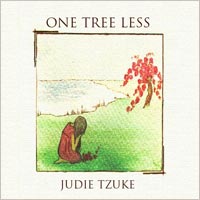
Let’s add Judie Tzuke to the list. Her new album, One Tree Less, is a beauty. Troubled, uneasy lyrics juxtapose natural references with smarting, visceral explorations of broken relationships, fractured trust and self-doubt. The arrangements are string-laden, echoing aural landscapes, liberally sprinkled with epic piano riffs and sparkling guitar sequences that draw you in, making the occasional sharp jab of the words all the more startling.
“Stay With Me Till Dawn”: Judie Tzuke’s slow-burning torch song is still a classy affair after all these years
Tzuke has been making records for 35 years. She had her first hit, the torchy, slow-burning ballad “Stay With Me Till Dawn”, in 1978, lifted from the album Welcome to the Cruise, while she was signed to Elton John’s Rocket label. From the start, there was an edginess beneath the ethereal voice and polished pop lyrics – a restlessness and an anxiety that hinted at more substantial themes. In the wake of its success, she was put in the same bracket as Kate Bush, simply by dint of being a new, happening female singer songwriter. Truly, the music industry’s marketing imagination has never known its own bounds.
A stellar future seemed assured as Tzuke became a much in-demand touring artist and released a series of acclaimed albums through the early 1980s (she moved from Rocket to Chrysalis in 1982). But like so many before her, she found herself buffeted by an industry that has never been great at promoting and sustaining singular female talent. Ricocheting from one record company to the next for the rest of the decade and into the 1990s with diminishing returns, and occasionally beset with management disagreements, she took time out to have her two daughters (the eldest, Bailey, is now a singer in her own right and contributes backing vocals on the new album) before returning to the fray with her own label – finally in complete charge of her own career (Elton John handed back the copyright on her first three albums in 1999).
These days, the voice has a pleasing mahogany-dark timbre that compliments Tzuke’s misty upper register. From the title track, the ominous and agitated “One Tree Less”, with its tentative discovery of hope, to brooding, thoughtful numbers like “The Other Side” and “Till It’s Over”, the album showcases the ripeness of her talents – and particularly her ability to suggest an inner life in which doubt and uncertainty are constantly preying shadows, without ever sounding trite or pretentious. In other words, she is still exploring the consequences of that first dawn.
“Joy” is a deeply personal take on a friendship interrupted by tragedy. “Humankind” favours a dramatic piano intro, leading into a bleak wonder across the face of the human condition. “The Other Side” bridges the divide between life-as-a-bitch and security – but as always, with Tzuke, that note of hesitation is left hanging in the air: “though I might be wrong…”
“I Can Wait” is an up tempo, guitar-driven ballad about the sudden discovery of passion, “A Moving Target” an urgent, self-directed plea for acceptance of the way things are.
More substantial themes, indeed. So yes, Judie Tzuke is very much alive and kicking – and apparently in her prime. And more people should know about it. She’s touring the UK throughout March – which sounds like a good opportunity to catch up with one of our foremost, lamentably unsung, female singer/songwriters.
Someone who sings about love and loss, and the pain of experience. The power of torch-singing lies in its effect on the listener. For me, it transcends musical genres. These pages explore the dazzling, and sometimes dark, world of the female singer through history and in the present. Concert and CD reviews, interviews and articles combine to create a comprehensive view of this vital strand of popular culture. Why not share your views and experiences of your favourite artists, suggest performers you would like to see featured - and let me know what makes a torch singer for you?



 The Art of the Torch Singer
What do you think?